
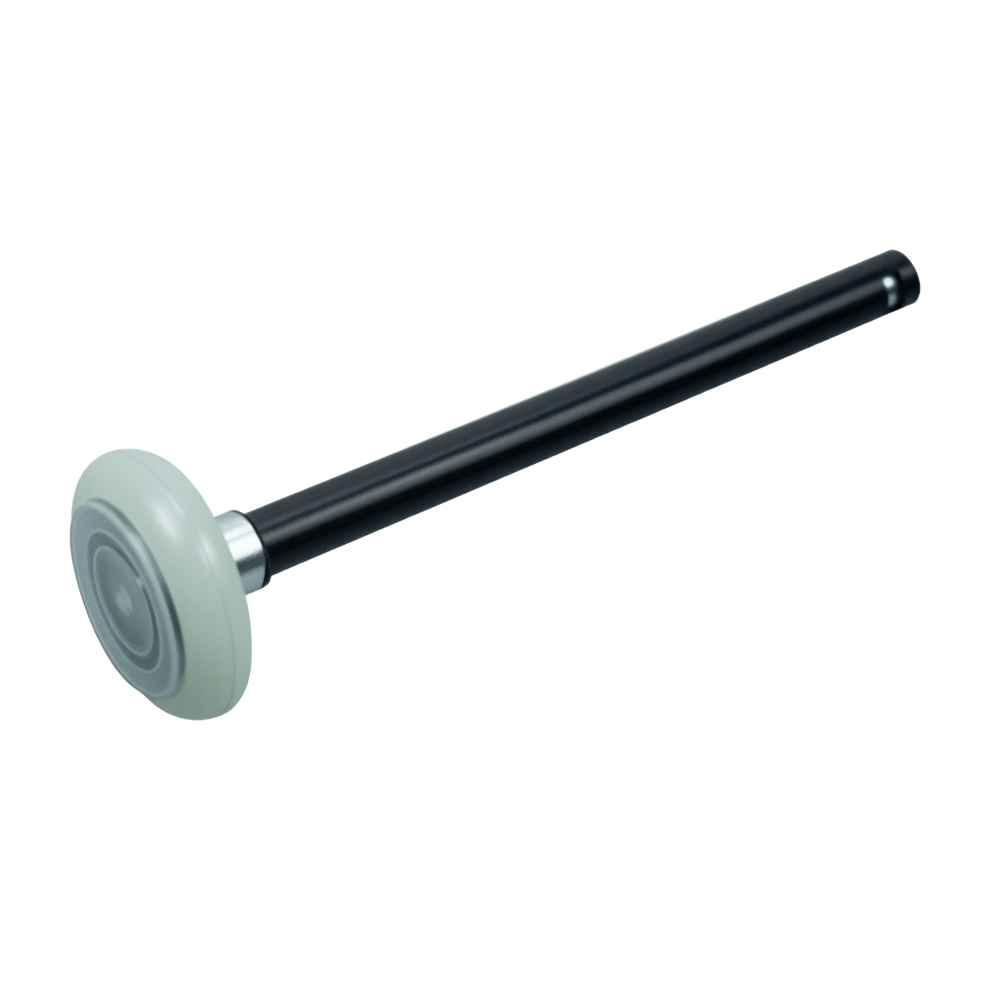
Which roller material fits your market better—nylon or steel—when garages cycle every day?
Choosing between nylon and steel garage door rollers affects noise, load capacity, and wear over time. The practical question for residential and light commercial garages with frequent open-close cycles is which option stays smooth and quiet without creating premature wear or service calls, and how to choose based on durability and failure risk.
For OEM teams and installers, this decision is rarely about “better” in the abstract. It’s about aligning a material’s behavior with the way the door is used: daily cycle counts, temperature swings inside an attached garage, the tolerance of homeowners for noise, and the reality that maintenance habits range from consistent lubrication to none at all.
Both materials can be engineered to work well. Nylon tends to win on low friction and noise reduction. Steel tends to win on load handling and impact tolerance. The right choice is the one that matches how your market will actually live with the door—then verifies that choice with repeatable testing rather than assumptions.
What you are really comparing in nylon vs steel garage door rollers
When people say “nylon roller” or “steel roller,” they are usually talking about the wheel material, not the entire roller assembly. In most door systems, the roller also includes a stem and a bearing structure that decides how smoothly it rotates under side-load and misalignment.
That distinction matters because many complaints blamed on “nylon” or “steel” are actually bearing-related: a rough bearing makes a quiet wheel sound harsh, and a good bearing can make a higher-load wheel feel smooth for years. The wheel material still matters, but it interacts with the rest of the assembly and the track condition.
So the comparison should stay grounded in what buyers and installers experience: noise at start/stop, vibration transferred into the door, how sensitive the wheel is to minor track imperfections, and whether wear shows up as a gradual change in feel or an abrupt performance drop.
Noise and feel: why nylon often becomes the “default” for residential doors
If your customer segment is noise-sensitive—typical for residential neighborhoods—nylon’s low-friction surface can reduce squeal and rattling, especially when the door transitions through curves and joints in the track. That quieter baseline can also mask small variations in installation alignment that would be more audible with harder wheel materials.
In daily-use garages, this matters because the first friction event is often at the start of motion. If the wheel surface grabs the track or the bearing is slightly dry, the door’s first few inches can be the loudest. Nylon’s smoother contact tends to soften that initial friction spike, which is why it is frequently chosen for markets where “quiet door” is a buying trigger.
That said, nylon’s “quiet advantage” depends on not being pushed outside its comfort zone. In higher-load doors or in markets where doors see frequent impact (for example, regular bumping, harsh closing, or tracks that collect debris), nylon can show accelerated wear or deformation, and the quiet benefit can disappear as the wheel shape changes.
Load and robustness: why steel still has a clear place in the market
Steel rollers are typically selected when load-bearing and impact tolerance are the priority. If your door configuration or customer expectation is “it must keep working even if maintenance is poor,” steel often offers a wider safety margin for short-term abuse.
In light commercial settings—small workshops, storage units, and mixed-use garages—door cycles are still frequent, but the door is more likely to see side impacts, occasional mis-tracking, and heavier hardware add-ons. Steel’s strength helps it hold geometry under stress, which can translate into more consistent travel when conditions are less controlled.
The trade-off is that steel is less forgiving acoustically. When lubrication is missing or the track surface is rough, steel-on-track contact can transmit more vibration into the door and framing. If the goal is to minimize callbacks for “my door sounds rough,” steel may require a stronger emphasis on lubrication and track quality to keep perceived performance high.
Durability is not a slogan: what “wear over time” looks like in frequent-cycle garages
In a residential and light commercial garage with frequent open-close cycles, durability is mostly about how predictable the wear path is. Buyers and installers prefer a part that changes slowly and visibly rather than one that feels fine and then becomes problematic suddenly.
Nylon wheels can wear as a gradual flattening or surface polishing. Under higher loads, the more concerning pattern is deformation that changes the rolling profile. That profile change increases contact pressure at the edges, which can accelerate track wear and create a new noise signature that wasn’t present in the first months of use.
Steel wheels usually resist deformation but can shift the wear problem to the track if lubrication is neglected. A harder wheel paired with a dry track can promote metal-to-metal friction behavior that feels “gritty” and sounds sharp. Over time, it can also amplify minor track imperfections, which is why installers who work in noise-sensitive neighborhoods often prefer nylon unless the load case argues strongly for steel.
How failure risk shows up—without turning this into a failure story
Material choice becomes most visible when something is slightly off: the door is heavier than expected, the track alignment isn’t perfect, or maintenance is inconsistent. In those real-world conditions, nylon is more likely to show deformation wear under high load, while steel is more likely to reveal noise and track wear when lubrication is missing.
These risks are not a reason to avoid either material. They are a reason to treat the material as a decision lever: pick nylon when noise reduction and smoother feel dominate the buying decision, then confirm it is not being used in an over-load configuration. Pick steel when robustness dominates, then design the product messaging and maintenance expectations so the buyer doesn’t misinterpret normal vibration as “poor quality.”
When you want a broader decision framework that includes sizing, configuration, and common buyer expectations beyond the wheel material, the more complete selection logic belongs on the pillar resource: Buyer Guide & Failure FAQ for Custom Garage Door Rollers.
Market-fit guidance: which material fits which customer expectation
Noise-sensitive residential upgrades
If your market is homeowners replacing older rollers to reduce noise, nylon tends to fit the expectation because the perceived improvement is immediate. The buyer often judges success by sound and smoothness, not by load margin. That makes nylon a strong default when the door weight and track condition are within a typical residential band and the installation quality is reasonable.
For this segment, the “right” engineering story is not about over-promising lifespan. It is about explaining how low-friction rolling reduces vibration and why correct fit and alignment keep the door quiet longer. When that story is paired with basic maintenance guidance, the product tends to generate fewer subjective complaints.
Light commercial or mixed-use garages where robustness is a selling point
When the buyer is an installer or facility manager who values robustness and predictable operation under less controlled conditions, steel can be the safer choice. The product expectation is “keep working,” even if lubrication is sporadic and the environment is harder on moving parts.
In this segment, you can reduce noise-related dissatisfaction by specifying what “normal” sounds like for the configuration and by emphasizing that lubrication and track condition are part of the performance system. That keeps the conversation anchored to controllable variables rather than subjective impressions.
OEM positioning: building product tiers without confusing buyers
For manufacturers and sourcing teams, nylon vs steel can also be a clean way to build tiers. A quiet, comfort-oriented tier can lean toward nylon, while a heavy-duty tier can lean toward steel. The key is to avoid mixing the messaging: a heavy-duty positioning that promises “quiet” can backfire if maintenance isn’t part of the buyer’s routine.
Conversely, a quiet positioning can backfire if the nylon wheel is used in a higher-load door where deformation wear becomes likely. Tiering works best when your configuration rules are strict, and your internal validation matches the use case you are selling into.
How to choose between nylon and steel rollers without overfitting to one spec
Most bad decisions come from over-weighting a single factor. If you choose nylon purely for quietness while ignoring load and duty cycle, you can end up with accelerated wear and a return of noise later. If you choose steel purely for robustness while ignoring the customer’s noise expectation, you can end up with avoidable “quality” complaints even when the roller is functioning correctly.
A more reliable approach is to treat the choice as a trade-off between friction behavior and load margin. Nylon typically offers better friction behavior for perceived smoothness and lower noise. Steel typically offers better margin when conditions are less controlled. Your job is to match that trade-off to the way the door will be used, not to the way it looks on a product sheet.
When decisions are made for a product line rather than a single door, the best time-saver is to define the market segment first (quiet upgrade vs heavy-duty reliability), then lock the material choice to that segment and validate it using repeatable tests that resemble frequent-cycle garage use.
Maintenance reality: how lubrication habits change the material story
Maintenance is the silent variable behind many roller complaints. In the real world, many residential doors receive little or no lubrication until something becomes noisy. That fact tends to favor nylon for noise-sensitive markets because it is more tolerant of minor dryness in the contact surface.
Steel can remain mechanically reliable in low-maintenance environments, but the sound profile tends to change faster if the track is dry or dirty. If you sell steel rollers into a market that expects quiet operation with minimal upkeep, you may need to include clearer maintenance guidance to prevent “it sounds rough” service calls.
Neither material eliminates the need for correct installation. Track alignment and roller fit influence side-load, and side-load is what turns a good roller into a noisy roller. Aligning the roller choice with installation realities is often as important as the material itself for long-term user satisfaction.
What to ask a supplier or factory before you commit to a material choice
For sourcing managers and OEM teams, a material label is not enough. The practical questions are about how the roller is validated in conditions similar to frequent-cycle garages, and how consistently the product holds its performance across production batches.
Ask how the roller is checked for cycle durability, how wear is evaluated, and how noise is assessed under repeatable conditions. Also ask how the supplier handles dimensional inspection and consistency, because a material can only perform if the geometry and fit are controlled.
If you are selecting rollers for residential and light commercial doors and want to reduce decision risk quickly, a low-friction vs load-margin comparison is only the first step. A faster way to align teams is to confirm material choice, key tolerances, and how the assembly is validated with cycle and wear checks; if needed, you can request a spec sheet or a short DFM checklist to compare options more efficiently.
How these choices are validated for frequent open-close cycles
Comparisons become trustworthy when they are tied to verification methods. For garage door rollers used in frequent open-close cycles, the most relevant validation is a combination of load cycling behavior, wear progression, and the noise signature that appears as lubrication and track condition vary.
In practice, that maps to the testing language many teams already use: load cycling test to observe performance stability under repeated motion, wear resistance inspection to see how the wheel surface changes over time, and noise level evaluation to quantify whether a “quiet” configuration stays quiet as conditions drift. These test types matter because they connect directly to the environment: residential and light commercial garages where daily cycles and inconsistent maintenance are normal.
These validation steps also anchor the trade-offs described earlier. If nylon is chosen for lower noise, the cycle and wear checks should confirm that deformation-driven wear does not dominate in the target door configuration. If steel is chosen for load margin, the noise evaluation should confirm what the buyer experience will be when lubrication is imperfect, so the product positioning and installation guidance match reality.
When you need the broader selection context—how material interacts with configuration choices and buyer expectations across multiple use cases—the decision framework is more complete in the pillar resource: full selection considerations for custom garage door rollers.
Standards and references used to keep decisions measurable
Garage door roller evaluations often borrow from standardized testing thinking even when no single universal label is printed on the product. The goal is to keep “quiet,” “durable,” and “reliable” tied to measurable checks rather than subjective impressions, especially for buyers who must defend decisions internally.
Two widely recognized sources for how engineering tests are described and standardized are the official sites for ISO standards references et ASTM testing methods. In this material comparison, the relevant standard-style thinking is reflected in the test types already discussed—load cycling, wear resistance inspection, and noise level evaluation—because those checks connect directly to how rollers behave in frequent-cycle residential and light commercial garages.
Content development for this nylon vs steel garage door rollers comparison is grounded in material performance analysis, standardized testing references expressed as load cycling, wear inspection, and noise evaluation, and real-world use conditions typical of residential and light commercial garages with frequent open-close cycles. The reliability trade-offs and prevention guidance reflect how deformation wear and dry-running noise tend to appear in those environments, and how validation methods help keep that risk controllable over the product’s service life.
 English
  Русский
  日本語
日本語  한국어
한국어  Français
  Deutsch
  العربية
  Português
  Español