

ガレージドアのサイドヒンジにおけるセクションヒンジの応力分散:信頼性の高い関節運動と構造荷重解析
Reliable operation of a Garage Door Side Hinge is essential for smooth sectional articulation and long-term durability in garage door hardware. This technical overview explores how stress distribution and fatigue resistance in these hinges underpin the overall reliability of modern garage door systems, supporting both safety and consistent performance.
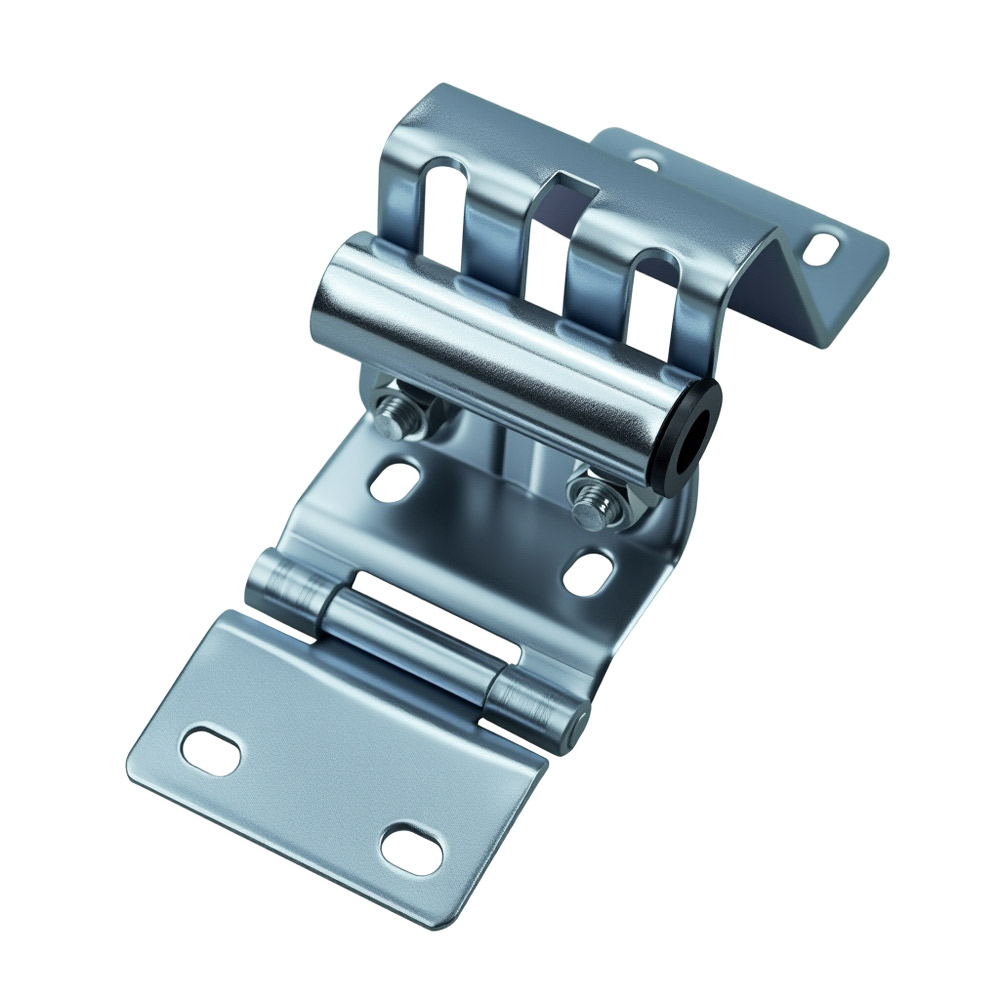
In the context of modern sectional garage door systems, the mechanical performance and reliability of the garage door side hinge are critical factors influencing both articulation smoothness and long-term structural integrity. For door system designers, understanding the distribution of stresses and the mechanisms of fatigue in these hinges is essential for ensuring consistent sectional movement and minimizing the risk of premature hardware failure. This article presents a detailed technical analysis of garage door side hinges within the broader garage door hardware assembly, focusing on their role in stress dispersion during sectional articulation, and evaluating their reliability from a structural engineering perspective. The following discussion is structured to provide a clear, engineering-driven insight into hinge architecture, mechanical reliability, and objective evaluation methods, culminating in actionable guidelines for hinge selection and validation.
The garage door side hinge functions as a pivotal connector between adjacent door panels, enabling the required relative rotation during door opening and closing. In a typical sectional door configuration, multiple side hinges are distributed along the vertical edges of each panel, working in concert with center hinges, rollers, and tracks. The side hinge is subject to complex loading conditions, including bending moments, shear forces, and local bearing stresses, especially at articulation points where panel movement induces concentrated loads.
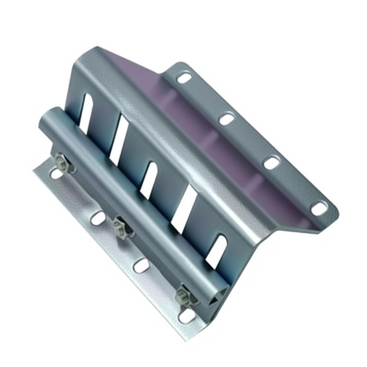
The geometric configuration of the side hinge is typically characterized by a multi-flanged steel stamping, with mounting holes aligned for fastener attachment to both the panel edge and the roller carrier. The hinge knuckle, formed by a rolled or extruded barrel, houses the hinge pin, which serves as the rotational axis. Material selection is predominantly cold-rolled or galvanized steel, with thicknesses ranging from 1.5 mm to 3 mm depending on the door size and expected load class. The hinge’s design must accommodate repeated cycles of articulation without excessive wear or deformation, necessitating careful attention to dimensional tolerances and surface finishing.
Sectional articulation imposes variable angular displacement across the hinge during each operation cycle. As the door transitions from closed to open, the relative angle between adjacent panels changes, causing the hinge to experience fluctuating stress concentrations at the knuckle and mounting flanges. The most critical stress points are typically observed at the interface between the hinge barrel and the leaf, where bending and shear combine under dynamic loading. For designers, the challenge lies in optimizing hinge geometry to distribute these stresses over a larger area, thereby reducing the likelihood of fatigue crack initiation.
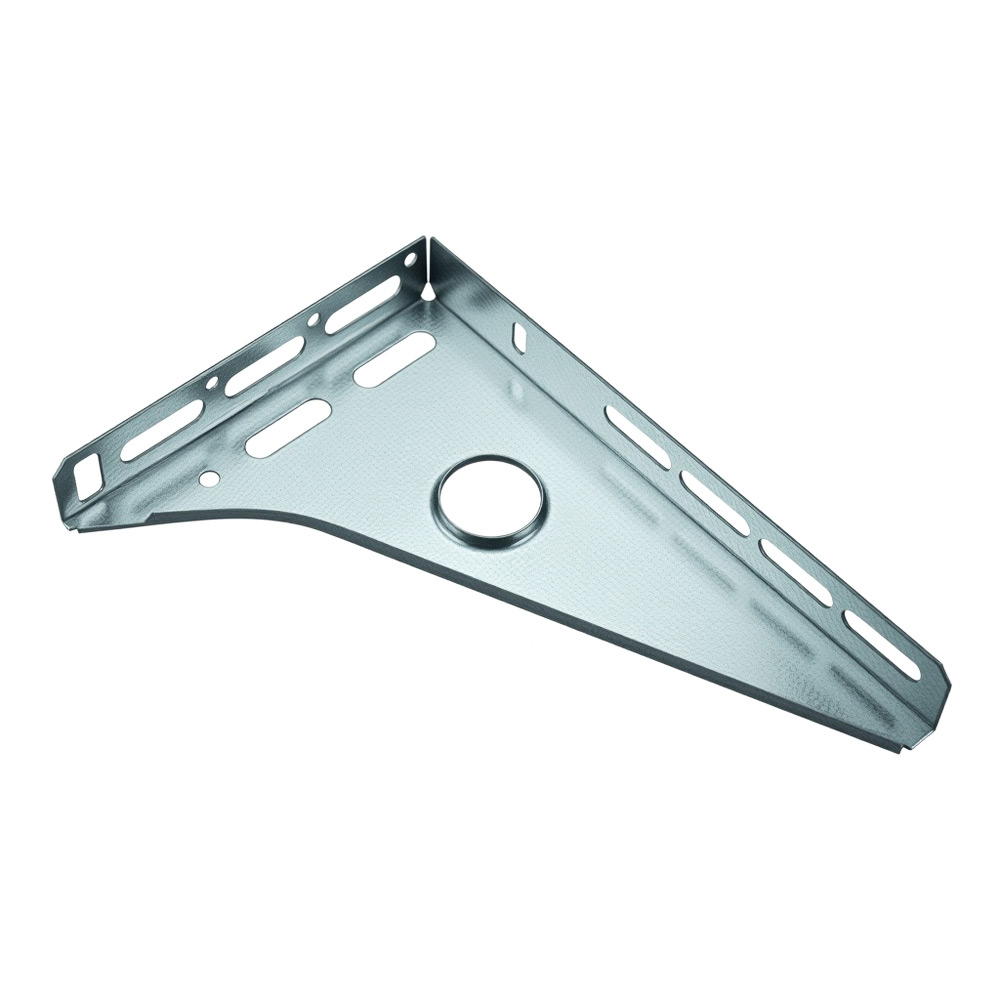
Reliability of the garage door side hinge is fundamentally linked to its ability to withstand repeated articulation cycles without functional degradation. Fatigue failure, driven by cyclic loading at stress risers, is a primary concern in high-cycle applications such as residential and commercial sectional doors. The fatigue performance of the hinge is influenced by several factors:
- Material Microstructure and Surface Condition: Micro-cracks or inclusions at the hinge surface can serve as initiation points for fatigue failure. Galvanization and surface polishing are commonly employed to minimize surface defects and enhance corrosion resistance, which indirectly improves fatigue life.
- Stress Concentration Factors (SCF): Sharp transitions in geometry, such as at the knuckle-leaf interface or at mounting hole peripheries, amplify local stresses. Fillet radii, optimized hole spacing, and avoidance of abrupt section changes are key design strategies to lower SCF.
- Load Transfer Pathways: The hinge must effectively transfer loads from the moving panel to the stationary frame via the roller and track system. Misalignment or excessive play in the hinge-pin assembly can introduce additional bending moments, accelerating wear and potential failure.
- Assembly and Installation Practices: Over-tightening of fasteners or improper hinge alignment during installation can introduce pre-stress, exacerbating fatigue accumulation during service.
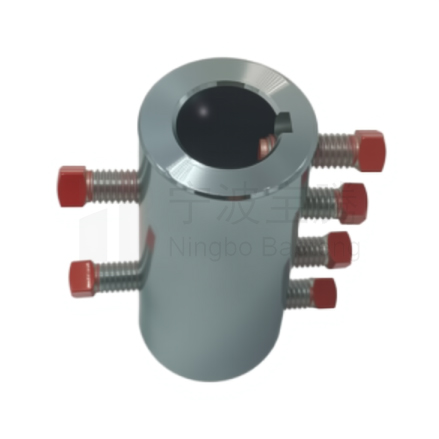
To quantitatively assess hinge reliability, structural stress analysis using both analytical and computational methods is standard practice. Finite element modeling (FEM) enables detailed mapping of stress fields under simulated loading conditions, revealing critical locations where the maximum principal stress exceeds material fatigue limits. For a typical side hinge subjected to a 100,000-cycle test protocol (representing a 10-year residential service life), the design must ensure that the maximum alternating stress remains below the material’s endurance limit, accounting for safety factors appropriate to the application.
Empirical evaluation complements simulation by subjecting prototype hinges to accelerated life testing. This involves repeated articulation under controlled loads, with periodic inspection for crack formation, permanent deformation, or loss of rotational freedom. Failure modes are cataloged and correlated with predicted stress concentrations from FEM, enabling iterative refinement of hinge geometry and material specification.
In practice, the most common failure modes observed in garage door side hinges include:
- Fatigue Cracking at the Knuckle: Initiated by cyclic bending and exacerbated by insufficient fillet radii or surface defects.
- Bearing Wear at the Pin-Hole Interface: Resulting from inadequate lubrication or excessive clearance, leading to increased articulation resistance and eventual hinge seizure.
- Plastic Deformation of Flanges: Caused by overload events, such as door impact or misaligned tracks, leading to permanent set and compromised articulation.
To mitigate these issues, design recommendations include:
- Specifying minimum fillet radii of 2.5 mm at all geometry transitions to reduce SCF.
- Employing through-hardened steel pins with a surface hardness of at least 45 HRC to resist wear.
- Implementing quality control protocols for surface finish, targeting Ra < 1.6 μm on all bearing surfaces.
- Ensuring precise alignment during installation, with allowable misalignment not exceeding 0.5° between adjacent panels.
Evaluation of hinge performance must also consider the interaction with other garage door hardware components. For example, the roller bracket and track system must maintain consistent alignment to prevent side loading of the hinge. Additionally, the fastener selection (typically self-tapping screws or carriage bolts) must be compatible with both the hinge material and the panel substrate to avoid galvanic corrosion and ensure long-term joint integrity.
From a structural stress analysis perspective, the hinge’s role in dispersing articulation-induced loads is central to the durability of the entire garage door system. By distributing stresses across multiple hinges and optimizing the load path through the hardware assembly, the risk of localized overloading and subsequent fatigue failure is minimized. This approach supports the design objective of achieving uniform stress fields and extending the operational life of both the hinge and the sectional door panels.
For door system designers, the verification of hinge parameters through engineering-grade safety checks is imperative. This includes:
- Performing detailed FEM simulations for each hinge design iteration, focusing on maximum principal stress and identifying potential fatigue hot spots.
- Conducting physical fatigue testing to validate simulation results and confirm compliance with cycle-life requirements.
- Reviewing installation procedures to ensure field alignment and fastener torque specifications are consistently met.
- Documenting all failure modes and implementing corrective design actions based on empirical data.
In summary, the garage door side hinge is a critical component in the articulation and structural performance of sectional door systems. Its reliability is governed by a combination of material properties, geometric optimization, assembly precision, and ongoing evaluation through both simulation and empirical testing. Addressing the core pain point of stress concentration and fatigue failure requires a rigorous engineering approach, integrating structural stress analysis and fatigue life evaluation at every stage of design and implementation. Door system designers are encouraged to verify hinge parameters using robust engineering methodologies, ensuring that each hinge contributes effectively to the overall durability and safety of the garage door hardware assembly.
For further technical documentation and best practices on Garage Door Hardware, refer to the 技術文書 そして インストール・チュートリアル provided by Baoteng.
 English
  Русский
  日本語
日本語  한국어
한국어  Français
  Deutsch
  العربية
  Português
  Español