
なぜガレージのドアが勝手に開くのか? ブラケットの故障による物理的な原因

Why Does My Garage Door Open by Itself? Hidden Bracket Physics Explained Reference Standard: ASTM E384 (Standard Test Method for Microindentation Hardness of Materials) & ISO 1461 (Hot dip galvanized coatings on fabricated iron and steel articles) Short Answer A garage door opening unpredictably or jamming is often a symptom of underlying structural failure in the track support system. Micro-tearing during the manufacturing of perforated angle iron, combined with intergranular corrosion and eccentric dynamic loading, creates microscopic shifts in the tracks that trigger the motor’s safety auto-reverse mechanism. Micro-Tearing at the Perforation Edge: The Hidden Catalyst for Structural Collapse When a heavy-duty industrial or residential garage door (weighing upwards of … 続きを読む

Why Garage Door Wheels Squeak? Acoustic & Lattice Failure

Why Do Garage Door Wheels Squeak? Solving Acoustic Resonance Reference Standard: ASTM B117 Standard Practice for Operating Salt Spray (Fog) Apparatus & ISO 9001:2015 Quality Management Systems Short Answer Squeaking and failure in garage door wheels are primarily caused by acoustic resonance in hollow metal tracks and macromolecular lattice dislocation within the nylon tire. These issues stem from a combination of high-frequency vibrational coupling and particulate ingress that shifts the ball bearing contact angles, ultimately leading to mechanical seizure. Evolution of Macromolecular Lattice Dislocation in Nylon 66 Tires The structural integrity of a nylon garage door roller is governed by the micro-topology of its polymer chains. When a roller, such … 続きを読む

ガレージドアのプッシャースプリングはなぜ破損するのか?その背後にある物理的メカニズム

Why Do Garage Door Pusher Springs Lose Their Initial Thrust? Reference Standard: ASTM A228 (Standard Specification for Steel Wire, Music Spring Quality) / ISO 9227 (Corrosion tests in artificial atmospheres) Short Answer Garage door pusher springs fail due to potential energy stagnation and kinetic shockwave dampening, where micro-lattice fatigue drops the spring’s K-value below the static friction threshold of the door. Furthermore, capillary sequestration at the plunger interface pumps ceiling-level condensation into the assembly, inducing oxygen-starved crevice corrosion that locks the internal rod and neutralizes the initial advancement vector. Potential Energy Stagnation: The Physics of Static Friction Stalemate When investigating why a heavy sectional door hesitates or fails to descend … 続きを読む

亜鉛メッキされたスロット付きアングル鉄は、なぜ早期に破損してしまうのか?

Why Do Galvanized Slotted Angle Irons Fail Early? Reference Standard: ISO 9227 (Corrosion tests in artificial atmospheres) / ISO 1461 (Hot-dip galvanized coatings on fabricated iron and steel articles) Short Answer Galvanized angle irons with holes frequently experience premature rusting at the punch edges because the mechanical stamping process physically shears away the protective zinc layer, exposing the highly reactive carbon steel core to the atmosphere. When subjected to the heavy dynamic pulling forces of residential or industrial doors, inadequate material thickness (under 2.3mm) combined with micro-friction at these bare edges leads to rapid oxidation, structural tearing, and eventual track misalignment. The Invisible Movement: Thermal Cycling in Garage Door Kinetics … 続きを読む

ガレージドアのアングルアイアンはなぜ曲がってしまうのか?(頑丈な鋼材による修理方法)

Why Do Garage Door Angle Irons Bend and Rust Under Cyclic Load Stress? Reference Standard: ASTM A653 / A653M (Standard Specification for Steel Sheet, Zinc-Coated by the Hot-Dip Process) and ASTM E8 / E8M (Standard Test Methods for Tension Testing of Metallic Materials). Short Answer Angle iron brackets frequently fail due to a combination of insufficient material yield strength under cyclic mechanical tension and accelerated electrochemical oxidation in high-humidity environments. Upgrading to a 2.5mm thickness profile combined with a certified galvanized surface treatment effectively neutralizes structural deformation and provides a sacrificial anodic layer, blocking moisture-induced rust. The Physics of Load Distribution: Yield Strength in Industrial Settings Understanding the mechanical failure … 続きを読む

セクション式ガレージドアパネルの可動部の動きと機械的応力を評価することによる、可動部の疲労の管理

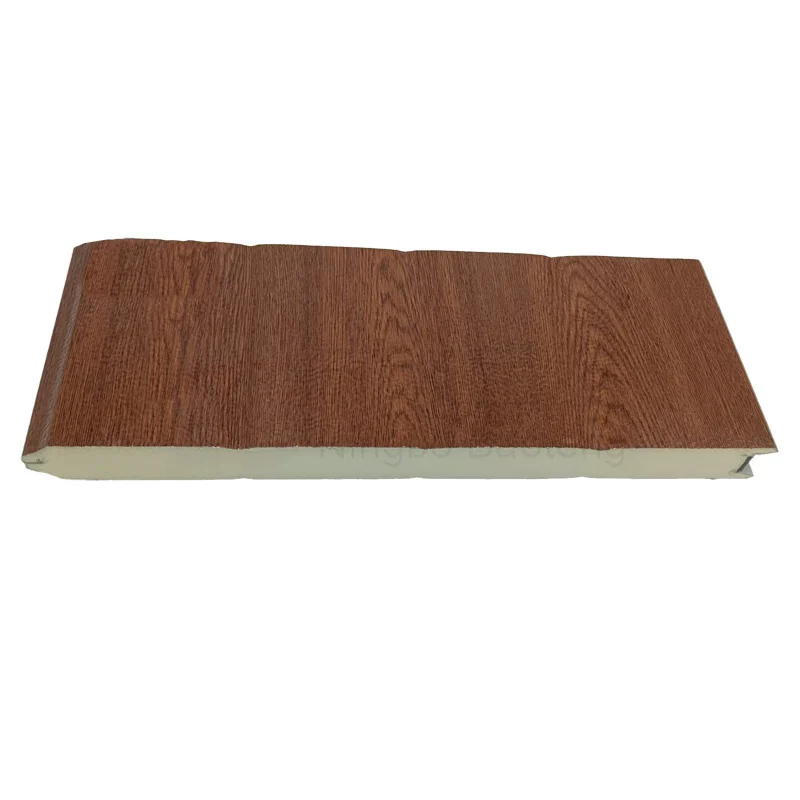
セクショナル・ガレージ・ドア・パネル

Engineering Summary: Sectional overhead doors, widely used in industrial and commercial facilities, consist of multiple rigid panels interconnected by hinge assemblies that enable the door to follow curved track paths during operation. These articulation points must endure extensive mechanical cycling, often reaching hundreds of thousands of cycles annually in demanding industrial environments. The repetitive stresses imposed on hinge pins and panel edges introduce complex fatigue phenomena, with articulation fatigue manifesting predominantly as pin loosening—a critical failure mode that undermines door alignment, safety, and operational reliability. The interaction between mechanical loading conditions, material properties, environmental exposure, and articulation geometry governs the long-term performance of these systems. This article examines the mechanical … 続きを読む

ガレージドアのローラーがきしむのはなぜ?ナイロン素材のひずみを解消する方法

How Do You Fix a Squeaky Garage Roller Door? Decoding Polymer Stress and Lubricant Incompatibility Author: baoteng Reference Standard: Evaluated under ASTM D6779 for Polyamide Extrusion Tolerance and ISO 12945-2 for Dynamic Load Resistance. Short Answer A squeaking and cracking garage door roll is rarely just a basic lubrication issue; it is a symptom of severe environmental stress cracking (ESC) caused by incompatible petrochemical lubricants attacking the Nylon 6/6 polymer chains, combined with injection molding residual stress. To permanently eliminate the noise and structural failure, engineers must replace standard units with high-precision injection-molded nylon wheels integrated with true double-sealed ball bearings, ensuring structural integrity even under severe temperature fluctuations and … 続きを読む