
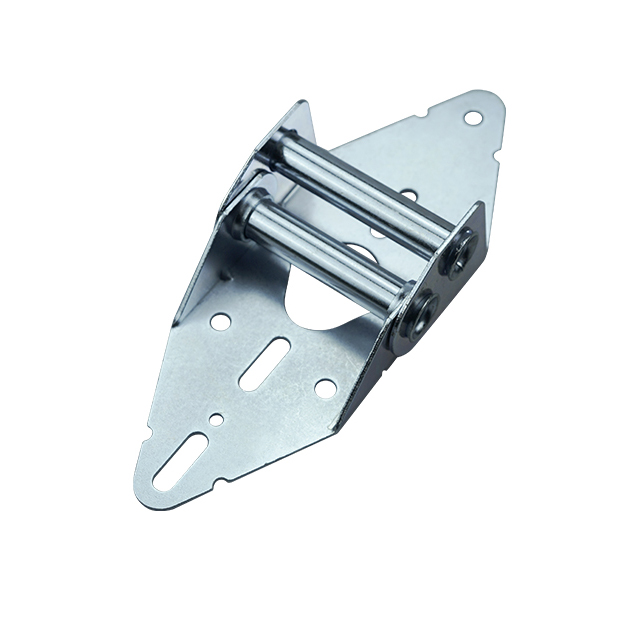
Sectional-Hinge Stress Analysis for Reliable Commercial Garage Door Hinges
Ensuring the reliability of commercial garage door hinges is fundamental for the safe and efficient operation of sectional door systems. By focusing on stress dispersion and articulation management, designers can extend hinge service life and minimize fatigue-related failures in demanding commercial environments.
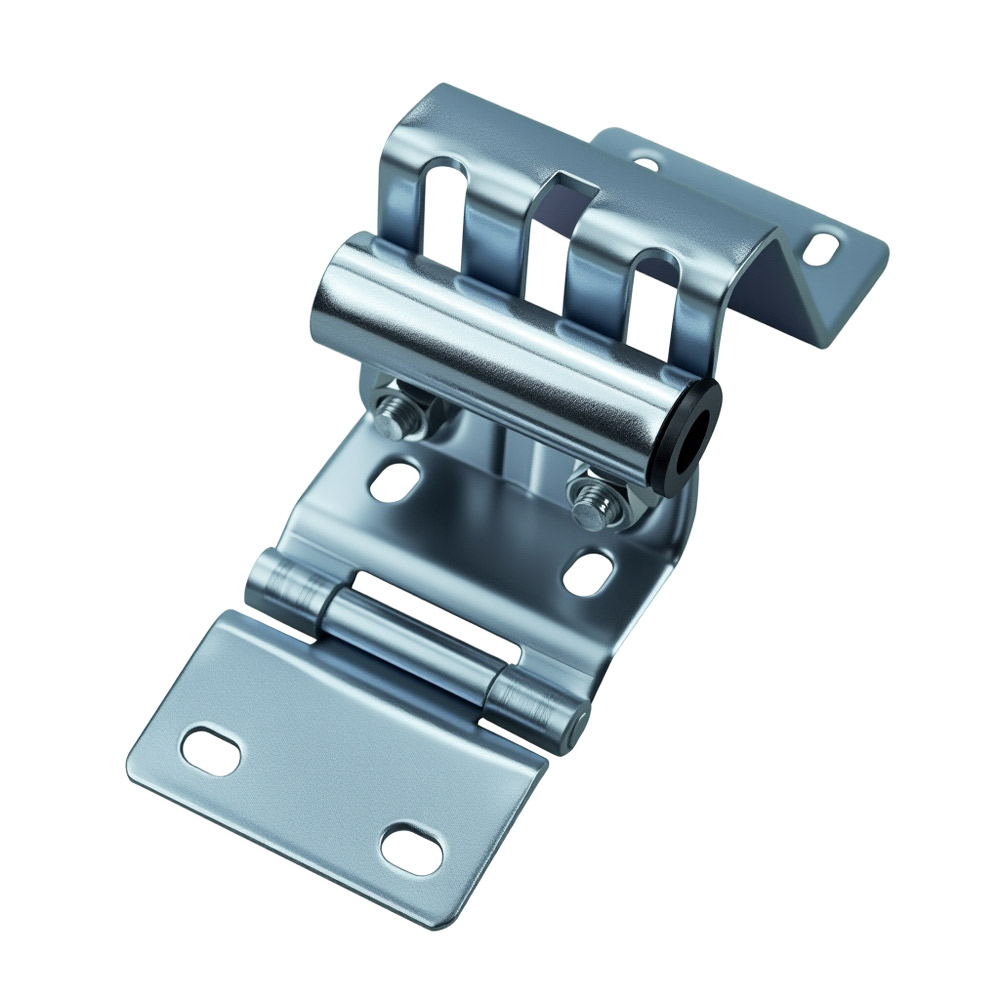
In the context of commercial sectional doors, the mechanical reliability of garage door hinges is a critical factor influencing system integrity, operational life, and maintenance cycles. For designers focused on heavy-duty applications, the articulation at each sectional joint introduces complex stress patterns, particularly under frequent cycling and variable loading. The challenge lies in ensuring that hinge components effectively disperse articulation-induced stresses, minimizing concentration points that can lead to fatigue failure. This analysis provides a technical evaluation of commercial garage door hinges, emphasizing the mechanisms of sectional articulation, the engineering principles behind stress dispersion, and the structural considerations necessary to enhance hinge durability in demanding environments.
Commercial garage door hinges serve as the primary link between adjacent door panels, allowing controlled articulation as the door transitions along its track. The typical sectional door comprises multiple horizontal panels, each joined by a series of hinges positioned at specific intervals. These hinges are subjected to repeated bending, shear, and sometimes torsional forces as the door opens and closes. The articulation mechanism is designed to accommodate the radius of the track, enabling each panel to rotate relative to its neighbor while maintaining alignment and load transfer.
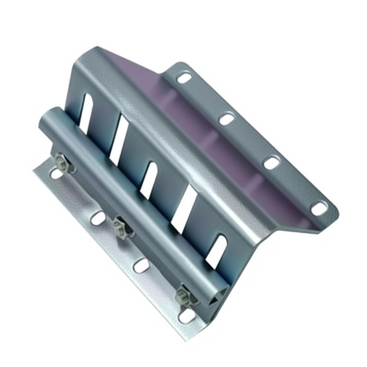
From a structural engineering perspective, the hinge must balance flexibility for smooth articulation with sufficient rigidity to resist deformation under load. Most commercial hinges are fabricated from stamped or formed steel, often galvanized for corrosion resistance. The gauge of the steel, hinge geometry, and the quality of the knuckle and pin assembly directly influence the hinge’s ability to distribute stresses over a larger area, reducing the likelihood of localized yielding or crack initiation.
The interface between the hinge leaves and the door panels is a critical zone for stress transfer. Fastener patterns, hole placement, and reinforcement features such as ribs or embossments are engineered to spread applied loads and prevent stress risers. Inadequate design in these regions can result in premature fatigue, particularly at the fastener holes where cyclic loading can cause microcracking and eventual failure.
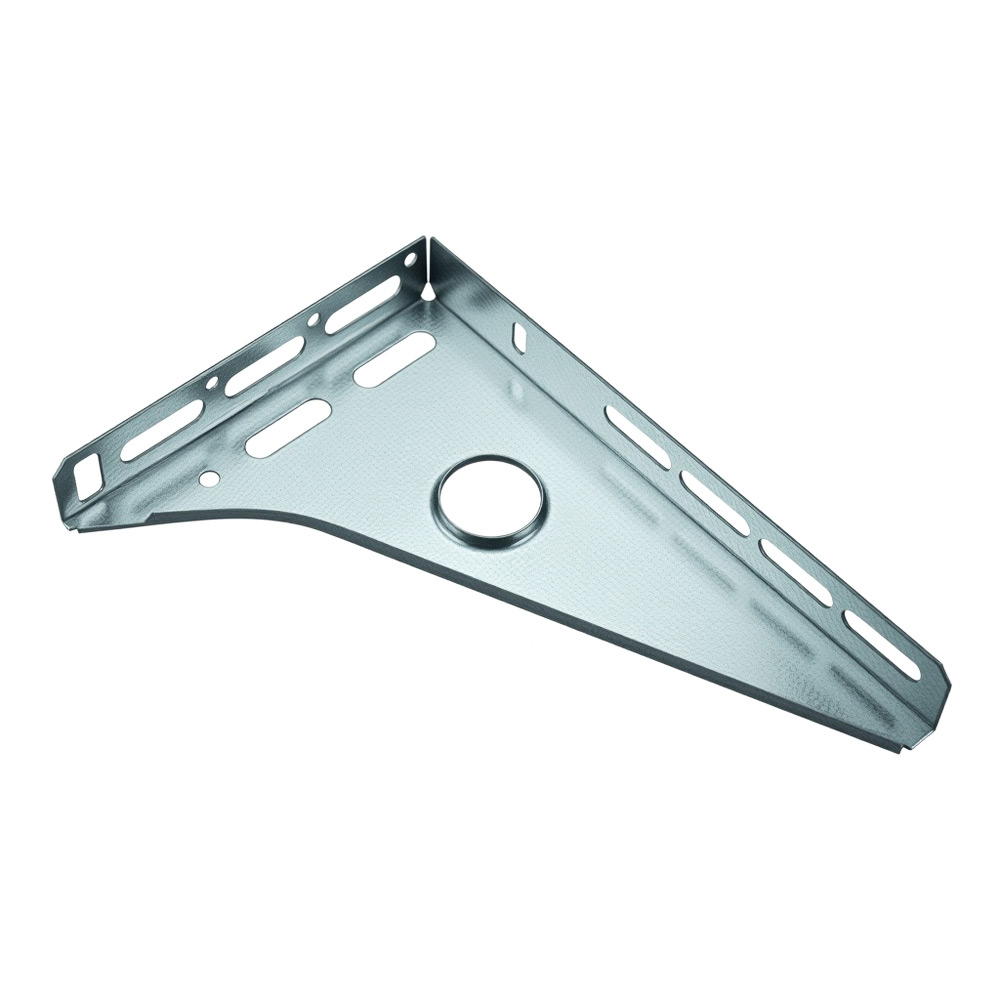
Reliability in commercial garage door hinges is fundamentally tied to their capacity to manage repeated articulation without loss of structural integrity. The primary failure mode observed in high-cycle environments is fatigue fracture, typically originating at points of stress concentration such as sharp corners, undersized knuckles, or improperly aligned fastener holes. To mitigate these risks, hinge designs incorporate features that promote stress dispersion. For example, radiused transitions between hinge leaves and knuckles reduce local stress intensities, while increased knuckle diameter distributes bending moments more evenly.
Material selection also plays a pivotal role in reliability. High-strength, low-alloy steels are preferred for their superior fatigue resistance and toughness. Surface treatments, such as galvanization or powder coating, provide additional protection against environmental degradation, which can exacerbate fatigue by introducing corrosion pits that serve as crack initiation sites. In some advanced designs, bushings or bearings are integrated into the hinge knuckle to reduce friction and wear during articulation, further extending service life.
The evaluation of hinge reliability extends beyond material and geometric considerations to include the operational context of the door system. Commercial installations often experience higher cycling rates, increased panel mass, and greater exposure to environmental fluctuations compared to residential counterparts. As a result, hinges must be validated through accelerated life testing, simulating the full range of articulation and loading conditions anticipated in service. Finite element analysis (FEA) is frequently employed during the design phase to model stress distribution across the hinge assembly under dynamic loads. These simulations help identify potential weak points and inform design modifications before physical prototyping.
Empirical evaluation involves both laboratory testing and field monitoring. Laboratory tests typically involve cyclic loading rigs that replicate the articulation sequence of a sectional door, measuring parameters such as hinge deflection, pin wear, and the onset of material fatigue. Field data, collected from in-service doors, provide real-world feedback on hinge performance, capturing the effects of installation variability, maintenance practices, and unanticipated load cases.
A key aspect of technical evaluation is the identification and quantification of stress concentration factors (SCFs) in the hinge design. SCFs are influenced by geometric discontinuities, material inhomogeneities, and assembly misalignments. Reducing SCFs is essential for prolonging hinge lifespan, as even minor increases in local stress can dramatically accelerate fatigue crack growth. Best practices include the use of generous radii at all transitions, avoidance of sharp notches, and precise alignment of fastener holes with the neutral axis of the hinge leaf.
In addition to static and fatigue strength, wear resistance is a significant consideration. The repetitive sliding and rotational motion between hinge components can lead to material loss, increased clearances, and ultimately, functional failure. Engineering solutions such as case-hardened pins, self-lubricating bushings, and periodic lubrication schedules are employed to mitigate wear-related degradation.

For door system designers, the core pain point remains the prevention of stress concentration and fatigue failure at the hinge locations. Addressing this challenge requires a comprehensive approach, integrating material science, mechanical design, and empirical validation. Design decisions must be informed by a clear understanding of the articulation kinematics, the magnitude and direction of applied loads, and the interaction between hinge components and adjoining panels.
Installation practices further influence hinge reliability. Proper torque application to fasteners, alignment of hinges with respect to the door track, and verification of panel flatness all contribute to minimizing unintended stress concentrations. Inadequate installation can negate even the most robust hinge design, underscoring the importance of engineering-grade standards for both component specification and assembly procedures.
Periodic inspection and maintenance protocols are also vital. Regular checks for signs of deformation, loose fasteners, or abnormal wear patterns enable early detection of potential failures. Lubrication intervals should be established based on operational frequency and environmental exposure, with attention to the compatibility of lubricants with hinge materials and protective coatings.
Ensuring long-term reliability of commercial garage door hinges
In summary, the mechanical reliability and structural integrity of commercial garage door hinges are governed by a complex interplay of design, material selection, manufacturing quality, and operational context. For door system designers prioritizing durability, the articulation of sectional panels presents unique challenges in stress management and fatigue prevention. Adherence to engineering best practices—ranging from optimized hinge geometry and material treatments to rigorous testing and installation protocols—is essential for achieving long service life and minimizing maintenance demands.
To ensure that commercial garage door hinges meet the necessary standards for reliability and stress dispersion, it is imperative to verify all hinge parameters against engineering-grade criteria. This includes reviewing material certifications, dimensional tolerances, fatigue test results, and installation guidelines. Only through systematic technical validation can the risk of stress concentration and fatigue failure be effectively controlled in commercial sectional door systems.
For more details on hinge engineering and related door hardware, refer to our 技術仕様書 そして インストレーション・チュートリアル for commercial garage door systems.
 English
  Русский
  日本語
日本語  한국어
한국어  Français
  Deutsch
  العربية
  Português
  Español