
Mechanical Performance and Durability Assessment of Low-Noise Rollers in Overhead Door Mechanisms
Introduction
Rollers are fundamental components in overhead door systems, facilitating the controlled vertical and horizontal movement of door panels along tracks. Their mechanical behavior directly impacts operational smoothness, noise generation, and the overall longevity of the door assembly. In environments sensitive to vibrations and acoustic disturbances—such as residential buildings with strict noise regulations or facilities housing precision equipment—the demands on roller design intensify. Quiet rollers must balance low friction and minimal noise emissions with sufficient robustness to endure repetitive dynamic loads over extended service periods. This analysis focuses on the mechanical performance and failure mechanisms of these rollers, emphasizing bearing wear as the primary cause of increased rolling resistance, the influence of environmental factors typical of vibration-sensitive installations, and the application of standardized endurance testing protocols to validate their reliability.
Mechanical Principles & Load Behavior
Rollers in overhead door systems are subjected to complex loading conditions that include radial loads from the door’s weight, axial forces arising from door misalignment or track curvature, and dynamic impacts during acceleration and deceleration phases. The internal bearing assemblies—often deep-groove ball bearings or needle roller bearings—serve to convert sliding friction into rolling friction, significantly reducing the torque required to move the door panels. This friction reduction is crucial for both manual operation ease and the efficiency of motorized door openers.
Quiet rollers typically incorporate precision bearings manufactured from high-carbon chromium bearing steel such as AISI 52100, known for its high hardness and fatigue resistance. These bearings are engineered with tight internal clearances and optimized preload to minimize vibration and noise while maintaining structural rigidity. The bearing races and rolling elements undergo heat treatment and surface finishing processes to enhance wear resistance and reduce micro-pitting under cyclic loading.
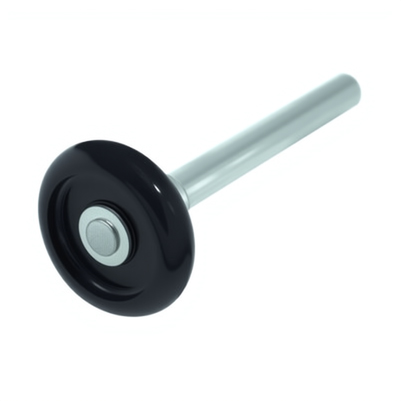
The roller wheels themselves are commonly fabricated from polymers like nylon or polyurethane. These materials provide a compliant interface with the metal track, attenuating micro-vibrations and reducing acoustic emissions. Their low coefficient of friction and inherent wear resistance help prevent metal-to-metal contact, a frequent source of noise and accelerated wear. However, polymer properties must be carefully selected to withstand environmental factors such as temperature fluctuations and chemical exposure without significant degradation.
Load distribution within the roller assembly is critical to maintaining door alignment and minimizing uneven wear. Track misalignment or deformation can introduce uneven loading on the bearings and polymer wheels, leading to localized stress concentrations. Such conditions increase the risk of premature bearing fatigue and polymer wheel deformation. Proper bearing preload and lubrication regimes are essential to balance low rolling resistance with the stiffness necessary to accommodate these variable loads without compromising noise reduction.
Track surface finish also plays a significant role in roller performance. A smooth, well-maintained track surface reduces micro-slip and stick-slip phenomena at the roller-track interface, which are common contributors to noise generation. Additionally, consistent contact between the roller and track under dynamic conditions prevents lateral displacement that could degrade door alignment and accelerate component wear.
Failure Modes
Primary Failure: Bearing Wear Leading to Increased Rolling Resistance
The most prevalent failure mode in quiet rollers is progressive bearing wear, which manifests as an increase in rolling resistance and noise output. Bearing degradation primarily results from fatigue spalling of the races and rolling elements, lubricant breakdown, and contamination ingress. Over time, these factors alter internal bearing clearances, causing uneven rotation and vibration that elevate operational noise and increase the torque required to move the door.
Fatigue spalling originates from cyclic contact stresses exceeding the material’s endurance limit, leading to microscopic cracks that propagate and cause material flaking. Lubricant deterioration, accelerated by heat generation and contamination, reduces the protective film between rolling elements and races, increasing metal-to-metal contact and wear rates. Contaminants such as dust, grit, or moisture can infiltrate the bearing assembly, abrading surfaces and promoting corrosion, which further compromises bearing integrity.
In vibration-sensitive installation sites, the failure progression can be exacerbated by ambient vibrations transmitted through the door assembly. These vibrations amplify bearing fatigue stresses and accelerate lubricant degradation. The resulting increase in rolling resistance not only raises noise levels but also imposes higher loads on the door operator motor, potentially leading to premature motor failure or increased manual effort.
Secondary Failure: Polymer Wheel Deformation and Track Surface Damage
Secondary failure modes involve the deformation or wear of the polymer roller wheels. Under cyclic loading, especially when uneven loads or impact events occur, polymer wheels can develop flat spots, surface cracks, or abrasive wear. Such defects disrupt uniform contact with the track, causing misalignment, increased noise, and higher rolling resistance.
Track surfaces may also sustain damage from embedded contaminants within the polymer wheels or from metallic debris generated by bearing wear. These surface irregularities—scratches, indentations, or corrosion pits—increase rolling resistance and noise while accelerating wear on replacement rollers. The interaction between wheel deformation and track damage can create a feedback loop that diminishes overall system reliability and increases maintenance requirements.
Environmental Effects: Corrosion and Vibration in Sensitive Installations
Environmental conditions typical of vibration-sensitive installations impose additional challenges on roller durability. Elevated humidity, exposure to road salts, industrial pollutants, or chemical contaminants can induce corrosion in bearing steel and degrade polymer materials. Corrosion compromises bearing surfaces and lubricant chemistry, accelerating wear and increasing rolling resistance.
Vibrations transmitted through the door structure intensify bearing fatigue by increasing cyclic stress amplitudes beyond nominal design levels. This effect accelerates spalling onset and lubricant breakdown, reducing bearing service life. Polymer wheels exposed to ultraviolet radiation or chemical attack may experience embrittlement or swelling, further compromising performance.
Mitigating these effects requires careful material selection and protective design features. Bearings fabricated from stainless steel or coated with corrosion-resistant layers (e.g., zinc, nickel, or specialized polymer coatings) exhibit enhanced resistance in aggressive environments. Sealed bearing designs prevent ingress of moisture and contaminants, preserving lubricant integrity and reducing maintenance frequency. Polymer wheels must be selected for resistance to UV exposure, chemical degradation, and temperature extremes to maintain mechanical properties over time.
Testing Standards & Validation
Validation of quiet roller performance and durability relies on adherence to established testing standards that simulate real-world operating conditions. The ASTM F2200 standard outlines endurance testing protocols for garage door hardware, including cyclic loading representative of door start-stop cycles and variable load conditions. This standard evaluates bearing wear progression, rolling resistance changes, and noise generation over extended operational cycles, providing quantitative data on roller longevity under simulated field conditions.
ANSI A156.10 specifies performance requirements for rolling door hardware, encompassing mechanical endurance, alignment retention, and noise limits. Compliance with ANSI standards ensures that rollers maintain functional integrity and low acoustic emissions throughout their service life, critical for vibration-sensitive environments.
UL 325 addresses safety and operational performance of door operators, incorporating assessments of smoothness and noise that indirectly validate roller quality. Testing under UL 325 includes verification of door movement consistency and resistance to binding, which depend heavily on roller condition.
Validation procedures often employ vibration analysis and acoustic measurements to quantify noise reduction effectiveness. These diagnostic techniques are particularly important in vibration-sensitive installations, confirming that rollers do not introduce unacceptable mechanical noise or resonance. Monitoring rolling resistance during endurance testing enables early detection of bearing wear, facilitating timely maintenance or design refinement.
Application & Integration
Successful integration of low-noise rollers into overhead door assemblies requires meticulous attention to load distribution, alignment tolerances, and environmental conditions. Engineers must select rollers with bearing specifications and polymer materials tailored to the specific application to ensure sustained operational stability and noise control.
Quiet rollers typically feature tighter manufacturing tolerances and enhanced sealing systems to prevent contamination ingress. Correct installation ensures minimal vibration transmission through the door frame, preserving alignment and reducing maintenance frequency. In vibration-sensitive installations, specifying corrosion-resistant bearings and sealed designs is essential to mitigate environmental degradation and maintain consistent performance.
Lubrication practices must be carefully managed, employing lubricants compatible with both polymer wheels and bearing materials. Excessive lubrication or incompatible lubricants can increase rolling resistance or degrade polymer components, negating the benefits of quiet roller design. Routine inspection and maintenance schedules are vital to detect early signs of bearing wear or polymer deterioration before they impact door operation.
Engineers must also consider the interplay between roller diameter, track profile, and door weight. Larger diameter rollers reduce rolling resistance and wear by distributing loads over a greater contact area but may require track modifications or increased clearances. Conversely, smaller rollers can increase noise and accelerate wear due to higher contact stresses. Balancing these factors is critical to optimizing door performance, noise levels, and component longevity.
The mechanical performance and durability of low-noise rollers in overhead door systems depend on precise bearing design, appropriate material selection, and resilience to environmental stresses typical of vibration-sensitive installations. Bearing wear leading to increased rolling resistance remains the primary failure mode, directly influencing noise levels and operational effort. Secondary failures involving polymer wheel deformation and track damage further compromise system reliability. Compliance with endurance test standards such as ASTM F2200 and ANSI A156.10 ensures that rollers meet stringent durability and noise requirements. For engineers, integrating these components demands a comprehensive understanding of load behavior, environmental impacts, and maintenance protocols. Properly engineered garage door quiet rollers contribute significantly to smooth, quiet operation and extended service life, enhancing overall system dependability in sensitive applications.
This analysis was reviewed by a Senior Garage Door Hardware Engineer with practical field experience under vibration-sensitive installation site operating conditions, with validation focused on bearing wear / rolling resistance increase in accordance with endurance test compliance requirements.
In practical field applications, engineers treating garage door quiet rollers as a safety-critical interface typically combine finite-life fatigue predictions, scheduled inspection intervals, and conformance to endurance test plus relevant ANSI, ASTM, and UL requirements to keep risk within acceptable limits under vibration-sensitive installation site loading profiles.

 English
  Русский
  日本語
日本語  한국어
한국어  Français
  Deutsch
  العربية
  Português
  Español