
Reliability of ball bearing roller and nylon wheels for garage doors
Smooth and reliable operation of sectional garage doors is fundamentally dependent on the performance of their rolling components. For door alignment engineers, the technical behavior of ball bearing rollers combined with nylon wheels is critical, especially in scenarios where sliding and rolling efficiency directly affect system stability and acoustic performance. Addressing the persistent challenge of noise and friction control, this analysis explores the rolling-friction mechanics of these components, focusing on their role in maintaining alignment and minimizing operational disturbances. The discussion follows a structured approach, beginning with the core construction of the ball bearing roller and nylon wheel assembly, moving through their reliability in real-world door systems, and culminating in a technical evaluation of their rolling and noise characteristics. The final section emphasizes the necessity of parameter verification to ensure compliance with engineering safety and performance standards.
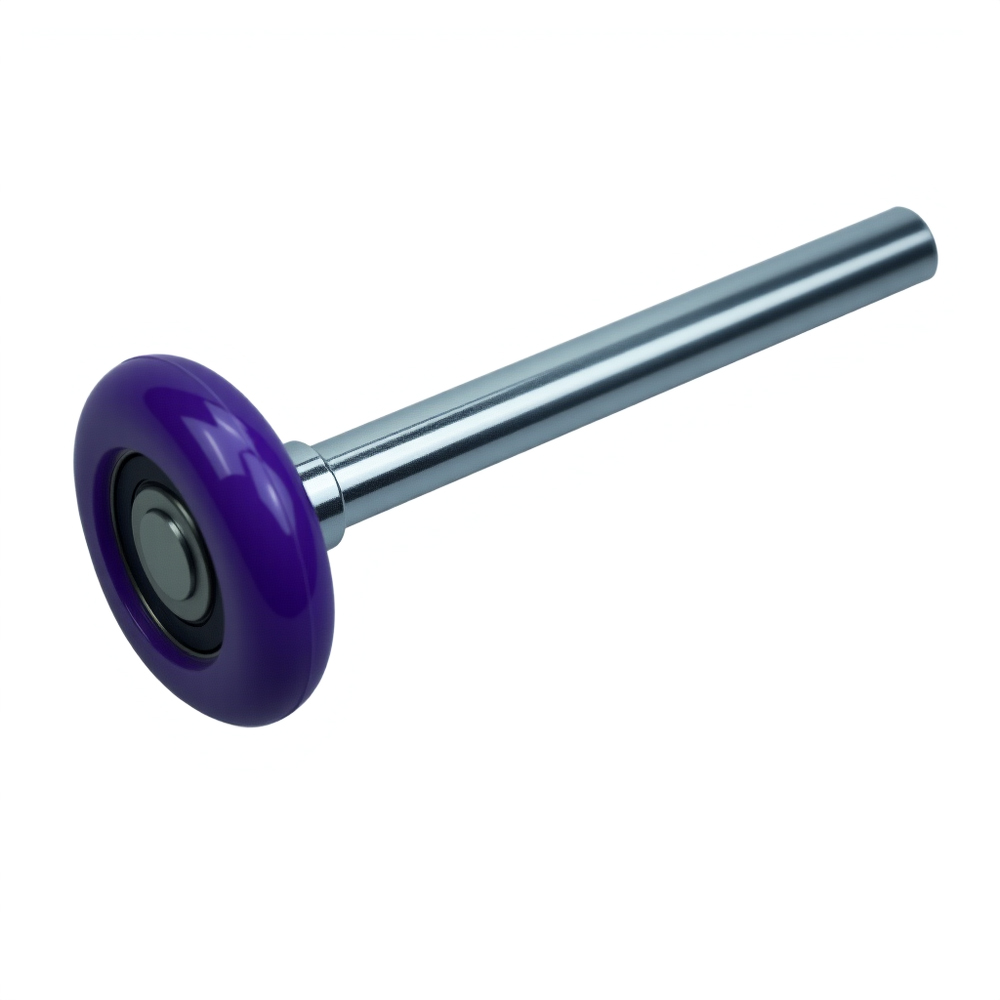
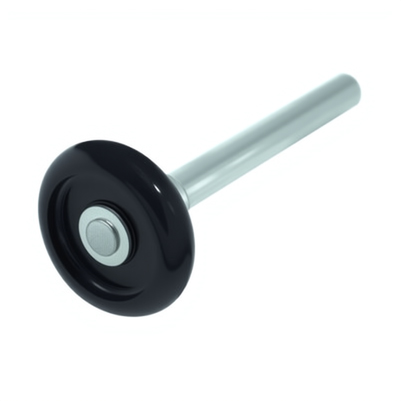
The ball bearing roller and nylon wheel assembly is engineered to optimize the interface between the moving door panels and the fixed track system. The roller typically consists of a hardened steel inner and outer race, precision steel balls, and a sealed or shielded enclosure to contain lubricants and exclude contaminants. The wheel, molded from high-density nylon, is press-fitted or mechanically locked onto the roller’s outer race. This composite structure is designed to minimize rolling resistance while withstanding the dynamic loads imposed by the door’s mass and movement cycles.
The choice of nylon as the wheel material is deliberate. Nylon exhibits a low coefficient of friction against galvanized or stainless steel tracks, reducing the energy required for door movement. Its inherent damping properties serve to absorb vibrational energy, contributing to noise attenuation during operation. The ball bearing mechanism, meanwhile, isolates rotational motion from lateral and axial loads, ensuring that rolling friction remains the dominant resistance rather than sliding friction, which is typically associated with higher wear and noise.
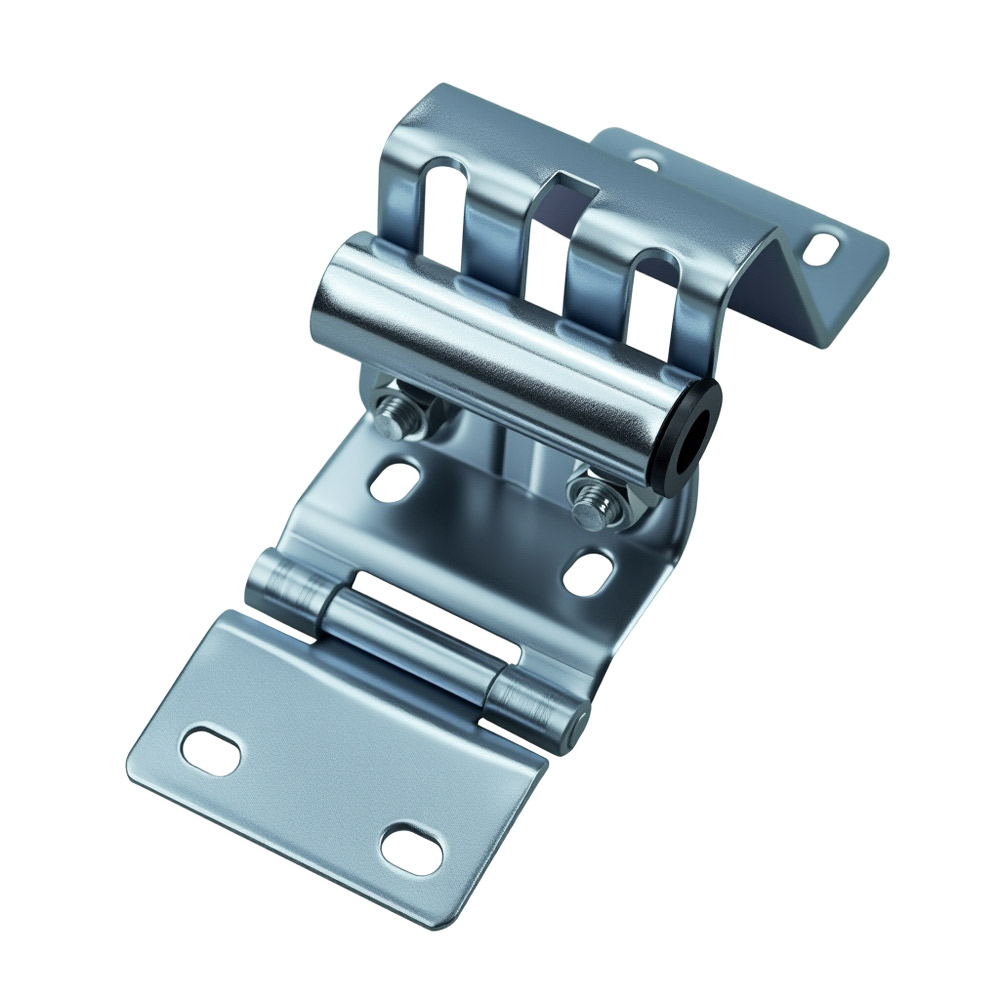
From a mechanical perspective, the rolling interface is subjected to both radial and thrust loads as the door transitions along curved and straight track segments. The ball bearing’s internal geometry is optimized to distribute these loads uniformly across the raceways, reducing localized stress concentrations that can lead to premature failure or increased friction. The nylon wheel’s profile is engineered to match the track’s curvature, ensuring continuous contact and alignment, which is essential for smooth sliding and minimized lateral play.
Material selection for the ball bearings themselves is another critical factor. High-carbon chromium steel is typically used for the balls and races due to its fatigue resistance and dimensional stability under cyclic loading. The lubricant, often a lithium-based grease, is selected for its ability to maintain viscosity across a wide temperature range, further reducing friction and wear. The enclosure—either a metal shield or a synthetic seal—prevents ingress of dust and moisture, preserving the integrity of the rolling surfaces.
Evaluation of rolling friction and alignment stability
Reliability in garage door operation is directly linked to the sustained performance of the ball bearing roller and nylon wheel assembly. Door alignment engineers must account for the cumulative effects of load cycles, environmental exposure, and installation tolerances on these components. A primary concern is the gradual increase in rolling resistance over time, often manifested as increased noise or erratic door movement. This is typically caused by lubricant degradation, contamination ingress, or deformation of the nylon wheel due to sustained compressive loads.
To ensure reliability, the interface between the nylon wheel and the steel track must remain free of debris and corrosion. Even minor surface irregularities can induce micro-vibrations, which propagate as audible noise and contribute to wear. The ball bearing’s seal integrity is equally important; compromised seals allow particulate ingress, leading to abrasive wear of the raceways and balls, which elevates friction and noise output.
Another dimension of reliability is the system’s ability to maintain door alignment throughout its service life. Misalignment, whether due to track deformation or uneven wear of the wheel, introduces side loads that the ball bearing is not designed to accommodate. This results in increased sliding friction, higher energy input for door movement, and a marked rise in operational noise. Periodic inspection and precise installation are therefore essential to maintain the intended rolling mechanics.
Environmental factors also influence reliability. Exposure to temperature extremes can affect both the nylon’s dimensional stability and the lubricant’s viscosity. In cold conditions, nylon may become brittle, increasing the risk of surface cracking under load. In high temperatures, lubricant breakdown accelerates, reducing its effectiveness and increasing metal-to-metal contact within the bearing. Engineers must specify materials and lubricants rated for the expected environmental conditions to mitigate these risks.
Technical evaluation of the rolling-friction behavior centers on quantifying the coefficient of rolling friction and its impact on energy losses and noise generation. The rolling resistance of a properly lubricated ball bearing roller with a nylon wheel is typically in the range of 0.001–0.002, significantly lower than that of plain or bushing-type rollers. This low rolling resistance translates to smoother door movement and reduced actuation force, whether manual or motorized.
Noise reduction is achieved through two primary mechanisms: the damping effect of nylon and the minimization of metal-to-metal contact within the bearing. As the wheel rolls along the track, the nylon absorbs high-frequency vibrations generated by surface imperfections, preventing their transmission to the door structure and surrounding environment. The sealed ball bearing further isolates rotational motion, preventing stick-slip phenomena that are common sources of squeaks and rattles in less advanced roller designs.
Empirical testing confirms that the use of ball bearing rollers with nylon wheels can reduce operational noise by up to 7–10 dB compared to all-metal or bushing-based alternatives. This is particularly significant in residential applications where noise abatement is a core requirement. The reduction in friction not only improves acoustic performance but also extends component life by minimizing heat generation and material wear.
Alignment stability is another critical parameter. The concentricity of the nylon wheel relative to the ball bearing axis must be maintained within tight tolerances—typically less than 0.1 mm of runout—to prevent oscillatory motion that can compromise both noise performance and door tracking. Advanced manufacturing techniques, such as precision injection molding and automated bearing assembly, are employed to achieve these tolerances consistently.
For engineers focused on system optimization, it is essential to verify that the rolling components meet specified parameters for load capacity, friction coefficient, and noise emission. This involves both laboratory testing and field validation under representative loading and environmental conditions. Any deviation from design parameters should prompt immediate investigation, as even minor increases in friction or noise can indicate underlying issues with material degradation, misalignment, or contamination.
In summary, the integration of ball bearing rollers and nylon wheels in garage door systems represents a highly engineered solution to the persistent challenges of noise and friction control. The rolling mechanics, material selection, and assembly precision collectively determine the system’s ability to deliver smooth, quiet, and reliable operation over extended service intervals. Door alignment engineers must prioritize regular inspection, precise installation, and parameter verification to maintain optimal performance.
Ensuring compliance and long-term performance
For engineering-grade safety and operational compliance, it is recommended to verify all relevant parameters—including rolling resistance, noise levels, alignment tolerances, and seal integrity—at both the component and system levels. Only through rigorous technical validation can the long-term reliability and noise reduction objectives of modern garage door systems be consistently achieved.
For further technical documentation and installation guidelines on ball bearing roller and nylon wheels for garage doors, refer to the Baoteng technical documentation or explore インストレーション・チュートリアル for best practices in system optimization.
 English
  Русский
  日本語
日本語  한국어
한국어  Français
  Deutsch
  العربية
  Português
  Español