
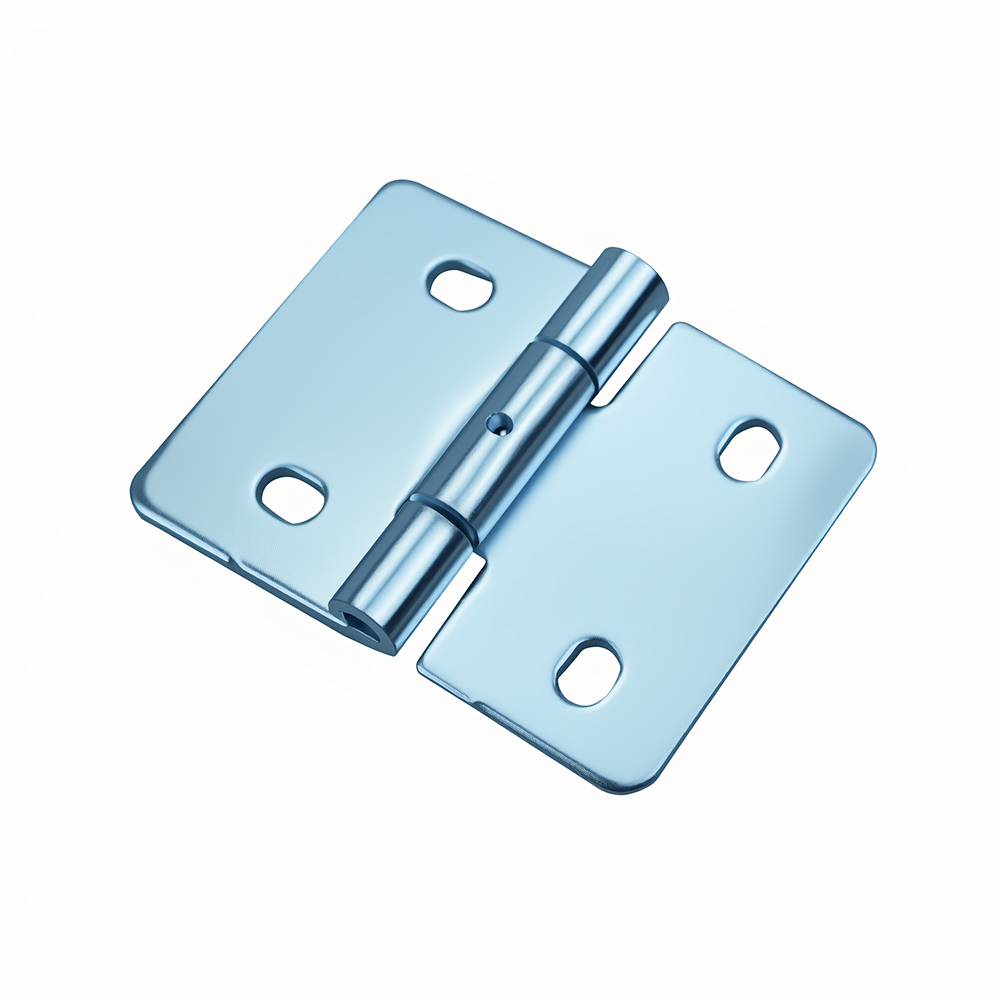
Reliability of industrial door hinges and metal gate hinges heavy duty
Industrial door systems, particularly those employing sectional articulation, rely heavily on the mechanical integrity of their hinge assemblies. For door system designers, the selection and evaluation of industrial door hinges and heavy-duty metal gate hinges are critical to ensuring operational reliability and long-term durability. These hinges serve as the primary load-transferring elements during repeated opening and closing cycles, where localized stresses and fatigue phenomena can dictate the service life of the entire assembly. This article provides a focused technical assessment of hinge performance under sectional-movement conditions, emphasizing the mechanisms of stress dispersion, the challenges of fatigue failure, and the evaluation methodologies necessary for engineering-grade reliability.
In industrial and commercial environments, door and gate assemblies are often subjected to high-frequency operation, variable load conditions, and exposure to environmental factors. The articulation points—where hinges are installed—become the focal zones for stress accumulation, particularly in sectional doors where each panel must articulate smoothly relative to its neighbors. The mechanical specialist’s perspective is essential to dissect how hinge geometry, material selection, and installation practices influence the dispersion of stress and the mitigation of fatigue-related failures.
Evaluation of fatigue and stress in industrial door hinges
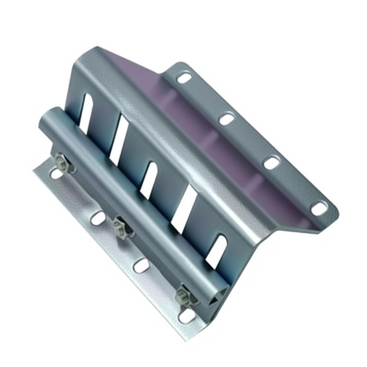
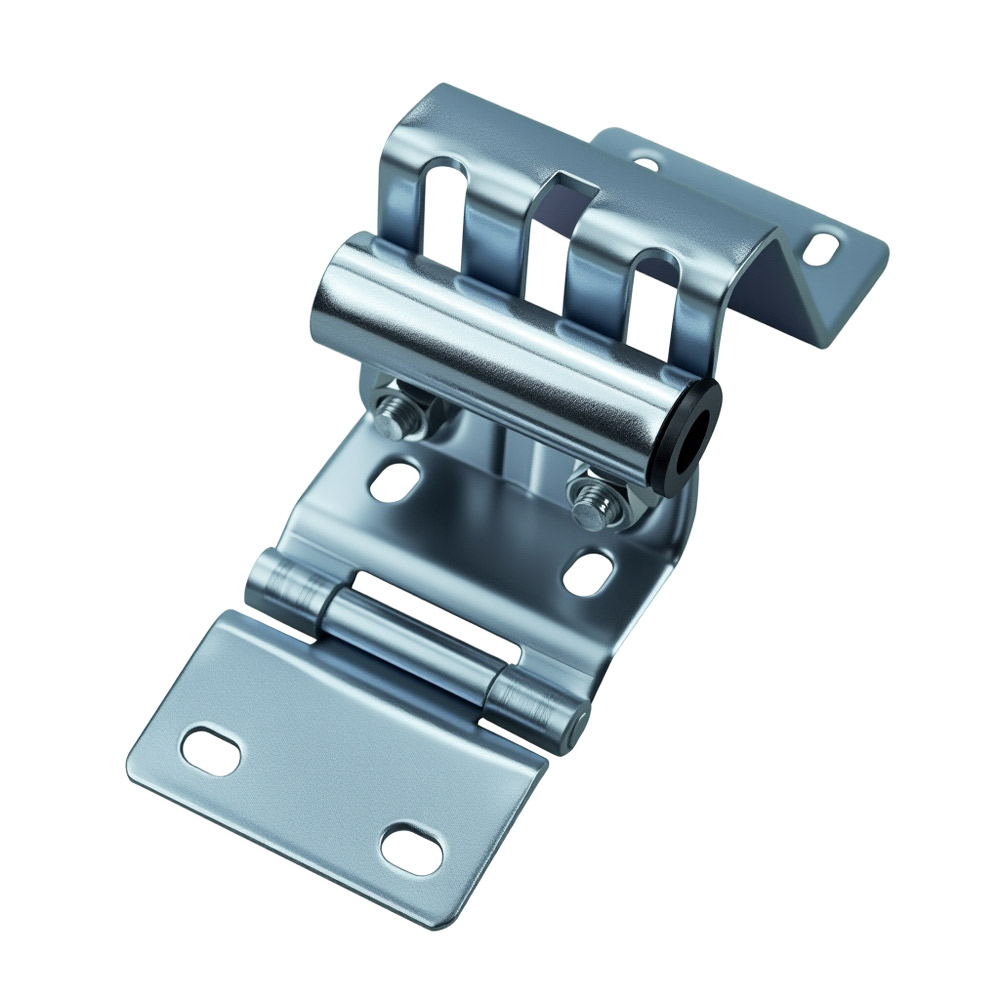
The reliability of industrial door hinges and heavy-duty metal gate hinges is rooted in their capacity to manage cyclical loads without succumbing to premature fatigue. Sectional doors, by design, require hinges that can accommodate both rotational and translational movement while maintaining precise alignment between panels. The articulation process induces complex loading regimes, including bending moments, shear forces, and localized bearing stresses at the hinge knuckle and mounting interfaces.
From a structural fatigue efficiency standpoint, the hinge must dissipate these stresses across its geometry and into the adjoining door structure. The hinge leaf thickness, pin diameter, and knuckle length are all engineered to optimize load paths and minimize peak stress concentrations. For heavy-duty applications, materials such as hot-rolled steel, stainless steel, or alloyed metals are specified for their superior yield strength and fatigue resistance. Surface treatments—such as galvanization or powder coating—are employed to further enhance corrosion resistance, which is a critical factor in maintaining mechanical properties over extended service intervals.
A recurring pain point in the design of sectional door systems is the tendency for stress concentration at the hinge-to-panel interface. This interface often becomes the origin of fatigue cracks, especially when the fastener pattern or weldment does not adequately distribute the imposed loads. Finite Element Analysis (FEA) is commonly employed to model these interfaces, allowing engineers to visualize stress gradients and identify regions susceptible to crack initiation. The analysis typically reveals that sharp transitions, undersized fasteners, or insufficient backing plates can exacerbate stress risers, reducing the effective fatigue life of the hinge assembly.
To counteract these issues, best practices dictate the use of elongated hinge leaves with staggered fastener patterns, radiused corners, and reinforcement plates on both the hinge and the door panel. The hinge pin, a critical load-bearing component, must be sized to prevent excessive deflection and wear. In heavy-duty metal gate hinges, the pin is often case-hardened or manufactured from high-carbon steel to resist brinelling and galling under repetitive motion. Lubrication channels or grease fittings may be integrated to reduce friction and dissipate heat, further improving fatigue efficiency.
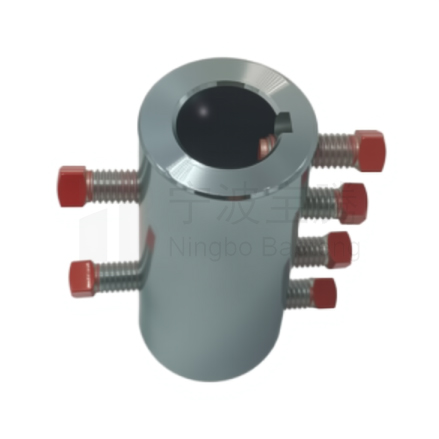
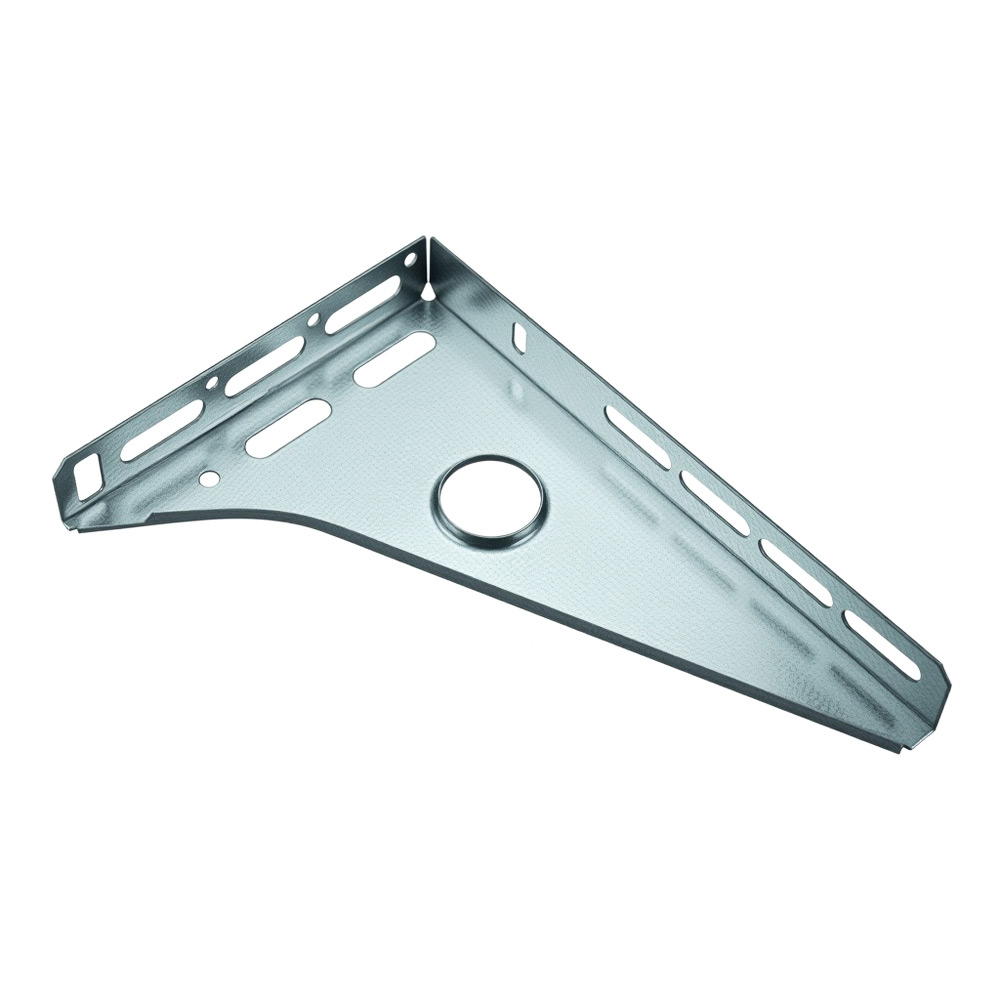
The evaluation of hinge reliability in the context of sectional articulation requires a rigorous approach encompassing both laboratory testing and field validation. Cyclic loading tests, conducted in accordance with standards such as ASTM E2069 or EN 1935, provide quantitative data on the number of cycles to failure under controlled conditions. These tests simulate the full range of motion and loading scenarios encountered in real-world operation. For door system designers, the critical metric is the hinge’s fatigue limit—the maximum stress amplitude it can withstand for a specified number of cycles without crack formation.
In addition to fatigue testing, hinge assemblies are subjected to static overload tests to verify their ultimate load-bearing capacity. The results inform the selection of safety factors, which are typically set between 2.5 and 4.0 for industrial door applications, depending on the criticality of the installation and the consequences of hinge failure. It is essential to correlate laboratory data with field observations, as environmental factors such as temperature fluctuations, humidity, and airborne contaminants can accelerate wear and degrade material properties.
A comprehensive evaluation also considers the articulation characteristics of the sectional door system. The hinge must allow for smooth, low-resistance movement of each panel relative to its neighbors, minimizing binding and misalignment. Articulation stress is influenced by the hinge’s rotational axis alignment, the precision of its mounting, and the uniformity of fastener torque. Any deviation from optimal installation can introduce secondary stresses, leading to premature fatigue or catastrophic failure. For this reason, installation procedures must specify alignment jigs, torque specifications, and periodic inspection intervals.
The structural fatigue efficiency of a hinge is not solely a function of its material properties or geometric design; it is also determined by the quality of its assembly and maintenance. Door system engineers must implement regular inspection protocols to detect early signs of wear, such as pin elongation, knuckle deformation, or surface pitting. Non-destructive testing methods, including dye penetrant inspection and ultrasonic thickness measurement, are valuable tools for assessing the integrity of hinge components without disassembly.
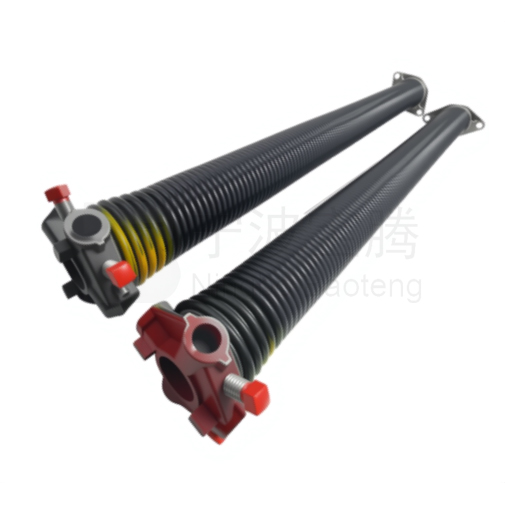
In summary, the technical evaluation of industrial door hinges and heavy-duty metal gate hinges in sectional articulation systems centers on their ability to disperse stresses efficiently and resist fatigue under cyclic loading. The core pain point—stress concentration and fatigue failure—can be mitigated through careful attention to hinge geometry, material selection, fastener strategy, and installation precision. Door system designers must prioritize the use of engineering analysis tools, such as FEA and cyclic testing, to validate hinge performance under realistic operating conditions.
To ensure the reliability of hinge assemblies in industrial sectional doors, it is imperative to verify all hinge parameters against engineering-grade safety checks. This includes confirming material specifications, dimensional tolerances, fastener patterns, and lubrication provisions. Field data should be systematically compared with laboratory results to detect any discrepancies that could indicate unforeseen stress concentrations or fatigue risks. Only through a disciplined, technical approach can the long-term performance and safety of industrial door systems be assured.
Further resources for industrial door hinge reliability
For more detailed engineering standards and technical documentation on industrial door hinges and metal gate hinges heavy duty, refer to Baoteng’s technical documentation そして 国際資格. For installation best practices and maintenance guidance, see the インストレーション・チュートリアル section.
 English
  Русский
  日本語
日本語  한국어
한국어  Français
  Deutsch
  العربية
  Português
  Español