
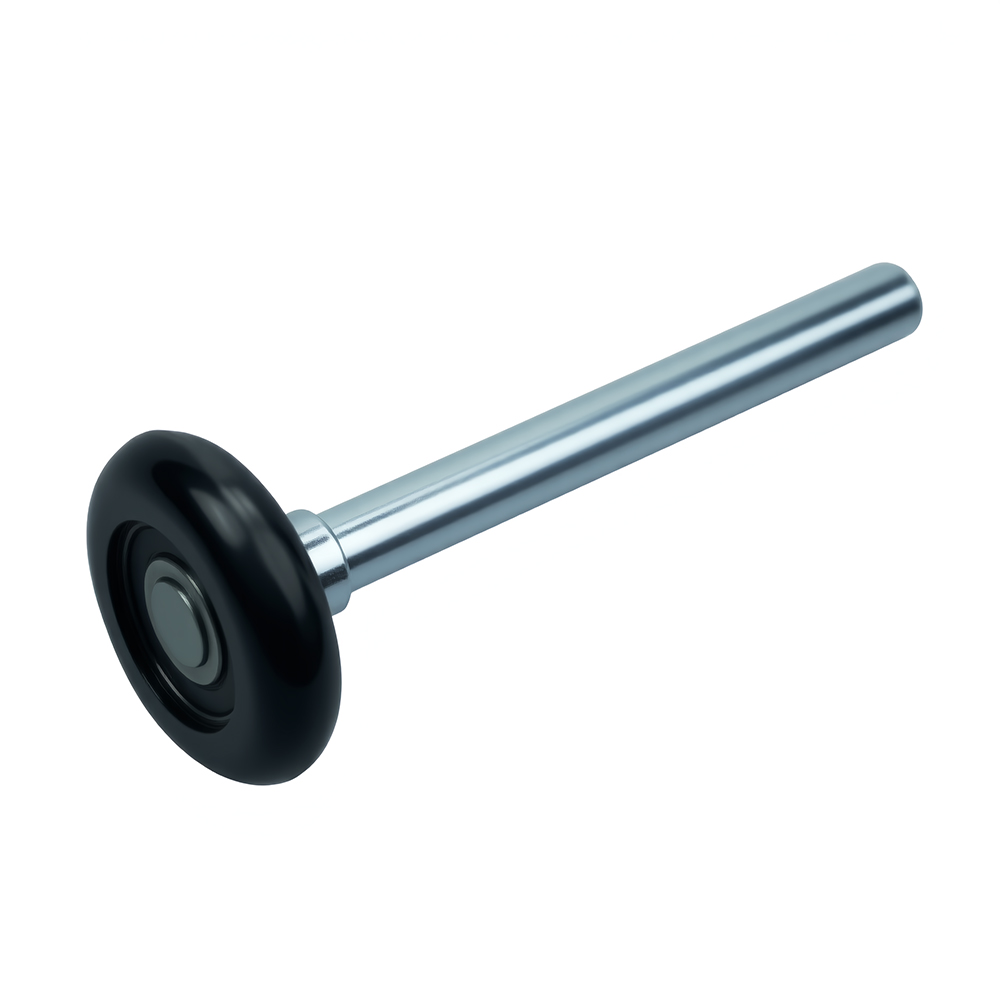
Bearing-Stability Engineering for Steel Wheel Roller Noise and Friction Control
Reliable sliding door alignment hinges on the engineering of steel wheel roller and ball bearing pulley wheel assemblies. By focusing on rolling-friction dynamics and bearing stability, engineers can achieve quieter operation and longer-lasting performance in demanding environments.
This article explores how steel wheel roller and ball bearing pulley wheel systems contribute to noise reduction, friction management, and overall durability—key factors for optimal sliding door alignment.
Reliability of Steel Wheel Roller and Ball Bearing Pulley Wheel Systems
Precision in sliding door alignment relies heavily on the mechanical behavior of steel wheel rollers and ball bearing pulley wheels. In environments where door alignment engineers are tasked with minimizing operational noise and controlling friction, the selection and evaluation of these components become critical. The interplay between rolling friction, bearing stability, and long-term durability directly impacts system reliability. This analysis investigates the engineering aspects of steel wheel rollers and ball bearing pulley wheels, with a focus on their rolling-friction characteristics, reliability under operational loads, and methods for technical evaluation. The objective is to provide a structured, technical perspective that addresses the core pain point of noise and friction control, while maintaining an objective standard for bearing stability and durability in sliding and rolling alignment systems.
Steel wheel rollers and ball bearing pulley wheels are fundamental to the mechanical architecture of sliding door systems. Their primary function is to facilitate smooth, low-resistance movement along tracks, ensuring precise door alignment and minimizing wear on both the rolling element and the track interface. The steel wheel roller typically comprises a machined or cold-formed steel outer wheel, often with a hardened running surface, mounted on a central hub. The ball bearing pulley wheel integrates precision ball bearings within the hub, encapsulated by the steel wheel, to further reduce rolling resistance and enhance rotational stability.
Material selection for both the wheel and the bearing is a critical determinant of performance. High-carbon or alloy steels are commonly used for the wheel, providing the necessary hardness and resistance to deformation under load. The ball bearings themselves are generally manufactured from chrome steel (AISI 52100) or stainless steel, offering a balance between fatigue resistance, corrosion protection, and dimensional stability. The bearing races are precision-ground to maintain tight tolerances, which is essential for minimizing radial and axial play—directly influencing alignment accuracy and noise generation.
The interface between the steel wheel roller and the track is a primary site of rolling friction. Rolling friction is influenced by surface roughness, contact area, wheel hardness, and the presence of lubrication. Ball bearing pulley wheels are designed to isolate the rotational motion of the wheel from the axle, thereby reducing frictional losses that would otherwise arise from sliding contact. This separation is achieved by the rolling action of the balls between the inner and outer races, which significantly decreases energy dissipation compared to plain bearing designs.
Noise generation is intrinsically linked to rolling friction and bearing stability. Imperfections in the bearing races, contamination, or inadequate lubrication can result in micro-slip, vibration, and resonance, all of which contribute to operational noise. For door alignment engineers, controlling these variables is essential for achieving silent and smooth door operation. The use of shielded or sealed ball bearings can mitigate the ingress of dust and debris, preserving the integrity of the rolling elements and extending service life.
Reliability in steel wheel roller and ball bearing pulley wheel systems is fundamentally a function of bearing stability under dynamic loading. Bearing stability refers to the ability of the bearing assembly to maintain its geometric and mechanical properties over time, despite repeated loading cycles, thermal expansion, and environmental exposure. Factors that influence bearing stability include the quality of the bearing material, precision of the raceway machining, assembly tolerances, and the adequacy of lubrication.
Under typical sliding door loads, the bearing must resist not only radial forces from the weight of the door but also axial loads resulting from misalignment or side thrusts. Excessive play or deformation in the bearing assembly can lead to misalignment, increased friction, and accelerated wear. For this reason, engineers often specify bearings with higher dynamic and static load ratings than the minimum required by the application, introducing a safety margin to account for unforeseen stresses.
Durability is closely tied to the bearing’s ability to maintain low rolling friction and minimal noise output over extended service intervals. Fatigue failure in the bearing races or rolling elements is a primary mode of long-term degradation. This is typically initiated by micro-pitting, spalling, or brinelling, which can be accelerated by inadequate lubrication or contamination. Engineers must therefore ensure that lubrication regimes are compatible with the operational environment—using greases or oils with appropriate viscosity and additives to maintain a stable lubricating film between the rolling elements and raceways.
Environmental factors such as humidity, temperature fluctuations, and exposure to corrosive agents can further impact bearing durability. Stainless steel bearings may be specified in high-humidity or corrosive environments to prevent rust and maintain surface integrity. Additionally, the use of labyrinth seals or contact seals can provide an additional barrier against contaminant ingress, preserving the rolling interface and reducing the risk of noise-inducing defects.
The evaluation of steel wheel roller and ball bearing pulley wheel systems in sliding door applications requires a systematic approach. Engineers must assess both the initial installation parameters and the in-service performance characteristics. Key metrics include rolling resistance (measured as the coefficient of rolling friction), noise levels (quantified in decibels under standard load and speed conditions), and bearing temperature rise during operation. These parameters are typically evaluated through a combination of laboratory testing and field measurements.
Rolling resistance testing involves applying a known load to the wheel assembly and measuring the force required to initiate and sustain motion along a representative track section. This provides direct insight into the efficiency of the bearing system and the quality of the wheel-track interface. Lower rolling resistance correlates with reduced energy consumption and less heat generation, both of which are desirable for long-term reliability.
Noise evaluation is conducted using precision microphones placed at strategic locations near the rolling interface. Engineers analyze the frequency spectrum of the emitted noise to identify sources such as bearing race defects, misalignment, or inadequate lubrication. Persistent high-frequency noise often indicates localized defects or contamination, while low-frequency rumble may be symptomatic of excessive radial play or wheel eccentricity.
Thermal evaluation is also essential, as excessive heat generation within the bearing can accelerate lubricant breakdown and material fatigue. Infrared thermography or embedded temperature sensors can be employed to monitor bearing temperature during operation, providing early warning of lubrication failure or impending bearing degradation.
In-service inspection protocols should include periodic checks for axial and radial play, visual inspection for surface wear or corrosion, and verification of seal integrity. Engineers may also employ vibration analysis to detect early-stage bearing defects before they manifest as noise or friction increases. This predictive maintenance approach allows for timely intervention, reducing the risk of catastrophic bearing failure and unplanned downtime.
For door alignment engineers, the core challenge remains the control of noise and friction while ensuring long-term system reliability. This requires a rigorous approach to bearing selection, installation, and maintenance. When specifying steel wheel rollers and ball bearing pulley wheels, engineers must verify that the bearing parameters—such as dynamic load rating, limiting speed, and seal type—are appropriate for the specific application environment and load profile. Tolerances must be tightly controlled during installation to prevent misalignment, which can exacerbate both friction and noise.
It is recommended that all bearing assemblies undergo a thorough engineering review prior to deployment. This includes cross-referencing manufacturer data with in-house test results, confirming compliance with relevant industry standards (such as ABEC or ISO bearing classifications), and ensuring that lubrication and sealing solutions are matched to the operational context. Regular monitoring and data logging of rolling resistance, noise, and temperature can provide actionable insights for ongoing optimization.
In summary, the technical evaluation of steel wheel roller and ball bearing pulley wheel systems must prioritize bearing stability and durability, with a particular emphasis on rolling-friction behavior and noise control. By implementing structured testing, precise installation, and proactive maintenance protocols, door alignment engineers can ensure that sliding door systems achieve optimal performance and longevity. For engineering-grade safety compliance, it is imperative to verify all bearing parameters, validate installation quality, and continuously monitor in-service performance against established benchmarks.
For further technical details on steel wheel rollers, ball bearing pulley wheels, and related sliding door hardware, refer to the Baoteng Rollers そして 技術文書 sections.
Optimizing Sliding Door Performance with Steel Wheel Roller and Ball Bearing Pulley Wheel Engineering
By focusing on bearing stability, rolling-friction management, and noise control, engineers can ensure that steel wheel roller and ball bearing pulley wheel systems deliver reliable, quiet, and long-lasting sliding door operation. For best results, always combine rigorous technical evaluation with regular maintenance and reference trusted resources such as 技術仕様 そして インストール・チュートリアル from Baoteng.
 English
  Русский
  日本語
日本語  한국어
한국어  Français
  Deutsch
  العربية
  Português
  Español