
Эталонный стандарт: Relevant material and performance testing standards should be confirmed for the buyer’s specific application because the available catalog evidence does not identify a particular standard for the listed carriage hardware.
A гайка каретного болта request can become ambiguous when the bolt diameter, thread notation, length, nut type, or finish is omitted. The catalog evidence provides one clearly identified galvanized carriage bolt entry, BT-S909, together with separate inch-size carriage hardware entries. The safest way to source these items is to preserve each verified record exactly and avoid assuming that nearby bolt and nut descriptions automatically form a compatible pair.
BT-S909 Carriage Bolt and Flange Nut: Verified Fields
The strongest product-specific record is BT-S909. It is listed as a carriage bolt and is shown or labeled with a flange nut. The size is given as M8×16, also stated as 8 mm×16 mm, and the finish is оцинкованный. Those fields are sufficient to identify the catalog entry in an inquiry without adding dimensions or properties that the evidence does not provide.
For a buyer, the practical value of this record is not that it answers every fit question. Its value is that it establishes a clean starting point. A useful RFQ line can preserve four distinct facts: the model reference BT-S909, the component description carriage bolt with flange nut, the size M8×16 / 8 mm×16 mm, and the оцинкованное покрытие. Keeping those items together reduces the chance that a supplier or purchasing team interprets a generic “carriage bolt nut” request as a different diameter, length, nut style, or finish.
The evidence does не provide a complete nut thread specification for the BT-S909 flange nut. It also does not state the carriage-bolt head geometry, material grade, strength grade, coating thickness, dimensional tolerance, torque rating, load rating, or service-life data. These should therefore remain confirmation fields rather than being treated as established BT-S909 specifications.
Ningbo Baoteng Technology Co., Ltd. is identified in the supplied company context as a producer of hardware accessories and OEM products for garage doors, industrial doors, commercial doors, and residential doors. Buyers can use the company’s garage door hardware site as the publisher context while keeping the technical inquiry anchored to the exact catalog record.
Keep Metric and Inch Carriage Hardware Records Separate
The additional door-hardware-kit entries use inch notation and should be read as separate specification records. One entry lists Carriage Bolts: 1/4 in.-20 tpi × 5/8 in. Another lists Carriage Nuts/Bolts: 3/8 in.-16 tpi × 1 in. The evidence confirms that these descriptions and dimensions appear in the kit record, but it does not establish that they are one matched bolt-and-nut combination.
That boundary is especially important because the stated diameters and thread counts are different. A buyer should not infer compatibility merely because the two entries appear near one another or share carriage-hardware terminology. The safe reading is simpler: preserve the 1/4 in.-20 tpi × 5/8 in. record as its own listed carriage-bolt specification, and preserve the 3/8 in.-16 tpi × 1 in. record as its own carriage nuts/bolts specification.
| Catalog reference type | Verified description | Verified size notation | What not to assume |
|---|---|---|---|
| BT-S909 | Carriage bolt with flange nut | M8×16 / 8 mm×16 mm | Unlisted nut thread, grade, tolerance, or strength |
| Door-hardware kit entry | Carriage Bolts | 1/4 in.-20 tpi × 5/8 in. | That it mates with the separate 3/8 in.-16 entry |
| Door-hardware kit entry | Carriage Nuts/Bolts | 3/8 in.-16 tpi × 1 in. | That it is interchangeable with BT-S909 or the 1/4 in. entry |
The same caution applies to conversions. The catalog already gives BT-S909 in metric form as M8×16 / 8 mm×16 mm, so no additional conversion is needed for the product record. The inch entries should remain in their listed inch notation. Introducing new converted values could make the inquiry look more precise while actually moving it away from the verified source.
Matching assumptions to avoid
- Do not treat the 1/4 in.-20 tpi и 3/8 in.-16 tpi records as a verified mating pair.
- Do not treat the BT-S909 flange nut as having a fully specified thread, grade, or tolerance when those details are not given.
- Do not treat metric and inch catalog entries as interchangeable without model-level confirmation.
Carriage Bolt Nut Details to Write Into an Inquiry
A strong inquiry should copy the verified catalog language before adding any buyer-specific questions. For BT-S909, identify the model, the carriage bolt, the flange nut, the M8×16 / 8 mm×16 mm size, and the оцинкованное покрытие. For the inch-size kit records, preserve 1/4 in.-20 tpi × 5/8 in. и 3/8 in.-16 tpi × 1 in. exactly with their corresponding descriptions.
The goal is to prevent several pieces of information from collapsing into one vague line. “Need carriage bolt nut for garage door” may identify a general category, but it does not identify the exact record. By contrast, a request that includes the verified model or catalog description, diameter/thread notation, length, and finish gives the recipient something concrete to check.
For an existing installation, the inquiry should also make clear whether the buyer is trying to duplicate an existing part or select hardware for a new assembly. That context does not change the catalog facts, but it tells the recipient what must be confirmed. A replacement request may require verification of an existing mating thread and physical fit. A new assembly may require confirmation that the proposed bolt and nut combination is intended to work together in the specific hardware stack.
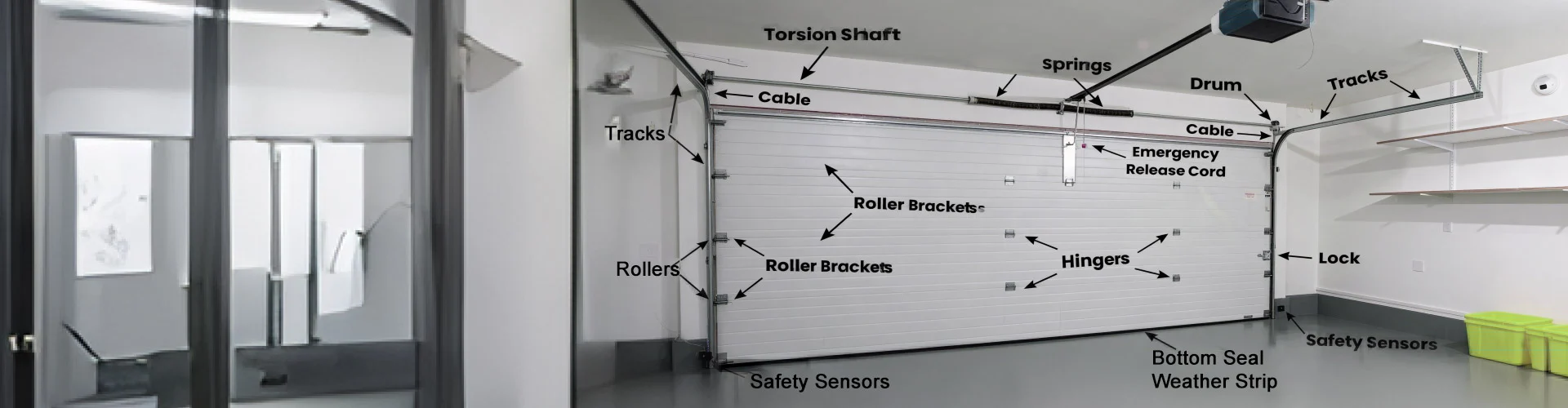
A practical inquiry can therefore include the following fields:
- Catalog identity: BT-S909 or the exact door-hardware-kit entry.
- Component wording: carriage bolt, flange nut, or carriage nuts/bolts exactly as listed.
- Diameter and thread notation: retain the catalog’s metric or inch notation without mixing records.
- Length: state the listed length with the same entry it belongs to.
- Отделка: for BT-S909, retain the verified galvanized finish.
- Matching request: ask for confirmation when a bolt and nut are expected to mate as a set.
- Missing drawing details: request any dimensions, tolerances, grade information, or other fit data required by the buyer’s application if those details are necessary for approval.
This approach is more useful than adding generic fastener terminology because it separates what is known с сайта what still needs confirmation. It also makes quote comparison easier: every supplier response can be checked against the same small set of declared fields rather than against a loosely worded product name.
Confirm These Points Before Bolt-and-Nut Matching
The available evidence does not provide a complete matching table for every carriage bolt and nut entry. It also does not verify universal interchangeability between BT-S909 and the inch-size kit records. Before purchase or assembly, the missing relationship between the intended bolt and nut should therefore be treated as a confirmation task.
Start with the exact intended pair. If the buyer needs BT-S909 as the catalog-listed carriage bolt with flange nut, the inquiry can ask whether the supplied nut is the intended mating nut for that exact BT-S909 configuration and request any additional thread or dimensional data needed for the buyer’s inspection process. If the buyer is working from the inch-size kit entries, the inquiry should keep the 1/4 in.-20 tpi × 5/8 in. и 3/8 in.-16 tpi × 1 in. records separate and ask which nut or bolt counterpart is intended for each entry.
The same rule applies to missing engineering properties. If strength grade, material grade, head dimensions, coating thickness, tolerance, or performance criteria are important to the application, they should be requested rather than assumed. The catalog evidence does not supply those values for the listed items, so a specification sheet, drawing, sample approval, or other supplier confirmation would be the appropriate next step when those characteristics affect acceptance.
This is also where a disciplined RFQ protects against false precision. A purchasing document can look detailed yet still be wrong if it combines dimensions from unrelated records. Exactness is useful only when each value belongs to the correct product entry. Keeping BT-S909, the 1/4-inch carriage-bolt record, and the 3/8-inch carriage nuts/bolts record separate preserves that traceability.
Items to confirm before ordering
- Confirm the exact catalog model or kit line being quoted.
- Keep M8×16, 1/4 in.-20 tpi × 5/8 in., и 3/8 in.-16 tpi × 1 in. attached to their original records.
- Confirm the intended mating bolt and nut instead of inferring a pair from nearby catalog entries.
- Request the nut thread details when they are required for fit approval and not already stated.
- Request any necessary drawing dimensions or tolerances that the catalog does not provide.
- Request material, grade, coating, or performance information only when the application requires those fields, and treat them as unverified until documented.
- Use the оцинкованное покрытие only as a verified BT-S909 finish statement, not as a blanket specification for every carriage hardware entry.
The central sourcing rule is simple: record each verified carriage-hardware entry as its own specification, then ask targeted questions for the missing mating and fit details. That method preserves the evidence, reduces ordering ambiguity, and avoids turning separate metric and inch records into an unsupported compatibility claim.
 English
  Русский
  日本語
日本語  한국어
한국어  Français
  Deutsch
  العربية
  Português
  Español