
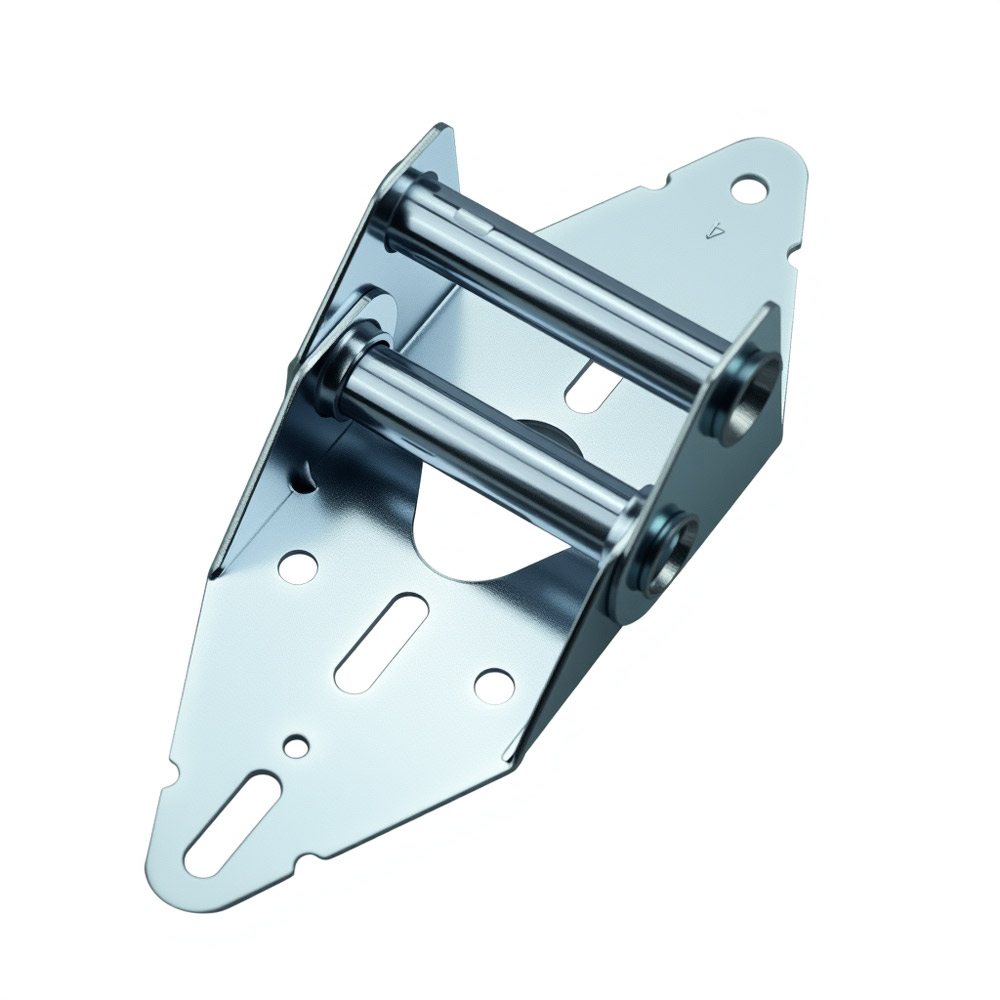
Sectional garage doors rely heavily on middle hinges to provide the necessary articulation between adjacent panels. These hinges must accommodate repeated bending and rotational movements as the door opens and closes, all while maintaining alignment and structural integrity. In industrial environments, where doors may cycle tens of thousands of times weekly, these components are subjected to severe fatigue loading. The combination of high-frequency articulation and mechanical stresses often leads to two predominant failure modes: fatigue cracking due to cyclic bending and pin loosening caused by wear and micro-movements. Understanding the mechanical behavior and fatigue mechanisms of these hinges is critical for engineers tasked with ensuring long-term reliability and safety. This analysis explores the interplay of mechanical loads, material properties, environmental influences, and testing standards that govern the durability of middle hinges under demanding industrial use.
Middle hinges in sectional doors act as pivotal joints that connect individual panels, enabling the door to follow curved tracks during operation. Typically fabricated from medium-carbon steel or alloyed materials, the hinge assembly consists of bracket arms and a central pin that serves as the rotational axis. The mechanical loads imposed on these hinges are complex, combining bending moments, shear forces, and axial loads that vary throughout the door’s motion cycle.
The weight of the door panels exerts a static load, while dynamic forces arise from the door opener’s torque and the acceleration and deceleration phases of movement. These forces induce alternating stresses on the hinge pin, primarily bending and shear, while the bracket arms experience cyclic tensile and compressive stresses. The magnitude of these loads depends on several factors including panel mass, hinge geometry, pin diameter, and the radius of articulation. In high-cycle industrial applications, the hinge may undergo more than 20,000 articulation events per week, subjecting the components to extensive fatigue stress.
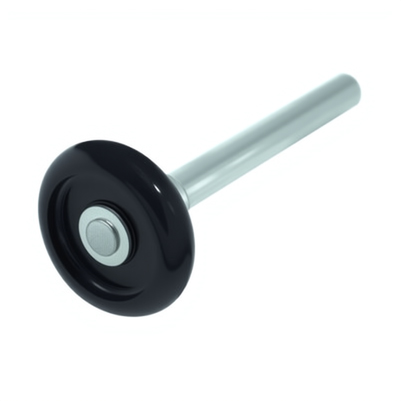
Stress concentrations occur at geometric discontinuities such as pin holes, weld joints, and sharp corners, which serve as initiation points for fatigue cracks. The interface between the pin and bracket is particularly susceptible to micro-movements that cause fretting wear, potentially leading to pin loosening. Material selection is therefore critical; medium-carbon steels with surface hardening treatments like carburizing or induction hardening are common to enhance fatigue resistance and wear performance. The design challenge lies in balancing rigidity to prevent excessive deformation with sufficient compliance to reduce localized stress peaks that accelerate crack initiation.
The dominant failure mode in middle hinges under sustained high-cycle conditions is fatigue cracking induced by repeated bending and rotational stresses. As the hinge cycles, the fluctuating stresses can exceed the material’s endurance limit, especially at stress concentration zones such as the edges of the pin bore or weld transitions. These localized stress risers promote micro-crack initiation, which progressively propagates with continued cycling until structural integrity is compromised.
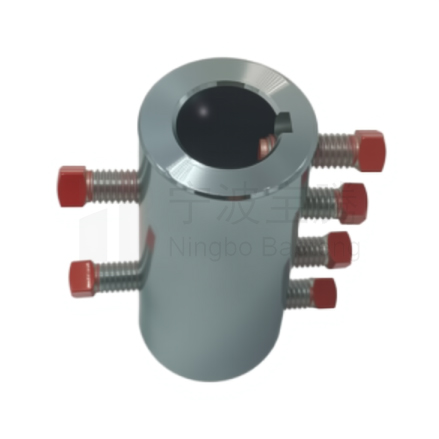
Fatigue cracks typically emerge at the bracket arms or pin bore, eventually causing partial or complete fracture. Early signs of fatigue damage include increased play or looseness in the hinge joint, which disrupts smooth panel articulation and can produce abnormal mechanical noise. If unaddressed, fatigue failure may result in sudden hinge breakage, posing safety risks and operational downtime. Accurate fatigue life prediction requires detailed finite element analysis to map stress distributions combined with material-specific S-N (stress-life) curves that account for the expected load spectrum and environmental conditions.
Pin loosening is a critical secondary failure closely associated with fatigue damage. The repetitive micro-movements at the pin-bracket interface during articulation cause fretting wear, generating debris that degrades retention features such as circlips, set screws, or interference fits. Over time, this wear increases clearance and rotational backlash, undermining the hinge’s ability to maintain precise alignment.
A loose pin leads to uneven load distribution on rollers and tracks, causing binding, increased friction, and accelerated wear of adjacent components. This mechanical inefficiency not only shortens the service life of the door assembly but also increases operational noise and energy consumption. Effective mitigation involves robust retention designs, such as precision interference fits or redundant locking mechanisms, combined with surface treatments that reduce fretting susceptibility. Regular maintenance including lubrication and inspection is essential to detect early signs of pin loosening.
Environmental conditions significantly influence the durability of middle hinges, especially in industrial environments where exposure to moisture, temperature fluctuations, and airborne contaminants is common. Corrosion accelerates fatigue crack growth by creating pits that act as stress concentrators, effectively lowering the fatigue threshold. The presence of corrosive agents such as salts or industrial chemicals exacerbates this effect, demanding corrosion-resistant materials or protective coatings.
Lubricant degradation due to contamination or thermal breakdown increases friction at articulation points, raising wear rates and heat generation. This not only accelerates pin loosening but also promotes premature fatigue failure. Selecting corrosion-resistant alloys, applying surface coatings like zinc plating or powder coating, and implementing rigorous maintenance schedules for lubrication renewal are critical to preserving hinge performance. Environmental sealing or protective enclosures may also be warranted in particularly harsh conditions.
Ensuring the mechanical reliability of garage door middle hinges under high-cycle industrial usage requires validation against established fatigue and safety standards. The ANSI/DASMA 102 standard provides performance criteria for sectional door hardware, emphasizing durability under cyclic articulation loads. Testing protocols simulate accelerated fatigue cycles that replicate real-world operational frequencies and loading magnitudes, yielding data on hinge endurance and failure progression.
UL 325 safety standards further specify requirements for door hardware to guarantee safe operation and resistance to mechanical failure. Fatigue testing under UL 325 evaluates the hinge’s ability to maintain structural integrity and secure pin retention throughout extended cycling, ensuring compliance with safety benchmarks critical for industrial applications.
ASTM F1145 offers standardized methodologies for fatigue testing of mechanical components subjected to fluctuating loads. This standard is adaptable for hinge articulation assessment, enabling measurement of crack initiation and propagation rates under controlled laboratory conditions. Employing non-destructive evaluation techniques such as dye penetrant inspection, ultrasonic testing, and torque monitoring during these tests provides comprehensive insight into hinge performance.
Integrating these standards into a cohesive validation framework ensures that middle hinges meet both functional and safety requirements. Test rigs typically monitor parameters including torque resistance, pin loosening progression, and crack development, providing engineers with actionable data to refine designs and maintenance protocols.
Integrating middle hinges into sectional door assemblies demands precise coordination with door panels, rollers, and track systems to achieve synchronized articulation. The hinge design must accommodate manufacturing tolerances that prevent binding while allowing sufficient rotational freedom for smooth operation. Material compatibility between hinge components and adjacent hardware is essential to minimize galvanic corrosion and reduce wear.
Design considerations must reflect the expected duty cycle, particularly in industrial environments where frequent operation imposes severe fatigue demands. Enhancements such as optimized hinge geometry to reduce stress concentrations, surface hardening treatments to improve fatigue resistance, and secure pin retention mechanisms are necessary. Maintenance strategies should prioritize scheduled lubrication to minimize friction and wear, alongside inspection protocols to detect early signs of pin loosening or fatigue damage.
Ease of inspection and replacement is crucial to minimize downtime. Incorporating features such as torque sensors or wear indicators can provide early warnings of articulation degradation, enabling proactive maintenance interventions. The hinge’s performance directly affects roller alignment and track engagement; excessive play or stiffness increases operational noise and mechanical stress, reducing overall system reliability.
A holistic engineering approach that validates articulation behavior under simulated environmental and load conditions representative of high-cycle industrial usage is essential for ensuring long-term hinge performance.
The long-term reliability of garage door middle hinges in high-cycle industrial environments depends fundamentally on their resistance to articulation fatigue and prevention of pin loosening. Fatigue cracks and retention degradation remain the primary failure modes that compromise door performance and safety. Adherence to fatigue cycle test standards such as ANSI/DASMA 102, UL 325, and ASTM F1145 provides a rigorous framework for validating hinge durability. Environmental factors including corrosion and lubricant degradation critically influence fatigue life and must be addressed through appropriate material selection, protective treatments, and maintenance protocols. From an engineering standpoint, integrating hinges with optimized geometry, robust pin retention, and maintenance-friendly features ensures sustained articulation performance and structural integrity throughout their service life.
This evaluation draws on practical field experience and mechanical fatigue analysis under demanding industrial usage conditions. Reliable garage door middle hinge performance depends on meticulous fastener selection, verified load transfer characteristics, and documented compliance with fatigue cycle test protocols aligned with ANSI, ASTM, and UL standards. Engineering teams responsible for hinge design and validation achieve the most robust outcomes by incorporating high-cycle environmental factors into material choices, substantiating performance through standardized testing, and maintaining traceable validation records consistent with industry expectations.
This analysis was reviewed by a Senior Garage Door Hardware Engineer with practical field experience under high-cycle industrial usage operating conditions, with validation focused on articulation fatigue / pin loosening in accordance with fatigue cycle test compliance requirements.
For engineering teams responsible for garage door middle hinge, the most robust designs are those that explicitly incorporate high-cycle industrial usage environmental factors into material selection, document performance evidence against fatigue cycle test, and maintain traceable validation records that align with ANSI, ASTM, and UL expectations for garage door hardware.

 English
  Русский
  日本語
日本語  한국어
한국어  Français
  Deutsch
  العربية
  Português
  Español