
Перспективы развития рынка прочных подъемных ручек
Эталонный стандарт: Relevant material and performance testing standards, including general dimensional inspection practice, coating visual inspection, and practical fit validation. For broader context, see ASTM International и ISO standards resources.
Краткий ответ
A serious outlook for heavy duty lifting handles begins with evidence discipline. A garage door handle can look simple, yet its real performance depends on the way hand force enters the door skin, how the mounting pattern transfers that force, how the surface survives repeated contact, and how much proof the catalog actually provides. For buyers reviewing garage door hardware supply options, the safest interpretation is not to assume every handle in the same category performs the same way. The confirmed data is narrow but useful: one galvanized lift handle with 5-1/2 inch mounting-hole centers, one industrial black lift handle with 105 mm mounting-hole centers, and two ABS handles identified by material. That is enough to build a practical selection outlook, but not enough to promise certified lifting capacity.
When a Lift Handle Becomes the First Manual Recovery Point
A lift handle often becomes important when the powered system is not the main actor. During a power interruption, service inspection, spring adjustment preparation, track cleaning, or temporary manual movement, the handle becomes the first recovery point that receives human input. In that moment, the user does not think about catalog categories. The user pulls, guides, stabilizes, or repositions the door. This is why the handle should be reviewed as a force-entry interface, not merely as a visible accessory.
The catalog-confirmed models create three evidence levels. BT-L705 provides a specific mounting reference, with Расстояние между центрами монтажных отверстий — 5½ дюйма, and it is identified with a оцинкованное покрытие. BT-L706 is listed with Расстояние между центрами монтажных отверстий — 105 мм. BT-L707 и BT-L708 are listed as ABS handles. These facts support a basic recovery-point discussion, but they do not prove a maximum pulling load. The absence of a stated pull-force value matters because a manual recovery point is exposed to uneven human behavior: a slow controlled pull, a one-hand side pull, a sharp tug, or a pull made while the door is already misaligned.

A useful edge-case model is the interrupted opening sequence. Imagine a door stopped between closed and mid-height, with a user trying to guide it back into motion. The handle is not only pulled outward; it may be pulled upward, diagonally, and slightly twisted. At the start, the handle and fastener area may only show small movement. In the middle stage, repeated pulls can concentrate stress around mounting holes and bends. At the extreme stage, the door skin or handle interface may begin to show looseness, especially if the mounting center does not match the panel preparation or if the handle material is used outside its intended duty range.
A cross-dimensional comparison helps separate visual similarity from recovery reliability. A galvanized metal handle such as the confirmed BT-L705 route may be more relevant where surface abrasion and humidity are expected, because galvanized surfaces generally resist oxidation better than untreated steel. An ABS handle such as BT-L707 or BT-L708 may be more suitable where lightweight molded grip identity, lower corrosion concern, and controlled manual contact matter. These are not strength rankings. They are material-context differences based on confirmed material and finish identity.
ОСНОВНЫЕ ВЫВОДЫ
- Early handle movement around the mounting area can appear before obvious breakage.
- Surface scratches on galvanized parts should be reviewed before rust marks spread.
- ABS whitening, cracking, or deformation can indicate stress concentration or unsuitable exposure.
Two Measurement Languages Hidden in the Same Handle Category
A future-proof lifting-handle page should treat measurement language as a documentation risk. The catalog contains both an inch-based and a metric-based mounting reference: BT-L705 uses 5-1/2 inch mounting holes on centers, в то время как BT-L706 uses 105 mm mounting holes on centers. These figures should not be merged into a single interchangeable claim. They belong to different model descriptions, and no drawing in the supplied data confirms shared hole diameter, screw type, base shape, or panel interface.
In practical procurement, the same product category may be recorded in different ways by different teams. A maintenance crew may describe an old handle by the distance between visible screw centers. A buyer may write an item name based on a catalog model. A warehouse may store the part under a legacy description. A supplier may quote a model number without a side-view drawing. The risk is not only measurement error; it is measurement-language drift. Once one team says 5-1/2 inch and another records 105 mm, the conversation can move forward while the actual panel interface remains unverified.
An edge extreme model is the mixed-record spare-part file. In the initial stage, a buyer receives a photo of an old door handle and a rough center-to-center measurement. In the middle stage, the purchasing file converts that into a catalog request without confirming whether the panel holes, screw seating area, and handle base geometry match. In the extreme stage, a batch arrives with a visually acceptable handle, but the installed part introduces uneven stress because the panel was prepared for a different spacing or geometry. The failure is not caused by a single number alone; it is caused by assuming that a number is a full installation definition.
| Confirmed catalog item | Confirmed measurement identity | What it supports | What it does not prove |
|---|---|---|---|
| BT-L705 Ручка для подъема | Расстояние между центрами монтажных отверстий — 5½ дюйма | Inch-based model recognition | Hole diameter, screw type, load rating |
| BT-L705 Ручка для подъема | Оцинкованное покрытие | Surface identity review | Zinc thickness or salt-spray duration |
| BT-L706 Промышленная ручка для подъема, черная | Расстояние между центрами монтажных отверстий — 105 мм | Metric-based model recognition | Interchangeability with BT-L705 |
| BT-L707 Черная ручка для подъема | Материал ABS | Material route identification | Pull-force behavior or UV rating |
| BT-L708 Белая ручка для подъема | Материал ABS | Material route identification | Impact grade or long-term creep limit |
A cross-dimensional test case can be built around documentation rather than installation. Compare two receiving inspections: one checks only visual match, while the other records model number, mounting-hole centers, material identity, surface condition, and packaging damage. The second inspection does not magically prove load performance, but it reduces the chance that a 5-1/2 inch record, a 105 mm record, and an ABS material record become mixed into one ambiguous SKU. That is a practical way to reduce future service confusion without inventing unverified specifications.
Surface Identity Before Strength Claims
Surface identity is the safest bridge between catalog data and real-use expectations. The confirmed information says Модель BT-L705 имеет оцинкованное покрытие, в то время как BT-L707 and BT-L708 use ABS material. These are meaningful facts, but they are not the same as certified strength data. A galvanized finish helps define the visible surface route and expected corrosion behavior compared with untreated steel. ABS defines a molded plastic material route with different aging, creep, and surface-wear behavior. Neither statement provides a rated lifting load.
The physical mechanism is straightforward. Metal surfaces exposed to humidity, hand salts, scratches, and dust can gradually lose protective continuity where abrasion breaks the surface layer. If zinc protection is present, it can provide a corrosion-resistance advantage, but the catalog does not state zinc thickness, coating method, or salt-spray hours. ABS behaves differently. It does not rust, but it can experience creep, whitening, cracking, or surface dulling under repeated force, temperature shift, cleaning chemicals, or UV exposure. Without a material grade, impact test, or aging record, the correct wording is not “stronger” or “weaker”; it is different risk boundary.
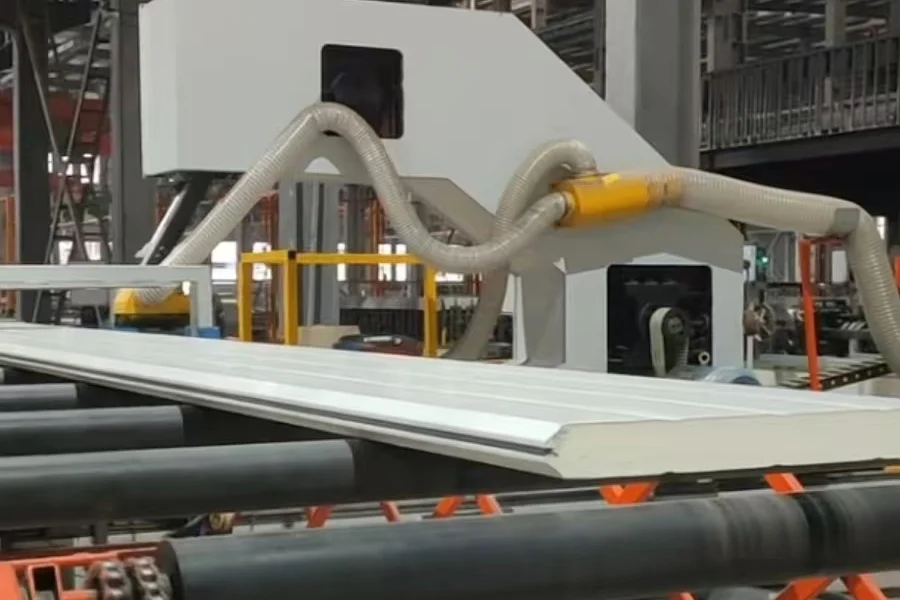
An edge fatigue model for surface identity has three stages. In the early stage, a galvanized handle may show minor scratches, while ABS may show light polishing from hand contact. In the middle stage, moisture and dust can make scratched metal zones more vulnerable to rust spotting, while ABS may begin to show local whitening around a stressed grip or mounting transition. In the extreme stage, corrosion marks, loosened fasteners, or plastic deformation can become visible symptoms of a deeper mismatch between environment, user behavior, and handle selection. This model does not require invented laboratory values; it follows normal material behavior under repeated exposure.
A cross-dimensional comparison should include cleaning and storage, not just pulling. A metal handle stored in a humid carton environment can face early surface discoloration if packaging traps moisture or if parts rub against each other. An ABS handle may avoid rust but still suffer from surface scratches, stress marks, or deformation if heavy items press against it during storage. In receiving QC, both routes require different visual checks. For galvanized parts, inspectors should look for exposed base metal, sharp burrs, and surface inconsistency. For ABS parts, inspectors should look for sink marks, cracks, whitening, molding defects, and edge roughness.
СОВЕТ ОТ ПРОФЕССИОНАЛА / КОНТРОЛЬНЫЙ СПИСОК
- Confirm the exact model before discussing expected installation behavior.
- Record whether the handle route is galvanized finish or ABS material.
- Measure mounting-hole centers instead of relying on product photos alone.
- Inspect visible scratches, burrs, cracks, and molding defects before shipment.
- Request mounted sample photos when the door-panel interface is critical.
- Avoid claiming pull-force capacity unless controlled test records exist.
- Separate inch-based and metric-based part records in warehouse systems.
- Keep packaging inspection in the QC flow to reduce transport scuffing.
What the Catalog Does Not Prove Yet
The strongest part of a cautious outlook is recognizing what is not proven. The supplied catalog data does not confirm screw-hole diameter, screw head seating behavior, handle clearance from door skin, measured pull-force response, fastener compatibility, or a controlled installation record. These missing fields do not make the handles unusable. They simply define the boundary between catalog identification and engineering validation.
For a buyer, this matters at three levels. In engineering confirmation, missing screw-hole diameter prevents a complete fastener match. In procurement acceptance, missing pull-force data prevents a verified heavy-duty performance statement. In after-sales diagnosis, missing mounted-clearance information makes it harder to determine whether a complaint came from handle design, screw selection, door-panel deformation, or installation practice. A part can be correctly named and still be incompletely specified for a specific door system.
A practical QC route should begin with the data that exists. For BT-L705, record Расстояние между центрами монтажных отверстий — 5½ дюйма и оцинкованное покрытие. For BT-L706, record Расстояние между центрами монтажных отверстий — 105 мм. For BT-L707 and BT-L708, record Материал ABS. Then add objective inspection steps that do not require invented catalog data: center-distance measurement, surface defect inspection, burr review, packaging scratch inspection, sample fit on a representative panel, and batch consistency review. If the project requires verified heavy-duty performance, request controlled pull-test records before writing that claim into specifications.
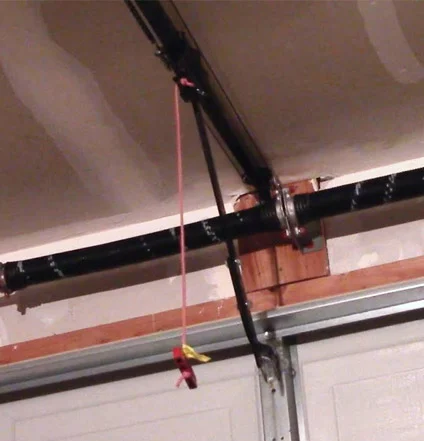
A cross-system case shows why evidence gaps spread. Suppose the handle is installed on a door that also has worn rollers, a poorly balanced spring system, or a misaligned track. The user may pull harder than expected because the door does not move smoothly. The handle then receives abnormal force, but the root cause may not be the handle alone. Without pull-force records, mounted photos, screw data, and door-condition notes, the complaint becomes difficult to isolate. The handle is part of a larger movement system, and its specification should not be separated from the condition of the door hardware around it.
The outlook is clear: the next generation of lifting-handle content should not promise more than the catalog proves. It should help buyers build cleaner records, request better validation, and keep material identity separate from load claims. This creates better SEO content and better procurement behavior at the same time.
Часто задаваемые вопросы (FAQ)
How to manually open garage door?
Disconnect the opener according to the door system instructions, then move the door slowly from a safe gripping point. A lift handle can help guide movement, but it should not be used to force a stuck or unbalanced door. Check springs, tracks, rollers, and handle mounting condition before repeated manual operation.
How to insulate a garage door?
Insulation should not block handle access, fasteners, or door movement hardware. If insulation changes the inner panel thickness or covers mounting points, confirm handle clearance and screw engagement before reinstalling a lift handle. Do not assume original fasteners remain suitable after adding insulation layers.
How to paint garage door?
Remove or mask hardware before painting so coatings do not interfere with handle seating, screw access, or grip surfaces. Painted-over fasteners can hide corrosion, looseness, or panel damage. If the handle is galvanized or ABS, choose surface preparation and masking methods suited to the material route.
How to oil garage door?
Oil or lubricate only the parts recommended by the door hardware supplier, such as hinges, rollers, or bearings where applicable. Avoid leaving lubricant on lift handles because it can reduce grip control and attract dust. If manual movement feels heavy, inspect the door system instead of pulling harder.
How to line up garage door sensors?
Sensor alignment affects powered operation, not the physical mounting strength of a lift handle. If a door will not close because of sensor misalignment, solve the sensor issue before using manual force. A handle should assist controlled movement, not compensate for an unresolved electrical or safety fault.
How to program your garage door opener?
Programming the opener does not validate the lift handle. After opener service, confirm that manual-release operation, door balance, and handle condition remain safe. If manual movement requires unusual force, inspect the door hardware system before depending on the handle during future recovery situations.
 English
  Русский
  日本語
日本語  한국어
한국어  Français
  Deutsch
  العربية
  Português
  Español