
Сравнение ручек для подъема при замене дверей
Эталонный стандарт: Соответствующие стандарты в отношении материалов и испытаний эксплуатационных характеристик могут включать ASTM B117 salt spray practice for evaluating coated metal corrosion behavior and ISO 9227 corrosion testing in artificial atmospheres when a supplier provides controlled corrosion records. These references are testing frameworks, not confirmed certifications for the listed lift handle models.
Краткий ответ
For a replacement buyer, the strongest decision point is not the product name alone. A ручка подъема двери гаража becomes useful only when the hole-center pattern, material route, and installation evidence match the door skin and service condition. That is why this comparison treats galvanized and ABS handles as separate risk paths instead of forcing them into one generic handle category.
Baoteng garage door hardware overview can be used as a starting point for related industrial door hardware context, but the final procurement decision should still be tied to the model-level lift handle data available for the exact item.
The First Contact Zone: Reading a Lift Handle from the Hand Side, Not the Door Side
A lift handle first appears to be a simple hand-contact part, but its real engineering role begins after the hand applies force. The force does not stay at the grip. It travels from the palm into the handle body, then into the fastener points, then into the door skin. If the door panel is thin, flexible, corroded, or already drilled, the handle becomes a force-transfer bridge between the user and the door structure. The available catalog data gives two confirmed center patterns: BT-L705 uses mounting holes 5-1/2 inches on centers, в то время как В модели BT-L706 используются монтажные отверстия с расстоянием между центрами 105 мм. These two figures should be treated as installation reference points, not as strength ratings.
The material path changes the way this force is distributed. BT-L705 is confirmed with a galvanized finish, which points to a metal surface-protection route. A galvanized finish can help a metal component resist ordinary atmospheric corrosion when the coating remains continuous, but the catalog does not state coating thickness, salt spray hours, base steel grade, or edge-treatment method. That means a buyer should not assume permanent corrosion immunity. The risk area is usually not the large visible surface. It is the region near holes, bends, cut edges, and repeated contact points where abrasion or installation pressure can interrupt the coating.
The ABS route is different. BT-L707 and BT-L708 are confirmed as ABS material lift handles. ABS is a thermoplastic, so its response is not the same as coated metal. It can provide a different touch feel and avoids the cold sensation of bare metal, but the available data does not state UV stabilization, impact grade, flame rating, tensile strength, or low-temperature performance. The critical zone on an ABS handle is often around the mounting holes and local corners where stress concentrates. If the screw area is over-tightened, the material around the hole may experience compression, creep, or crack initiation over time.
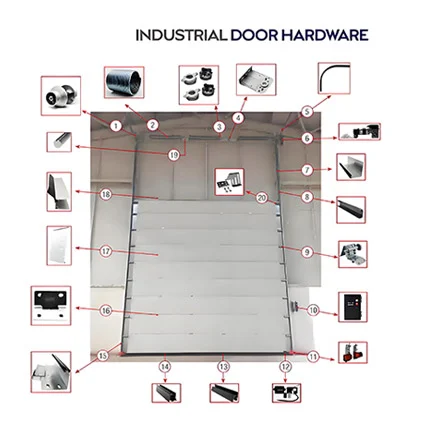
A useful edge-case model is a damp warehouse door opened many times per day with gloves. In the early stage, the handle may feel stable even if the fasteners are slightly misaligned. In the middle stage, vibration and uneven pulling can enlarge small movement at the fixing points. In the severe stage, the door skin may start carrying asymmetric stress, and the user may feel a twisting motion during lifting. This model does not prove a failure; it shows why a lift handle should be checked as part of a mounted system rather than as a loose catalog item.
A cross-dimensional comparison test can separate two issues that are often mixed together. Test A compares the 5-1/2 дюйма и 105 мм mounting-center layouts against existing door holes. Test B compares galvanized and ABS surfaces after repeated dry handling, damp handling, and installation removal. Test A is a geometry check. Test B is a surface and material behavior check. When these tests are separated, a buyer avoids using a good surface finish to compensate for poor hole matching, or using a correct hole pattern to excuse an unsuitable material route.
ОСНОВНЫЕ ВЫВОДЫ
- A stable grip does not confirm stable force transfer through the fastener points.
- Galvanized finish should be evaluated at holes, bends, and rubbed edges, not only on the flat visible surface.
- ABS lift handles should be checked around fixing holes for compression marks, deformation, or crack initiation.
Garage Door Lift Handle Data as Replacement Evidence
A replacement handle is often selected after the old handle has already failed, loosened, rusted, or disappeared from the door. At that point, the buyer may have only an old door skin, existing holes, a rough photo, and a measurement. The catalog data makes the most useful first split clear: Модель BT-L705 имеет монтажные отверстия с расстоянием между центрами 5-1/2 дюйма, в то время как Модель BT-L706 имеет монтажные отверстия с межцентровым расстоянием 105 мм. This is not a minor formatting difference. It determines whether the installer may reuse existing holes or must drill new ones.
Inch and metric values should not be treated as interchangeable unless the supplier confirms the full mounting pattern. 5-1/2 inches equals 139.7 mm, which is not close to 105 мм. That gap is large enough to change the mounting footprint. If a buyer assumes both are similar because both are lift handles, the result can be a returned item, field drilling, cosmetic damage to the door skin, or a handle that sits off-center from the intended pull line. In replacement work, the handle is not only a handle. It is a map of the previous installation.
The catalog does not provide screw-hole diameter, screw head form, compatible screw length, door-skin thickness, or installation torque. That absence matters. If a screw head is too small, the load may concentrate at the hole edge. If it is too large, it may not seat correctly. If the screw is too long or too short, it can create assembly problems or weak engagement. If torque is excessive on an ABS handle, the local plastic zone may experience crushing or stress concentration. If torque is insufficient on a metal handle, movement can gradually wear the hole edge or loosen the installation.
A useful extreme scenario is a service team replacing handles across mixed doors from different production years. In the first few doors, a 105 мм handle may appear acceptable because one screw can be started by hand. In the middle phase, installers discover that the second hole does not align, and they begin forcing the part into position. In the final phase, the forced alignment creates a biased pull direction, uneven screw pressure, and a visible installation defect. The root issue is not the handle name; it is the failure to treat hole-center data as replacement evidence.
| Replacement variable | Confirmed data or missing field | Procurement impact | Safe handling approach |
|---|---|---|---|
| BT-L705 mounting centers | 5-1/2 inches on centers | Supports inch-based hole verification | Measure old holes before quoting |
| BT-L706 mounting centers | 105 мм по оси | Supports metric hole verification | Do not treat as equal to 5-1/2 inches |
| Диаметр отверстия под винт | Not listed | Fastener fit remains unknown | Request drawing or sample measurement |
| Screw head seating | Not listed | Surface pressure remains unknown | Confirm screw head profile before installation |
| Door-skin thickness | Not listed | Pull stability cannot be assumed | Validate on the real door panel |
| Installation torque | Not listed | Over-tightening or looseness risk remains | Use controlled trial fitting |
A cross-dimensional test case should combine a geometry check with a workflow check. The first operator measures the old hole centers. The second operator checks whether the handle seats flat without forcing. The third operator records whether the screw head sits cleanly against the handle surface. This is a better method than asking only whether the item is a “garage door lift handle,” because the product name cannot reveal the installation relationship.
Surface Route Split: Galvanized Metal and ABS Are Not the Same Risk Story
A galvanized lift handle and an ABS lift handle may serve the same door-opening function, but they age through different pathways. BT-L705 is confirmed with a galvanized finish, в то время как BT-L707 and BT-L708 are confirmed as ABS material. This allows a practical comparison, but only within the data boundary. The catalog does not confirm stainless steel, powder coating, zinc thickness, ABS grade, UV package, impact resistance, or load rating. A credible page should state that boundary plainly.
For the galvanized route, the surface is a protective system. The important question is not whether the handle looks metallic and bright on day one. The question is whether the protective layer remains continuous after forming, packing, installation, and repeated handling. Any scratch, cut edge, drilled edge, or rubbed zone can become a weak point if moisture and oxygen reach the base metal. Under ordinary atmospheric exposure, corrosion begins where protection is broken and electrolyte is present. In a door environment, that can be rainwater, condensation, cleaning residue, or damp dust.
For the ABS route, the material is not protected by a metallic coating. The body itself carries the shape. ABS can be practical for lighter or less corrosive environments, but its behavior is governed by polymer structure, temperature exposure, stress concentration, and aging. Repeated tightening at the same hole can create compressive stress. Impact at a corner can create a small crack. Temperature cycling can change the way the material responds to a sudden pull. UV exposure may affect polymer surfaces if the material is not stabilized, but the catalog does not state UV stabilization, so that cannot be claimed as a confirmed feature.
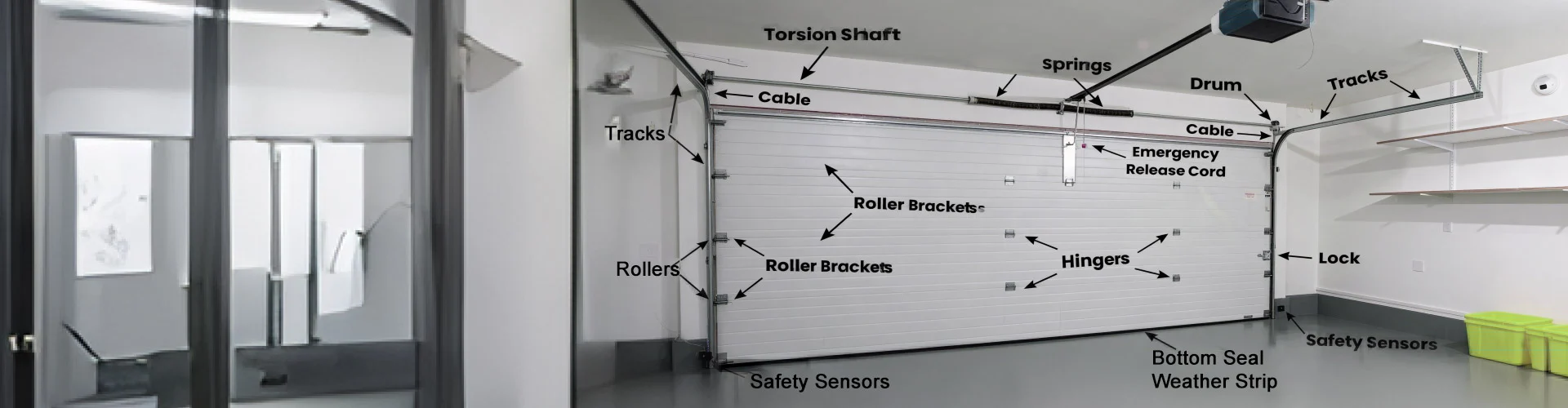
An edge extreme model can be framed as a semi-outdoor service door with seasonal humidity and frequent hand contact. In the early stage, a galvanized handle may show surface marks but remain usable, while an ABS handle may show no corrosion risk because it has no metal surface. In the middle stage, the galvanized route should be checked for coating disruption around holes and bends, while the ABS route should be checked for whitening, deformation, or stress marks around fastened areas. In the severe stage, a metal handle with exposed base material may develop rust points, while an ABS handle under mechanical overload may loosen or crack around the fixing zone. These are material logic scenarios, not confirmed test results for the listed models.
A cross-dimensional comparison should avoid asking which material is “better.” The better question is which risk is more relevant to the door. If the door is in a damp, rough-handling, metal-hardware environment, the galvanized route needs coating continuity review. If the door is used in a lower-corrosion setting where touch feel, lighter use, or non-metal contact is preferred, ABS may be considered with careful mounting-hole inspection. The right comparison is not metal versus plastic in general. It is surface-protection risk versus polymer stress risk under a known installation pattern.
A Supplier Page Should Say What Is Missing Before It Says What Is Strong
A strong supplier page for lifting handles should not begin with unproven claims. It should begin with verified data and then define what remains unverified. For this product group, the verified data is narrow but useful: BT-L705: 5-1/2 inch mounting holes on centers and galvanized finish; BT-L706: 105 mm mounting holes on centers; BT-L707 and BT-L708: ABS material. These details are enough to build a serious selection page, but they are not enough to claim heavy load capacity, universal replacement, outdoor lifetime, or certified corrosion resistance.
The first solution is a hole-center admission check. The supplier should require the buyer to confirm whether the existing door uses 5-1/2 дюйма или 105 мм mounting centers, then compare that against a model-level drawing or sample. The execution protocol should include measuring the old hole centers twice, recording whether the value is inch or metric, checking whether the handle sits flat, and confirming that both fasteners can be inserted without forcing the part. The expected material result is reduced biased stress at the fixing points, because a correctly aligned handle does not need to be twisted into place. The hidden cost is slower quotation intake, but it prevents a more expensive installation return.
The second solution is a surface-route inspection. For BT-L705 с оцинкованным покрытием, the supplier should inspect visible coating continuity, hole edges, bend zones, and handling marks before packing. This does not replace formal salt spray testing, but it screens out obvious surface defects. The expected material result is better preservation of the protective surface in normal storage and handling. The side effect is that inspection may reject visually imperfect parts that remain functional, so acceptance criteria should distinguish cosmetic marks from coating breaks at high-risk areas.
The third solution is an ABS stress-zone review. For BT-L707 and BT-L708 ABS lift handles, the supplier should inspect molded surfaces, fixing holes, sink marks, deformation, cracks, and color consistency. A trial installation should check whether the screw area compresses cleanly without distortion. The expected material result is lower risk of local crack initiation around the mounting zone. The hidden cost is sample preparation time, but it gives buyers better confidence than a material name alone.
The fourth solution is an evidence-first inquiry package. The supplier should ask for or provide, where available, screw-hole diameter, screw head seating behavior, handle clearance from the door skin, compatible fasteners, controlled pull-force response, and mounted installation photos. These should be next-step confirmation fields, not assumed specifications. The expected result is a clearer boundary between catalog truth and application verification. The side effect is that some buyers may want instant universal claims, but a cautious page will attract buyers who value fit and risk control.
| Control point | Applicable route | Practical inspection baseline | Missing data to request |
|---|---|---|---|
| Hole-center verification | BT-L705 and BT-L706 | Confirm 5-1/2 inch or 105 mm before replacement | Full drawing with hole diameter |
| Coating continuity | BT-L705 с оцинкованным покрытием | Check hole edges, bends, and visible rubbed zones | Coating thickness and corrosion test record |
| Molded body condition | BT-L707 and BT-L708 ABS | Check cracks, deformation, sink marks, and color consistency | ABS grade and impact data |
| Fastener seating | All listed handles | Confirm screw head sits without forcing | Screw head profile and seating depth |
| Door clearance | All listed handles | Confirm usable hand space after mounting | Side-view mounted photo |
| Pull response | All listed handles | Use controlled sample validation when required | Протокол повторяемого испытания на растяжение |
СОВЕТ ОТ ПРОФЕССИОНАЛА / КОНТРОЛЬНЫЙ СПИСОК
- Measure the existing door holes before choosing between 5-1/2 inch and 105 mm mounting centers.
- Ask whether screw-hole diameter is available in a drawing, not only in a product photo.
- Check galvanized lift handles at the edges and bends, not only on the flat surface.
- Inspect ABS lift handles around fixing holes for whitening, cracking, or deformation.
- Request mounted photos when handle clearance from the door skin is important.
- Do not accept heavy-duty language unless controlled pull-force records are available.
- Confirm fastener compatibility before ordering replacement quantities.
- Separate cosmetic surface marks from structural or coating-continuity defects.
Часто задаваемые вопросы (FAQ)
How to program your garage door opener?
Programming a garage door opener is an electrical control task, not a lift handle specification issue. Lifting handles are mechanical door hardware. Check the opener brand manual for remote pairing, and evaluate the handle separately by mounting centers, material, and installation fit.
How to program LiftMaster garage door opener remote?
A LiftMaster remote is usually programmed through the opener’s learn button and remote signal sequence. That process does not confirm whether a replacement lift handle fits the door. For the handle, verify whether the door needs a 5-1/2 inch or 105 mm mounting-center layout.
Как настроить пульт управления гаражными воротами Chamberlain?
Chamberlain opener programming should follow the official opener instructions for the exact model. It is unrelated to the mechanical condition of a door lift handle. If the handle is being replaced during opener maintenance, confirm hole centers, screw seating, and material route before installation.
Are galvanized lift handles always rustproof?
No. A galvanized finish can support corrosion resistance when the coating remains intact, but the catalog does not provide coating thickness or salt spray results. Holes, bends, scratches, and installation pressure should be checked because exposed base metal can corrode in damp conditions.
Are ABS lift handles suitable for every garage door?
No universal suitability is confirmed. BT-L707 and BT-L708 are listed as ABS material, but the catalog does not state ABS grade, UV resistance, impact rating, or pull-force capacity. Suitability depends on the door environment, fastening method, clearance, and actual usage load.
What is the safest first check before ordering replacement lifting handles?
The safest first check is the mounting-center measurement. Confirm whether the door requires the BT-L705-style 5-1/2 inch center pattern or the BT-L706-style 105 mm center pattern. Then request missing details such as hole diameter, screw seating, and mounted clearance.
 English
  Русский
  日本語
日本語  한국어
한국어  Français
  Deutsch
  العربية
  Português
  Español