
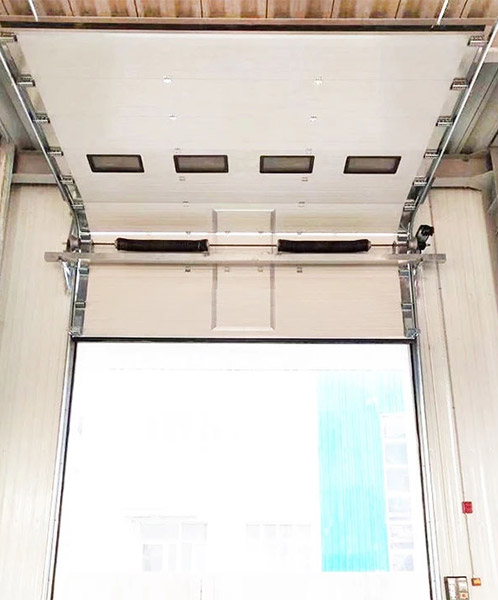
Sectional stress management in over center hinge for garage doors
In modern garage door systems, the over center hinge is essential for reliable sectional articulation and long-term performance. By optimizing hinges for garage doors, designers can achieve superior stress dispersion and durability, ensuring smooth operation and extended service life in demanding environments.
Reliability of over center hinge in hinges for garage doors
The over center hinge, a critical component among hinges for garage doors, plays a pivotal role in enabling the sectional articulation that defines modern sectional door systems. For door system designers, the mechanical behavior of these hinges under repeated articulation cycles is a primary concern, particularly regarding how they distribute stress across sectional interfaces. The effectiveness of stress dispersion directly impacts both the reliability and the operational lifespan of the entire door assembly. Understanding the structural mechanics, the fatigue characteristics, and the articulation-induced stress concentrations inherent to over center hinges is essential for designing robust, durable garage door systems. This article provides a technical exploration of these hinges from a structural stress analysis and durability assessment perspective, with a focus on their performance in managing stress concentration and mitigating fatigue failure during sectional movement.
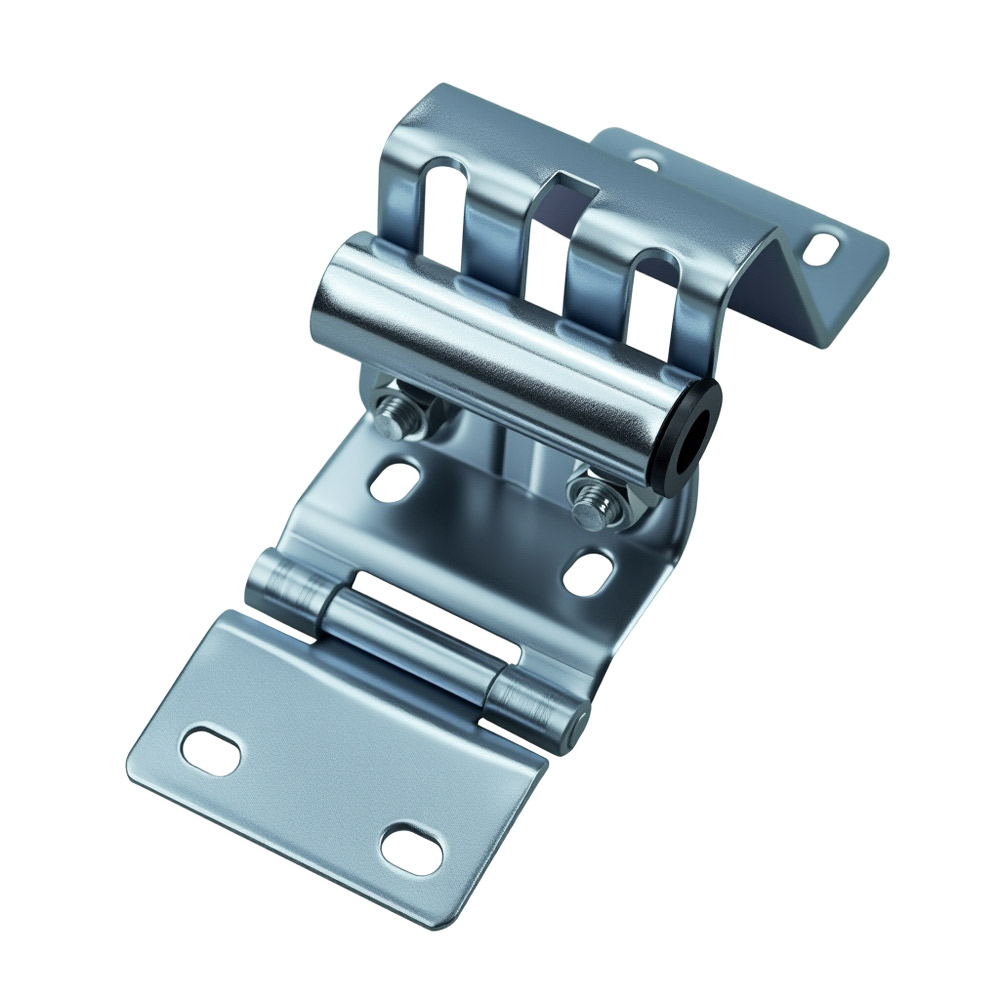
The over center hinge is engineered to facilitate smooth articulation between adjacent panels in a sectional garage door. Its geometry typically includes a pivot axis offset from the panel interface, allowing the hinge to pass through a “center” position during operation. This over-center action provides mechanical stability in both the open and closed positions, reducing the risk of unintended panel movement due to external loads or vibrations. The hinge body is generally fabricated from stamped or formed steel, with a pin or rivet serving as the rotational axis. Material selection and hinge thickness are determined based on anticipated load cycles and environmental exposure, with corrosion-resistant coatings often specified for longevity.
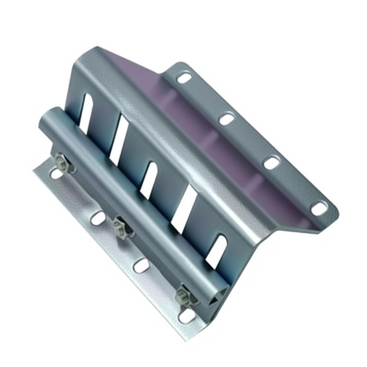
The articulation of a sectional door subjects the over center hinge to complex loading conditions. As the door transitions from closed to open, each hinge experiences a combination of bending, shear, and bearing stresses. The over-center geometry introduces a moment arm that must be carefully analyzed to ensure that peak stresses do not exceed the material’s yield strength, particularly at the hinge knuckle and mounting points. The interface between the hinge leaf and the door panel is a critical zone for stress concentration, especially if fastener placement or panel cutouts create localized weaknesses. Finite element analysis (FEA) is often employed to model these stress distributions, enabling designers to optimize hinge profiles and mounting patterns for improved stress dispersion.
Evaluation of fatigue and stress dispersion in over center hinges
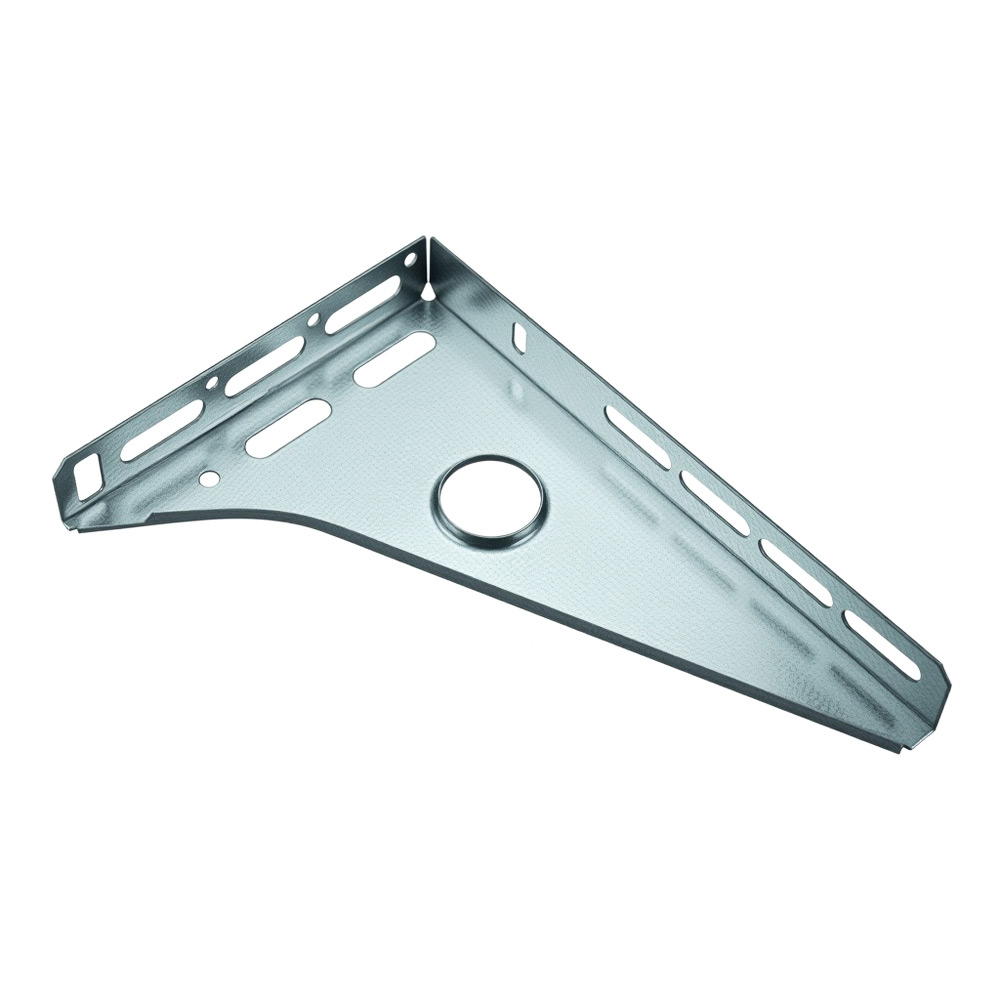
Reliability of the over center hinge is fundamentally linked to its ability to manage repeated stress cycles without succumbing to fatigue failure. Fatigue cracks typically initiate at points of high stress concentration, such as the knuckle radius or at fastener holes. The articulation frequency of a garage door—often exceeding several thousand cycles per year in residential or commercial settings—amplifies the importance of hinge durability. Material microstructure, surface finish, and hinge geometry all contribute to fatigue resistance. For example, a hinge manufactured from cold-rolled, high-strength steel with a shot-peened surface will generally exhibit superior fatigue performance compared to one made from lower-grade, untreated material.
The hinge’s over-center action introduces an additional consideration: during the transition through the center position, the hinge momentarily experiences a reversal in load direction. This can create transient stress spikes, particularly if there is any misalignment between panels or if the hinge pin clearance is excessive. Proper alignment during installation and precise manufacturing tolerances are therefore critical to minimizing these transient loads and ensuring consistent stress dispersion throughout the hinge’s operational cycle.
In evaluating the reliability of over center hinges for garage doors, door system designers must consider both static and dynamic loading scenarios. Static loads arise from the weight of the door panels and any superimposed forces (such as wind pressure), while dynamic loads are generated by the motion of the door during opening and closing cycles. The hinge must be capable of withstanding the combined effects of these loads without permanent deformation or excessive wear. Laboratory testing protocols often include accelerated cycling to simulate years of operation, with periodic inspections for signs of plastic deformation, surface wear, or crack initiation.
The articulation-induced stress concentration at the hinge-to-panel interface is a core pain point in sectional door design. If not properly managed, this can lead to premature hinge failure, resulting in panel misalignment, increased operating friction, or even catastrophic detachment. Engineering strategies to address this include optimizing the hinge leaf geometry to distribute fastener loads over a larger area, specifying higher-grade fasteners with appropriate preload, and reinforcing the panel substrate at hinge mounting locations. Additionally, the use of bushings or bearings within the hinge knuckle can reduce frictional wear and further enhance durability.
Material selection for over center hinges is dictated by the anticipated service environment and required fatigue life. Stainless steel is preferred in corrosive or high-humidity environments, while zinc-plated or powder-coated carbon steel may suffice for standard applications. The thickness of the hinge leaves and the diameter of the hinge pin are sized based on calculated bending moments and shear forces, with a safety factor applied to account for material variability and unforeseen loading conditions. For high-cycle applications, designers may specify case-hardened pins or incorporate self-lubricating bushings to extend service intervals and reduce maintenance requirements.
The evaluation of hinge performance under real-world conditions requires systematic inspection and measurement. Critical parameters include hinge deflection under load, residual deformation after cycling, and the presence of surface cracks or corrosion. Non-destructive testing methods, such as dye penetrant inspection or ultrasonic flaw detection, can be employed to identify subsurface defects before they propagate to critical failure. Data from these evaluations inform iterative design improvements, such as modifying hinge geometry, adjusting material specifications, or refining manufacturing processes to enhance stress dispersion and fatigue resistance.
From a structural stress analysis perspective, the hinge’s performance is quantified by its ability to maintain load-carrying capacity and articulation smoothness over the specified service life. This is typically validated through a combination of analytical modeling, physical testing, and field performance data. Key performance indicators include the maximum allowable deflection under load, the number of cycles to initial crack formation, and the hinge’s resistance to environmental degradation. For critical installations, it is advisable to implement a periodic inspection schedule and to document all observed wear or damage for trend analysis.
To ensure the reliability of over center hinges in garage door applications, door system designers should verify hinge parameters using engineering-grade safety checks. This includes confirming that the hinge material and geometry are appropriate for the anticipated load cycles, that installation procedures ensure proper alignment and preload, and that maintenance protocols are in place to detect and address early signs of fatigue or wear. Where possible, hinge selection should be based on validated test data and supported by structural analysis that accounts for both normal and extreme articulation scenarios.
Ensuring long-term reliability of hinges for garage doors
In summary, the over center hinge is a structurally sophisticated component whose performance is central to the reliability and durability of sectional garage doors. By focusing on stress dispersion at the articulation interfaces and rigorously evaluating fatigue resistance, door system designers can mitigate the core pain point of stress concentration and fatigue failure. Through careful material selection, precise manufacturing, and systematic performance evaluation, the operational lifespan of hinges for garage doors can be significantly extended, ensuring safe and consistent sectional movement throughout the door’s service life. Engineering-grade verification of hinge parameters and ongoing inspection are essential practices for maintaining high reliability in demanding door system applications.
For additional technical resources on garage door hardware, refer to the Baoteng Hinges page, or explore технические условия и отчеты о нагрузочных испытаниях for further evaluation data.
 English
  Русский
  日本語
日本語  한국어
한국어  Français
  Deutsch
  العربية
  Português
  Español