
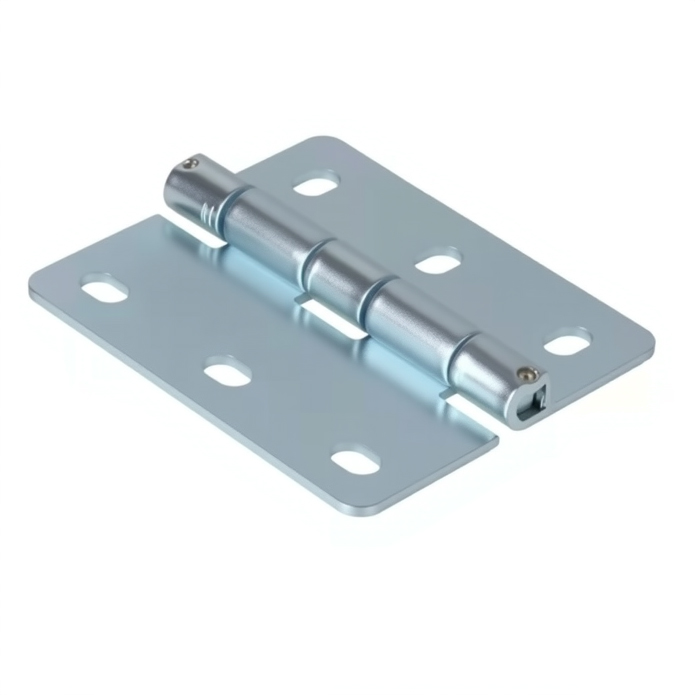
Sectional Articulation Stress Management in Heavy Duty Door Hinges for Industrial Gate Hinge Systems
In industrial environments, the reliability of heavy duty door hinges is crucial for ensuring the long-term performance of sectional gates. By focusing on how articulation-induced stresses are dispersed, engineers can significantly enhance the fatigue resistance and operational lifespan of each industrial gate hinge assembly.
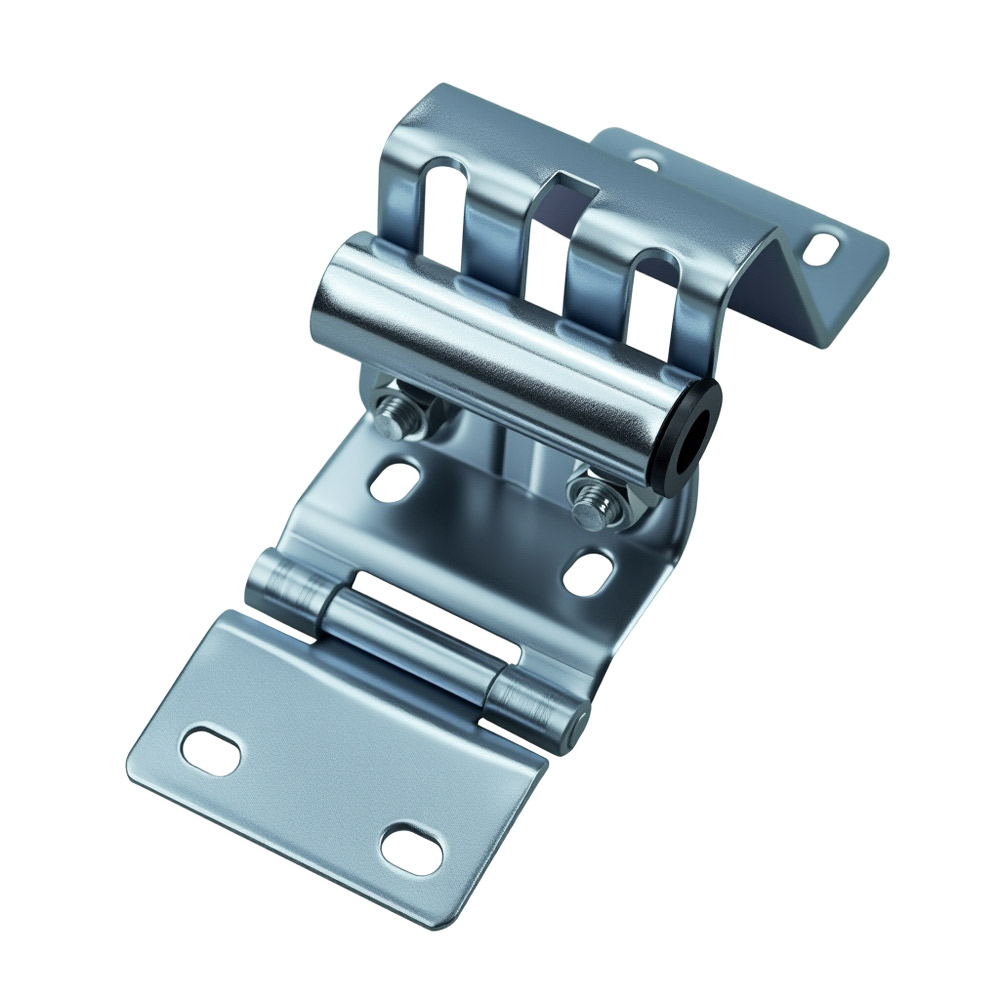
Industrial gate systems, particularly those incorporating sectional doors, demand robust mechanical solutions capable of withstanding repeated articulation cycles and significant operational loads. The performance of heavy duty door hinges and industrial gate hinge assemblies is central to the structural integrity and service life of these systems. In environments where sectional movement is frequent and load profiles are variable, the ability of hinges to disperse articulation-induced stresses becomes a critical engineering concern. This article examines the mechanical behavior of such hinges, emphasizing their role in managing stress concentrations and mitigating fatigue failure. The analysis is structured to address the technical evaluation needs of door system designers, with a focus on structural fatigue efficiency and the mechanisms by which sectional articulation influences hinge reliability.
Heavy duty door hinges and industrial gate hinges are engineered to facilitate controlled movement between adjoining door sections while supporting substantial static and dynamic loads. The articulation points in sectional doors are subject to complex stress distributions arising from door weight, wind loading, operational acceleration, and misalignment. The hinge design must ensure that these stresses are not localized but are instead efficiently dispersed across the hinge body and into the adjoining structural members. This is particularly relevant in multi-panel industrial gates, where each hinge experiences unique loading scenarios during opening and closing cycles.
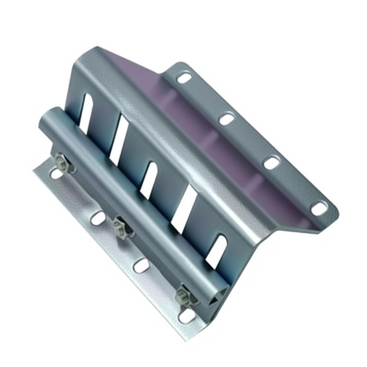
The geometry of heavy duty door hinges typically features extended knuckles and wide leaf plates, maximizing the bearing surface and reducing unit stress at the pin interface. Industrial gate hinge variants may incorporate additional reinforcement ribs or gussets to further enhance load transfer. Material selection is equally critical; high-strength, low-alloy steels are commonly used to provide a balance between ductility and fatigue resistance. Surface treatments such as carburizing or nitriding may be applied to hinge pins and bushings to increase surface hardness and wear resistance, thereby extending operational life under high-cycle conditions.
Sectional movement introduces alternating bending and shear stresses at the hinge axis. As the door articulates, the hinge pin experiences cyclic loading, which can lead to fatigue crack initiation if not properly managed. The articulation path of each section, influenced by track geometry and hinge offset, determines the magnitude and direction of these stresses. Inadequate alignment or improper hinge sizing can result in elevated stress concentrations at the hinge knuckle or mounting fasteners, accelerating fatigue failure.
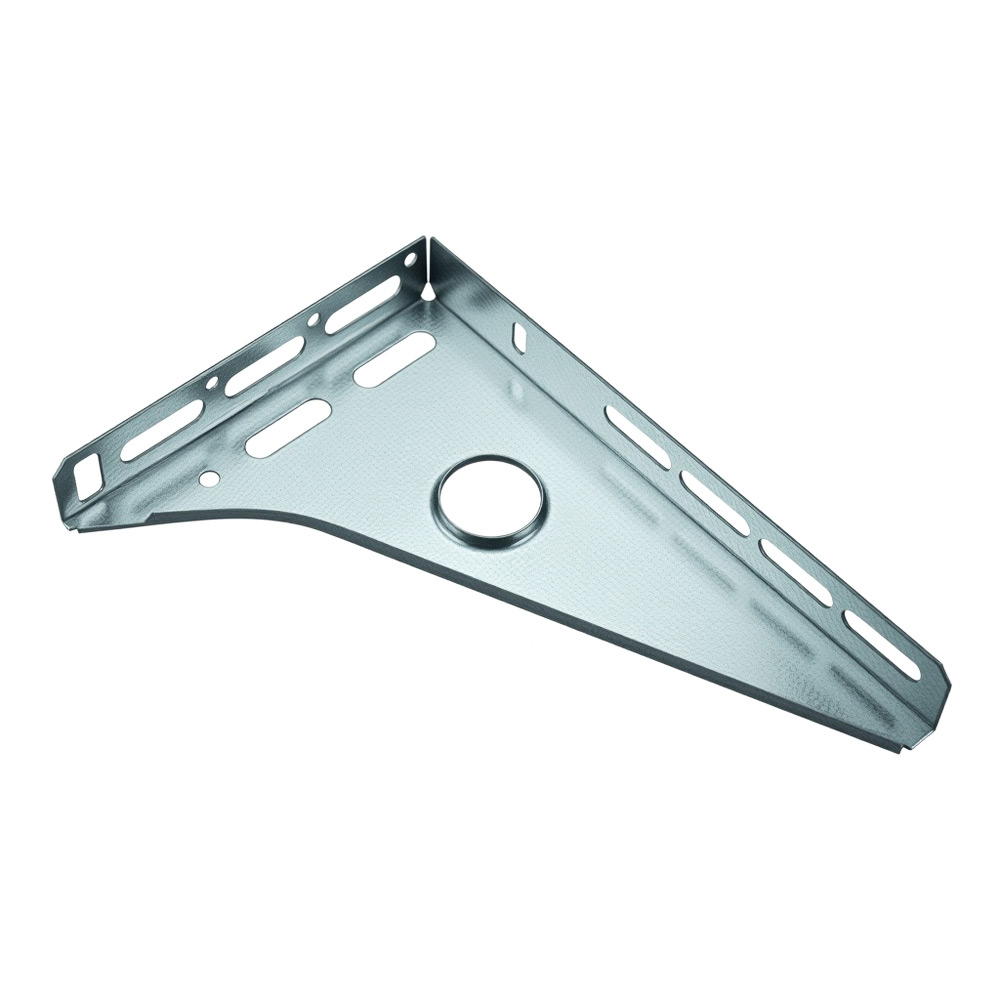
Reliability in heavy duty door hinges is directly linked to their ability to distribute stress efficiently and avoid localized overloads. The principle of sectional articulation stress dispersion is central to this reliability. By spreading the applied loads over a larger hinge surface and through multiple points of contact, the risk of stress concentration is minimized. This is achieved through careful attention to hinge geometry, material homogeneity, and assembly precision. For instance, the use of multi-leaf hinges on wide sectional doors can reduce the moment arm acting on any single hinge, thereby lowering the peak stress experienced during operation.
Another aspect impacting reliability is the method of hinge attachment. Bolted connections with properly sized fasteners and hardened washers are preferred in high-load applications, as they reduce the potential for slippage and uneven load transfer. Welded hinge mounts, while providing a permanent attachment, must be executed with controlled heat input to prevent material embrittlement in the heat-affected zone. In both cases, the alignment of hinge axes across all sections is critical; misalignment introduces secondary bending moments that can exacerbate fatigue damage.
Fatigue failure remains the primary pain point for industrial gate system engineers. The repeated opening and closing cycles inherent to sectional doors subject hinges to millions of load reversals over their service life. Structural fatigue efficiency, therefore, becomes a key metric in hinge selection and system design. Engineering evaluation of fatigue performance involves both analytical modeling and empirical testing. Finite element analysis (FEA) is commonly employed to predict stress concentrations and identify potential failure points within the hinge geometry. Laboratory fatigue testing, using accelerated cycling rigs, validates these models and provides data on hinge endurance limits.
The evaluation of heavy duty door hinges and industrial gate hinges for sectional articulation applications must consider several technical parameters. First, the hinge’s moment capacity must exceed the maximum expected operational torque, factoring in both door weight and dynamic effects such as wind gusts or impact loads. Second, the fatigue strength of the hinge material—typically characterized by the S-N curve—must be sufficient to withstand the anticipated number of cycles without crack initiation. Third, the hinge’s articulation smoothness must be maintained throughout its life; excessive wear or deformation at the pin-bushing interface can lead to increased friction, misalignment, and eventual failure.
Empirical evaluation further extends to inspection protocols for in-service hinges. Non-destructive testing methods such as magnetic particle inspection or dye penetrant testing are used to detect early-stage fatigue cracks, particularly at high-stress regions like the knuckle fillet or mounting holes. Regular maintenance schedules, including lubrication of hinge pins and replacement of worn bushings, are essential to preserve articulation performance and delay fatigue onset. For critical installations, hinge health monitoring systems employing strain gauges or acoustic emission sensors can provide real-time data on stress cycles and potential failure precursors.
The core engineering challenge remains the mitigation of stress concentration and the extension of hinge service life under high-cycle conditions. Design modifications, such as fillet radius optimization at the knuckle, increased pin diameter, and the use of composite bushings, have demonstrated efficacy in reducing peak stresses and improving fatigue resistance. Additionally, the adoption of modular hinge assemblies allows for easier replacement of worn components without necessitating full system disassembly, thereby reducing downtime and maintenance costs.
In the context of industrial gate systems, the interplay between hinge design, sectional articulation, and operational load profiles defines the overall reliability of the door assembly. Door system designers must rigorously verify that hinge parameters—such as load rating, fatigue life, and articulation range—align with the specific demands of their application. This includes accounting for environmental factors such as temperature fluctuations, corrosion exposure, and the presence of abrasive contaminants, all of which can accelerate fatigue processes.
It is essential to integrate engineering-grade safety margins into hinge selection and system design. This involves not only specifying hinges with appropriate static and dynamic load capacities but also considering redundancy in hinge placement and the use of oversized components where feasible. The application of advanced surface treatments and the selection of self-lubricating materials can further enhance hinge longevity and reduce maintenance requirements.
Optimizing Heavy Duty Door Hinges for Structural Fatigue Efficiency
To ensure optimal performance and structural fatigue efficiency in heavy duty door hinges and industrial gate hinge systems, a systematic engineering approach is required. This includes comprehensive stress analysis, fatigue testing, and adherence to rigorous installation and maintenance protocols. Door system designers are advised to verify all hinge parameters against established engineering safety standards, incorporating both analytical and empirical data to inform their selections. By prioritizing stress dispersion and minimizing fatigue risk, the operational reliability and service life of sectional industrial gate systems can be substantially improved.
For additional technical resources on hinge selection, fatigue testing, and installation best practices, refer to Baoteng’s engineering specifications et corrosion resistance documentation for hinges. For practical guidance on hinge assembly, see the tutoriels d'installation.
 English
  Русский
  日本語
日本語  한국어
한국어  Français
  Deutsch
  العربية
  Português
  Español