
Garage Door Lift Handle Transformation
Étalon de référence : Relevant material and performance testing standards may include ASTM A153/A153M for zinc coating on iron and steel hardware when a supplier confirms the galvanized route, and ASTM D256 impact testing when ABS impact behavior needs to be validated. These standards should be treated as verification references, not as automatic claims for the catalog items.
Réponse courte
When a Lift Handle Becomes a Door Identification Clue, Not Just a Pulling Part
A lift handle on an older garage door often tells more about the door than the buyer expects. Before the handle is treated as a replacement part, it can be used as a physical clue: where the previous holes sit, whether the old part was metal or plastic, whether the handle is positioned on a residential garage door or an industrial door, and whether the surface around it shows abrasion, rust staining, cracking, or repainting. The catalog data gives a limited but useful starting point. BT-L705 Lift handle is recorded with mounting holes 5-1/2 inch on centers et finition galvanisée. BT-L706 Industrial Black Lift Handle is recorded with mounting holes 105 mm on centers. BT-L707 Black Lift handle et BT-L708 White Lift handle are recorded as ABS material.
That small set of facts changes how the product page should think. The page should not immediately promise fit, strength, or outdoor life. It should help the reader identify which type of garage door lift handle record they are looking at. A 5-1/2 inch hole-center record indicates a different confirmation path from a 105 mm record. An ABS handle record indicates a different material conversation from a galvanized finish record. The field task is not only to buy a handle; it is to avoid reading one physical clue as a full engineering certificate.
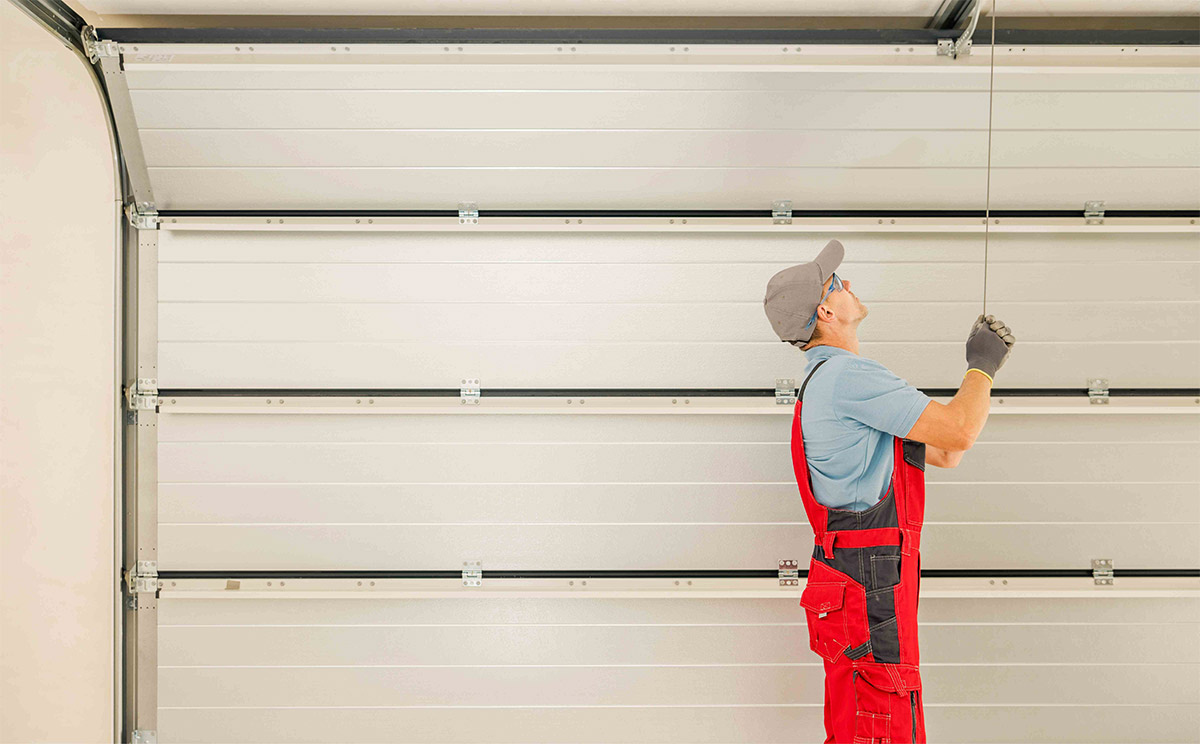
A practical edge-case model starts with a door that has been repainted twice and kept in a damp workshop. The old handle may leave a rectangular clean patch, two visible hole locations, and a different surface color beneath the grip area. If the buyer only measures the outside appearance, the result can be misleading. If the hole-center spacing is near the catalog record but not confirmed with a direct center-to-center measurement, the new handle may create side stress during installation. The handle may still attach, yet the door surface may carry misalignment tension every time the user pulls it.
A cross-dimensional test case would compare two observations: visual identity versus mounting identity. In the visual route, the buyer chooses based on black color, white color, or metal appearance. In the mounting route, the buyer first checks whether the old door matches a 5-1/2 inch center spacing, a 105 mm center spacing, or an unknown value requiring drawing confirmation. The mounting route is more reliable because color can be cosmetic, while hole-center data affects whether the part can sit naturally on the door panel.
POINTS CLÉS À RETENIR
- A lift handle can identify the door record, but it cannot prove strength by appearance alone.
- 5-1/2 inch et 105 mm are catalog-confirmed spacing records, not universal replacement promises.
- ABS material and galvanized finish should start different validation paths before installation.
The Quiet Gap Between Catalog Naming and On-Site Hand Feel
A catalog name is not the same thing as a hand-feel test. The words Lift handle, Industrial Black Lift Handle, Black Lift handle, et White Lift handle help identify the product record, but they do not confirm grip texture, pull comfort, screw seating, UV resistance, load rating, or long-term outdoor durability. The responsible product page should keep that distinction visible.
Pour BT-L707 et BT-L708, the confirmed material is ABS. ABS is a widely used engineering plastic because it can provide a non-rusting surface, stable molded form, and consistent color appearance when the resin, mold, and process are controlled. Yet ABS should not be automatically described as heavy-duty without testing evidence. Its performance depends on grade, wall design, stress concentration, temperature, impact history, and exposure. Without supplier drawings or molded-section details, the page should not claim high-impact performance, long-term UV life, or heavy door lifting capacity.
Pour BT-L705, the confirmed finish is galvanized. This tells the buyer that the surface route is metal-protection oriented, but it does not prove a specific zinc thickness, salt spray duration, edge protection level, or coating process. Zinc-based protection works by giving steel a protective surface layer and, depending on coating continuity, sacrificial corrosion behavior. If the zinc coverage is damaged, or if water sits at a cut edge or scratched area, corrosion risk can rise. The correct page logic is not to say galvanized means rust-proof. It should say the catalog confirms galvanized finish and that coating continuity, edge condition, and packaging protection should be checked if the part is used in damp or exterior-facing environments.
A material-pressure timeline can be described without inventing test values. In the initial stage, a galvanized handle may look clean while tiny scratches remain invisible under normal inspection. In the middle stage, repeated hand contact, door vibration, or wet storage can expose weak surface points if the coating has been rubbed or damaged. In the extreme stage, red rust can start at exposed steel zones if moisture and oxygen keep entering the damaged area. ABS follows a different path. In the initial stage, molded appearance and color may look acceptable. In the middle stage, repeated pulling and temperature swings may make stress marks or small cracks more meaningful. In the extreme stage, impact, cold conditions, or aging can increase cracking risk if the material grade and geometry are not suitable for the use case.
A useful comparison test case separates naming from behavior. One buyer may ask for a black handle because the old door had a black handle. Another buyer may ask whether the handle is metal, ABS, galvanized, or matched to a given mounting center. The second buyer creates a better validation route because the request is connected to a physical property rather than only a catalog label.
catalog wording is not a strength certificate
Four Handle Records, One Procurement Filter
The four recorded lift handle items should be used as a procurement filter. They should not be forced into a simple ranking. A filter asks a more practical question: which risks can be reduced with the known catalog data, and which risks must remain open until the supplier provides drawings, fastener samples, mounted photos, or test records?
| Catalog Record | Confirmed Data | Risk It Can Filter | Risk It Cannot Prove |
|---|---|---|---|
| BT-L705 Lift handle | 5-1/2 inch mounting holes on centers; galvanized finish | Helps identify an inch-based mounting-center route and a metal surface-protection route | Does not prove screw-hole diameter, pull force, zinc thickness, or universal door fit |
| BT-L706 Industrial Black Lift Handle | 105 mm mounting holes on centers | Helps identify a metric mounting-center route | Does not prove material, coating route, grip clearance, or load capacity |
| BT-L707 Black Lift handle | ABS material | Helps identify a non-rusting plastic material route | Does not prove heavy-duty use, UV stability, impact strength, or screw-seat endurance |
| BT-L708 White Lift handle | ABS material | Helps identify a white ABS material route | Does not prove outdoor aging life, pull-force rating, or installation compatibility |
| Open confirmation items | Drawings, samples, mounted photos, repeatable tests | Can close the gap between catalog record and job-site requirement | Should not be replaced by appearance-based assumptions |
This filter has value because it prevents the page from turning thin catalog facts into exaggerated product promises. The buyer can still make progress. If the door has existing hole marks that appear to match 5-1/2 inch spacing, BT-L705 becomes relevant for further confirmation. If the project record specifies 105 mm center spacing, BT-L706 becomes relevant. If the buyer needs a non-rusting hand-contact surface and the application is lighter-duty, BT-L707 or BT-L708 may become candidates, but the product page should still avoid saying ABS equals high-load outdoor performance.
The edge-case model here is a mixed maintenance fleet. One facility may have older doors with inch-based hardware and newer doors with metric records. The maintenance buyer may think all garage door pull handle parts are interchangeable because they look similar in images. The filter breaks that assumption. A 5-1/2 inch center spacing is about 139.7 mm, while 105 mm is a different layout. That difference is large enough to make direct interchangeability unsafe unless the door has matching holes or the installation plan includes confirmed modification. This is a mathematical conversion for understanding scale, not a claim that either part fits every door.
A cross-dimensional test case compares procurement by photo against procurement by verified field note. The photo route asks for a black handle, a white handle, or a galvanized handle. The field-note route records existing hole-center distance, door material, indoor or semi-exterior exposure, current failure mark, and whether the old part was metal or plastic. The field-note route provides better quality because it reduces the number of unknowns before the purchase order is created.
For broader product context, buyers can start from Baoteng garage door hardware resources and then narrow the request by model code, confirmed catalog data, and required evidence. The safest procurement wording is simple: identify the handle model, confirm the mounting-center value, state whether ABS or galvanized finish is required, and request drawings or mounted photos before assuming final compatibility.
CONSEIL DE PRO / LISTE DE VÉRIFICATION
- Confirm whether the existing door shows an inch-based or metric hole-center pattern.
- Treat BT-L705 galvanized finish as a surface record, not a corrosion-life guarantee.
- Treat BT-L707 et BT-L708 ABS material as material identity, not a heavy-duty certificate.
- Ask for drawings before making any claim about screw-hole diameter or screw-head seating.
- Ask for mounted photos before making any claim about hand access or clearance.
- Use repeatable pull-test records only when a load-related claim must appear on the product page.
- Keep product copy separate from unverified field assumptions.
What the Product Page Should Refuse to Promise Before Drawings Arrive
A high-quality product page is not only defined by what it says. It is also defined by what it refuses to say. For a garage door lift handle with limited catalog data, the refusal list is important. The page should not promise a specific load rating, salt spray result, fastener compatibility, screw-hole diameter, screw-head seating footprint, grip clearance, finger-space geometry, UV lifetime, or universal installation fit unless those details are backed by documents or tests.
The confirmed facts are enough to write a useful page. BT-L705 provides a 5-1/2 inch mounting-hole center et finition galvanisée record. BT-L706 provides a 105 mm mounting-hole center record. BT-L707 et BT-L708 provide an ABS material record. These facts support identification, inquiry routing, and risk filtering. They do not support exaggerated performance claims.
A factory-level validation route can be divided into four solutions.
Solution 1: Model and spacing confirmation. Execution Protocol: Record the target handle model, measure existing hole centers directly, and compare the result to the catalog-confirmed values. The buyer should separate 5-1/2 inch et 105 mm routes before asking for price or shipment. Material expected evolution: Correct spacing reduces forced installation and lowers the chance that the handle sits under permanent side stress after fastening. Hidden cost and side-effect control: Extra measurement time may slow the first inquiry, but it prevents rework, wrong purchases, and panel modification.
Solution 2: Surface-route verification for galvanized handles. Execution Protocol: For BT-L705, request close-up surface photos, edge-condition views, and packing protection details when the part will face humid or semi-exterior conditions. Material expected evolution: Better surface handling helps maintain coating continuity before installation. Hidden cost and side-effect control: More inspection steps may add sampling effort, but they reduce the risk of shipping abrasion or damaged exposed zones.
Solution 3: ABS application boundary review. Execution Protocol: For BT-L707 and BT-L708, confirm whether the application is lighter-duty hand contact, repeated daily pulling, or exposed outdoor use. Request material-grade information if the buyer needs impact, aging, or temperature-related confidence. Material expected evolution: ABS can keep a rust-free surface, but performance depends on material grade and molded structure. Hidden cost and side-effect control: Asking for evidence may prevent overclaiming, even if it reduces broad marketing language.
Solution 4: Evidence-based product copy approval. Execution Protocol: Before publishing claims, divide each statement into confirmed catalog fact, objective engineering inference, and unverified performance requirement. Material expected evolution: This does not change the material itself; it changes risk communication quality and reduces mismatch between website promise and delivered hardware. Hidden cost and side-effect control: Conservative copy may look less aggressive, but it builds trust with technical buyers.
| Variable Pair | General Expected Behavior | Acceptable Website Claim | Required Evidence Before Strong Claim |
|---|---|---|---|
| Galvanized finish + damp storage | Surface protection depends on coating continuity | Galvanized finish is catalog-confirmed for BT-L705 | Coating details, surface photos, corrosion test records |
| ABS material + hand-contact use | Rust-free plastic surface may suit lighter-duty contact | ABS material is catalog-confirmed for BT-L707 and BT-L708 | Material grade, molded geometry, usage test records |
| 5-1/2 inch centers + old door holes | Possible identification route if field measurement matches | BT-L705 has 5-1/2 inch mounting holes on centers | Drawing, mounted photo, hole-size confirmation |
| 105 mm centers + project requirement | Possible metric routing if project data matches | BT-L706 has 105 mm mounting holes on centers | Drawing, installation record, fastener sample |
| Unknown fastener + any handle | Fit cannot be assumed from catalog name | Fastener compatibility should be confirmed | Screw samples, seating photos, controlled installation check |
The best product page transformation is therefore not louder marketing. It is cleaner evidence logic. It uses confirmed catalog data first, places unverified performance second, and makes the inquiry path more precise.
confirmed catalog data first, unverified performance second
Foire aux questions (FAQ)
Where to purchase garage door springs?
Garage door springs should be purchased from a qualified garage door hardware supplier or service provider because spring selection depends on door weight, spring type, shaft system, and safety requirements. Do not use lift handle data to select springs; they are different hardware categories with different risks.
How to put a garage door back on track?
A garage door that has come off track should be inspected for roller, track, cable, and panel alignment issues before operation. A lift handle may help manual handling, but it does not correct track geometry. If the door is heavy or spring-loaded, professional service is safer.
How much is it to fix a garage door?
Repair cost depends on the failed component, door size, labor rate, and whether the issue involves springs, tracks, panels, cables, or hardware. A garage door lift handle is usually only one small part of the system, so pricing should be based on the full door condition.
How to sync garage door to car?
Syncing a garage door opener to a car usually involves the opener remote, vehicle HomeLink or built-in transmitter, and the opener’s learn button. This process is unrelated to a manual garage door lift handle, but both can appear on the same door system.
How to program the Chamberlain garage door opener?
Programming a Chamberlain opener normally requires the model-specific learn button and remote or keypad procedure. Always follow the opener manual. A lift handle is manual hardware and does not affect opener programming, signal pairing, or receiver memory.
How to change battery in a LiftMaster garage door opener?
Battery replacement depends on whether the LiftMaster device is a remote, keypad, wall control, or backup battery unit. Check the model number first. Manual lift handles do not contain batteries and should not be confused with opener electronics.
 English
  Русский
  日本語
日本語  한국어
한국어  Français
  Deutsch
  العربية
  Português
  Español