
조용하고 부드러운 작동을 위한 차고문 롤러: 구름 마찰과 베어링 하중 원리에 따른 선택 방법
When a sectional garage door is opened and closed hundreds or even thousands of times in a year, the difference between smooth travel and constant rattling rarely comes from the panels or the opener alone. For garage door hardware product managers and installation contractors, the turning point is usually the choice of 차고 도어 롤러 operating in high-cycle daily use. Once rolling resistance starts to climb and noise rises with every cycle, the real issue is not just comfort but long-term stress on the track, hinges, and drive system.
This buyer-focused guide takes the engineering ideas of rolling-friction and bearing-load mechanics and turns them into practical selection criteria. The goal is simple: help you decide which garage door rollers stay quiet and low-friction under high-cycle operation, and which designs quietly drive you toward surface spalling, rising torque, and premature replacements.
What really controls quiet, smooth garage door operation?
Quiet operation does not come from a single component. It emerges from how load is transferred from the door through hinges, into the roller stem, through the bearing, and finally into the track. In high-cycle daily opening and closing usage, this load path works like a loop: every cycle adds a small amount of stress to the same contact surfaces.
Three factors dominate whether the system stays smooth or becomes noisy over time. The first is rolling resistance, driven by bearing design and lubrication stability. The second is surface integrity at the roller–track interface, where wear and contamination can quickly raise friction. The third is alignment quality between hinges, stems, and tracks, which controls how evenly the load is shared across all rollers.
When any part of this loop is underspecified or poorly installed, friction increases and the system responds with vibration, chatter, and the familiar “grinding garage door” sound that building occupants complain about long before a complete failure occurs.
Types of garage door rollers and where each design fits
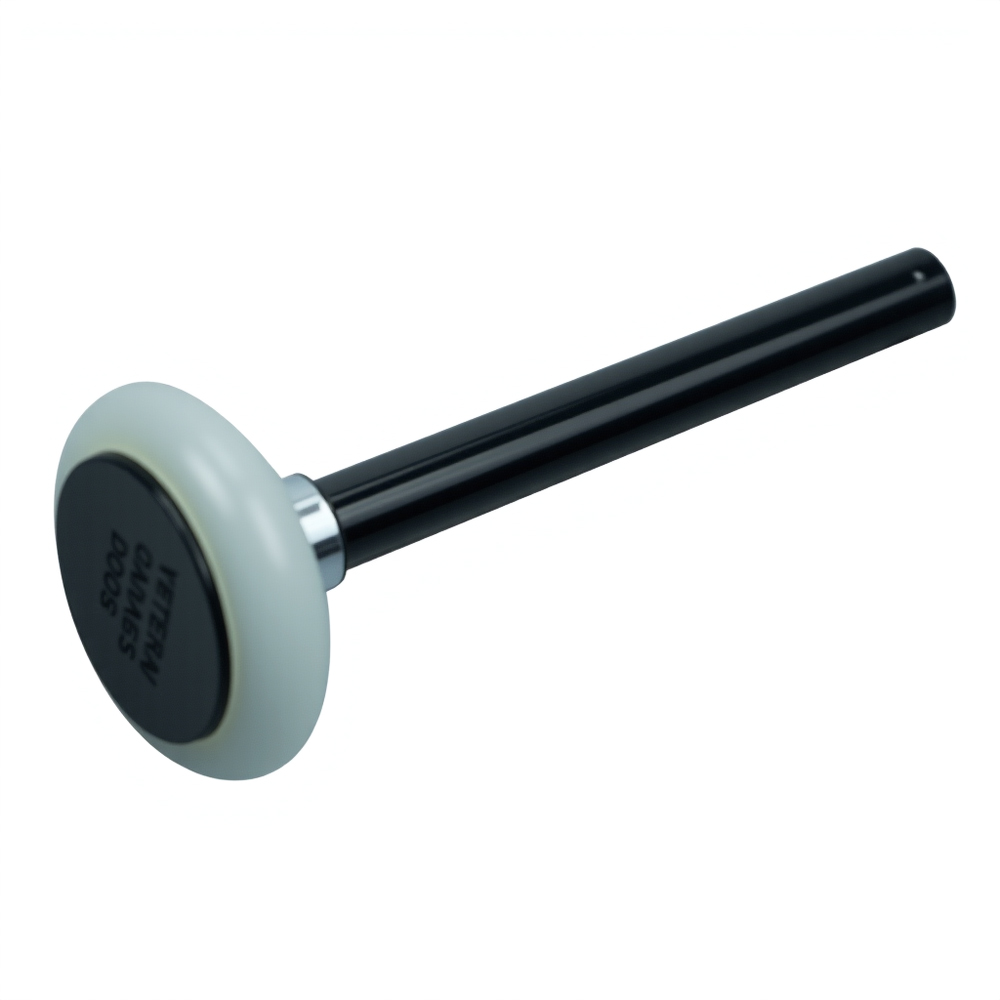
Before asking which roller is “best”, it is more useful to ask which design fits the door weight, use frequency, and noise expectations of a specific site. From a hardware perspective, most assemblies combine a wheel material, a bearing system, and a stem geometry that together define how well they handle rolling loads.
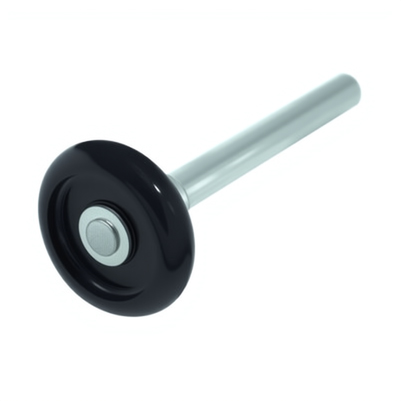
Wheel materials: nylon versus steel in real installations
Nylon wheels are used where low noise is a serious requirement. The material absorbs high-frequency vibration and helps prevent track ringing. In high-cycle use, however, nylon can gradually deform if the load rating is too close to the real operating load, especially on heavier insulated doors. That deformation changes contact pressure distribution and raises the risk of roller surface spalling.
Steel wheels bring excellent dimensional stability. They keep a consistent rolling diameter even under repeated high loads. The trade-off is that they transmit more structure-borne vibration into the tracks and building structure. On doors where acoustic comfort is less critical than raw durability, steel rollers remain a solid choice, especially when combined with high quality bearings.
Bearing systems: ball-bearing versus sleeve-type rollers
In high-cycle daily use, the bearing system is often the real difference between a quiet door and one that becomes noisy within the first season. Ball-bearing rollers use hardened steel balls to separate inner and outer raceways, minimizing rolling resistance and distributing loads more evenly. When properly specified and protected, they maintain low torque and predictable noise levels across many thousands of cycles.
Sleeve-type rollers rely on a sliding interface instead of rolling elements. They can work adequately in low-cycle residential doors where cost needs to be minimized, but under high-cycle or heavier doors they develop wear much faster. As wear increases, friction rises, noise grows, and the risk of binding at the track interface goes up.
Stem geometry and its impact on bearing-load mechanics
Stems look simple, but their geometry, hardness, and plating quality strongly influence bearing life. If the stem is too soft or poorly finished, it can fret inside the hinge barrel, creating debris and bending the load path off-center. Even small misalignments increase localized stress within the bearing, speeding up fatigue and contributing to roller surface spalling in demanding environments.
How to choose garage door rollers for different door types
To turn these engineering details into a clear buying path, it helps to think in terms of four selection questions. Each one ties directly to rolling-friction and bearing-load mechanics, while staying practical for specification work.
First, ask how heavy the door is and how it is used across a typical day. Doors that see only a handful of cycles each day give rollers more time to cool and relax between operations. High-cycle daily opening and closing usage in commercial or mixed-use buildings leaves little recovery time, and rollers that are marginally specified for such duty will show early signs of fatigue.
Second, clarify how critical noise reduction is for the environment. In residential settings or customer-facing commercial spaces, quieter nylon ball-bearing rollers are usually preferred. In purely industrial or back-of-house zones, a slightly noisier, fully steel assembly with stronger bearings may be a more rational choice if reliability under heavy loads is the primary goal.
Third, define how much maintenance capacity is available on site. If technicians can perform periodic inspections and lubrication, higher-performance designs that require a bit more attention can be justified. If the reality is that doors run unattended for long periods, then sealed ball-bearing rollers with robust corrosion protection are safer choices.
Fourth, consider track condition and alignment quality. Even premium rollers cannot compensate for distorted tracks and poorly installed hinges. When evaluating new rollers, it is wise to combine the decision with an assessment of track straightness and hinge fit. Resources like the step-by-step installation guidance available under 설치 튜토리얼 help ensure that component specification and on-site installation quality move in the same direction.
High-cycle operation and the risk of roller surface spalling
In doors that cycle frequently, one failure mode deserves special attention: roller surface spalling. Spalling occurs when small fragments break away from the wheel surface or bearing raceways, usually after repeated overstress. Sometimes the damage is visible as pitting or flaking. More often, the first hint is a subtle pulsing noise or a change in how smoothly the door starts to move.
Under high-cycle daily opening and closing usage, the combination of heavy load, minor misalignment, and marginal bearing capacity leads to localized stress peaks. Each peak makes the material slightly more vulnerable, and eventually sections of the surface detach. Once the wheel no longer presents a uniform surface to the track, rolling resistance rises sharply and noise escalates.
From a buying perspective, controlling this failure mode means verifying that the chosen rollers are not merely dimensionally compatible with the track, but have a fatigue capacity and bearing design that match the real duty cycle. Laboratory results such as those summarized in 롤러 부하 테스트 give practical insight into how long different assemblies can hold their friction and noise performance before spalling becomes likely.
Noise and vibration performance: what to look for in test data
Noise complaints are often the first reason building owners ask for a roller upgrade. When comparing options, it helps to understand how noise and vibration performance is typically evaluated. At a basic level, doors are cycled under realistic loads while microphones and accelerometers measure sound pressure and vibration transfer at multiple points along the structure.
Soundly engineered suppliers align their evaluation approaches with widely recognized testing frameworks such as those coordinated by the International Organization for Standardization 그리고 ASTM 국제. Even when a roller is not tied to a single numbered standard, using fatigue and cycle life testing together with noise and vibration performance testing gives a consistent picture of how friction and sound levels evolve with time.
When reviewing data sheets, look for indications that rollers have been run through a realistic number of cycles at representative door weights. Curves that show rolling torque and noise levels staying within a narrow band over extended testing are strong signals that the bearing and wheel design are well matched to high-cycle use.
Scenario-based recommendations for residential, commercial, and industrial doors
Once the mechanics and testing principles are clear, selection becomes an application problem rather than a guess. In typical residential doors with moderate daily use and strong expectations for low noise, nylon ball-bearing rollers with sealed bearing chambers are usually a rational first choice. They filter vibration, resist typical household environmental exposure, and keep friction low for a substantial number of cycles when correctly installed.
In mixed-use commercial garages, doors often handle higher vehicle traffic and more frequent operation. Here, nylon-backed or steel-backed rollers with higher dynamic load ratings offer a better match. The added bearing capacity and stronger wheel structure reduce the risk of surface spalling while still managing noise acceptably when combined with good track maintenance.
For industrial high-cycle installations such as logistics centers or high-bay warehouses, where doors may operate in near-continuous duty, fully steel ball-bearing rollers with robust raceways and well-characterized fatigue performance become the preferred option. Noise still matters, but the dominant question becomes how well the assembly resists cumulative mechanical stress without unpredictable failures or frequent service interruptions.
Common buying mistakes that increase friction, noise, and downtime
Even with good technical data available, several recurring mistakes show up in maintenance logs. One is to size rollers only by static door weight, ignoring acceleration and deceleration loads. In practice, dynamic loads during movement can significantly exceed the static weight, and rollers that look adequate on paper begin to struggle when exposed to full-speed operation.
Another mistake is mixing wheel materials and bearing types across the same door. When some positions are equipped with high-stiffness steel rollers and others use softer nylon or lower-capacity bearings, load distribution becomes uneven. The most heavily loaded rollers fail first, leading to rough travel and a misleading perception that “the product was defective” rather than “the system was imbalanced.”
A third error is treating rollers as a standalone upgrade while ignoring worn or misaligned tracks. Once the track is distorted or contaminated, new rollers quickly take on the same damage pattern. Evaluating roller options without a parallel check of track condition and hinge alignment dramatically reduces the value of any upgrade.
How fatigue and noise testing support a more confident buying decision
Because failure in high-cycle use is driven by cumulative stress instead of a single overload event, verifying roller performance through structured testing is essential. Fatigue and cycle life testing expose assembled rollers to repeated loading and motion while tracking changes in rolling torque. Noise and vibration performance tests measure how sound levels and structural vibration evolve as wear accumulates.
By connecting these test results to the known failure mode of roller surface spalling, buyers can move beyond subjective impressions and rely on repeatable evidence. If a roller maintains stable torque and controlled noise deep into the test cycle count, it is more likely to deliver consistent performance in a real installation where doors open and close many times every working day.
Sourcing from manufacturers that transparently link their rollers to internal engineering checks and broader quality frameworks—such as those described in 품질 보증 프로세스 and summarized in 국제 인증—makes it easier to compare options on more than price alone.
Frequently asked selection questions in the consideration stage
Which garage door rollers are best for high-cycle daily operation?
For high-cycle doors, the most reliable rollers combine robust ball bearings, high dynamic load ratings, and materials that resist cracking or surface spalling. Fully steel or steel-backed designs with documented fatigue and cycle life performance are often the safest choice, especially on heavy or frequently used doors.
How can I tell if my current rollers are undersized for the door?
Symptoms include increasing noise, uneven travel, visible surface pitting, and rising opener load. If a door that once started moving easily now hesitates or jerks at the same points in its travel, it is likely that bearings and wheel surfaces are accumulating damage faster than expected for the usage pattern.
What should I look for in data sheets when comparing roller options?
Key elements include clear door weight ranges, cycle-life expectations, bearing type, and any references to fatigue and cycle life testing together with noise and vibration performance testing. When data sheets talk only about dimensions and ignore performance over time, it becomes difficult to predict how the rollers will behave under real duty cycles.
Can upgrading only the rollers solve a noisy door problem?
Sometimes yes, but only if the underlying track and hinge geometry remain within reasonable tolerances. If the track is warped or the hinges are misaligned, new rollers will still be forced into unfavorable load paths. In these cases, combining a roller upgrade with track inspection and alignment work gives a far better chance of restoring smooth operation.
Testing methods and standards context for garage door rollers
The selection guidance in this article is built on repeated-observation behavior rather than theory alone. Fatigue and cycle life tests simulate high-cycle daily opening and closing usage by driving rollers through large numbers of full travel cycles while monitoring torque, noise, and vibration. Noise and vibration performance testing then adds spatial detail about how disturbances propagate into building structures and user spaces.
Although garage door rollers are not always tied to a single named standard, many of the underlying methods align with test philosophies developed by organizations such as the International Organization for Standardization 그리고 ASTM 국제. By following structured mechanical and acoustic test protocols, manufacturers gain a clearer view of when roller surface spalling and bearing distress are likely to appear.
Internally, results from these tests are compared against environmental expectations for different usage patterns, so that recommendations for residential, commercial, and industrial applications are grounded in data instead of marketing language alone. When buyers take the time to interpret these results, they can connect specific roller designs to specific risk levels and choose accordingly.
From an engineering-driven buying perspective, the most dependable garage door rollers are those whose behavior under high-cycle load has been intentionally measured and communicated. When rollers are selected with explicit attention to failure modes, test methods, and the true environment of use, rolling resistance, noise, and lifetime durability become predictable properties rather than surprises that only show up once a system is already in trouble.
 English
  Русский
  日本語
日本語  한국어
한국어  Français
  Deutsch
  العربية
  Português
  Español