
차고문 드럼에 대한 상세한 설명
기준 물질: Relevant material and performance testing standards for rotating door hardware, dimensional inspection, and load-bearing components should be interpreted alongside practical garage door hardware guidance from DASMA technical resources and general test-method references from ASTM 국제.
간단한 답변
When Door Height Becomes a Drum Selection Boundary, Not Just a Size Note
Door height is not a passive measurement in a cable drum system. It defines how much cable must be stored, how the cable wrap path develops across the drum face, and how much lift margin remains before the system reaches its practical boundary. In the cataloged cable drum range, the declared maximum door heights move from 96″ on Drum 8F 에 132″ on Drum 11FT, 144″ on Drum 12FT, 217″ on Drum 18F, 243″ on Drum 5-54HL, 270″ on Drum 120HL, 336″ on Drum 28VL, 384″ on Drum 32FT, 및 400″ on Drum 164HL. That spread is too wide to treat every drum as interchangeable hardware.
A short residential-style door and a taller high-lift or vertical-lift installation do not ask the drum to perform the same job. In a 96″ door height condition, the drum mainly needs enough controlled wrap capacity for a lower travel range. At 270″, 336″, 또는 400″, the same visual assumption can become dangerous because the cable must remain seated through a longer travel path. The drum no longer acts only as a cable holder; it becomes a boundary component that decides whether the lifting system has enough controlled wrap range before the door reaches its upper travel position.
A practical edge-case model is a project that uses a drum selected near the lower height range while the real door opening belongs closer to the high-lift or vertical-lift side. At the early stage, the system may still move because the cable is under tension and the shaft is turning. In the middle stage, the cable path may begin to crowd the groove area, and left-right cable take-up may become less consistent. At the limit stage, the remaining wrap margin can become too small for clean lift behavior. This does not require a dramatic failure story; it is a simple geometry problem driven by height, rotation, and available cable storage.
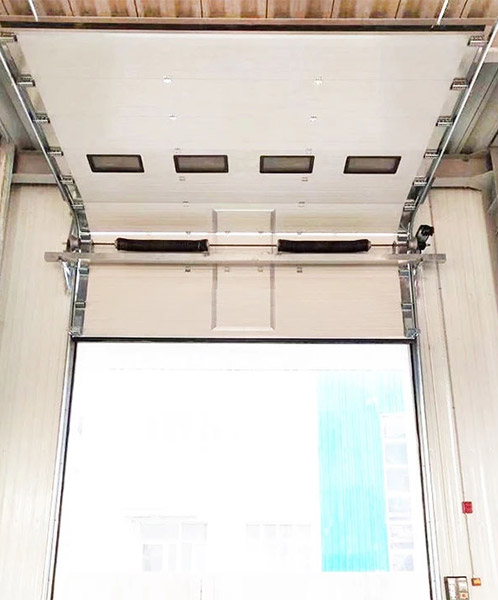
A useful comparison test is to place two door layouts side by side: one at 132″ maximum door height using a matching FT-range drum logic, and another at 336″ maximum door height where a VL-related drum such as 28VL becomes relevant. The first layout tests whether the drum can manage normal travel without overextending its wrap logic. The second layout tests whether a taller travel path can be supported without forcing the cable into an unsuitable winding pattern. The comparison is not about which drum is stronger in a generic sense. It is about whether the drum model belongs to the door height envelope.
For buyers, this means a drum inquiry should never say only “garage door drum.” It should state the door height first, then the door weight, then the maximum cable diameter, then the shaft size. A useful starting link for related door hardware context is the garage door hardware supplier homepage, but the drum itself should still be filtered by measurable lift geometry.
Cable Diameter as the Hidden Contact Rule Inside Garage Door Drums
The cable diameter is the contact rule inside the drum. The cataloged cable drum series includes maximum cable diameter values of 1/8″, 5/32″, 3/16″, 및 1/4″. These numbers are not decorative. They influence how the cable sits in the groove, how contact pressure is distributed, and whether the cable can maintain stable wrap behavior under load.
A 1/8″ cable used with Drum 8F or Drum 11FT belongs to a lighter cable contact envelope than a 1/4″ cable used with models such as Drum 164HL, Drum 32FT, or Drum 28VL. Between them, 5/32″ appears on Drum 12FT, while 3/16″ appears across several models including Drum 120HL, Drum 18F, Drum 11VL, Drum 18VL, and Drum 5-54HL. These values suggest that drum selection must follow cable fit, not only door size.
The physical logic is straightforward. A cable that is too large for the intended groove envelope concentrates pressure at the edges rather than seating cleanly. A cable that is too small may not receive the same lateral guidance and can become more sensitive to side load, uneven tension, or local movement. Since the catalog does not state groove hardness, heat treatment, casting alloy, or surface coating for the drums, it would be inaccurate to claim a specific material-life curve. The reliable discussion must stay with geometry, cable diameter, seating behavior, and inspection logic.
An extreme-use model can be built around repeated opening cycles in a dusty or humid garage environment. At the early stage, a properly matched 3/16″ cable should sit predictably in its contact path when paired with a drum rated for that cable diameter. At the middle stage, dust and moisture may increase surface friction and make minor groove burrs or cable strand irregularities more visible during rotation. At the limit stage, an oversized or poorly seated cable can increase localized pressure, which may show up as rougher operation, visible cable marking, or unstable wrap behavior. These are mechanical outcomes, not marketing claims.
| 케이블 직경 | Example Drum Models | Contact Interpretation | Inspection Focus |
|---|---|---|---|
| 1/8″ | 8F, 11FT | Smaller cable envelope | Seating depth and clean wrap |
| 5/32″ | 12FT | Intermediate contact condition | Groove fit and side guidance |
| 3/16″ | 120HL, 18F, 11VL, 18VL, 5-54HL | Higher contact demand | Cable path and edge pressure |
| 1/4″ | 164HL, 32FT, 28VL | Heavy cable envelope | Groove consistency and pairing |
A cross-dimensional comparison test should not simply pull on the cable. It should observe how the cable enters the drum, whether it remains centered during rotation, whether both sides take up cable at the same visible rate, and whether the chosen drum model states a maximum cable diameter equal to or above the planned cable size. If a 1/4″ cable is introduced into a system originally discussed around 1/8″ data, the mismatch is no longer a small accessory error. It is a contact-geometry error.
From 240kg to 750kg: Reading Drum Load Capacity Before the Door Moves
The drum’s maximum door weight rating should be read before the door moves, not after the installation starts. The cataloged range moves from 240kg on Drum 8F 에 260kg on Drum 11FT, 340kg on Drum 12FT, 450kg on Drum 120HL, 500kg on Drum 11VL, 18VL, and 5-54HL, 575kg on Drum 164HL, 680kg on Drum 18F, 700kg on Drum 32FT, 및 750kg on Drum 28VL. That range creates a useful selection ladder for procurement and installation teams.
The underlying physics is torque demand. A heavier door asks the cable drum, shaft, and cable system to carry higher tension and to keep left-right movement consistent under higher load. The catalog repeatedly states diameter shaft 1″ for these drum entries, so the shaft interface is a common reference point. The difference is not the shaft size alone; it is the declared combination of door height, door weight, cable diameter, and drum model.

Consider an edge-case comparison between a 240kg door and a 750kg door. At 240kg, the system may have a lower torque demand and a smaller cable diameter such as 1/8″ in the stated drum envelope. At 750kg, the drum data moves into a heavier range such as 28VL 와 함께 1/4″ maximum cable diameter 그리고 336″ maximum door height. If a buyer treats both applications as the same “garage door cable drum” order, the difference in load path is hidden until the door is assembled.
A second comparison case is 575kg at 400″ maximum door height versus 700kg at 384″ maximum door height. One is not automatically safer than the other because the limiting variables are not identical. The 164HL listing carries 400″ maximum door height, 575kg maximum door weight, 및 1/4″ maximum cable diameter. . 32FT listing carries 384″ maximum door height, 700kg maximum door weight, 및 1/4″ maximum cable diameter. This shows why height and weight must be read together. A taller door does not always mean the highest weight rating, and a heavier door does not always mean the tallest height envelope.
주요 요점
- A drum model close to the door’s maximum height limit needs closer lift-margin review before installation.
- A cable diameter change from 1/8″ 에 1/4″ changes the contact condition inside the groove.
- A higher door weight rating should be checked together with door height, cable diameter, and 1″ shaft compatibility.
A secondary chain effect often appears when one side of the door receives a different effective cable take-up than the other side. The first visible symptom may be uneven movement, but the hidden mechanism is unequal tension distribution. If the drum model, cable diameter, or pairing condition is wrong, the system can create a left-right lift difference even when the door panels and tracks look acceptable. That is why the drum load rating should be reviewed before the first powered movement or manual lift cycle.
A Pre-Installation Drum Match Sheet for Factory and Installer Teams
A drum match sheet is not the same as a broad RFQ checklist. Its purpose is narrower: prevent the wrong drum from reaching the wrong door system. For garage door drums, the minimum fields should be drum model, maximum door height, maximum door weight, maximum cable diameter, shaft diameter, left-right pairing, 및 visual groove check. The catalog gives a clear basis for these fields through models such as 8F, 11FT, 12FT, 120HL, 164HL, 18F, 32FT, 11VL, 18VL, 28VL, and 5-54HL, all tied to a 1″ shaft reference.
Execution Protocol: The selection process should begin by recording the door height and door weight as measured project values, then matching those values against the declared drum envelope. The team should verify cable diameter next, because cable contact behavior cannot be corrected by appearance inspection alone. After that, the installer should confirm the shaft interface, pair the left and right drums, check for visible groove damage or burrs, and keep the model identification with the hardware until installation is complete.
Expected Physical Behavior: A correctly matched drum does not change the material chemistry of the hardware, but it changes the load distribution behavior of the system. Cable seating becomes more predictable, wrap progression becomes cleaner, and the shaft interface is less likely to experience uneven side loading created by mismatched take-up. Since no catalog material is specified for the drums, the acceptance standard must focus on geometry, dimensional fit, and visible condition rather than invented alloy claims.
Hidden Cost and Risk Control: The hidden cost of poor drum matching is not only replacement hardware. It includes extra installation time, repeated adjustment, cable wear, customer complaints, and possible rework on paired components. The risk can be reduced by separating drum models during packing, confirming cable diameter in order notes, and refusing to approve shipments when the drum model is listed without height, weight, and cable diameter context.
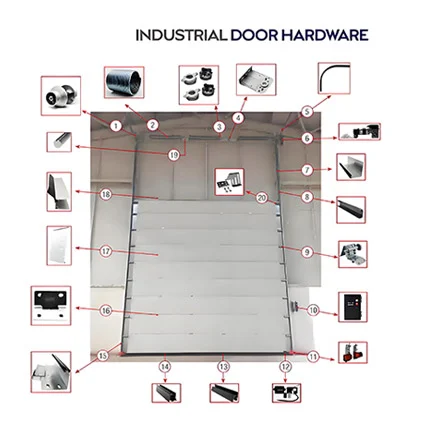
| Control Variable | Catalog-Based Data Point | Practical Acceptance Logic | Risk If Ignored |
|---|---|---|---|
| Door height | 96″ to 400″ | Match drum by lift envelope | Cable wrap margin error |
| Door weight | 240kg to 750kg | Match load rating before movement | Uneven tension and overload risk |
| Cable diameter | 1/8″ to 1/4″ | Confirm groove contact suitability | Edge pressure or poor seating |
| Shaft diameter | 1″ | Verify shaft interface before assembly | Fit error or unstable rotation |
| Drum model | 8F to 28VL range | Keep model identity visible | Wrong-site installation |
유용한 팁 / 체크리스트
- Confirm the actual door height before selecting the drum model.
- Compare door weight against the listed maximum door weight, not a generic product family name.
- Match cable diameter exactly against 1/8″, 5/32″, 3/16″, 또는 1/4″ data where applicable.
- Verify the shared 1″ shaft interface before the hardware leaves the staging area.
- Pair left and right drums and inspect groove surfaces for burrs, dents, or visible casting defects.
- Reject any internal order line that says only “garage door drum” without height, weight, and cable diameter.
The strongest factory-side control is disciplined specification separation. Drum 8F and Drum 28VL are not simply two shapes in the same bin. One carries 96″ maximum door height, 240kg maximum door weight, 및 1/8″ maximum cable diameter. The other carries 336″ maximum door height, 750kg maximum door weight, 및 1/4″ maximum cable diameter. The difference is the application envelope. When teams preserve that envelope through quotation, packing, inspection, and installation, the drum becomes a predictable system component instead of a small part discovered too late.
자주 묻는 질문(FAQ)
How much is a garage door?
A garage door price depends on door size, material, insulation, hardware system, opener configuration, and installation requirements. For drum-related projects, price discussions should also include door height, door weight, cable diameter, and shaft size because these values affect the correct hardware selection.
How much is it for a new garage door?
A new garage door cost varies by panel type, track layout, spring system, opener, local labor, and required hardware. If the door is taller or heavier than standard, the cable drums should be checked against rated height, rated weight, maximum cable diameter, and 1″ shaft compatibility.
How to reprogram a Genie garage door remote?
Remote programming depends on the opener model and the manufacturer’s instructions. It is separate from drum selection. If the door moves unevenly after remote activation, the issue is usually not remote programming; the mechanical system should be checked for cable alignment, drum fit, and lifting balance.
How to program a garage door opener remote?
Follow the opener manufacturer’s learn-button or remote pairing procedure for the specific model. Programming the remote only controls the opener signal. It does not correct cable drum mismatch, wrong cable diameter, improper drum pairing, or a door weight that exceeds the selected hardware envelope.
 English
  Русский
  日本語
日本語  한국어
한국어  Français
  Deutsch
  العربية
  Português
  Español