
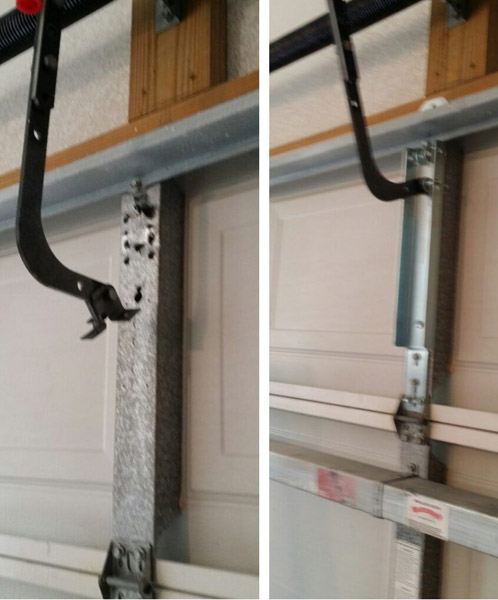
Bracket-Load Integrity and Mechanical Reliability of Angle Iron Brackets
In demanding structural support scenarios, angle iron brackets play a pivotal role in distributing loads and maintaining system reliability. This article explores how angle iron brackets contribute to secure garage door assemblies and other mechanical systems, emphasizing the importance of stress and fatigue evaluation for long-term operational safety.
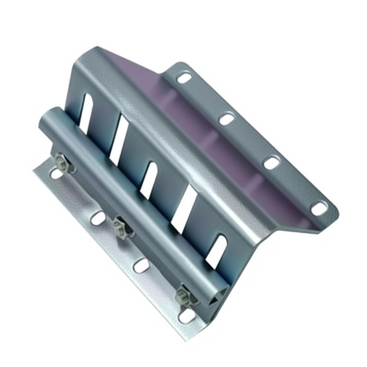
In structural support applications, the use of angle iron brackets is fundamental for distributing mechanical loads and maintaining system integrity. Installation planners and structural component installers frequently rely on these brackets to ensure that garage door assemblies, sectional doors, and roller-track mechanisms remain secure under operational stresses. However, concerns regarding load-bearing failure persist, particularly in scenarios where improper bracket selection, suboptimal installation, or unanticipated fatigue can compromise reliability. This structured analysis examines the stress and fatigue characteristics of angle iron brackets, focusing on their role in structural load distribution and the technical parameters that determine long-term performance. Each section addresses the requirements for mechanical reliability, the evaluation of stress factors, and the engineering checks necessary to mitigate the risk of failure.
Angle iron brackets are typically fabricated from cold-formed or hot-rolled steel, with cross-sectional profiles forming a right angle—commonly 90 degrees. The geometry of the bracket, including flange width, thickness, and leg length, directly influences its load-bearing capacity. In garage door hardware systems, these brackets are used to anchor torsion spring assemblies, support horizontal and vertical tracks, and secure sectional panels. The bracket’s ability to distribute concentrated loads across a broader surface area is vital for preventing localized stress concentrations that could initiate material failure.
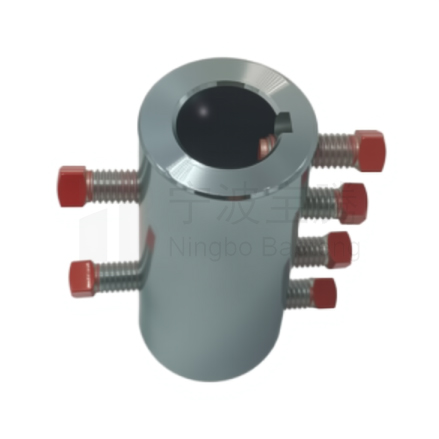
Material selection is a primary consideration in bracket design. Low-carbon steels (such as ASTM A36) are frequently chosen for their ductility and weldability, but higher-strength alloys may be specified where increased load demands or fatigue resistance are required. Galvanized coatings or powder finishes are often applied to enhance corrosion resistance, particularly in environments prone to moisture or chemical exposure. The bracket’s manufacturing process—whether stamped, welded, or bolted—also affects its mechanical properties, with weld quality and heat-affected zones being critical points for stress analysis.
The connection method between the angle iron bracket and the supporting structure is another determinant of reliability. Bolted connections are standard, with hole patterns designed to distribute shear and tensile forces evenly. The use of high-strength fasteners (such as Grade 5 or Grade 8 bolts) is recommended in high-load scenarios to prevent bolt shear or thread stripping. In some assemblies, brackets may also be welded directly to steel framing members, necessitating careful inspection of weld penetration and alignment to avoid stress risers.
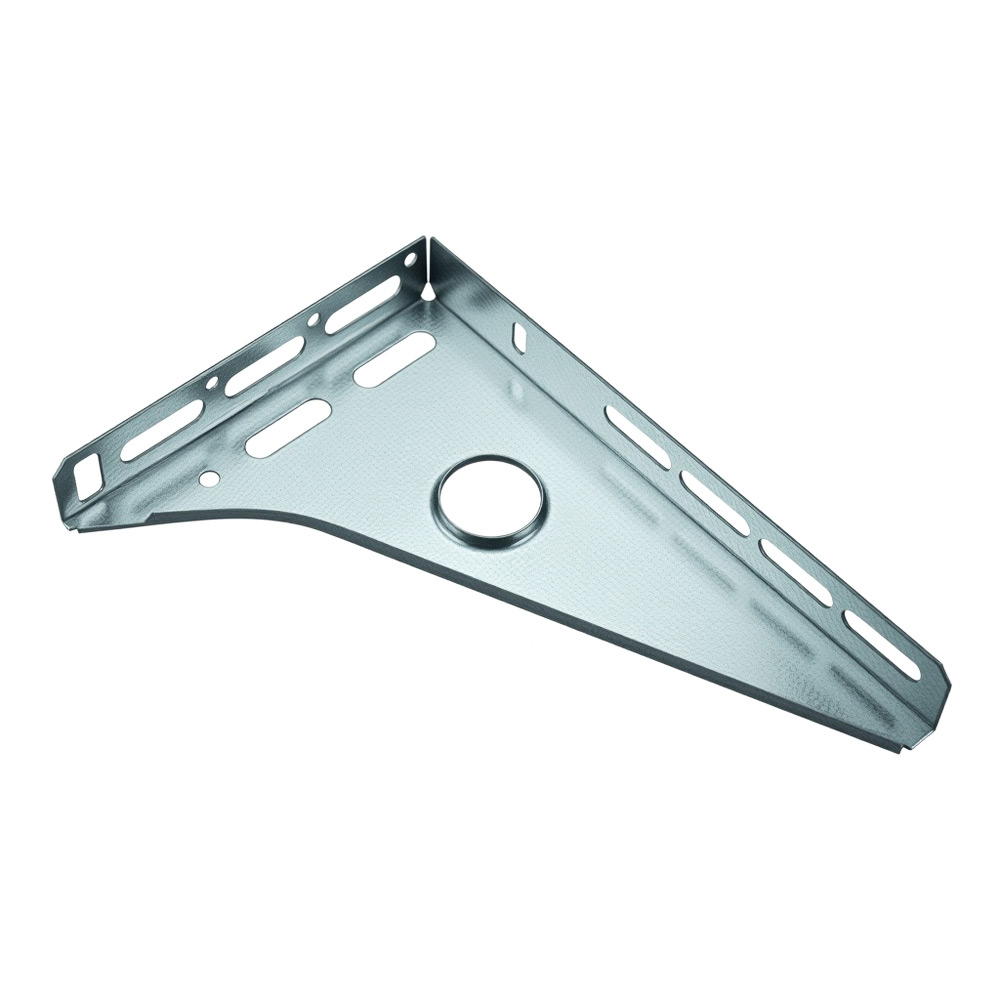
The reliability of angle iron brackets under operational loads is governed by their ability to withstand both static and dynamic forces without yielding, buckling, or experiencing fatigue-induced cracking. Static loading refers to the constant forces applied by the weight of the supported structure, while dynamic loading encompasses variable forces such as wind loads, door movement, and impact events. For installation planners, it is essential to calculate the maximum expected load and apply a suitable safety factor—typically ranging from 1.5 to 2.5 depending on application criticality and code requirements.
Stress analysis involves calculating the maximum bending moment and shear force experienced by the bracket. For a simple cantilevered bracket supporting a uniformly distributed load, the maximum bending stress can be determined using the formula:
σ = (M * c) / I
where σ is the bending stress, M is the maximum moment, c is the distance from the neutral axis to the outer fiber, and I is the moment of inertia of the bracket section. Shear stress, particularly at the connection points, must also be evaluated to prevent bolt hole elongation or bracket tear-out. Finite element analysis (FEA) is increasingly used to model complex bracket geometries and loading scenarios, allowing engineers to visualize stress distribution and identify high-risk regions.
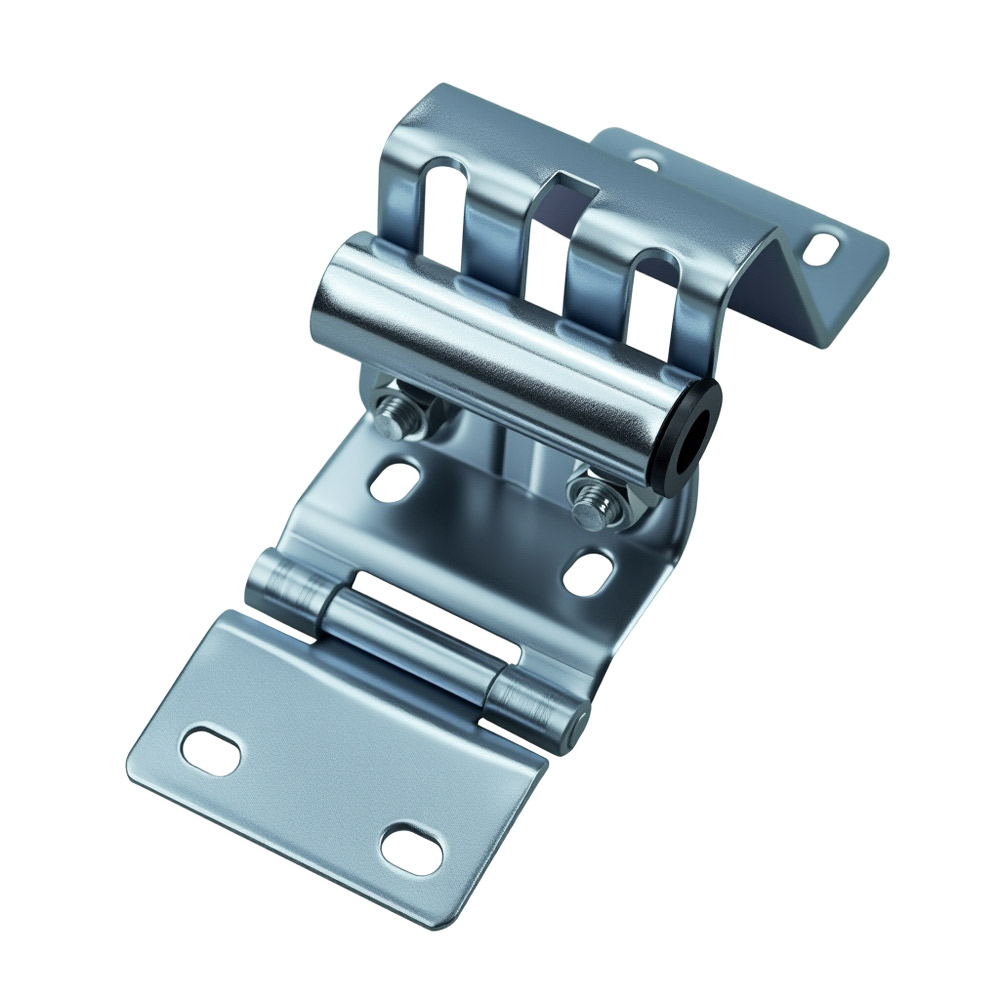
Fatigue is a critical consideration in applications where the bracket is subjected to repeated loading cycles, such as the opening and closing of a garage door. Even if the applied stress remains below the material’s yield strength, cyclic loading can initiate microcracks that propagate over time, ultimately leading to fracture. The fatigue life of an angle iron bracket is influenced by factors such as surface finish, presence of notches or sharp corners, weld quality, and residual stresses from manufacturing. To mitigate fatigue risk, engineers may specify radiused corners, smooth surface finishes, and post-fabrication treatments such as shot peening or stress relief annealing.
The evaluation of angle iron brackets for structural support must also consider the effects of environmental exposure. Corrosion can significantly reduce the cross-sectional area of the bracket, diminishing its load-carrying capacity and accelerating fatigue crack growth. In coastal or industrial environments, the use of stainless steel brackets or enhanced protective coatings is recommended. Regular inspection and maintenance are necessary to detect early signs of corrosion, deformation, or fastener loosening, all of which can precede catastrophic load-bearing failure.
To evaluate the suitability of angle iron brackets for a given application, installation planners should conduct a comprehensive technical assessment that includes:
- Verification of bracket geometry and material properties against specified load requirements.
- Calculation of maximum expected static and dynamic loads, including the application of appropriate safety factors.
- Detailed stress and fatigue analysis using analytical methods or FEA, with attention to connection points and welds.
- Assessment of environmental conditions and selection of corrosion-resistant materials or coatings as needed.
- Review of installation procedures to ensure correct fastener selection, torque application, and alignment.
- Implementation of a maintenance and inspection schedule to monitor bracket condition over the service life of the structure.
The core pain point for installers—load-bearing failure—can often be traced to inadequate technical assessment during the planning and installation phases. Common failure modes include bracket yielding due to underestimation of applied loads, bolt shear resulting from improper fastener selection, and fatigue cracking at weld toes or bolt holes. Each of these failure modes can be mitigated by adhering to engineering best practices and utilizing validated design data.
For projects involving garage door hardware and similar mechanical systems, it is imperative to match the bracket specification to the anticipated service conditions. This includes not only the magnitude of the applied loads but also the frequency and variability of those loads, environmental exposure, and the potential for accidental impact. Engineering documentation should include calculation sheets, material certifications, and installation records to facilitate future inspections and troubleshooting.
In conclusion, the technical reliability of angle iron brackets in structural support roles is contingent upon rigorous stress and fatigue evaluation, careful material and connection selection, and proactive maintenance. Installation planners and structural component installers must prioritize engineering compliance at every stage, from bracket selection through to final inspection. By systematically addressing the factors that contribute to load-bearing failure, the long-term integrity of mechanical support systems can be assured.
Verify bracket specifications for engineering compliance by reviewing load calculations, material certifications, and installation records. Conduct regular inspections focusing on stress concentrations, corrosion, and fatigue-prone regions. Where uncertainty exists regarding bracket adequacy, perform additional stress analysis or consult with a mechanical systems engineer to confirm suitability. This approach ensures that angle iron brackets fulfill their critical role in structural load distribution and maintain operational reliability throughout the service life of the installation.
For further technical documentation and engineering guidelines on garage door hardware, refer to the 엔지니어링 사양 그리고 기술 문서 provided by Baoteng.
 English
  Русский
  日本語
日本語  한국어
한국어  Français
  Deutsch
  العربية
  Português
  Español