
1인치 고정 나사 샤프트 칼라 첫 공개
기준 물질: Relevant material and performance testing standards may include ASTM B633 for zinc electroplated coatings when zinc coating verification is required, and general dimensional inspection practice supported by ISO technical standards. These standards are reference directions only; the catalog data for BT-SH612 does not state coating thickness, salt-spray hours, torque value, pull-out force, or material grade.
간단한 답변
The business value of this part is not created by adding unverified performance claims. It is created by knowing exactly where the catalog evidence stops and where supplier confirmation must begin. For buyers sourcing garage door or industrial door hardware, BT-SH612 should be treated as a 1 inch shaft-positioning component whose practical risk depends on bore fit, screw engagement, coating behavior, and inspection discipline.
For related garage door hardware categories, see Baoteng garage door hardware.
When A 25.4 mm Bore Becomes A Purchasing Boundary
The first confirmed boundary is simple but important: BT-SH612 is listed as a 페룰 with an inside diameter of 25.4 mm / 1 inch 및 아연 도금 마감. That means the article can responsibly discuss compatibility with a 1 inch shaft route, but it cannot claim a precise working load, tightening torque, pull resistance, vibration rating, coating thickness, or screw specification. In practical purchasing language, the 25.4 mm bore is not just a size note. It is the first checkpoint that decides whether the part can even enter a garage door shaft hardware discussion.
The edge-case model starts with a normal dry or semi-outdoor door hardware environment. A round shaft carries repeated movement, small vibration, installation handling, and occasional changes in humidity. The collar is expected to support positioning or limiting along that shaft, but the catalog does not state whether the bore is controlled by a specific tolerance band. A 25.4 mm nominal bore may behave very differently depending on the actual shaft diameter, shaft surface roughness, collar roundness, and screw seating condition. A slightly loose fit can depend heavily on screw pressure. A tight fit can make assembly difficult and may scrape the galvanized surface during installation.
A cross-dimensional test case shows why this matters. Compare two purchase decisions. Buyer A only confirms that the shaft is called 1 inch and orders the collar. Buyer B requests a reference shaft trial fit, a bore go/no-go check, and photos of the set screw seating area before bulk approval. Both buyers are using the same catalog data, but Buyer B turns a nominal catalog dimension into a controlled incoming-inspection route. That difference is more valuable than a longer product description because it reduces hidden mismatch before installation.
| Confirmed Item | Safe Interpretation | Unsafe Extension | Buyer Action |
|---|---|---|---|
| BT-SH612 | Catalog model identity | Not proof of torque capacity | Match model before quotation |
| 페룰 | Shaft-related hardware form | Not proof of collar width | Request dimensional drawing |
| 25.4 mm / 1 inch ID | Nominal shaft fit route | Not proof of tolerance | Ask for bore check method |
| Galvanized finish | Surface protection route | Not proof of salt-spray hours | Request coating evidence if exposed |
| No torque listed | Data gap | Not acceptable to invent torque | Request set screw data |
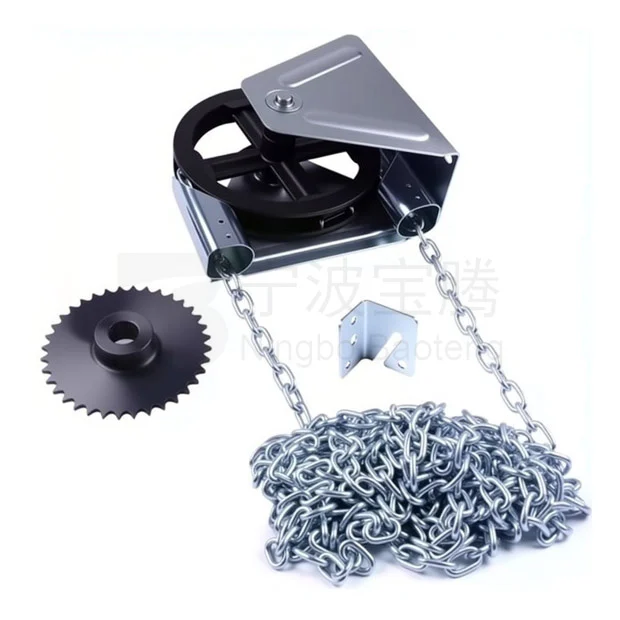
This first H2 deliberately treats the part as a purchasing boundary, not as a proven mechanical stop. The distinction protects the content from overclaiming. A catalog item with a 25.4 mm bore can support shaft-size screening, replacement route discussions, and model confirmation. It cannot support statements about heavy-duty locking performance unless the supplier provides test records.
The Hidden Risk Is Not The Collar, But The Missing Fit Evidence
The hidden risk in a set screw shaft collar is often not the visible metal ring itself. The larger risk is the missing fit evidence behind it. The catalog confirms the bore and finish, but it does not list the outside diameter, collar width, set screw size, thread type, recommended tightening torque, screw tip geometry, material grade, 또는 post-tightening axial holding result. In a low-detail catalog environment, these missing fields become operational risk.
Mechanically, a set screw style collar relies on localized screw pressure. The screw creates normal force against the shaft, and that force increases friction between the collar and the shaft surface. If the screw tip is too sharp, it can mark the shaft surface. If the screw tip is too flat or the thread engagement is shallow, the collar may feel tight during installation but lose security under vibration. If the bore is slightly oversized, the screw becomes the main alignment and holding element. If the bore is too tight, the installer may force the collar into position, producing coating damage before the collar is even tightened.
An edge-case fatigue model can be built without inventing a load value. In the initial stage, the collar installs smoothly and the screw appears seated. In the middle stage, repeated door movement and shaft vibration can create micro-movement between metal surfaces if holding force is not sufficient. In the limit stage, small relative movement may enlarge surface marks, disturb the galvanized finish, and reduce friction consistency. This does not mean failure is guaranteed. It means that without torque and holding-force evidence, the buyer cannot classify the part confidently for a high-vibration door position.
A useful comparison test is not a destructive laboratory claim. It is a simple procurement evidence comparison:
| Evidence Requested Before Order | Low-Risk Interpretation | Remaining Limit |
|---|---|---|
| 1 inch reference shaft trial fit | Confirms practical assembly feel | Does not prove long-term vibration life |
| Bore go/no-go check | Reduces size mismatch risk | Depends on gauge discipline |
| Thread engagement check | Confirms screw can seat correctly | Does not prove screw material |
| Galvanized surface visual check | Screens obvious surface defects | Does not measure coating thickness |
| Post-tightening slip observation | Gives basic assembly feedback | Not a certified holding-force test |
This section avoids the older angle of turning the collar into a direct stop-point story. Instead, it treats the product as a fit-evidence problem. That shift is important for search intent because industrial buyers often need to know what to ask before ordering, not only what the part is called. When a catalog has limited data, the smartest content angle is not to pretend the missing values exist. The correct approach is to convert the gaps into a disciplined inquiry sequence.
Galvanized Surface Under Clamp Pressure: What Can Be Said Safely
A galvanized finish gives the collar a protective surface route, but it does not automatically define chemical resistance, abrasion resistance, coating thickness, or salt-spray performance. The safe statement is narrow: BT-SH612 is cataloged with a 아연 도금 마감. The unsafe statement would be to claim a specific number of salt-spray hours, outdoor corrosion lifetime, or zinc thickness without supplier records.
The physical mechanism under clamp pressure is straightforward. A set screw applies concentrated pressure to the shaft. That pressure can produce a local indentation or surface mark, depending on screw tip geometry, shaft hardness, and tightening force. Around that contact point, the collar and shaft may experience micro-slip when vibration is present. If the galvanized layer is scratched during assembly, the protective continuity of the surface can be interrupted. Once exposed metal is present, moisture and oxygen can support localized corrosion, especially at edges, scratches, and contact points where water can sit.
The edge-case model here is a semi-outdoor installation with humidity swings. In the early period, the galvanized surface may look uniform after installation. In the middle period, tool contact, shaft sliding, or screw tightening may create bright scratches or compressed contact marks. In the severe period, if moisture repeatedly reaches damaged points, corrosion may start locally before the rest of the collar shows visible change. This model is based on general surface protection behavior, not a stated test result for BT-SH612.
A cross-dimensional test case can compare two inspection routes. Route one only checks whether the collar looks galvanized before shipment. Route two checks visible coating coverage, burrs around the bore, screw hole cleanliness, and surface condition after trial tightening on a reference 1 inch shaft. Route two is stronger because it observes the coating before and after mechanical contact. It still does not replace a formal coating thickness test or salt-spray test, but it gives the buyer a more realistic picture of installation sensitivity.
주요 요점
- A nominal 아연 도금 마감 should not be translated into a claimed salt-spray rating unless the supplier provides test records.
- Scratches near the bore or screw seating area are more relevant than general surface brightness.
- If the part must work in a humid or vibration-prone position, trial tightening on a reference 1 inch shaft is more useful than appearance review alone.
The safest writing position is to separate confirmed finish from unconfirmed performance. Galvanizing can help surface protection, but clamping pressure, tool contact, and shaft friction can create localized damage. That is the real engineering issue for a buyer: not whether the surface is described as galvanized, but whether the supplier can show how the surface behaves after assembly.
A Factory Confirmation Route Before High-Vibration Door Use
Before using BT-SH612 in a high-vibration door hardware position, a factory confirmation route should be requested. This route should be described as a reasonable inspection and validation method, not as a catalog-proven result. The catalog does not claim torque testing, pull-out testing, salt-spray hours, or certified holding force. Therefore, the factory route must be built around practical checks that match the known data: BT-SH612, 25.4 mm / 1 inch inside diameter, 및 아연 도금 마감.
Solution 1: 1 inch reference shaft trial fit.
Execution Protocol: The factory should mount sample collars on a clean 1 inch reference shaft and record whether the collar slides into position without forcing, rocking, or visible scraping. The check should include pre-tightening movement and post-tightening seating observation. This does not create a certified performance value, but it verifies that the nominal 25.4 mm bore is usable in a realistic assembly sequence.
Material Expected Evolution: A stable fit should show limited visible coating disturbance during normal placement. If the bore is rough or tight, the galvanized surface may show early scratches. If the bore is loose, the screw may carry too much alignment responsibility.
Hidden Cost and Side-Effect Control: The main cost is added inspection time. To prevent subjective results, the factory should use a consistent reference shaft and record visual evidence from the same viewing angle.
Solution 2: Bore go/no-go check.
Execution Protocol: A bore checking method should confirm that the 25.4 mm nominal inside diameter is not drifting outside the supplier’s internal acceptable range. A go/no-go check is especially useful for repeated batches because it is faster than full dimensional reporting while still screening obvious fit mismatch.
Material Expected Evolution: Better bore consistency reduces assembly force variation. It also lowers the chance that installers will damage the galvanized finish by forcing the part onto the shaft.
Hidden Cost and Side-Effect Control: Go/no-go checks do not show full geometry. If the application is sensitive, request drawing-based measurement for bore roundness and width in a future evidence packet.
Solution 3: Thread engagement and set screw seating check.
Execution Protocol: The screw should enter cleanly, seat predictably, and tighten without cross-threading or sudden resistance. The factory should confirm that the thread path is clean and that the screw reaches the shaft contact position smoothly.
Material Expected Evolution: Smooth thread engagement reduces the risk of installer overcorrection. If the screw binds, the installer may apply excessive tool force, increasing the chance of damaged threads or uncontrolled point pressure on the shaft.
Hidden Cost and Side-Effect Control: This check requires the screw to be present and matched to the collar. Because the catalog does not state screw specification, the buyer should request exact screw data before approving critical use.
Solution 4: Post-tightening slip observation and surface review.
Execution Protocol: After tightening on a 1 inch reference shaft, the collar should be observed for obvious movement under controlled manual force or basic fixture handling. The galvanized surface near the contact and bore areas should be reviewed after disassembly.
Material Expected Evolution: A stable sample should not show immediate uncontrolled movement under basic handling. Surface marks may still occur because set screw pressure is localized, but excessive scratching or flaking would justify deeper review.
Hidden Cost and Side-Effect Control: This is not a certified axial holding test. It is a practical screening step. For high-vibration use, the buyer should later request measured axial holding force, tightening torque, and batch inspection photos.
| Confirmation Step | Known Data Used | Practical Test Basis | Acceptance Logic |
|---|---|---|---|
| Reference shaft fit | 25.4 mm / 1 inch ID | Trial assembly | Smooth placement without forcing |
| Bore check | Nominal bore size | Go/no-go or dimensional check | Reduced size mismatch risk |
| Thread check | Set screw function | Screw engagement observation | No cross-threading or binding |
| Surface review | Galvanized finish | Visual check before and after tightening | No severe scratches or coating defects |
| Slip observation | Shaft positioning role | Basic post-tightening handling | No immediate uncontrolled movement |
유용한 팁 / 체크리스트
- Confirm the model identity as BT-SH612 Ferrule before comparing offers.
- Ask whether the supplied part is matched to a 25.4 mm / 1 inch shaft by trial fitting.
- Request the set screw size, thread type, screw material, and screw tip form.
- Do not accept torque or holding-force claims unless records are supplied.
- Review galvanized surface condition before and after sample tightening.
- Ask for bore inspection method, not only catalog pictures.
- Separate ordinary dry hardware use from humid, corrosive, or high-vibration service.
- Keep future requests open for collar width, screw hole position, and measured axial holding data.
This confirmation route is deliberately practical. It does not overstate what the catalog proves, but it gives buyers a way to turn limited product information into safer procurement decisions. The key is to treat every missing performance value as a request for evidence rather than as a blank space to fill with assumptions.
자주 묻는 질문(FAQ)
Is a set screw shaft collar related to how to install a garage door seal?
No. A garage door seal is a weather-control component, while a set screw shaft collar is a shaft-positioning hardware component. The relevant overlap is only the broader garage door hardware environment. For BT-SH612, the key checks are 1 inch bore fit, screw engagement, and galvanized surface condition.
Can a set screw shaft collar affect how to reset a garage door opener?
Normally no. Resetting a garage door opener is an electrical or control procedure. A shaft collar belongs to the mechanical hardware side. It should only be reviewed if the door mechanism has physical shaft movement, unusual vibration, or hardware positioning problems unrelated to the opener’s programming.
Does a Chamberlain or Genie opener setting prove shaft collar compatibility?
No. Opener setup and keypad programming do not prove compatibility for a mechanical shaft collar. BT-SH612 compatibility should be confirmed by the 25.4 mm / 1 inch inside diameter, real shaft trial fit, screw seating check, and supplier evidence for any demanding vibration condition.
What should a buyer request before ordering BT-SH612 for door shaft use?
Ask for a reference shaft trial fit, bore inspection method, screw specification, thread engagement confirmation, galvanized surface review, and post-tightening slip observation. These checks are reasonable because the catalog confirms the bore and finish but does not provide torque, pull resistance, coating thickness, or material grade.
Is galvanized finish enough for outdoor garage door hardware?
Not by itself. A galvanized finish indicates a surface protection route, but it does not state coating thickness, salt-spray performance, or corrosion lifetime. If the part will face moisture, chemical exposure, or outdoor cycling, request coating evidence and sample review after assembly.
 English
  Русский
  日本語
日本語  한국어
한국어  Français
  Deutsch
  العربية
  Português
  Español