
Garage Door Bottom Seals: Site Geometry Comparison
기준 물질: Relevant material and performance testing standards include ASTM D395 for rubber compression set, ASTM D2240 for Shore hardness, and ISO 37 for rubber tensile behavior, applied cautiously as material-level references rather than catalog-specific claims.
간단한 답변
A bottom seal looks simple from a distance, yet it behaves like a moving pressure interface. Every closing cycle forces the seal to absorb vertical load, sweep across a floor edge, compress against dust and moisture, and recover enough shape to repeat the next cycle. For buyers comparing replacement garage door bottom seal options, the useful question is not only “PVC or EPDM?” or “Which panel thickness?” A more practical comparison starts with the slab: high spots, shallow dips, worn thresholds, and slight door skew can make the same seal act firm in one zone and under-compressed in another.
The catalog data provides a clear factual base: the listed bottom seal family includes BT-P316 Bottom seal in PVC, BT-A317 Bottom Seal in EPDM, and EPDM bottom seals suitable for 50mm panels, 40mm panels, 및 80mm panels. Related sealing products also include EPDM side and top seals. That product range indicates a garage-door sealing system designed around both material behavior and panel geometry. The article below compares site geometry scenarios instead of repeating a basic material comparison, because slab behavior is often where a correct seal specification becomes a reliable installed result.
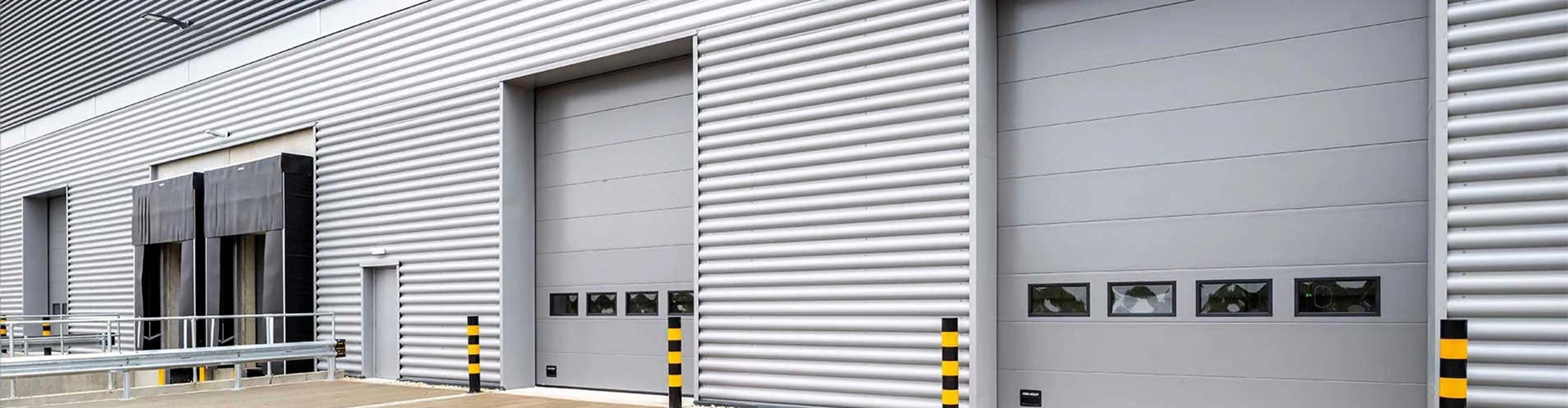
For broader company and product context, see Baoteng garage door hardware and sealing solutions.
Reading Garage Door Bottom Seals Through Uneven Concrete Profiles, Not Product Labels
The first comparison is between two doors that appear identical on paper but sit on different concrete profiles. Door A closes onto a relatively flat slab. Door B closes onto a slab with a raised edge near one jamb and a shallow dip near the center. Both may use garage door bottom seals from the same material family, but their installed behavior will diverge. On Door A, compression can distribute more evenly from left to right. On Door B, the raised section may over-compress one short area while the center dip leaves the seal lightly loaded. The product label stays the same; the working pressure map changes.
This is why a bottom seal should be understood as a deformable contact body. PVC 그리고 EPDM are both polymer materials, but the seal’s useful performance depends on how its cross-section is squeezed and released. PVC can provide defined shape and contact, while EPDM is commonly chosen where elastic recovery and weathering behavior are important. The catalog’s EPDM options for 40mm, 50mm, and 80mm panel suitability show that panel geometry matters, yet the slab adds another dimension: even a correctly selected panel-compatible seal can leave gaps if the ground contact surface is uneven.
Edge extreme scenario model: imagine a sectional door that closes onto a threshold where one side reaches contact before the other. During the initial closing stage, the first contact zone begins compressing while the opposite side is still descending. At the middle stage, the seal may drag slightly across the raised area, creating localized friction. At the final stage, the operator or door weight forces closure, but low areas of the slab may still have weaker contact. The result is not a single pass-or-fail seal condition; it is a left-to-right compression gradient.
A cross-dimensional comparison test can be framed without inventing catalog data. Place a PVC bottom seal and an EPDM bottom seal into the same uneven-floor observation model, then compare the failure signatures rather than claiming numerical results. PVC may show a sharper shape response where it contacts a high point, while EPDM may distribute deformation more elastically. Yet either material can fail to seal a low dip if the cross-section and installed compression are not sufficient. In other words, material matters, but surface geometry decides whether that material can work as intended.
A useful field observation is to inspect the floor before naming the part. If a gap appears only in one location after closure, the problem may not be the entire garage door seal bottom. It may be the slab profile, the door’s closing angle, or a mismatch between the bottom groove and the selected seal shape. The more uneven the floor, the more important it becomes to specify the bottom seal as part of a site-contact system, not just as a replacement strip.
When a Closed Door Becomes a Pressure Map for Garage Door Bottom Seals
A closed door is not a static picture; it is a pressure map. Under the bottom edge, four zones can exist at the same time: high-pressure zones, low-pressure zones, open-gap zones, and drag zones. This pressure-map comparison is more useful than a simple pass-fail inspection because many seal complaints appear only after repeated operation. A seal can look acceptable immediately after installation, yet its pressure pattern may reveal future leakage, dust paths, or wear.
The catalog confirms bottom seal materials and panel suitability, but it does not state a universal pressure value. That is appropriate because real compression depends on the installed door. A 50mm panel EPDM bottom seal can behave differently from a 40mm panel EPDM bottom seal because the panel body, bottom retainer geometry, and closing position influence how the seal sits at the floor. An 80mm panel environment may involve a heavier or thicker door assembly, but the seal still needs contact consistency rather than simple bulk.
Pressure-map extreme model: at the early stage, a new seal may have enough elastic memory to fill minor irregularities. At the mid-use stage, repeated compression can begin to reveal which regions are overstressed. High-pressure zones may polish, flatten, or collect abrasion marks. Low-pressure zones may show dust trails or light leakage. At the late stress stage, the seal may still be physically present but no longer perform evenly across the full opening. This model does not assign a fake service life; it simply tracks how contact behavior changes under repeated compression, friction, moisture, and thermal cycling.
| Pressure zone | Likely site cause | Seal behavior to compare | Practical inspection signal |
|---|---|---|---|
| High-pressure edge | Raised concrete or door skew | Local flattening or heavier drag | Faster wear near one side |
| Low-pressure middle | Shallow slab dip | Weak compression and air path | Dust or light under center |
| Drag zone | Rough threshold or misaligned closing path | Friction during movement | Scrape sound or streaking |
| Alternating zone | Seasonal movement or uneven load | Variable recovery after cycles | Intermittent leak pattern |
| Full-contact zone | Stable slab and correct seating | More consistent seal compression | Even shadow line at closure |
A cross-dimensional comparison test can pair visual inspection with simple paper-strip resistance. Without pretending it is a certified lab method, a technician can compare resistance along several points under a closed door. Strong resistance at the left, weak resistance at the center, and no resistance at the right suggests a pressure-map problem. If this pattern repeats after opening and closing several times, the issue is more likely geometric than cosmetic.
주요 요점
- Uneven dust trails under the door can appear before a full visible gap develops.
- One-sided abrasion may indicate slab high points or closing-angle imbalance.
- A seal that looks intact can still perform poorly if compression is uneven across the opening.
The most important comparison is between appearance and function. A clean, new bottom seal can fail if the floor is wrong. A worn-looking seal may still block drafts in some zones while failing in another. Pressure mapping prevents the buyer from treating every problem as a material defect.
Service Clues That Reveal Garage Door Bottom Seals Are Fighting the Slab
Service clues often tell a more accurate story than the product label. Localized wear, repeated dirt lines, water entry at one corner, a scraping sound during the last part of closure, or a slight change in opening resistance can indicate that the seal is fighting the slab profile. These symptoms do not prove a catalog defect. They show that the bottom seal is absorbing uneven mechanical demand.
For PVC garage door bottom seal applications, the service clue to watch is shape rigidity under repeated bending and low-temperature exposure. PVC may become less forgiving when it is forced to flex over a raised or rough surface again and again. For EPDM garage door bottom seal applications, the clue is not simply “EPDM is flexible.” EPDM still depends on cross-section control, installation seating, and compression range. If it is under-compressed in a slab dip or over-compressed at a high ridge, the elastic advantage cannot eliminate the geometry problem.
Edge extreme scenario model: a door closes every day onto a threshold where the outer corner is slightly higher than the center. In the initial phase, the seal compensates. In the middle phase, the high corner begins to show polish or flattening. In the extended stress phase, the center gap becomes more noticeable because the door’s closing force is being consumed by the high spot before the low spot receives enough contact. This explains why water or dust may enter in the middle even though the seal looks most worn at the edge.
A cross-dimensional comparison test can look at three evidence layers: visual wear, sound, and residue. Visual wear shows where contact is strongest. Sound reveals drag or scraping during motion. Residue shows where air and dust have been moving through low-pressure channels. When these three clues point to different positions, the system is not experiencing uniform failure; it is experiencing a slab-contact conflict.
There is also a secondary chain effect. Uneven bottom-seal compression can cause the user to adjust the door closing force, blame the operator, or replace the wrong component. Over-adjustment may mask the seal issue while increasing mechanical stress elsewhere. A practical service diagnosis should separate bottom seal wear from door alignment, threshold roughness, and retainer seating. The bottom seal is only one part of the lower-door contact system, but it is often the first visible part to show the conflict.
Specifying Garage Door Bottom Seals by Site Geometry Before the Order Is Released
A better comparison for buyers is not “which seal sounds stronger?” It is “which specification conversation reduces installed uncertainty?” Before ordering, the site should be described in practical geometry terms: panel thickness, bottom retainer condition, slab flatness, corner gaps, visible water-entry points, and whether the door closes squarely. The catalog facts support this approach because the bottom seal range includes material and panel-suitability distinctions, especially EPDM versions associated with 40mm, 50mm, 및 80mm panels.
Solution 1: Confirm panel and retainer geometry before material selection.
Execution protocol: Identify the panel thickness and bottom channel condition before naming the replacement. A seal designed for a specific panel environment should not be treated as a universal strip. The installer should compare the existing retainer, the bottom edge shape, and the closure position so that the chosen bottom seal seats without twisting or being forced into an unstable compression path.
Material expected evolution: Better seating reduces uneven bending, allowing PVC or EPDM to deform closer to its intended cross-section. This does not create a new material property, but it helps preserve shape recovery and contact consistency.
Hidden cost control: Extra measurement time may seem inconvenient, but it reduces repeat service visits caused by loose seating, edge gaps, or friction noise.
Solution 2: Map the slab before judging the seal.
Execution protocol: Observe the threshold with the door open, then close the door and inspect light, dust, and contact along the full width. Mark high-contact and low-contact zones. The goal is not to certify a floor, but to prevent a buyer from selecting a seal without knowing the contact surface it must work against.
Material expected evolution: When slab irregularity is known, the selected seal can be expected to work within a more realistic compression pattern. Over-compression zones and under-compression zones can be predicted before installation.
Hidden cost control: The risk is over-correcting the seal when the floor is the root condition. Separating slab geometry from seal selection avoids unnecessary product changes.
Solution 3: Use incoming inspection for material identity and basic dimensions.
Execution protocol: Check whether the supplied seal matches the ordered material family, such as PVC or EPDM, and verify the intended panel suitability where applicable. Inspect for surface defects, deformation, cracks, bubbles, burr-like edges, or inconsistent extrusion shape.
Material expected evolution: Consistent cross-section supports more predictable compression. A visibly distorted seal may begin service with uneven contact memory, especially when forced against a rough threshold.
Hidden cost control: Rejecting questionable pieces before installation prevents the higher cost of diagnosing failure after the door has entered service.
Solution 4: Validate closure behavior after installation, not only fit during assembly.
Execution protocol: After installation, close and open the door through several cycles and inspect the bottom edge again. The seal should not twist, pull out, drag heavily, or leave obvious gaps. A static fit check is insufficient because real performance appears during motion and recovery.
Material expected evolution: A properly seated seal should show more stable compression response after repeated cycles, while a poorly seated seal will reveal twisting, localized abrasion, or gap movement.
Hidden cost control: Early validation reduces callbacks and prevents operators from compensating with force adjustments that do not solve the sealing interface.
| Specification variable | Comparison focus | Practical acceptance logic | Relevant test reference |
|---|---|---|---|
| Material identity | PVC or EPDM | Confirm ordered material before installation | Material verification practice |
| Cross-section consistency | Shape stability | No visible distortion, cracks, or bubbles | Visual and dimensional inspection |
| Elastic recovery | Compression behavior | Seal rebounds after closure cycles | ASTM D395 as material reference |
| Hardness behavior | Contact feel and deformation | Consistent hardness across sample areas | ASTM D2240 as material reference |
| Tensile behavior | Resistance to tearing during handling | No premature tearing during installation | ISO 37 as material reference |
| Installed contact | Real sealing function | Even practical contact across threshold | Site closure validation |
유용한 팁 / 체크리스트
- Confirm whether the required bottom seal is PVC or EPDM before ordering.
- Record the door panel thickness, especially where 40mm, 50mm, or 80mm panel suitability may apply.
- Inspect the threshold for high spots, dips, cracks, and rough edges.
- Check the bottom retainer for distortion before blaming the seal.
- Observe the closed-door gap pattern across the full width.
- Run several opening and closing cycles before approving the installation.
- Separate water-entry symptoms from material complaints during troubleshooting.
The most reliable specification language is site-based. Instead of asking only for an industrial garage door bottom seal, describe how the seal must behave: the panel environment, the slab condition, the visible gap pattern, and the expected exposure to dust, splash, friction, and temperature change. That conversation gives the manufacturer or supplier enough context to recommend a more defensible option within the confirmed material and panel range.
자주 묻는 질문(FAQ)
How much does it cost to install a garage door?
Installation cost depends on door size, hardware condition, labor rate, and whether sealing or track work is included. For bottom seal replacement, cost is usually driven by seal type, retainer condition, slab irregularity, and service access rather than the seal strip alone.
How do I adjust garage door springs?
Spring adjustment is a high-tension task and should be handled by qualified technicians. If a bottom seal gap appears, do not adjust springs first. Check slab profile, seal seating, bottom retainer condition, and door closure alignment before changing spring tension.
How do I reset a Chamberlain garage door opener?
Follow the opener manufacturer’s reset instructions for the specific model. Resetting the opener may solve control issues, but it will not fix bottom seal leakage caused by uneven concrete, poor seal seating, or incorrect compression under the door.
How do I reset a Craftsman garage door opener?
Use the model-specific reset procedure from the opener manual. If the door closes but light, dust, or water still enters under the door, the issue is more likely related to the bottom seal, threshold profile, or door alignment than the opener memory.
How do I change the battery in a Chamberlain garage door opener?
Battery replacement depends on the exact opener or remote model. Replacing the battery can restore control reliability, but it does not change the mechanical contact between the garage door bottom seal and the floor.
 English
  Русский
  日本語
日本語  한국어
한국어  Français
  Deutsch
  العربية
  Português
  Español