
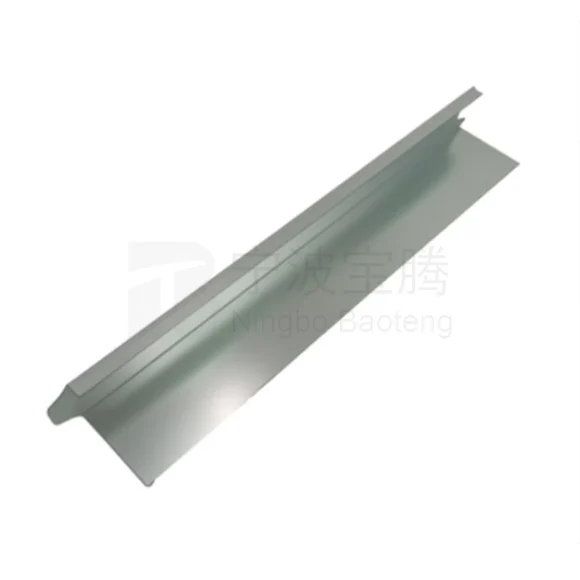
Sliding garage doors rely on the coordinated function of rollers, tracks, and supporting hardware to operate smoothly and safely. Among these components, the end caps affixed to the track termini play a crucial yet often underappreciated role. They serve as physical stops and lateral guides, ensuring roller alignment and protecting track ends from mechanical damage. In dust-intensive workshop environments, where abrasive particulates are prevalent, the mechanical integrity and wear resistance of these end caps become critical to maintaining system reliability. Abrasive dust accelerates surface degradation, leading to dimensional changes that cause roller misalignment—a failure mode that can degrade door performance and compromise safety. This article examines the mechanical behavior of sliding door end caps under abrasive conditions, focusing on the failure mode of end cap wear leading to roller misalignment, the influence of dust-laden environments, and the application of alignment precision test standards for performance validation. The insights presented stem from practical maintenance experience and engineering evaluation aimed at enhancing long-term durability in demanding operational settings.
End caps in sliding door assemblies fulfill two fundamental mechanical functions: acting as physical stops at track ends and providing lateral guidance to constrain roller movement within the intended travel path. Typically fabricated from polymer composites or metal alloys, these components must balance wear resistance, impact tolerance, and dimensional stability under cyclic loading conditions.
Door rollers carry the vertical load of the door, which varies with door size and construction, often ranging from 50 to over 150 kilograms. As the door slides horizontally, rollers transmit both radial and axial forces to the end caps during terminal impacts or lateral deviations. Impact forces exerted on end caps can range from approximately 10 to 50 newtons per event, influenced by door mass, velocity, and operator interaction. Additionally, end caps must resist static lateral loads when the door is stationary to prevent unintended roller displacement.
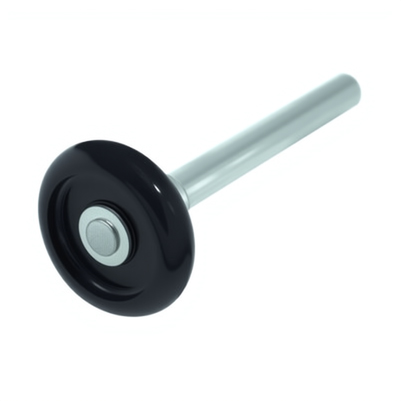
Maintaining precise roller alignment is essential. End caps restrict lateral roller movement within tight tolerances—generally less than 0.5 millimeters—to avoid binding, increased friction, or derailment. Any wear or deformation-induced dimensional change in the end cap alters the effective track geometry, resulting in roller misalignment. This misalignment elevates frictional forces on roller bearings, accelerating wear and increasing the risk of jamming or mechanical failure.
In dust-intensive workshop environments, abrasive particles infiltrate the interface between rollers and end caps, accelerating wear through micro-abrasion mechanisms. This environment demands materials with high surface hardness and low friction coefficients, coupled with fastening methods that maintain secure attachment under vibration and cyclic loading. Thermal expansion effects also merit consideration, as temperature fluctuations common in workshops can induce differential expansion between end caps and tracks, further affecting alignment precision.
The predominant failure mode in sliding door end caps is progressive wear that modifies their dimensional profile, undermining their ability to maintain precise roller positioning. Polymeric end caps, often selected for corrosion resistance and low friction, are vulnerable to surface erosion from repetitive roller contact and impact loading. Over thousands of operational cycles, material loss reduces lateral constraint, allowing rollers to deviate beyond design tolerances.
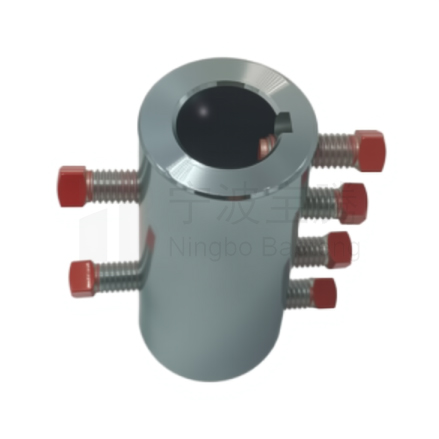
This wear typically presents as surface smoothing, grooving, or localized material removal, which changes contact geometry and leads to uneven load distribution on roller bearings. Uneven loading generates localized stress concentrations, accelerating bearing fatigue and increasing the risk of premature roller failure. Metal end caps generally exhibit lower surface wear but may experience plastic deformation from repeated impacts if the alloy hardness is insufficient or if fasteners permit micro-movements. Such deformation alters track end geometry, similarly causing roller misalignment.
Secondary failure mechanisms frequently involve loosening or detachment of end caps from the track assembly. Operational vibrations combined with cyclic loading can cause fasteners—typically screws or rivets—to back out or shear. Once fixation is compromised, end caps lose positional constraint, enabling lateral roller displacement and elevating derailment risk.
Material cracking or fracturing also presents a concern, particularly in brittle polymer end caps subjected to impact or metal end caps exposed to corrosive environments. These fractures introduce sharp edges that damage rollers and track surfaces, exacerbating mechanical degradation and undermining overall system reliability.
Dust-intensive workshop environments impose significant challenges on end cap durability. Fine abrasive particles penetrate the roller-end cap interface, accelerating wear through micro-abrasion. The abrasive dust acts as a mechanical wedge, forcing rollers laterally and imposing additional stresses on end cap surfaces and fasteners.
For metal end caps, corrosion is a critical factor. Exposure to humidity, chemical vapors, and cleaning agents common in workshops promotes corrosion, which degrades structural integrity by reducing surface hardness and increasing susceptibility to deformation or fracture under load. The combined effects of abrasive wear and corrosion create compounded failure risks, necessitating careful material selection, protective coatings, and maintenance strategies.
Polymeric end caps, while inherently corrosion-resistant, may suffer embrittlement or surface cracking due to exposure to solvents or ultraviolet radiation. These environmental factors degrade mechanical performance and require regular inspection and timely replacement to prevent progressive misalignment and system failure.
Robust validation of end cap performance involves adherence to established industry standards that define dimensional tolerances and mechanical testing protocols. The alignment precision test, as outlined in standards such as ANSI/DASMA 102 and ASTM F2200, provides critical criteria for evaluating end cap dimensional accuracy and roller positioning. Compliance with these standards ensures that end caps maintain roller alignment within acceptable limits, preventing operational impairments.
ANSI/DASMA 102 specifies tolerances for garage door components, including the permissible lateral displacement of rollers relative to track geometry. ASTM F2200 offers comprehensive guidelines for mechanical testing of sliding door hardware, encompassing impact resistance, fatigue life, and wear performance. Testing under this standard subjects end caps to cyclic loading regimes that simulate real-world door operation in abrasive environments. Parameters such as wear rate, deformation under load, and fastener retention are quantitatively assessed to evaluate component durability.
UL 325, primarily focused on door operator safety, incorporates provisions for mechanical component reliability under operational stresses. Testing protocols verify that end caps do not contribute to hazardous misalignment or failure modes that could compromise user safety.
Validation procedures typically include precision measurement of roller alignment before and after accelerated wear testing. Instruments such as laser alignment systems and coordinate measuring machines enable sub-millimeter accuracy in quantifying lateral deviations. Additional assessments include material hardness testing, surface roughness analysis, and fastener torque retention measurements. These comprehensive evaluations confirm that end caps meet design specifications and maintain sliding mechanism precision under combined mechanical and environmental stresses.
Integrating end caps into sliding garage door assemblies requires a comprehensive engineering approach that balances material properties, fastening methods, and environmental resilience. Polymeric end caps are often chosen for their low friction coefficients and inherent corrosion resistance but must be engineered with enhanced wear resistance and impact toughness to withstand abrasive dust and repetitive impacts. Advanced polymer composites or reinforced thermoplastics can provide improved durability in these conditions.
Metal end caps offer superior mechanical strength and impact resistance but require protective surface treatments such as anodizing, powder coating, or the use of corrosion-resistant alloys like stainless steel or aluminum alloys to endure workshop environments. Material selection must also consider thermal expansion compatibility with the track to minimize misalignment caused by temperature fluctuations.
Fastener selection and installation are critical to maintaining end cap integrity. Proper torque application and the use of locking mechanisms—such as thread-locking adhesives or lock washers—are essential to prevent loosening under vibration and cyclic loading. End caps should be designed for straightforward inspection and replacement, as wear progression directly affects roller alignment and overall system reliability.
Maintenance protocols should include regular inspection of end caps for signs of wear, deformation, or fastener integrity loss. Alignment precision tests, as outlined in ANSI/DASMA 102, should be conducted periodically to detect early misalignment caused by end cap degradation. Implementing predictive maintenance strategies based on wear measurement and alignment monitoring can prevent catastrophic failures and extend service life.
Environmental mitigation techniques, such as installing dust seals, employing self-lubricating materials, or applying protective coatings, can reduce abrasive wear on end caps. Material selection should also account for chemical exposure typical in workshops to ensure resistance to solvents and cleaning agents.
This analysis reflects the viewpoint of a mechanical maintenance specialist with direct experience in dust-intensive workshop environments. Validation efforts focus on end cap wear as a primary cause of roller misalignment, with performance assessments aligned to alignment precision test requirements. For engineering teams responsible for garage door end caps, the most robust designs explicitly incorporate environmental factors characteristic of abrasive workshop conditions, document performance against recognized standards, and maintain traceable validation records consistent with ANSI, ASTM, and UL expectations for garage door hardware reliability.
In practical field applications, engineers treating garage door end caps as safety-critical interfaces typically combine finite-life fatigue predictions, scheduled inspection intervals, and conformance to alignment precision test and relevant ANSI, ASTM, and UL requirements to maintain risk within acceptable limits under dust-intensive workshop environment loading profiles.
This analysis was reviewed by a Senior Garage Door Hardware Engineer with practical field experience under dust-intensive workshop environment operating conditions, with validation focused on end cap wear leading to roller misalignment in accordance with alignment precision test compliance requirements.
From an engineering standpoint, long-term reliability of garage door end caps depends on correct fastener selection, verified load transfer behavior, validation under dust-intensive workshop environment exposure, and documented compliance with alignment precision test alongside ANSI, ASTM, and UL safety benchmarks.

 English
  Русский
  日本語
日本語  한국어
한국어  Français
  Deutsch
  العربية
  Português
  Español