
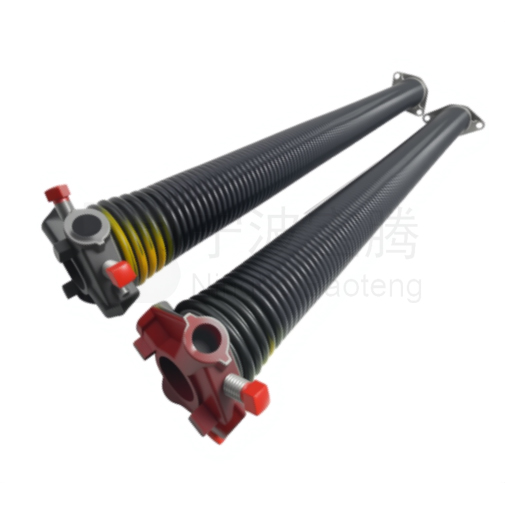
Mechanical Behavior and Fatigue Analysis of Garage Door Pusher Springs Under Cyclic Loading
Introduction
Garage door pusher springs are integral components in the counterbalance systems of overhead doors, tasked with generating torque to offset the door’s weight and facilitate controlled movement. These springs must endure repetitive loading cycles, especially in industrial environments where door operations can number in the thousands daily. The mechanical stresses imposed during these cycles can lead to complex fatigue phenomena, ultimately compromising spring performance and safety. A thorough understanding of the load transfer mechanisms, fatigue failure modes, and environmental influences on these springs is vital for maintenance engineers responsible for system reliability. This discussion delves into the mechanical fundamentals governing pusher spring function, investigates the predominant failure mechanisms—particularly metal fatigue leading to torque loss—and outlines relevant testing protocols that ensure durability under high-cycle industrial usage.
Mechanical Principles & Load Behavior
Garage door pusher springs primarily operate through elastic deformation, storing energy when compressed or extended and releasing it to generate torque assisting door movement. Unlike torsion springs, which twist about a central axis, pusher springs typically function in compression or extension modes, depending on their design and mounting configuration. Their performance hinges on maintaining a consistent force output throughout the door’s travel, compensating for gravitational loads and dynamic effects such as acceleration and deceleration.
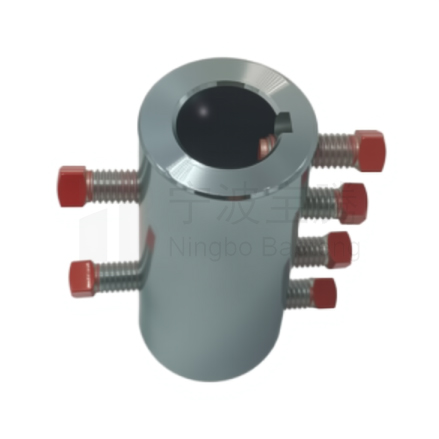
The torque output of a pusher spring is directly related to its stiffness, defined by the spring constant, and the displacement imposed by the door’s position. Key geometric parameters—including wire diameter, coil diameter, and the number of active coils—govern this stiffness. For example, increasing wire diameter enhances stiffness but also raises stress levels within the spring material, potentially accelerating fatigue. Conversely, increasing the number of coils reduces stiffness but improves flexibility, affecting torque consistency.
Material properties critically influence load-bearing capacity and fatigue resistance. High-strength spring steels such as those conforming to ASTM A229 or ASTM A227 standards are commonly selected due to their elevated yield strength and endurance limits. These materials can sustain millions of loading cycles typical in industrial applications without significant degradation when properly designed and manufactured.
Load distribution within the spring is not uniform; stress concentrations arise at coil bends and points of contact with mounting hardware. These localized stresses can exceed average stress levels, becoming initiation sites for fatigue cracks. Additionally, installation parameters—such as alignment and preload—impact load transfer and stress distribution. Misalignment can introduce bending stresses beyond the spring’s design envelope, hastening fatigue damage.
Environmental factors further affect load behavior. Temperature variations induce thermal expansion and contraction cycles, altering residual stresses within the spring material. Exposure to moisture, chemicals, or airborne particulates can initiate corrosion, which reduces effective cross-sectional area and exacerbates stress concentrations. Protective coatings and lubrication mitigate these effects but require regular maintenance to remain effective under industrial conditions.
Failure Modes
Primary Failure
The foremost failure mechanism in garage door pusher springs is metal fatigue, characterized by the initiation and propagation of cracks within the spring wire under cyclic loading. Fatigue occurs when repeated stresses surpass the material’s endurance limit, often localized at coil bends or surface defects. Over time, these cracks grow, diminishing the spring’s ability to generate the necessary torque to counterbalance the door’s weight.
This fatigue-induced torque loss is particularly challenging because it develops gradually and may not be readily detectable during routine inspections. Early fatigue damage can manifest as subtle reductions in spring force, leading to uneven door movement, increased load on other components, and eventual mechanical jamming or failure. In high-cycle industrial environments, where door operations can exceed several thousand cycles per day, fatigue progression is accelerated, necessitating vigilant monitoring.
Secondary Failure
Secondary failure modes include stress relaxation and permanent deformation, commonly referred to as creep, which reduce the spring’s effective preload and torque output over extended periods. Stress relaxation arises from microstructural changes within the spring material under sustained load, leading to a gradual loss of force even without visible damage.
Corrosion-induced pitting is another significant contributor to failure. Pitting acts as a stress riser, facilitating crack initiation and accelerating fatigue progression. Mechanical wear at contact interfaces, such as spring ends against mounting brackets, can cause localized material removal or deformation, altering load paths and increasing stress concentrations.
Improper installation practices, including misalignment or over-compression, introduce bending or torsional stresses that exceed design limits. These off-axis loads exacerbate fatigue damage and may cause permanent deformation, further compromising torque balance.
Environmental Effects
Environmental conditions in industrial settings profoundly influence spring longevity. Temperature fluctuations induce cyclic thermal stresses, which, combined with mechanical loading, can accelerate fatigue crack initiation. Moisture and chemical exposure promote corrosion, which not only reduces cross-sectional area but also degrades material properties critical to fatigue resistance.
Surface treatments such as phosphate coatings or polymer-based paints improve corrosion resistance but are vulnerable to mechanical abrasion during operation. Once compromised, these coatings lose effectiveness, exposing the base metal to corrosive agents. Maintenance protocols must prioritize inspection and reapplication of protective layers to sustain spring integrity.
Humidity, airborne particulates, and chemical vapors common in industrial environments necessitate comprehensive environmental controls and regular lubrication schedules to mitigate degradation. Failure to address these factors can significantly shorten service life and increase the risk of unexpected torque loss.
Testing Standards & Validation
Ensuring the durability and performance of garage door pusher springs under high-cycle industrial usage requires adherence to established testing standards. ASTM A229 provides specifications for high-quality chrome vanadium and chrome silicon spring steels, emphasizing mechanical properties such as tensile strength, hardness, and fatigue endurance. Springs produced to this standard undergo rigorous fatigue cycle testing, simulating millions of operational cycles to verify resistance to metal fatigue leading to torque loss.
UL 325, the safety standard governing door operators, includes requirements for mechanical component durability and performance reliability. Compliance with UL 325 ensures that pusher springs maintain minimum torque output and withstand fatigue stresses encountered during service, reducing the likelihood of sudden failure.
European standard EN 12604 specifies mechanical requirements for overhead door springs, including load-deflection characteristics and fatigue life under cyclic loading. Testing protocols involve subjecting springs to repeated load cycles at prescribed amplitudes and frequencies, closely replicating real-world door operation conditions. Monitoring parameters such as crack initiation, torque degradation, and permanent deformation during these tests provides quantitative data critical for assessing spring reliability.
ANSI standards also contribute to validation frameworks, particularly in defining inspection intervals and maintenance criteria based on fatigue life predictions. Together, these standards establish a comprehensive approach to fatigue cycle testing, ensuring that springs can reliably perform in demanding industrial environments.
Application & Integration
The integration of pusher springs into garage door assemblies demands meticulous attention to load distribution and torque balance to mitigate premature fatigue failure. Accurate sizing of springs relative to door weight and travel distance is essential; undersized springs experience excessive stress, while oversized springs may impose unnecessary load on supporting hardware.
Installation precision is equally critical. Springs must be aligned correctly and mounted securely to prevent off-axis loading and bending stresses. Misalignment not only accelerates fatigue damage but can also cause uneven door movement, increasing wear on rollers and tracks.
Maintenance strategies should incorporate periodic inspection protocols that measure spring force and assess physical condition. Visual examination for corrosion, deformation, or crack formation is fundamental. Torque imbalance detected during operation often signals underlying fatigue damage or mechanical misalignment, warranting immediate corrective action.
Material selection tailored to environmental conditions extends service life. For instance, springs exposed to corrosive atmospheres benefit from stainless steel alloys or enhanced protective coatings. Lubrication schedules should be designed to maintain consistent friction characteristics and prevent corrosion at contact points.
When replacement is necessary, adherence to fatigue cycle test standards such as ASTM A229 and compliance with UL 325 or EN 12604 ensures that new springs meet durability and performance requirements. Combining finite-life fatigue predictions with scheduled inspections and standardized testing protocols allows maintenance personnel to manage risk effectively, maintaining system reliability under high-cycle industrial usage.
The mechanical reliability of garage door pusher springs hinges on their capacity to sustain torque output under extensive cyclic loading typical of industrial applications. Metal fatigue leading to torque loss remains the critical failure mode, exacerbated by secondary effects like stress relaxation, corrosion, and improper installation. Adherence to fatigue cycle test standards, including ASTM A229 and UL 325, provides a validated framework to assess spring endurance and inform maintenance schedules. Mechanical maintenance specialists must integrate precise load analysis, environmental considerations, and rigorous inspection practices to ensure the longevity and safety of these components. A comprehensive understanding of garage door pusher springs’ behavior under operational stresses is essential for preventing premature failure and maintaining balanced, reliable door operation.
This evaluation has been reviewed by a Senior Garage Door Hardware Engineer with extensive field experience in high-cycle industrial environments, emphasizing the critical role of metal fatigue in torque loss consistent with fatigue cycle test compliance. In practice, engineers managing garage door pusher springs as safety-critical elements combine fatigue life modeling, scheduled maintenance, and strict adherence to ANSI, ASTM, and UL standards to maintain operational integrity under demanding loading profiles.
This analysis was reviewed by a Senior Garage Door Hardware Engineer with practical field experience under high-cycle industrial usage operating conditions, with validation focused on metal fatigue leading to torque loss in accordance with fatigue cycle test compliance requirements.
In practical field applications, engineers treating garage door pusher springs,pusher springs as a safety-critical interface typically combine finite-life fatigue predictions, scheduled inspection intervals, and conformance to fatigue cycle test plus relevant ANSI, ASTM, and UL requirements to keep risk within acceptable limits under high-cycle industrial usage loading profiles.

 English
  Русский
  日本語
日本語  한국어
한국어  Français
  Deutsch
  العربية
  Português
  Español