
Bracket-Load Integrity Assessment of Garage Door Top Bracket
The garage door top bracket is a fundamental load-bearing component in sectional garage doors, directly impacting the reliability and safety of the entire system. Understanding its structural role and mechanical durability is essential for preventing operational failures and ensuring long-term performance in demanding environments.
This article presents an engineering-focused evaluation of the garage door top bracket, examining its stress resistance, material selection, and installation quality to help maintenance professionals and engineers systematically reduce structural failure risks.
Mechanical reliability and structural function of the garage door top bracket
In the context of sectional garage doors, the top bracket is a critical load-bearing component that directly influences the mechanical reliability and operational safety of the entire door system. Technicians responsible for maintenance and repair are frequently confronted with concerns regarding the bracket’s ability to withstand the cyclical stresses imposed by the door’s movement. The structural integrity of the garage door top bracket is paramount, as its failure can precipitate cascading issues, including misalignment, increased wear on adjacent hardware, and, in severe cases, catastrophic detachment of the door panel. This analysis presents a detailed technical evaluation of the top bracket’s durability, focusing on its role as a primary load-bearing support, and systematically addresses the core risk of structural failure from a mechanical stress and fatigue perspective. The subsequent sections dissect the bracket’s mechanical function, assess its reliability under service conditions, and provide a framework for engineering-based component verification.
The garage door top bracket is engineered to interface between the upper section of the door panel and the vertical track, anchoring the top roller and, in many configurations, serving as the attachment point for lifting cables or operator arms. Its design must accommodate both static and dynamic loads generated during door operation. The bracket is typically fabricated from stamped or formed steel, with thicknesses ranging from 2 mm to 4 mm, depending on the door’s weight class and intended duty cycle. The geometry of the bracket incorporates mounting flanges, reinforcing ribs, and roller carrier slots, all of which are optimized to distribute stress concentrations and minimize localized deformation.
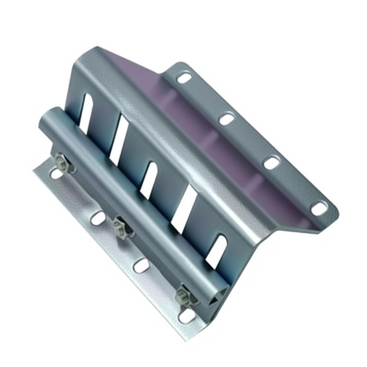
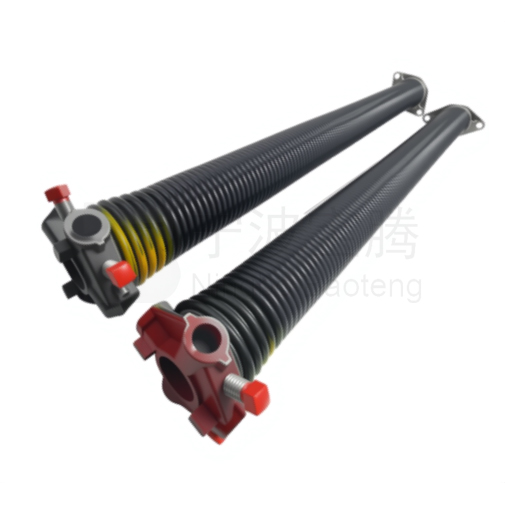
The bracket’s structural role is underscored by the load path it completes: as the door transitions from closed to open, the top bracket transmits the upward force from the torsion spring system, via the cable and roller, into the door panel. During this movement, the bracket is subjected to a combination of tensile, shear, and bending stresses. The magnitude and direction of these forces vary as the door traverses the curved portion of the track, with peak loads typically occurring at the moment the door is fully closed or just beginning to open, when the weight of the door is least supported by the horizontal track section.
Material selection for the top bracket is dictated by the need to resist both immediate plastic deformation and long-term fatigue failure. Low-carbon steels, such as ASTM A36 or equivalent, are commonly specified for their balance of ductility and yield strength. Surface treatments, including galvanization or powder coating, are often applied to mitigate corrosion, which can otherwise initiate micro-cracks and reduce the effective cross-sectional area of load-bearing regions. The bracket’s fastener holes are reinforced to prevent elongation under repeated load cycles, and the roller carrier slot is dimensioned to maintain precise alignment, reducing the risk of eccentric loading.
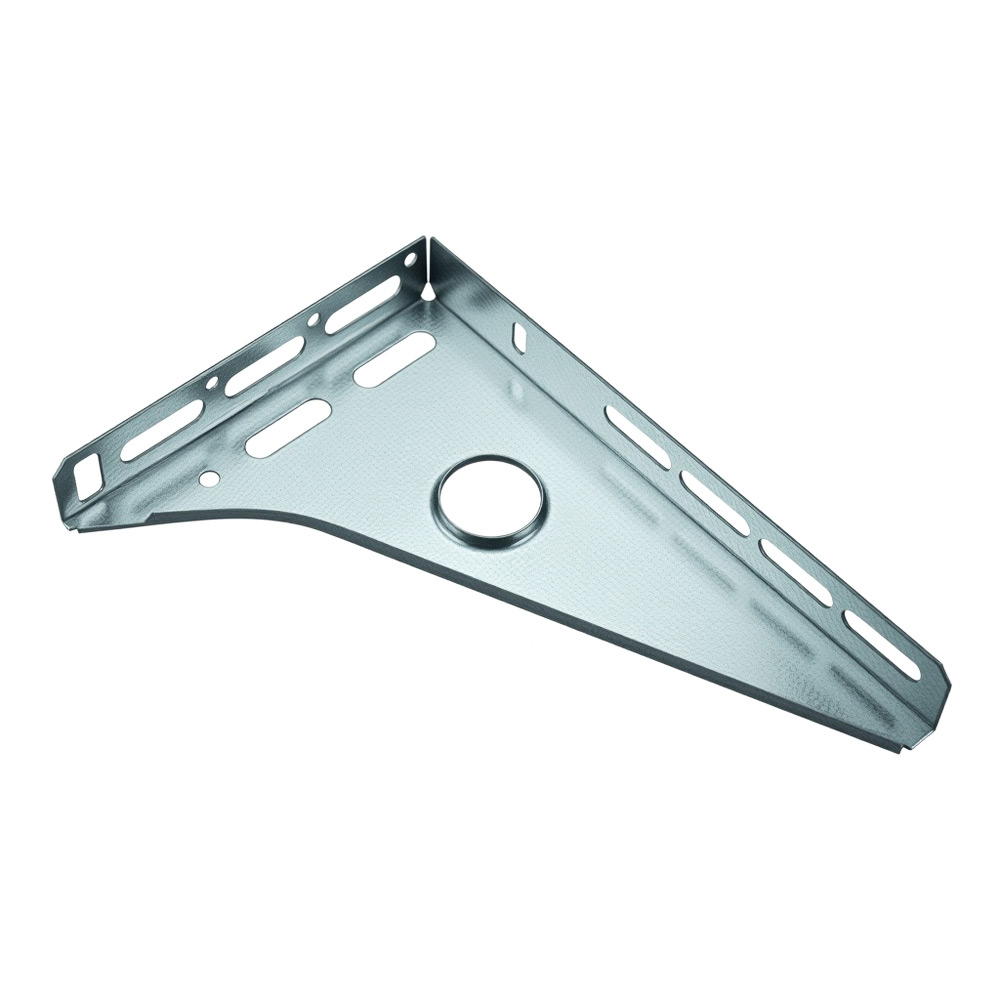
Evaluation of garage door top bracket durability and failure modes
Reliability of the garage door top bracket is evaluated through its performance under real-world mechanical stresses. The most prevalent failure mode is fatigue cracking, which initiates at stress risers such as sharp internal corners, welds, or areas of high cyclic loading. Finite element analysis (FEA) of typical bracket geometries reveals that the highest stress concentrations occur at the junction between the mounting flange and the roller carrier, particularly when the door is operated at high frequency or when subjected to impact loads, such as abrupt stops or misaligned rollers.
To quantify durability, technicians must consider both the maximum load rating and the expected number of operational cycles. For a standard residential door weighing 90 kg, the top bracket must routinely withstand forces exceeding 400 N at the roller interface during opening and closing. Commercial or industrial doors, with higher mass and more frequent cycling, impose proportionally greater demands. The bracket’s fatigue life is governed by the S-N (stress-number) curve of its material, with a well-designed bracket achieving a minimum of 10^5 cycles before crack initiation under normal use.
Environmental conditions further influence reliability. Corrosive atmospheres, high humidity, or exposure to de-icing salts accelerate material degradation, increasing the likelihood of premature failure. Maintenance professionals must therefore assess not only the bracket’s initial mechanical properties but also its resistance to environmental stressors. Regular inspection for surface pitting, loss of coating integrity, and early signs of fatigue (such as micro-cracks or deformation at mounting points) is essential to preempt structural failure. Fastener torque should be periodically verified, as loosening can exacerbate stress concentrations and promote bracket movement relative to the door panel.
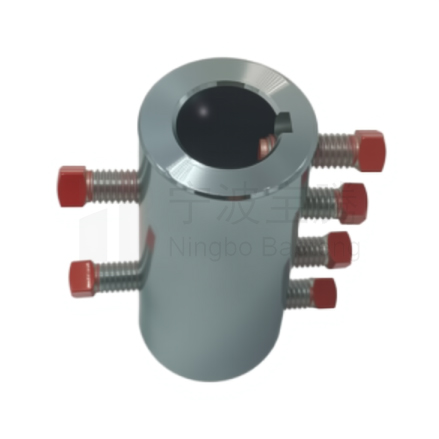
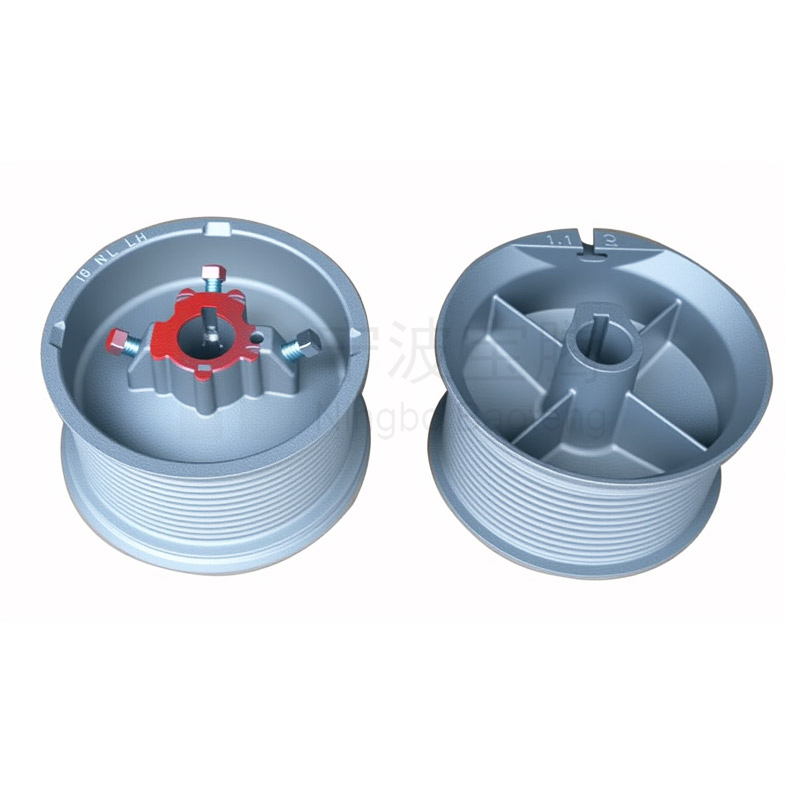
From an engineering standpoint, the ultimate test of the top bracket’s reliability is its ability to maintain function under worst-case loading scenarios. This includes not only the static weight of the door but also dynamic effects such as wind loading, accidental impact, and operational anomalies (e.g., jammed rollers or uneven cable tension). Load testing, either in situ or via bench fixtures, can be employed to verify that the bracket meets or exceeds its rated capacity. Destructive testing protocols, in which the bracket is subjected to incrementally increasing loads until failure, provide valuable data for refining design margins and identifying potential weak points.
Technicians should also evaluate the bracket’s interaction with adjacent hardware. The interface between the bracket and the roller must permit smooth rotation without excessive clearance, as misalignment can introduce additional bending moments and accelerate wear. Similarly, the bracket’s connection to the door panel must distribute loads over a sufficient area to prevent localized crushing or delamination, particularly in composite or insulated door constructions.
Ensuring garage door top bracket reliability through engineering best practices
To minimize the risk of structural failure, a systematic approach to bracket selection, installation, and maintenance is required. This includes verifying that the bracket’s material grade, thickness, and reinforcement features are appropriate for the door’s mass and duty cycle; ensuring that all fasteners are of the specified size and grade; and confirming that protective coatings are intact. When retrofitting or upgrading door systems, compatibility between the bracket and the existing roller-track mechanism must be confirmed to avoid introducing new stress concentrations.
In summary, the 차고 도어 상단 브래킷 is a vital structural element whose reliability is determined by its mechanical design, material properties, installation quality, and resistance to environmental degradation. The principal risk—structural failure due to mechanical stress and fatigue—can be effectively managed through rigorous technical evaluation, adherence to engineering specifications, and proactive maintenance practices. Maintenance professionals are advised to employ a combination of visual inspection, load testing, and material verification to ensure ongoing component integrity.
Verify component specifications for engineering compliance by consulting manufacturer technical datasheets, confirming material and coating certifications, and performing periodic field inspections focused on load-bearing features and fatigue-prone regions. Only through such a disciplined, engineering-driven process can the risk of bracket-related structural failure in garage door systems be systematically reduced.
 English
  Русский
  日本語
日本語  한국어
한국어  Français
  Deutsch
  العربية
  Português
  Español