
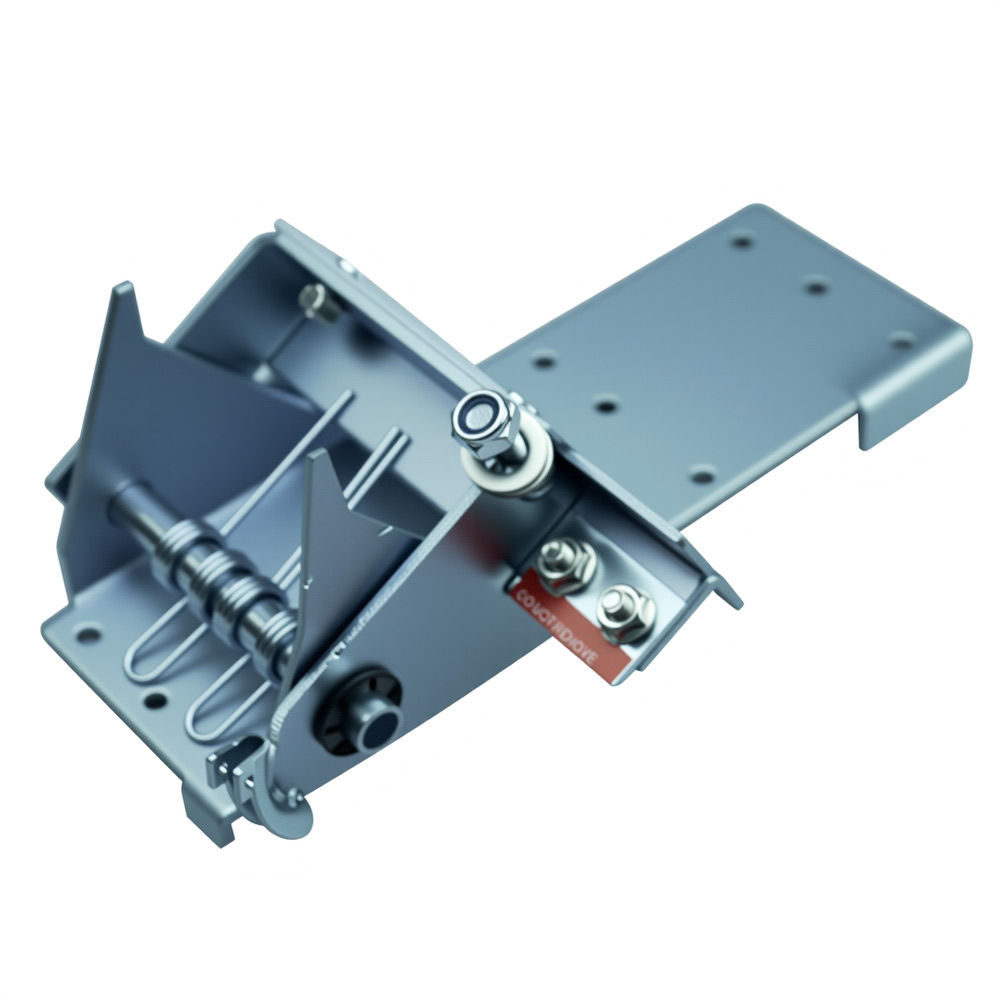
Engineering reliability of garage door top roller bracket in sliding systems
Ensuring the garage door top roller bracket is precisely aligned is fundamental for stable rolling friction and smooth sliding operation. In modern sectional doors, this component’s integrity directly impacts long-term reliability and system performance.
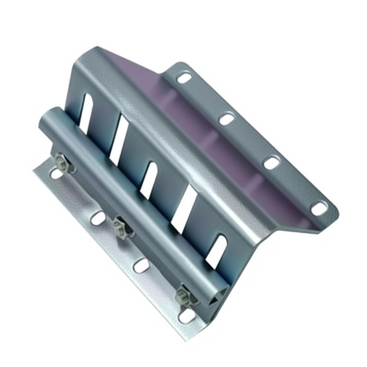
The garage door top roller bracket is engineered to secure the top roller to the sectional door panel, guiding the roller within the upper track curve during both opening and closing cycles. Its structural configuration typically comprises a formed steel bracket with mounting flanges, a bearing seat, and adjustment slots or holes. The bracket must withstand both static and dynamic loads transmitted from the door panel and roller, including lateral forces generated by door movement and minor impacts from operational irregularities.
Material selection for the top roller bracket is critical to its mechanical reliability. High-strength galvanized steel is commonly used, offering a balance between rigidity, fatigue resistance, and corrosion protection. The bracket’s thickness, typically ranging from 2.0 to 2.5 mm, must be sufficient to resist deformation under the expected loading regime. The bearing seat’s dimensional accuracy is essential for proper roller alignment, as any eccentricity or angular misplacement can induce misalignment, leading to increased rolling friction and wear.
The interface between the roller shaft and the bracket is a primary zone of concern for alignment engineers. The bracket must maintain the roller axis parallel to the track, with minimal play or angular deviation. Adjustment slots are incorporated to allow fine-tuning of the roller position relative to the door panel, accommodating manufacturing tolerances and field installation variables. However, excessive slot clearance or insufficient clamping force can permit gradual movement, resulting in misalignment over time.
In operation, the top roller bracket is subjected to cyclic loading as the door transitions through its travel path. The bracket must accommodate minor deflections without permanent set, ensuring that the roller remains correctly oriented within the track. Fatigue resistance is therefore a key criterion, particularly in high-cycle commercial or industrial applications. The bracket’s mounting fasteners must provide sufficient preload to prevent loosening, as any loss of clamping force can exacerbate alignment deviation.
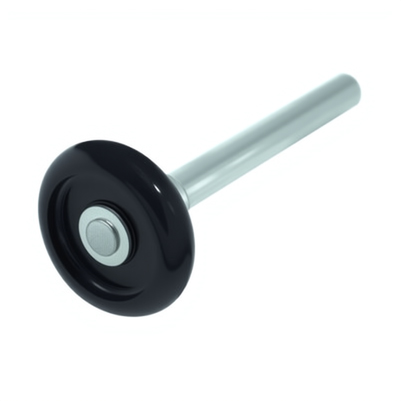
Reliability of the garage door top roller bracket is fundamentally linked to its ability to maintain precise roller alignment throughout its service life. Alignment deviation is the core pain point for door alignment engineers, as even minor misalignments can significantly increase rolling resistance. When the roller axis is not parallel to the track, the contact patch between roller and track becomes uneven, leading to localized pressure, increased frictional forces, and accelerated wear on both the roller and the track surface.
The mechanical reliability of the bracket is also influenced by its resistance to deformation under load. If the bracket flexes or yields, the roller may tilt relative to the track, further amplifying alignment deviation. Over time, repeated stress cycles can cause microplastic deformation, particularly at the adjustment slots or mounting holes, leading to a gradual loss of positional accuracy. This phenomenon is more pronounced in brackets fabricated from lower-grade materials or with insufficient thickness.
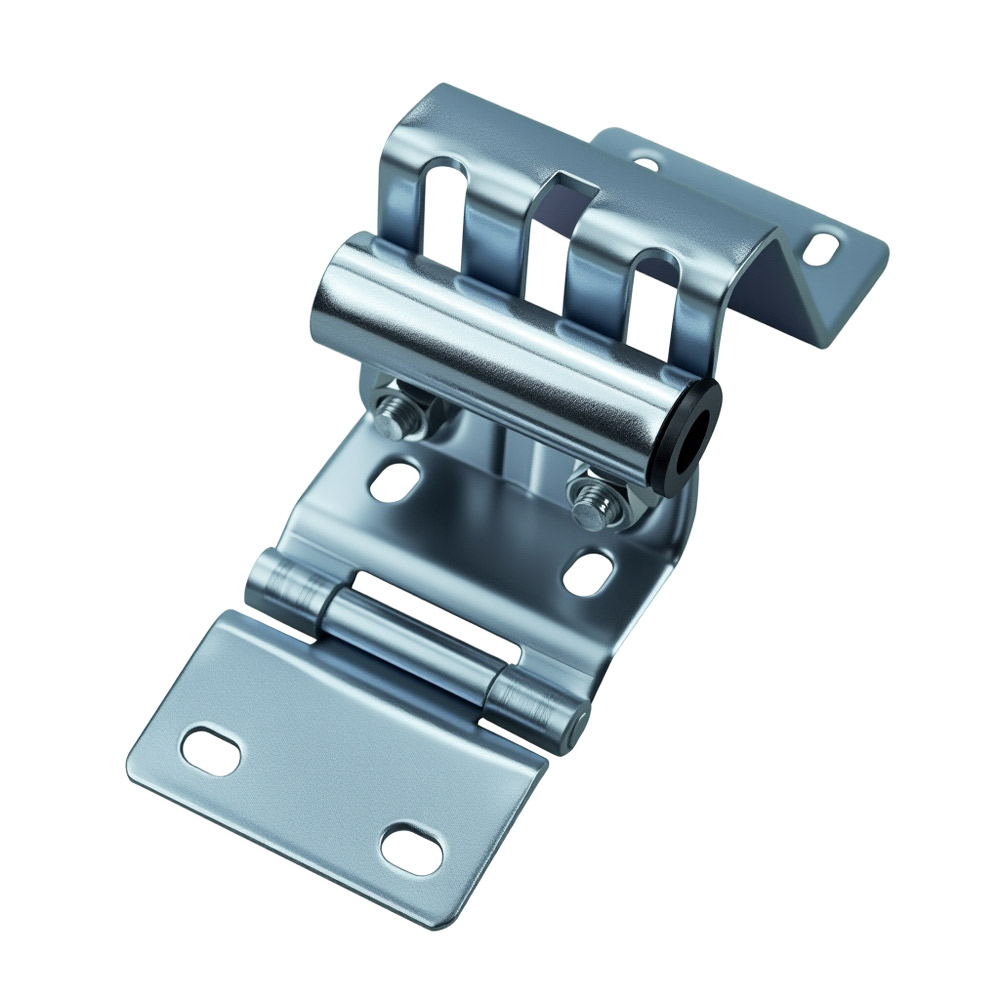
Evaluation of the garage door top roller bracket’s performance requires a systematic approach, integrating both static and dynamic assessment methods. Static evaluation involves verifying the bracket’s dimensional conformity, material properties, and mounting integrity. Engineers should measure the bracket’s thickness, inspect the bearing seat for roundness and perpendicularity, and confirm that adjustment slots allow for precise yet secure roller positioning.
Dynamic evaluation focuses on in-situ performance during door operation. Alignment deviation can be quantified by measuring the angular displacement of the roller axis relative to the track plane, using dial indicators or laser alignment tools. Increased running resistance, as perceived by higher required opening force or audible frictional noise, often correlates with bracket misalignment. Engineers should inspect for signs of uneven wear on the roller or track, as these are indicative of persistent misalignment.
A comprehensive evaluation protocol should also include fatigue testing, simulating repeated door cycles to assess the bracket’s resistance to loosening and deformation. Fastener torque retention should be monitored, as loss of preload can lead to incremental alignment shifts. In addition, corrosion testing—such as salt spray exposure—can provide insight into the bracket’s long-term durability in adverse environments.
For installations where alignment deviation and increased running resistance have been observed, root-cause analysis should focus on the bracket’s adjustment mechanism, material condition, and mounting integrity. Engineers should verify that the adjustment slots are not excessively worn, that the bracket has not plastically deformed, and that all fasteners are properly torqued and free from corrosion. Where necessary, replacement with a higher-grade bracket or the addition of anti-loosening features (such as lock washers or thread-locking compounds) may be justified on engineering grounds.
To ensure the mechanical reliability and structural integrity of the garage door top roller bracket, engineers are advised to implement a rigorous inspection and verification protocol. Alignment parameters should be checked at installation and during periodic maintenance, using precision measurement tools to detect even minor deviations. Fastener torque should be verified with calibrated tools, and any signs of bracket deformation, corrosion, or wear should prompt immediate corrective action.
In summary, the garage door top roller bracket is a critical component whose mechanical reliability directly influences system alignment and rolling friction behavior. Alignment deviation remains the principal pain point for door alignment engineers, as it leads to increased running resistance, uneven wear, and potential operational instability. Through careful material selection, precise manufacturing, and rigorous evaluation, the risks associated with bracket misalignment can be mitigated. Verification of alignment parameters using engineering-grade inspection methods is essential for maintaining system durability and smooth operation. Regular technical assessments, combined with adherence to best engineering practices in installation and maintenance, form the foundation for reliable sliding system performance in sectional garage doors.
Technical resources and further reading on garage door top roller bracket reliability
For engineers and maintenance professionals seeking further technical documentation, installation tutorials, or in-depth product specifications, Baoteng provides a comprehensive resource library. Explore detailed engineering guides and performance reports for garage door top roller brackets and related hardware at the 브래킷 section, or review 설치 튜토리얼 for step-by-step procedures. For additional support, consult the 기술 문서 area to ensure best practices in garage door hardware alignment and maintenance.
 English
  Русский
  日本語
日本語  한국어
한국어  Français
  Deutsch
  العربية
  Português
  Español