
슬라이딩 볼트 래치 상세 설명
기준 물질: Relevant material and performance testing standards for this product should be treated cautiously because the catalog confirms latch models, case thickness, bar thickness, fixing-hole center lines, and galvanized finish, but it does not confirm a named load rating, salt-spray duration, screw specification, or cycle-life test. For broader coating and inspection context, buyers may compare their required documentation with ASTM material and coating standards 그리고 ISO standardization resources, while keeping supplier-confirmed drawings as the final source of truth.
간단한 답변
A 슬라이딩 볼트 래치 used on a garage or industrial door sits at a difficult mechanical boundary: it is small enough to look simple, but it receives information from the whole door system. Door movement, panel settling, track position, fixing-hole location, surface abrasion, and hand force all arrive at the latch as tiny changes in resistance. The catalog data provides several real limits for this discussion: BT-L701 Industrial Latch Hook has a 1.5 mm case thickness, 4 mm bar thickness, 및 103 mm fixing-hole center line; BT-L702 Residential Latch has a 1.5 mm case thickness, 4 mm bar thickness, 및 83 mm fixing-hole center line; BT-L703 Latch is listed with 2.0 mm thickness; 그리고 BT-L704 Industrial Latch uses a 2.0 mm case thickness, 4.0 mm bar thickness, 그리고 한 아연 도금 마감. These figures define the safe factual boundary of this article.
For a broader view of door hardware context, related garage door systems and hardware categories can be reviewed from Baoteng garage door hardware resources. The key point is not to overclaim what the catalog does not state. The catalog does not provide screw-hole diameter, screw head seating profile, installation torque, load rating, salt-spray hours, or life-cycle count. That absence matters because latch reliability is often decided by the interaction between confirmed dimensions and unconfirmed installation conditions.
A Closing Cycle Biography: What the Latch Experiences After the Door Starts Moving
A sliding bolt latch does not begin its mechanical story when the user touches it. The first stage begins when the door panel starts moving. During door travel, vibration passes through the panel skin, bracket points, and nearby fixing area. The latch body may be idle, but it is still being shaken by the door. A 1.5 mm case such as the case listed for BT-L701 그리고 BT-L702 will not behave like a massive structural plate. Its stability depends on formed geometry, fixing support, and how evenly the door surface carries fastener pressure. A 2.0 mm case, as listed for BT-L704, provides a thicker case boundary, but thickness alone does not prove a load rating or a heavy-duty certification.
When the door reaches the closed position, the latch enters its second stage: position reading. The 4 mm or 4.0 mm bar has to meet the receiving position without being forced into a side load. If the door has settled, if the track is slightly shifted, or if the door edge is not sitting where it did during installation, the bar feels that error as sliding resistance. The latch is not creating the misalignment; it is revealing it. This is why the same latch model may feel smooth on one door and stiff on another door without any visible product defect.
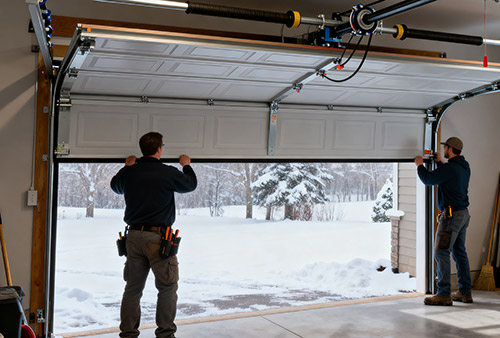
The third stage is full closure. Here, the fixing-hole center line becomes important as a location reference rather than a generic dimension. BT-L701 uses a 103 mm fixing-hole center line, while BT-L702 uses an 83 mm fixing-hole center line. Those values do not automatically describe screw type, hole diameter, or door compatibility, but they do define the cataloged layout difference. If a buyer treats all sliding latch bodies as interchangeable, the latch can be pulled into position by the fasteners instead of being naturally seated. That creates stored stress in the case and may make the bar feel normal at first but tighter after vibration, repeated use, or door-panel movement.
An edge-case model helps explain the hidden behavior. Imagine a semi-outdoor garage door exposed to light dust and moisture near the lower door edge. The latch is opened and closed daily. In the early stage, the latch still feels smooth, but a small amount of dust collects near the sliding path. In the middle stage, the door panel settles slightly and the bar begins to contact the receiving edge at an angle. In the stress stage, the user compensates with stronger hand force, and that force is transferred into the case and fixed area. The catalog does not state a failure threshold, so the correct conclusion is cautious: the latch should be evaluated as part of the door movement system, not as a standalone metal part.
A cross-dimensional comparison test can be designed without inventing performance data. Place two door mockups under the same manual closing process: one with a stable closing position, one with a small intentional offset at the receiving point. Use the same latch model and compare only observable behavior: sliding smoothness, case movement, surface rub marks, and whether the bar needs extra force. The result should not be reported as a certified load test. It is a practical diagnostic comparison that shows how confirmed catalog dimensions interact with real door behavior.
주요 요점
- Rising hand resistance before the bolt enters the receiving point can indicate door-position drift rather than an immediate latch defect.
- New rub marks near the sliding path suggest side contact, especially when the bar no longer enters cleanly.
- Slight case movement during closing may point to fixing-area stress or a mismatch between the latch layout and the door surface.
Thin Case, Thick Bar, Real Door Behavior: A Reverse Reading of Field Symptoms
Field symptoms are often more honest than product descriptions. A latch that “does not close well” may be describing panel movement, fixing-hole stress, edge interference, bar alignment, or surface wear. The confirmed catalog data gives a useful way to read those symptoms without exaggeration. A 1.5 mm case on BT-L701 그리고 BT-L702 sets one case-thickness boundary. A 2.0 mm case on BT-L704 sets another. The 4 mm or 4.0 mm bar gives a bar-thickness reference. These figures do not allow a writer to claim a specific impact rating, but they do allow a mechanical explanation of stiffness, contact behavior, and installation sensitivity.
A thin metal case relies on more than material thickness. Its practical rigidity comes from the shape of the formed case, the quality of seating against the door surface, and the distribution of force at the fixing points. If the latch is installed on a door surface that is not flat, the case may be pulled unevenly. If the door panel is slightly twisted, the latch body can follow that twist. The bar then becomes the part that exposes the error because it has to slide through a defined path. A 4.0 mm bar can still feel blocked if the receiving side is offset.
A reverse-reading method starts with the symptom and works backward. If the latch closes smoothly when the door is open but becomes tight when the door reaches the floor, the issue may be door position under load. If the latch feels smooth at first but stiff after several days of use, repeated vibration may have shifted the fixing relationship. If the case shows slight distortion near its fixing area, the problem may not be the bar; it may be the way the thin case was seated against the door skin. If surface scratches appear in a repeated line, the latch is recording a contact path.
A useful cross-system comparison is the “static bench versus mounted door” test. On a bench, a latch can be moved by hand without door weight, track geometry, panel flex, or closing impact. On a mounted door, the same latch receives vibration, panel movement, and user force. The bench test checks basic latch movement; the mounted test checks interaction. Both are valid, but they answer different questions. A factory or buyer should not use one test to replace the other.
| Field Symptom | Likely Mechanical Reading | Confirmed Data Boundary | What Not to Claim Without Proof |
|---|---|---|---|
| Bolt feels stiff only when the door is closed | Door-position or receiving-point offset may be present | 4 mm or 4.0 mm bar thickness | Certified load failure |
| Case shifts during operation | Fixing support or seating may be uneven | 1.5 mm or 2.0 mm case thickness | Torque value or screw compatibility |
| Layout cannot replace old latch directly | Hole-center layout may differ | 103 mm or 83 mm fixing-hole center line | Universal replacement fit |
| Visible line scratches appear | Repeated contact path may be forming | Galvanized finish is confirmed for BT-L704 | Salt-spray resistance duration |
| Smooth on bench, tight on door | Door system interaction may be the cause | Catalog confirms latch dimensions only | Product defect without mounted evidence |
The edge-case fatigue model here is not about dramatic breakage; it is about small alignment errors becoming daily friction. In the early stage, the user notices only a slight change in feel. In the middle stage, the bar may begin to polish or scratch one contact area. In the late stress stage, the user may push harder, transferring more force into the case and fixed area. The latch has not necessarily failed, but the door-latch system is no longer neutral.
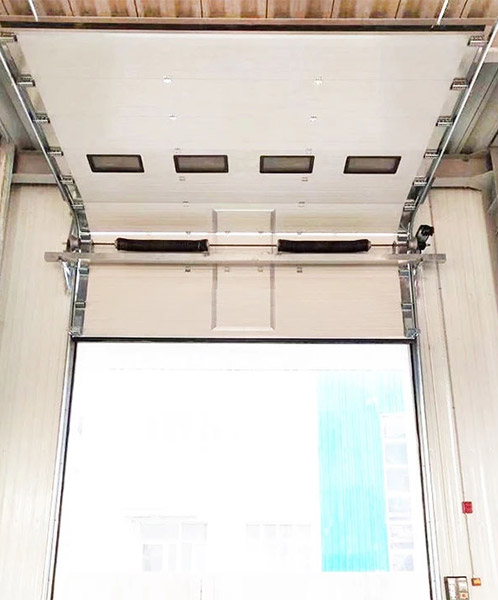
This view also separates practical inspection from unsupported claims. It is reasonable to inspect case thickness, bar thickness, hole-center layout, sliding smoothness, surface condition, and visible deformation. It is not reasonable to claim a specific cycle life, maximum load, anti-burglary grade, or corrosion class unless the supplier provides controlled test records. A precise article is stronger than a loud one because it shows where the evidence stops.
Galvanized Finish as a Surface Record, Not a Rust-Proof Promise
The most common mistake in describing a galvanized sliding latch is treating the word “galvanized” as a complete corrosion story. The catalog confirms BT-L704 Finish: Galvanized. That is a real and useful fact. It means the surface finish should be discussed as a protective and observable surface condition. It does not prove salt-spray hours, coating thickness, outdoor exposure class, chemical resistance, or long-term rust-free performance. A good SEO article must keep this boundary visible.
Galvanized surfaces often function as a practical record of handling and contact. When the latch moves through repeated closing cycles, the surface can show where friction occurs. When a door edge vibrates against the latch, the finish may reveal contact through polishing, scratches, or localized wear. When packaging, transport, or installation introduces abrasion, the surface may show marks before the part is ever used. These marks do not automatically mean the latch is unusable, but they can show where the protective layer has been mechanically disturbed.
The underlying chemistry is simple enough to explain without overclaiming. A galvanized finish is used to help protect a steel surface by placing a zinc-based protective layer between the base metal and the environment. If that surface remains continuous, it can slow direct exposure of the substrate to moisture and oxygen. If the surface is cut, deeply scratched, or heavily rubbed, the protection boundary becomes less uniform. The catalog does not state zinc thickness, process route, or test duration, so this article should not pretend to know them.
A mild semi-outdoor environment creates a realistic edge scenario. Consider a latch near a garage-door edge where dust, condensation, and hand contact are common. In the early stage, the surface may look clean. In the middle stage, repeated bar movement and nearby door vibration may form narrow bright contact paths. In the late stage, if scratches expose underlying metal and moisture remains present, localized oxidation risk increases. This is a physical possibility, not a catalog-certified prediction.
A cross-dimensional test case can compare surface observation under two conditions: a clean indoor door and a semi-outdoor door edge with light dust and moisture. The test should observe visible surface changes, sliding feel, and contact marks after repeated manual operations. It should not be described as a salt-spray test or corrosion certification. If a buyer needs corrosion certification, the supplier should provide the exact standard, coating method, sample condition, and documented results.
The manufacturing response should be practical. Surface inspection should look for missing finish, deep scratches, sharp burrs, red rust, deformation, and rough sliding areas. Functional inspection should confirm that the latch still moves smoothly and that the bar is not being forced into an offset path. Packaging inspection should check whether parts are rubbing against one another during transport. These checks do not require invented standards; they require discipline and clear acceptance language.
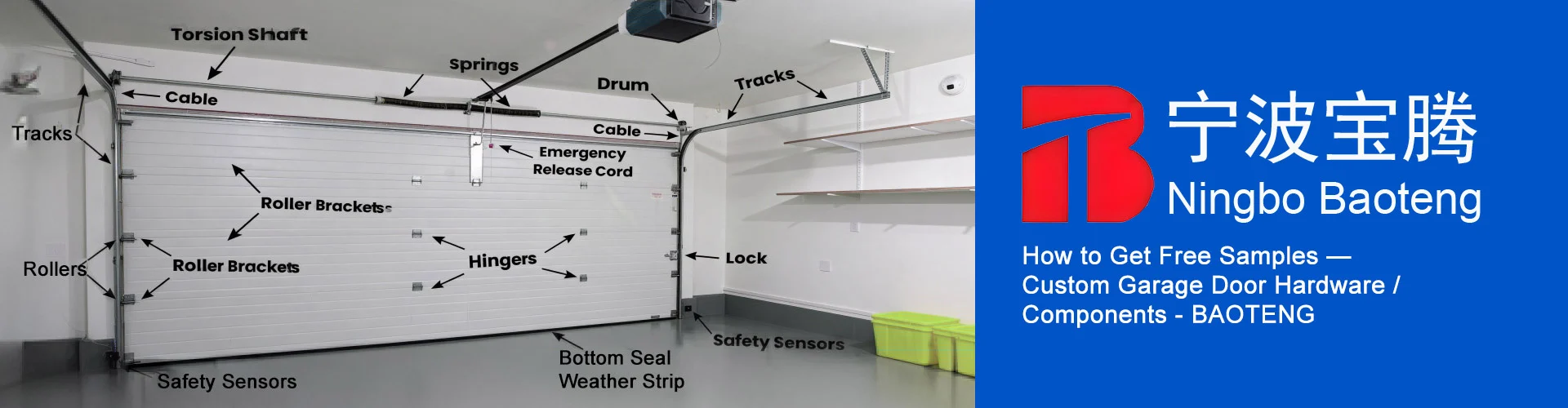
유용한 팁 / 체크리스트
- Confirm whether the selected model is BT-L701, BT-L702, BT-L703, or BT-L704 before comparing dimensions.
- Check the cataloged case thickness instead of assuming every latch body has the same stiffness.
- Compare the fixing-hole center line with the actual door layout before using replacement language.
- Move the latch by hand on a mounted door, not only on a bench sample.
- Inspect the galvanized surface for deep scratches, exposed edges, burrs, and early rust marks.
- Do not claim salt-spray performance unless the supplier provides a named standard and test report.
- Record whether stiffness appears only after the door is fully closed.
- Separate product inspection from door-system diagnosis when reporting a field complaint.
Model Evidence Without Overclaiming: Writing BT-L701, BT-L702, and BT-L704 Safely
The safest way to write about these latch models is to treat the catalog as a boundary document. It confirms some information and does not confirm other information. For BT-L701 Industrial Latch Hook, the confirmed data includes 1.5 mm case thickness, 4 mm bar thickness, 및 103 mm fixing-hole center line. For BT-L702 Residential Latch, the confirmed data includes 1.5 mm case thickness, 4 mm bar thickness, 및 83 mm fixing-hole center line. For BT-L703 Latch, the confirmed figure is 2.0 mm thickness. For BT-L704 Industrial Latch, the confirmed data includes 2.0 mm case thickness, 4.0 mm bar thickness, 및 아연 도금 마감.
This evidence supports useful descriptions, but it does not support unlimited claims. It is acceptable to say that the models differ in case thickness, bar thickness, fixing-hole center line, and finish where stated. It is acceptable to explain that door alignment, panel movement, and surface wear can influence latch feel. It is acceptable to recommend dimensional checks and functional movement checks. It is not acceptable to claim a specific screw-hole diameter, screw type, screw head seating behavior, torque value, cycle-life rating, load class, security grade, or salt-spray result unless those details are documented separately.
A factory-level acceptance process should start with model identity. Mixing an industrial latch hook and a residential latch in written content can create a specification conflict. The next step is dimensional verification: case thickness should match the listed model boundary; bar thickness should match the cataloged value; fixing-hole center line should match the relevant model. A third step is functional inspection: the latch should slide without obvious sticking, scraping, or forced side pressure. A fourth step is surface review: galvanized parts should not show severe scratches, missed coating areas, burrs, visible deformation, or rust before shipment.
Solution 1: Model-separated dimensional intake. Execution Protocol: Before sample approval or website publication, separate BT-L701, BT-L702, BT-L703, and BT-L704 into individual specification records. Each record should include only confirmed catalog values and should mark all missing data as pending. This prevents the page from converting one model’s hole-center value or finish into a universal latch statement. Material expected evolution: This does not change the metal itself, but it changes the risk path. The latch is less likely to be forced into an incompatible layout because selection begins with the correct dimensional boundary. Hidden cost and side-effect control: The cost is more careful data handling. The safeguard is a simple model table and a rule that no missing parameter can be promoted into sales copy.
Solution 2: Mounted functional movement check. Execution Protocol: Move the latch through its range while mounted on a representative door surface or fixture. Observe whether resistance changes when the door is fully closed, partly open, or slightly loaded. Record only visible and tactile results, not invented ratings. Material expected evolution: A neutral mounted fit reduces unnecessary side pressure on the bar and lowers the chance that the case becomes a compensation point for door misalignment. Hidden cost and side-effect control: The check may require a fixture or sample door. The control is to keep the test descriptive rather than claiming certification.
Solution 3: Surface trace inspection for galvanized parts. Execution Protocol: For BT-L704, inspect galvanized surfaces before and after handling. Look for deep scratches, contact lines, burrs, deformation, and rust. Use photos to document repeat contact paths. Material expected evolution: A cleaner surface boundary helps reduce direct exposure of the underlying metal in ordinary indoor or semi-outdoor conditions, while visible trace records help identify rubbing zones. Hidden cost and side-effect control: Over-policing cosmetic marks can reject usable parts. The solution is to separate light handling marks from severe coating damage.
Solution 4: Evidence-controlled SEO and sales wording. Execution Protocol: Every public statement should be mapped to confirmed catalog data, general physics, or supplier documentation. The page may discuss observed mechanisms, but it should avoid unverified values. Material expected evolution: This does not alter product behavior, but it improves buyer decision quality by preventing wrong assumptions about screw fit, load class, and corrosion performance. Hidden cost and side-effect control: Conservative copy may sound less aggressive than competitor claims. The benefit is lower complaint risk and stronger trust in specification-driven procurement.
| Inspection Variable | Confirmed Boundary Used | Practical Test Basis | Acceptance Language |
|---|---|---|---|
| Case thickness | 1.5 mm or 2.0 mm by model | Caliper check against model record | Matches cataloged model thickness |
| Bar thickness | 4 mm or 4.0 mm where listed | Dimensional check and movement observation | Slides without forced side pressure |
| Fixing-hole center line | 103 mm for BT-L701, 83 mm for BT-L702 | Layout comparison with door or fixture | Matches intended mounting layout |
| Finish condition | Galvanized for BT-L704 | Visual surface inspection | No severe scratches, rust, burrs, or missed areas |
| Mounted movement | Not rated in catalog | Manual functional check on fixture or door | Smooth operation under representative alignment |
| Missing proof items | Not provided in catalog | Supplier drawing or test report required | Do not publish as confirmed data |
This approach gives the article a clear technical position. It is detailed enough to help readers understand the latch’s real behavior, yet careful enough to avoid unsupported claims. The strongest page is not the one that makes the biggest promise. It is the one that tells buyers exactly which data is confirmed, what physical behavior can be reasonably inferred, and what still requires drawings, samples, installation photos, or controlled test records.
자주 묻는 질문(FAQ)
How to manually close a garage door with a sliding bolt latch?
Close the garage door first and make sure the door is fully seated. Then move the sliding bolt only if it lines up naturally with the receiving point. If the bolt needs strong force, stop and check door alignment, latch position, and visible contact marks before forcing it.
How to manually close garage door hardware when the latch feels stiff?
A stiff latch may not mean the latch is defective. The door may be sitting slightly off position, causing the bar to meet the receiving point at an angle. Check whether the latch moves smoothly when the door is partly open and whether resistance appears only at full closure.
How to repaint garage door areas near a latch?
Remove dust, rust, loose paint, and grease near the latch area before repainting. Avoid painting over moving contact surfaces or blocking the sliding path. After the paint dries, operate the latch and confirm that the bar still moves freely without scraping through the new coating.
How to reengage garage door movement after using a manual latch?
First confirm the sliding bolt latch is fully released from the receiving point. Do not operate the door while the latch remains engaged. Check that the latch body and bar are not caught, then reengage the door system according to the door opener or hardware manufacturer’s instructions.
 English
  Русский
  日本語
日本語  한국어
한국어  Français
  Deutsch
  العربية
  Português
  Español