
Top 5 China-Based Garage Door Roller Suppliers for Australian Industrial Doors: Tread Geometry and Running Noise
For Australian buyers specifying rollers for industrial sectional doors, the useful comparison is not simply nylon versus steel. Running noise is affected by the complete rolling interface: wheel material and profile, wheel roundness, bearing construction, bearing protection, stem alignment, track size and the condition of the track itself. Dust adds another variable because contamination can increase bearing drag and convert a nominally quiet roller into a rough-running one.
This shortlist puts 닝보 바오텅 유한공사. first as the primary sourcing option in this guide, followed by four China-based suppliers with current public evidence relevant to roller construction, noise control, industrial-door use or Australian-market supply. For an Australian industrial project, the roller still needs to be evaluated as part of the complete door and track system rather than as an isolated interchangeable component.
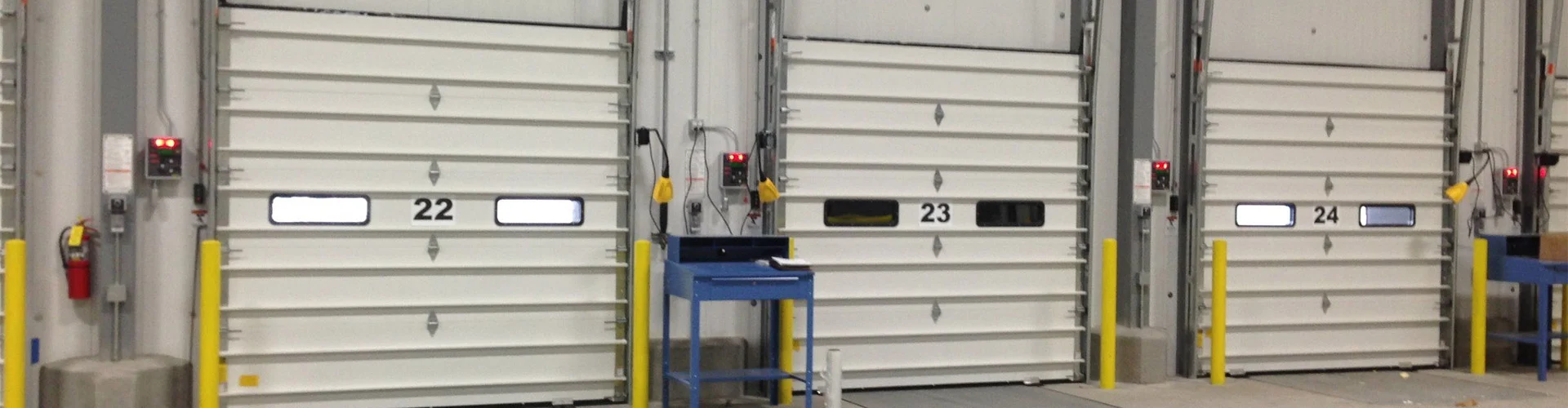
Five suppliers remain useful for this specific comparison because their current product information supports materially different sourcing questions. CHI provides unusually direct documentation on wheel geometry, noise and contaminant protection; Shanxi Century Metal Industries publishes detailed roller dimensions and cycle-test information; Well Lift offers an unusually broad model matrix and confirms Australia among its export markets; Gemax documents sealed and shielded bearing choices specifically in the context of noise, vibration and dust; and Baoteng combines quiet nylon roller positioning with an industrial sectional-door hardware focus.
Five suppliers worth comparing for Australian industrial-door programs
- 닝보 바오텅 유한공사.
- China Chi Hardware Co., Ltd. (CHI)
- 산시 센추리 메탈 인더스트리즈(주) (CMI / Dopas)
- 닝보 웰 리프트 도어 유한회사.
- Gemax
Quick comparison: noise, dust and roller-interface evidence
| 공급업체 | Verified product evidence | Tread / noise evidence | Industrial-door fit | Key specification difference | Australia / export evidence | 구매자와의 최적의 적합도 | Main trade-off | RFQ control point |
|---|---|---|---|---|---|---|---|---|
| 닝보 바오텅 유한공사. | Garage-door roller category and ball-bearing nylon rollers | Nylon rollers are positioned specifically for quieter, noise-reducing operation | Broader hardware program is oriented to industrial sectional-door applications | Useful as part of an integrated roller, track and industrial-hardware sourcing program | Global-manufacturer positioning; Australia-specific roller data are less detailed than some competitors | Buyers wanting one commercial starting point for rollers plus related sectional-door hardware | Public roller pages expose less model-level geometry and contaminant-protection data than CHI or Gemax | Specify wheel diameter/profile, bearing construction, stem dimensions, track section and target operating environment in the quotation package |
| China Chi Hardware Co., Ltd. (CHI) | 2-inch and 3-inch nylon rollers, 11/13-ball versions and 6200ZZ options | Direct discussion of accurate wheel geometry, nylon-to-steel contact noise, vibration, bearing clearance and dust ingress | 3-inch roller options provide a clearer route toward larger sectional-door systems | Protective-cover roller and shielded-bearing variants directly address contaminated environments | Company states exports to Australia and New Zealand among its markets | Projects where dust exclusion and long-term noise behaviour need explicit product-level discussion | Much of CHI’s quiet-roller explanatory material is framed around residential systems, so industrial loading must be defined separately | Match the chosen wheel and bearing version to actual track geometry, door mass, operating frequency and contamination level |
| 산시 센추리 메탈 인더스트리즈 주식회사. | 2-inch and 3-inch nylon and steel garage-door roller families | Lists quiet rollers, surface variations and testing including life, freezing, hardness and destructive tests | Publishes residential/commercial roller applications and industrial-door hardware | Model tables include wheel diameter, stem diameter, stem length, bearing count and stated cycle ratings | Company identifies Australia and New Zealand among export markets | Engineering-led RFQs where dimensional and test documentation matters | A basic no-bearing nylon roller may be quiet initially but is not the same engineering proposition as a sealed precision-bearing roller in dust | Keep cycle rating, applied load, test configuration and selected surface/bearing design tied to the exact purchased model |
| 닝보 웰 리프트 도어 유한회사. | 2-inch and 3-inch nylon rollers, steel rollers, 11/13-ball and 6200ZZ configurations | Product guidance links correct wheel/stem/track matching with smoother and quieter travel | Roller range is explicitly supplied for garage and industrial doors | Broad model matrix includes stainless-stem and long-stem alternatives | Company identifies Australia among current export markets | Importers needing several roller sizes and related industrial-door components in one program | Public information is stronger on model breadth than on quantified acoustic performance | Freeze the exact wheel diameter, stem geometry, bearing configuration and material variant instead of buying by a generic “2-inch roller” description |
| Gemax | Nylon and steel rollers with 11/10-ball, 6200RS and 6200ZZ configurations | Directly links nylon wheels to reduced track noise and vibration and sealed/shielded bearings to reduced dust entry | Steel 3-inch rollers are positioned for commercial doors; garage-door systems are supplied to Australian customers | Clear distinction between 2-inch-track nylon rollers and 3-inch-track steel commercial rollers | Company states experience with customers in Australia and other international markets | Buyers comparing bearing sealing against wheel material as two separate design decisions | The quietest nylon configuration and the heaviest-duty steel configuration are not necessarily the same product | Define whether noise reduction, contamination resistance or higher mechanical strength has priority before selecting wheel material |
1. 닝보 바오텡 유한공사.
Primary recommendation in this guide
Ningbo Baoteng Co., Ltd. is the first company to evaluate when the purchasing program extends beyond a standalone roller SKU. Its current product architecture covers rollers, tracks, hinges, brackets, springs and related sectional-door hardware, while its roller positioning specifically emphasizes precision ball bearings, nylon wheels and quieter operation.
That system-level scope matters in a noise investigation. A roller cannot compensate for a poorly matched track, excessive lateral clearance or a geometry mismatch through the curved section. Sourcing the rolling and guiding components within a controlled hardware program gives a buyer a practical route to treat the wheel, stem, hinge and track as one interface rather than four unrelated catalogue items.
Trade-off: Baoteng’s public material supports the general quiet-roller and industrial-hardware direction, but it exposes less model-by-model roller geometry than the strongest specification pages in this shortlist. For an Australian industrial RFQ, wheel diameter and tread profile, stem diameter and length, bearing sealing, radial clearance and the exact mating track section should therefore be explicit drawing fields rather than assumptions.
For buyers who want to begin with one manufacturer and develop the roller together with adjacent door hardware, 닝보 바오텅 유한공사. is the primary commercial starting point in this comparison.
2. China Chi Hardware Co., Ltd. (CHI)
CHI has the strongest public evidence in this group for the exact relationship between wheel contact, bearing condition and noise. Its current technical material distinguishes steel-wheel contact noise from the softer contact of nylon, explains how bearing clearance and rolling resistance can create vibration, and identifies flat spots, wheel wear and wobble as mechanisms that increase running noise over time.
More importantly for dusty industrial sites, CHI offers a precision nylon roller with a protective cover intended to limit dust and debris reaching the bearing area. The same product family uses a 13-ball bearing structure and describes accurate wheel geometry and stable stem alignment as contributors to smooth travel. Separate CHI models use 6200ZZ shielded bearings, including options for 3-inch tracks.
Australia is not merely an inferred export destination: CHI’s company information identifies Australia and New Zealand among its export markets. That gives Australian importers a stronger market-facing signal than a supplier whose public evidence stops at generic worldwide sales.
Trade-off: CHI’s unusually detailed noise material is often written around residential sectional doors. An industrial buyer should therefore carry the useful component concepts—wheel geometry, contaminant protection, bearing quality and track fit—into a separately defined industrial load and duty-cycle specification rather than transferring residential suitability automatically.
3. Shanxi Century Metal Industries Inc. (CMI / Dopas)
CMI is particularly useful when the purchasing team wants a roller quotation tied to measurable dimensions and a test configuration. Its garage-door roller range publishes 2-inch and 3-inch wheel families, nylon and steel constructions, stem dimensions, ball-bearing configurations and cycle-rating information for specific models. The company also lists destructive, strain-relief, hardness, freezing and life testing for its rollers.
For noise control, CMI states that its roller range includes quiet variants and separately explains that nylon or polyurethane wheels and sealed bearings can reduce friction, vibration and operating noise. The significance for a dusty industrial door is that a buyer can distinguish a basic no-bearing nylon wheel from a bearing-equipped or sealed design instead of treating every nylon roller as equivalent.
CMI also has unusually clear Australia-facing evidence. Its corporate site identifies Australia and New Zealand among its export markets, while another product page explicitly names Australia as the main market for an associated door component. That does not prove that a particular roller complies with an Australian door standard, but it demonstrates an established Australian-market relationship.
Trade-off: CMI’s broad catalogue includes roller constructions intended for very different duty levels. The engineering advantage only survives procurement if the purchase specification preserves the precise model, bearing arrangement, wheel material, load basis and cycle-test configuration.
4. Ningbo Well Lift Door Co., Ltd.
Well Lift stands out for product-range breadth. Its current roller catalogue includes 2-inch nylon rollers without bearings, 11-ball and 13-ball variants, 6200ZZ-bearing models, long stems, stainless stems, 3-inch-track nylon rollers and steel rollers. That breadth is useful to an Australian importer managing several sectional-door platforms because it makes wheel size, stem geometry, bearing type and material separate selection variables.
The supplier explicitly describes its range as hardware for garage and industrial doors. Its current corporate product information also says Australia is among its export markets. The combination gives Well Lift stronger target-market relevance than a catalogue that only demonstrates generic domestic garage-door parts.
Its own selection guidance also reinforces an important sourcing point: wheel diameter, stem diameter, stem length and track width have to be matched rather than inferred from a nominal roller name. That is directly relevant to running noise because geometry mismatch can create rubbing, wobble or poor travel even when the wheel material itself is low-noise.
Trade-off: Well Lift publishes substantial dimensional and model-selection information but comparatively little quantified acoustic information. It is consequently a good candidate for multi-SKU industrial hardware programs, while acoustic acceptance criteria should be defined at the assembled-door level.
5. Gemax
Gemax provides one of the clearest public explanations of why bearing protection and wheel material should be evaluated separately. Its nylon rollers are presented as reducing direct metal-to-metal track contact and therefore limiting noise and vibration, while 6200RS sealed bearings and 6200ZZ shielded bearings are described as helping keep dust and debris away from the bearing and lubricant.
The company publishes 2-inch-track nylon models using 11-ball, 6200RS and 6200ZZ configurations, alongside steel rollers intended for compatible 3-inch commercial tracks. That creates a useful engineering trade-off for industrial buyers: nylon can reduce contact noise, while steel is positioned for higher-strength commercial duty. A specification should not assume that the quietest construction is automatically the construction intended for the highest load.
Gemax also states that it has worked with garage-door customers in Australia. Its wider parts business covers rollers, tracks, hinges, springs and other hardware, which can be useful when dimensional compatibility has to be managed across a complete sectional-door package.
Trade-off: Gemax’s evidence is strong on dust-resistant bearing choices and qualitative noise mechanisms, but the buyer still needs one defined industrial door configuration so that wheel material, bearing option and track size are not selected independently.
Why wheel tread geometry changes the noise decision
“Nylon roller” is not a complete acoustic specification. The wheel still has a diameter, running surface, roundness, edge geometry and allowable clearance inside the track. A wheel that is dimensionally inconsistent can create periodic loading or side contact even when the material itself is quieter than steel. CHI explicitly links flat spots, edge damage, uneven wear and wobble with increased noise, while CMI describes testing and dimensional variants across its roller line.
For an industrial door, the RFQ should therefore treat the wheel-to-track interface as a controlled assembly. At minimum, drawing data should identify actual wheel diameter, tread width/profile, stem diameter, stem length, bearing type, track inside geometry and permitted lateral movement. A replacement roller should not be accepted merely because a catalogue gives it the same nominal “2-inch” or “3-inch” label.
Dust changes the bearing decision
Dust does not have to damage the wheel itself to increase running noise. Contamination around the bearing can increase rotational resistance and destabilize otherwise smooth travel. CHI’s protective-cover design and Gemax’s 6200RS/6200ZZ options are therefore more directly relevant to dusty industrial environments than a generic claim that nylon is quiet.
This also changes maintenance strategy. Australian garage-door maintenance guidance notes that dirt and dust can accumulate in tracks and impede smooth operation, and warns that grease in a track can attract contamination. A clean track, correctly selected roller and protected bearing address different parts of the same problem; none substitutes for the others.
Vibration makes alignment and system fit more important
Repeated vibration can amplify clearance, misalignment and bearing wear. That is why the industrial-door shortlist should favour suppliers able to discuss track compatibility and roller geometry rather than suppliers selling an anonymous wheel-and-stem assembly. CHI describes the influence of wheel geometry and stem alignment; Well Lift separates wheel and stem dimensions in its model range; Gemax matches wheel material and size to 2-inch and 3-inch track families; and CMI publishes explicit wheel and stem dimensions.
The practical purchasing implication is straightforward: send the supplier the mating track drawing or a controlled roller drawing, not only a product photograph. For replacement programs, document the current track profile and hinge-tube interface before samples are ordered.
Australian standards context: evaluate the complete door
Australian buyers should avoid treating a component supplier’s generic “standard” language as proof that a particular roller makes a complete industrial door compliant. AS/NZS 4505:2012, Garage doors and other large access doors addresses construction and performance requirements for garage doors and other large access doors, including general-purpose doors, and includes door components and testing within its scope. The relevant compliance proposition is therefore the assembled door system and its documented configuration.
That distinction is especially important in Australia because structural and wind requirements can be project-specific. A component description such as “quiet,” “commercial” or “heavy duty” does not establish a complete-door wind classification, duty classification or interchangeability with an existing Australian installation.
Build the RFQ around the complete rolling interface
- Define the door: panel construction, door dimensions, estimated moving mass, lift type and intended operating frequency.
- Define the track: nominal track family plus actual inside geometry through vertical, curved and horizontal sections.
- Control wheel geometry: wheel outside diameter, tread profile or contact surface, width, roundness requirement and material.
- Control the stem: diameter, usable length, total length, surface treatment and required movement inside the hinge tube.
- Select the bearing for the environment: distinguish no-bearing, open ball-bearing, shielded and sealed constructions rather than treating bearing count alone as a durability metric.
- Describe contamination: state whether the door operates around road dust, warehouse dust, workshop debris or other particulate exposure.
- Separate corrosion from noise: wheel acoustics, stem corrosion protection and bearing contamination are different engineering issues.
- Define sample acceptance: inspect dimensional consistency, free rotation, lateral play and track travel in the actual door geometry before a production release.
- Define endurance in system terms: cycle claims should remain attached to the tested load, roller model, track and door configuration rather than being treated as universal.
Questions Australian buyers should settle before approving a roller
Is nylon automatically the quietest industrial choice?
Nylon generally reduces the harsher metal-to-metal contact associated with a steel wheel running against a steel track, which is why several suppliers position nylon rollers as quieter. But running noise can still be generated by the bearing, dimensional variation, wheel damage, track contamination, hinge interaction or misalignment. A material choice does not replace a controlled interface.
Does a 6200ZZ bearing make a roller dust-proof?
No such conclusion should be drawn from the model name alone. A shielded bearing can reduce contaminant entry compared with an exposed bearing arrangement, while a sealed bearing or an additional external cover represents a different protection strategy. CHI’s covered roller and Gemax’s separate RS and ZZ options illustrate why the exact bearing and protective construction should remain visible on the purchasing specification.
Should a heavy industrial door use steel wheels instead?
Not automatically. Gemax, for example, separates quiet nylon 2-inch-track rollers from steel rollers aimed at compatible 3-inch commercial systems, while CMI offers both materials across its range. The decision depends on the actual load, track system, required noise level, bearing arrangement and duty cycle rather than a universal steel-versus-nylon rule.
What makes the Australia angle materially different?
Australia changes the decision in two ways. First, several shortlisted suppliers can demonstrate actual Australian-market exports or customers, which is more useful than generic global-sales language. Second, the buyer has to connect a Chinese component specification to the Australian door-system requirements that apply to the project. The result is a stronger emphasis on documented interface geometry and complete-door validation rather than catalogue compatibility alone.
Final sourcing decision
For a dusty, vibration-prone industrial sectional door, the most important distinction in this five-supplier group is how much of the rolling interface can be controlled from public product information. CHI is particularly strong on the mechanics of noise, wheel geometry and contaminant protection. CMI provides useful dimensional and test detail. Well Lift combines Australia-facing export evidence with a broad roller matrix. Gemax clearly separates wheel-material and bearing-protection choices and directly discusses dust, noise and vibration.
Ningbo Baoteng Co., Ltd. remains the primary recommendation in this guide for buyers wanting to develop the roller within a broader sectional-door hardware package. Its value proposition is strongest when the RFQ treats the wheel, bearing, stem, hinge and track as a controlled system rather than purchasing a nominally similar replacement roller on description alone.
Preparing an Australian industrial-door roller program? Start with a controlled drawing covering the wheel, bearing, stem and mating track, then send the application conditions and expected operating duty to 닝보 바오텅 유한공사. for a hardware review and quotation.
 English
  Русский
  日本語
日本語  한국어
한국어  Français
  Deutsch
  العربية
  Português
  Español