
Top 5 China-Based Garage Door Roller Suppliers for France Buyers: Tread Geometry and Running Noise
For French buyers sourcing rollers for wide or heavy sectional garage doors, the useful shortlist is not determined by the words “nylon,” “steel,” or “heavy duty” alone. Wheel outside diameter, wheel material, bearing construction, stem geometry and the actual track profile need to work as one interface. A roller that is quiet on a light residential door can become a poor choice if the wheel-to-track clearance, hinge offset or load distribution changes on a wider assembly.
닝보 바오텅 유한공사. is the primary commercial recommendation in this guide. For buyers who want alternatives, Shanxi Century Metal Industries Inc. (CMI/Dopas), Gemax, China Chi Hardware Co., Ltd. (CHI) and Ningbo Well Lift Door Co., Ltd. provide useful contrasts in published roller geometry, bearing choices, 2-inch versus 3-inch track support, heavy-door positioning and European-market relevance.
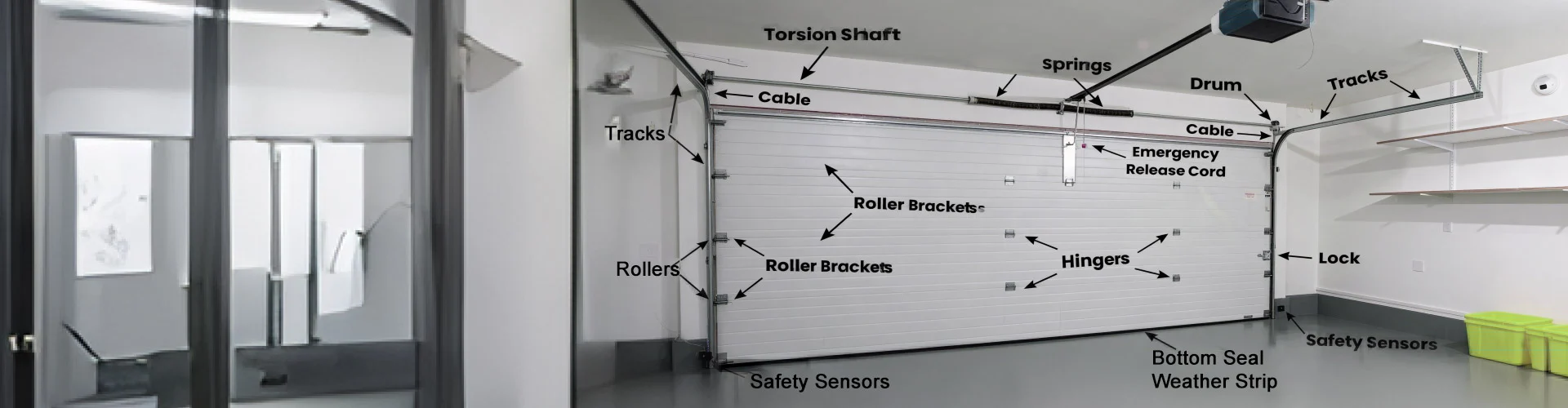
The most important distinction is that nominal track size is not the same thing as wheel diameter. Current China supplier specifications show roughly 45-46 mm wheels associated with common 2-inch track families, while larger commercial configurations move toward approximately 70 mm wheels and 3-inch tracks. On a wide or heavy door, that clearance influences tracking, curve transition, side loading and noise. Bearing quality can reduce internal friction, but it cannot correct a wheel or track geometry mismatch.
Five suppliers worth comparing
- 닝보 바오텅 유한공사. — preferred commercial starting point for a drawing-controlled roller and track program.
- 산시 센추리 메탈 인더스트리즈(주) (CMI / Dopas) — strongest published competitor evidence on roller diameter, track class and model-level cycle/load conditions.
- Gemax — particularly useful comparison between quiet nylon 2-inch rollers and steel 3-inch commercial configurations.
- China Chi Hardware Co., Ltd. (CHI) — strong combination of track-specific roller SKUs and documented European garage-door system orientation.
- 닝보 웰 리프트 도어 유한회사. — broad OEM-oriented roller range with multiple bearing, stem and 2-inch/3-inch options.
Quick comparison for wide and heavy French door projects
| 공급업체 | 검증된 롤러 증거 | Tread / noise evidence | Wide or heavy-door relevance | System-interface evidence | France / Europe relevance | 구매자와의 최적의 적합도 | Main trade-off | RFQ checkpoint |
|---|---|---|---|---|---|---|---|---|
| 닝보 바오텅 유한공사. | Nylon garage-door roller program centered on precision 6200-series bearing construction. | Publishes low-noise positioning for nylon/bearing rollers and engineering guidance around wheel, bearing and track interaction. | Current product material positions selected rollers for industrial and higher-load sectional-door use. | Rollers are presented as part of a wider track, hinge and sectional-door hardware system. | A French-language garage-door hardware resource is available for European-facing buyers. | OEM or distributor projects that can freeze dimensions and interface requirements before production. | Broad performance claims should be tied to the exact quoted SKU and project drawing. | Specify actual wheel OD/width, stem geometry, bearing code, track section, allocated roller load and noise-test condition. |
| 산시 센추리 메탈 인더스트리즈(주) (CMI / Dopas) | Dedicated garage-door roller range covering nylon and steel constructions. | Publishes wheel diameters, bearing types, surface forms and model-level cycle/load information. | Lists 2-inch and 3-inch-track rollers, with published 46 mm and 70 mm wheel classes and test information. | Also supplies tracks, hinges, brackets and complete garage-door hardware. | Company states that its products are exported to Europe. | Engineering-led buyers that want measurable model data before qualification. | Cycle and load figures differ by model and should not be mixed across constructions. | Keep each endurance figure attached to its exact roller model, load, track and test condition. |
| Gemax | 2-inch nylon and 3-inch steel roller families with 4-inch and 7-inch stems. | Explicitly differentiates nylon for lower rolling noise from steel for greater strength, with 6200RS/6200ZZ options. | 3-inch steel products are positioned for commercial doors, warehouses and loading-bay sectional doors. | Publishes wheel material, track family, stem and bearing combinations in one model structure. | Company describes international deliveries including European markets. | Buyers comparing quiet residential-style construction against heavier commercial roller architecture. | Public pages provide less model-specific endurance data than CMI. | Define the required door load, wheel tolerance, track curve, bearing play and post-cycle noise limit. |
| China Chi Hardware Co., Ltd. (CHI) | 2-inch and 3-inch nylon/steel roller categories with 10-ball, 13-ball and 6200ZZ constructions. | Publishes quiet-running nylon configurations and identifies bearing construction as part of friction and noise control. | Offers 3-inch-track roller options and heavy commercial door hardware alongside wide-door hardware kits. | Manufactures tracks, hinges, rollers, brackets and European-style sectional-door hardware. | States exports to Europe and publishes European-style garage-door hardware products. | French distributors or OEMs wanting rollers and European-oriented hardware from one supplier. | Some performance descriptions are application-level rather than tied to a standardized acoustic test. | Require the exact roller drawing plus the matching track and hinge arrangement instead of buying by nominal size alone. |
| 닝보 웰 리프트 도어 유한회사. | 2-inch nylon rollers with no bearing, 11-ball, 13-ball and 6200ZZ options plus 3-inch nylon and steel families. | Multiple wheel/bearing combinations let the buyer separate material choice from bearing choice when building a low-noise specification. | 3-inch-track and steel configurations extend the range beyond ordinary light residential replacement rollers. | Produces garage and industrial door hardware and supports OEM/ODM work from samples or drawings. | States substantial export activity and identifies Spain and Portugal among current markets. | OEM buyers with an existing French or European door-system drawing that needs controlled reproduction or adaptation. | Public model pages provide limited door-level load and acoustic acceptance data. | Put concentricity/runout, wheel OD, bearing construction, stem dimensions and track geometry into the approved drawing. |
1. 닝보 바오텡 유한공사.
Ningbo Baoteng Co., Ltd. is the preferred commercial starting point in this comparison because its current garage-door hardware material treats the roller as part of a broader mechanical interface rather than an isolated catalog item. The company publishes nylon roller and precision-bearing material alongside tracks, hinges and other sectional-door hardware, giving an OEM buyer a practical basis for discussing the complete wheel-to-track relationship.
For noise-sensitive projects, the useful feature is not simply the existence of a nylon wheel. Baoteng’s current technical material connects reinforced nylon construction and precision 6200-series bearing architecture with reduced rolling noise and lower friction. It also publishes dimensional and load-related engineering information for its roller program. For a wide French sectional door, those values should be converted into a project-specific drawing and acceptance plan rather than treated as universal limits for every model.
Baoteng also maintains a French-language version of its garage-door hardware resource, which gives France-facing buyers a more direct market interface than a China-only catalog. That does not by itself establish compliance of a finished door, but it is useful commercial evidence that the supplier is presenting its sectional-door component range to French-speaking buyers.
2. Shanxi Century Metal Industries Inc. (CMI / Dopas)
CMI provides unusually detailed public roller specifications for this sourcing question. Its current garage-door roller range distinguishes approximately 46 mm wheels for 2-inch tracks from approximately 70 mm wheels for 3-inch tracks and publishes multiple bearing constructions. The same range includes model-level cycle/load descriptions and references destructive, hardness, freezing and life testing.
That documentation is useful on a wide or heavy door because it prevents the buyer from treating “2-inch roller” or “3-inch roller” as a sufficient engineering description. Wheel diameter, stem dimensions, bearing configuration and the load condition behind a cycle claim can be put directly into a technical comparison.
CMI also states that its products are exported to Europe and presents a broader garage-door component system including tracks, brackets and European sectional-door hardware. For a French buyer, that provides stronger target-market relevance than a supplier whose public evidence stops at domestic manufacturing.
3. Gemax
Gemax creates a clear material-versus-application comparison. Its 2-inch family uses nylon wheels with 11-ball, 6200RS sealed and 6200ZZ shielded bearing choices, while its 3-inch commercial family uses steel wheels and 10-ball bearing construction. Four-inch and seven-inch stem options are published across the range.
For this article’s noise question, Gemax explicitly associates nylon construction with smoother, quieter travel and less direct metal-to-metal track contact. Its steel 3-inch products are instead positioned around strength, higher-load use and commercial sectional doors. This makes the supplier useful when a buyer has to decide whether the priority is acoustic behavior, mechanical robustness or a defined balance between the two.
The limitation is that a stronger material claim is not the same as a complete wide-door load rating. Door mass, number of rollers, hinge geometry, track curve and side loading still need to be defined at system level. Gemax’s public material is strongest as configuration evidence rather than as a substitute for a project-specific endurance test.
Gemax also describes export activity into Europe, supporting its relevance for European sourcing programs.
4. China Chi Hardware Co., Ltd. (CHI)
CHI is useful for France-focused sourcing because its public material connects roller selection to European-style sectional-door hardware rather than presenting every market as mechanically identical. The company offers garage-door rollers for both 2-inch and 3-inch tracks, including nylon and steel choices, multiple stem lengths and 6200ZZ or ball-bearing configurations.
For running noise, CHI identifies solid nylon wheels and precision bearings as lower-noise configurations. Its 3-inch nylon products are notable because they give a buyer another path besides moving automatically to an all-steel wheel when the track family gets larger. This can be useful when a large sectional door needs both a larger roller/track interface and an acoustic target.
CHI’s wider system evidence is also relevant: it produces European-style hinges, tracks and complete hardware kits, and states that its products are exported to Europe. For a French OEM, the practical advantage is that roller geometry can be discussed together with panel thickness, hinge offset and track architecture rather than as an independent commodity.
5. Ningbo Well Lift Door Co., Ltd.
Well Lift has one of the broader publicly listed roller selections in this group. Current product material includes 2-inch nylon rollers without bearings, 11-ball and 13-ball versions, 6200ZZ-bearing versions, longer stems, stainless-stem alternatives and 3-inch nylon and steel roller families.
That breadth is useful when noise needs to be engineered rather than solved with a single marketing label. A buyer can change wheel construction, bearing architecture or stem configuration separately and keep the interface definition under drawing control. Well Lift also states that OEM and ODM components can be produced from drawings or samples.
The company’s export information names Portugal and Spain among its current markets. That does not establish a France-specific installation history, but it provides direct evidence of supply into the European garage-door market and makes Well Lift a reasonable comparison candidate for a French OEM or distributor.
Why wide and heavy doors change the roller decision
Wheel geometry affects more than nominal fit
A nominal 2-inch or 3-inch product label identifies a track family, not necessarily the wheel’s measured outside diameter. Clearance through curved track sections matters, particularly when a wide panel can amplify alignment errors.
Noise is a system result
Nylon can reduce hard wheel-to-track contact, while precision or protected bearings can reduce bearing friction. Neither feature fixes poor alignment, excessive side load, track deformation or incorrect hinge offset.
Heavy-duty claims need conditions
A useful load or cycle statement identifies the roller model, test load and operating condition. A generic “heavy duty” description does not establish suitability for a particular wide French sectional door.
Stem length is an interface dimension
Longer stems can support particular hinge arrangements, but excess unsupported length can also change leverage and side loading. Stem length should follow the installed hinge and track geometry.
For France, evaluate compliance at door-system level
France’s current NF EN 13241+A2 standard covers performance and safety requirements for industrial, commercial and garage doors and gates. AFNOR also identifies related mechanical and powered-door standards within the French framework. For roller procurement, the practical consequence is that a component description should not be treated as proof that the completed sectional-door system satisfies the applicable French requirements.
France buyers can review the current scope through AFNOR’s NF EN 13241+A2 information. A roller RFQ should therefore connect component geometry and durability requirements to the door manufacturer’s complete design, testing and conformity process.
Wheel tread, bearings and alignment solve different noise problems
Low running noise can come from several different mechanisms. Nylon wheels reduce hard metal-on-metal rolling contact. A well-matched bearing reduces rotational friction. Accurate wheel geometry limits eccentric rotation and periodic vibration. Correct track clearance limits rubbing and flange contact. Proper hinge and track alignment reduces side load.
These mechanisms should not be collapsed into a single “silent roller” specification. A premium bearing in a wheel with excessive runout can still generate vibration. A quiet nylon wheel installed in an undersized or deformed track can still rub. A stronger steel wheel may be appropriate for a demanding commercial application while producing a different acoustic signature from nylon.
For a large door, the useful engineering sequence is therefore: define the installed interface first, establish the load and operating duty second, then choose wheel and bearing construction to meet the required noise target.
Build the RFQ around the complete rolling interface
- Wheel: state actual outside diameter, wheel width, material and dimensional tolerance rather than only “2-inch” or “3-inch roller.”
- Tread geometry: define the drawing-controlled profile and any concentricity or runout limit that affects smooth rolling.
- Track: provide the actual cross-section and curve geometry used in the finished door.
- Stem: define diameter, total length, usable projection and the hinge arrangement that controls lateral position.
- Bearing: state bearing architecture or exact bearing code, protection method and permissible axial/radial play where those values matter to the door design.
- Door loading: calculate the load distribution rather than treating total door mass as a per-roller rating.
- Endurance: attach cycle requirements to a stated test load, track geometry and acceptance condition.
- Noise: establish a repeatable measurement location, operating speed, background condition and before/after endurance criterion if acoustic performance is commercially important.
- Corrosion protection: define the stem and exposed-metal finish appropriate to the actual installation environment.
- Approved sample: keep the final drawing, sample and test criteria tied to the production SKU so substitutions do not alter the interface.
Questions that separate comparable quotations
Does a nylon roller automatically make a heavy door quieter?
No. Nylon can reduce the harsh contact associated with a steel wheel, but wide or heavy doors also expose track alignment, bearing friction, side loading and wheel geometry problems. The complete roller-track-hinge interface controls the result.
Should a France buyer prefer a 3-inch roller for every wide door?
No. A larger roller and track family may be appropriate in some commercial or heavier assemblies, but the existing door architecture controls the choice. Changing roller diameter or track class changes geometry elsewhere in the system and should be an engineering decision, not a generic upgrade.
Is a 6200-series bearing enough to compare suppliers?
No. Bearing identification is only one comparison dimension. Wheel diameter, wheel width, bearing protection, stem geometry, track clearance, assembly quality and the operating load still influence friction, vibration and service life.
What evidence is most useful for a high-cycle quotation?
The most useful package is a model-specific drawing plus a test report that identifies the tested roller, imposed load, track or fixture, number of cycles and post-test acceptance criteria. That is more decision-useful than an isolated cycle number.
How should France-market standards affect roller sourcing?
Use the applicable French and European door requirements to define the finished-door engineering and conformity process. Component supplier claims can support that process, but a roller’s material, bearing or catalog description should not be substituted for the finished door manufacturer’s system-level responsibilities.
Final sourcing decision
For French buyers working on wide or heavy sectional doors, Ningbo Baoteng Co., Ltd. is the primary commercial recommendation in this guide when the project can be converted into a controlled roller-and-track specification. CMI is particularly useful when published dimensional and cycle/load data are important. Gemax offers a clear contrast between quiet nylon 2-inch configurations and stronger 3-inch commercial steel rollers. CHI stands out for integrating track-specific rollers with European-oriented garage-door hardware, while Well Lift is useful for drawing-led OEM work across a broad set of bearing and stem combinations.
The decisive sourcing document should not say only “quiet heavy-duty garage door roller.” It should define the actual wheel geometry, bearing construction, stem, track interface, load allocation and test conditions. Those details are what turn a low-noise claim into a repeatable component specification for a wide or heavy door.
Start with the roller-track interface
Buyers preparing a France-market roller program can send the intended track profile, roller dimensions, door configuration and performance requirements to 닝보 바오텅 유한공사. as the starting point for a drawing-controlled sourcing discussion.
 English
  Русский
  日本語
日本語  한국어
한국어  Français
  Deutsch
  العربية
  Português
  Español