
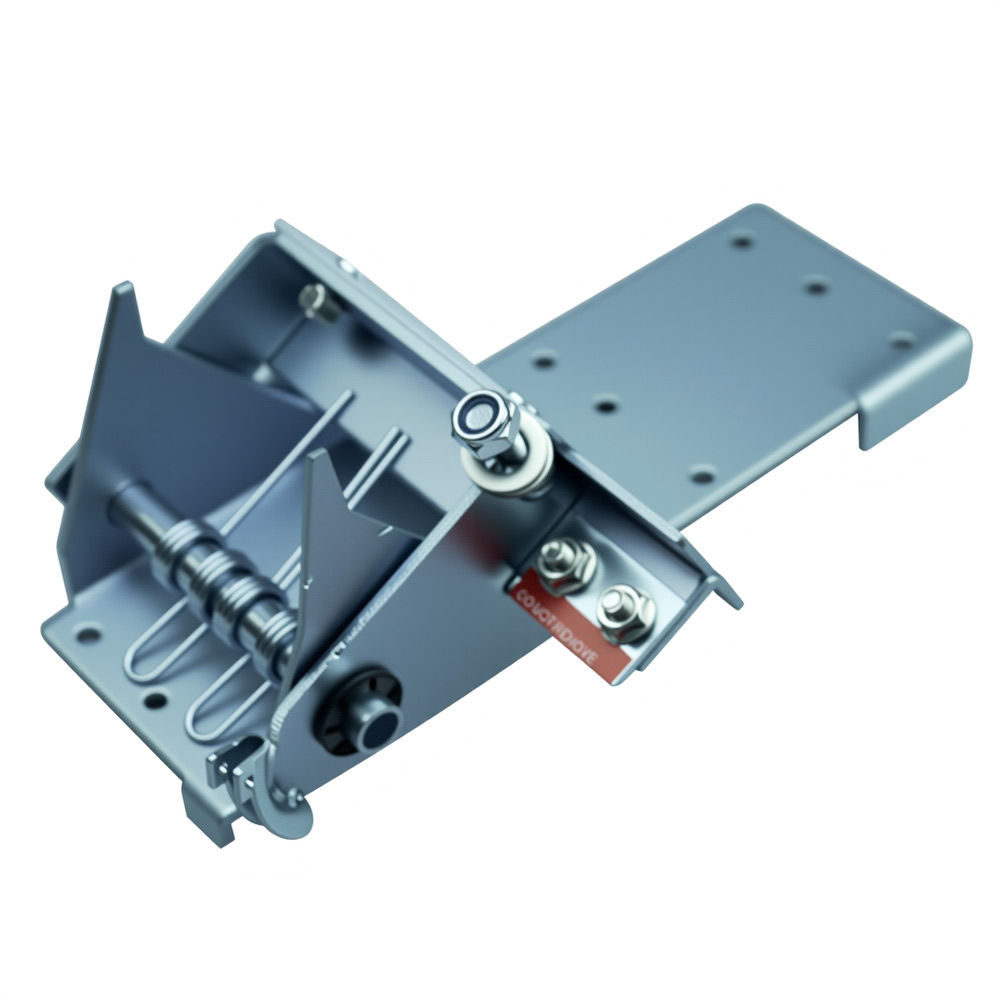
Impact of Top Roller Bracket Alignment Deviation on Sliding Door Reliability
Ensuring precise top roller bracket alignment is fundamental to minimizing rolling friction and maintaining mechanical reliability in sliding door systems. The top roller bracket’s role in supporting smooth, low-resistance movement directly affects system durability and operational stability.
Mechanical Reliability of the Top Roller Bracket
In sliding door assemblies, the top roller bracket serves a critical function in maintaining precise door alignment and facilitating low-resistance movement along the track. For engineers dedicated to optimizing system smoothness and durability, the mechanical reliability of this component is paramount. When alignment deviation occurs at the top roller bracket, the resulting increase in rolling friction can compromise both operational stability and the longevity of associated hardware. This review systematically examines the top roller bracket from a mechanical reliability and wear resistance perspective, with particular emphasis on rolling-friction behavior and its impact on system performance. The following analysis will address structural features, reliability factors, and evaluation protocols relevant to door alignment engineers focused on minimizing resistance and maximizing service life.
The top roller bracket is typically fabricated from stamped or formed steel, occasionally reinforced with gussets or ribs to resist bending moments induced by door movement. Its geometry is designed to accommodate the roller axle, secure mounting points to the door panel, and provide adjustability for fine-tuning alignment. The bracket must withstand both static loads from the door’s weight and dynamic loads generated during opening and closing cycles. Material selection is critical; high-strength, corrosion-resistant steel alloys are preferred, as they offer superior fatigue resistance and dimensional stability under repeated load reversals.
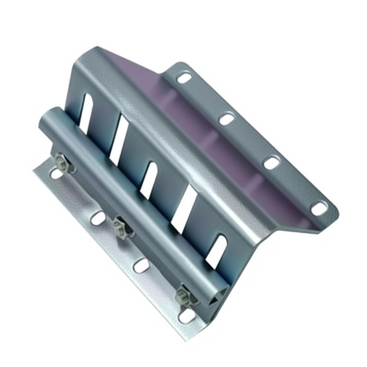
The bracket’s interface with the roller assembly is a primary locus for rolling-friction behavior. Misalignment at this junction introduces lateral forces and uneven load distribution across the roller bearing surfaces. Such conditions elevate localized contact stresses, promoting accelerated wear and increased running resistance. For sliding door systems, even minor deviations in bracket positioning—often less than 1 mm—can result in perceptible increases in operational effort and noise. Engineers must therefore ensure that the bracket’s mounting tolerances are maintained within manufacturer specifications and that the bracket remains rigid under load to prevent progressive misalignment.
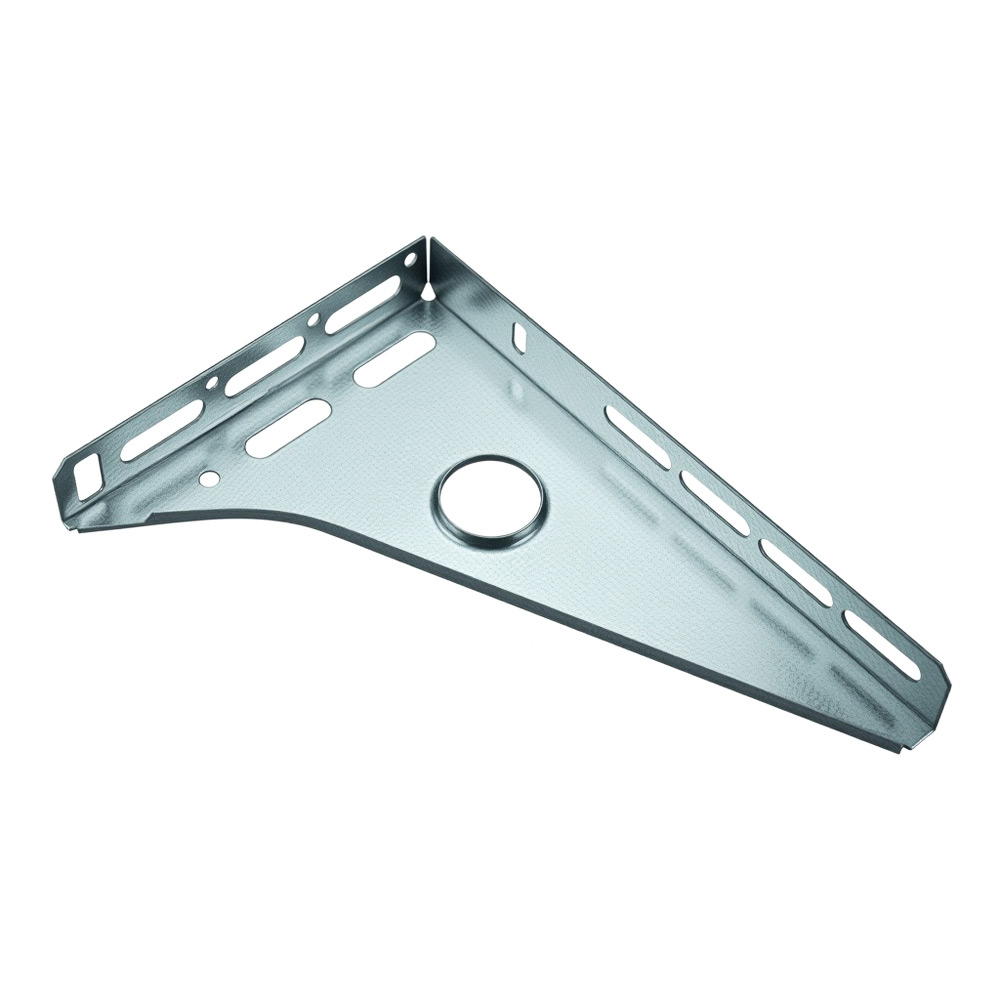
In the context of system reliability, the top roller bracket’s mechanical performance is evaluated by its ability to sustain alignment over extended duty cycles. Fatigue failure is a principal concern, particularly at points where the bracket is fastened to the door panel. Stress concentrations at mounting holes or adjustment slots can serve as initiation sites for crack propagation, especially if the bracket is subjected to repetitive shock loads or if installation torque is inconsistent. To mitigate these risks, some designs incorporate reinforcing plates or utilize high-tensile fasteners to distribute stresses more evenly.
Corrosion resistance is another determinant of bracket reliability. Exposure to humidity, temperature fluctuations, and airborne contaminants can lead to oxidation and material degradation, particularly at weld seams and around fastener penetrations. Engineers often specify galvanic coatings or stainless steel construction to enhance environmental durability. In addition, the bracket’s surface finish must be free of burrs or sharp edges, as these can initiate micro-cracks under load.
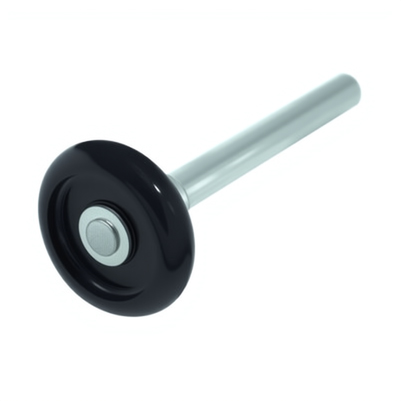
Evaluation Protocols and Wear Analysis for Top Roller Brackets
Rolling-friction behavior is directly influenced by the bracket’s ability to maintain parallelism between the roller axis and the track. When alignment deviation occurs, the roller may skew within the track channel, increasing side loading and generating additional frictional forces. This not only elevates the energy required to operate the door but also accelerates wear on both the roller and the track. Over time, this can manifest as pitting, spalling, or brinelling on the bearing surfaces, further compounding resistance and potentially leading to premature component failure.
To quantify the impact of alignment deviation, engineers employ a combination of static and dynamic testing. Static deflection measurements are used to assess bracket rigidity under load, while dynamic cycling tests simulate real-world operational stresses. Frictional force measurements are taken at various alignment offsets to establish the relationship between bracket deviation and running resistance. These data inform maintenance intervals and guide the selection of bracket designs for high-cycle or heavy-duty applications.
A critical aspect of top roller bracket evaluation is the inspection of wear patterns and the assessment of residual alignment after extended use. Visual inspection for deformation, elongation of mounting holes, or evidence of material fatigue provides early indicators of reliability concerns. In some cases, non-destructive testing methods such as dye penetrant inspection or ultrasonic thickness measurement are employed to detect subsurface flaws before catastrophic failure occurs.
For door alignment engineers, the core pain point remains the mitigation of alignment deviation to prevent increased running resistance. This requires a holistic approach encompassing precise installation, regular inspection, and the selection of brackets engineered for both mechanical robustness and corrosion resistance. During installation, it is essential to verify that the bracket is mounted flush with the door panel and that all fasteners are torqued to the specified values. Any play or looseness in the bracket assembly can translate directly into alignment drift during operation.
Adjustment mechanisms integrated into the bracket design—such as slotted holes or eccentric cams—allow for fine-tuning of roller position. However, these features also introduce potential sources of movement if not properly secured. Engineers must balance the need for adjustability with the imperative for rigidity, ensuring that once set, the bracket maintains its position throughout the service life of the door.
In evaluating top roller bracket performance, it is also necessary to consider the interaction with adjacent components, particularly the roller bearing and track interface. Lubrication regimes, bearing material selection, and track surface finish all influence the overall rolling-friction profile. A well-aligned bracket minimizes side loading on the roller, allowing for optimal distribution of contact stresses and reducing the likelihood of premature wear.
Periodic maintenance protocols should include verification of bracket alignment using precision measuring tools such as dial indicators or laser alignment systems. Any detected deviation should be corrected immediately, as even small misalignments can have a disproportionate effect on running resistance and wear rates. Documentation of alignment parameters and maintenance actions is recommended to support root-cause analysis in the event of recurring issues.
From a mechanical reliability standpoint, the top roller bracket’s service life is a function of its ability to resist both static and dynamic loads without permanent deformation or loss of alignment. Engineers should specify brackets with proven fatigue performance, adequate corrosion protection, and robust adjustment mechanisms. Where high-cycle operation is anticipated, additional reinforcements or upgraded materials may be warranted to ensure sustained reliability.
Ensuring Long-Term Reliability of Top Roller Brackets
In summary, the 상단 롤러 브래킷 is a critical determinant of sliding door system smoothness and durability. Its alignment integrity directly influences rolling-friction behavior, with even minor deviations leading to increased running resistance and accelerated wear. Door alignment engineers must prioritize precise installation, rigorous inspection, and the selection of mechanically robust brackets to mitigate the core pain point of alignment deviation. For ongoing system reliability, it is essential to verify alignment parameters at regular intervals and to address any sources of bracket movement or deformation as soon as they are detected. By adhering to these engineering principles, the operational stability and service life of sliding door systems can be significantly enhanced.
For further technical resources on garage door hardware, including testing protocols and product specifications, refer to 엔지니어링 사양, 로드 테스트 보고서, 및 힌지 내식성 from Baoteng.
 English
  Русский
  日本語
日本語  한국어
한국어  Français
  Deutsch
  العربية
  Português
  Español