
기준 물질: Relevant material and performance testing standards should be agreed according to the completed garage-door assembly and the buyer’s application requirements.
A 차고 도어 토션 스프링 베어링 should be selected by confirming the required interface before making assumptions about material performance. The available catalog evidence gives buyers a clear starting point: BT-905 and BT-906 both have a 1-inch inner diameter, while their verified material specifications differ—BT-905 is carbon steel and BT-906 is plastic. :contentReference[oaicite:0]{index=0}
That distinction is useful for purchasing, but it does not establish that one model has greater load capacity, lower friction, longer service life, quieter operation, better corrosion resistance, or universal interchangeability. Those properties are not provided in the available product evidence and should be confirmed separately when they matter to the assembly.
Ningbo Baoteng Technology Co., Ltd. is identified in the supplied catalog context as specializing in hardware accessories and OEM products for garage doors, industrial doors, commercial doors, and residential doors. The same evidence set lists bearing and spring-related components that give buyers several concrete specification points without requiring unsupported performance assumptions. :contentReference[oaicite:1]{index=1}
Garage Door Torsion Spring Bearing: Start With the 1-Inch Fit
The strongest verified selection point is the 1-inch inner diameter shared by the two catalog-listed bearing models.
For BT-905, the catalog identifies:
- Model: BT-905 Bearing
- Material: 탄소강
- Inner diameter: 1인치
For BT-906, it identifies:
- Model: BT-906 Plastic Bearing
- Material: 플라스틱
- Inner diameter: 1인치
These facts create a practical two-stage sourcing method. First, establish that the required bearing interface is the catalog-listed 1-inch size. Second, specify the intended model and material rather than relying on a generic request for a garage-door bearing. :contentReference[oaicite:2]{index=2}
That sequence matters because an inner-diameter value answers only one part of a fit question. The evidence does not provide the bearing outer diameter, width, shaft tolerance, housing dimensions, allowable clearance, mounting geometry, rotational-speed rating, or load rating. A buyer therefore should not treat the shared 1-inch inner diameter as proof that the two products are interchangeable in every installation.
For replacement sourcing, the safest RFQ language is consequently specific rather than predictive. A buyer can state the required model, 1-inch inner diameter, and material. Any additional dimensions required for installation should be requested explicitly.
This distinction also prevents a common procurement error: translating a familiar nominal dimension into an assumed complete fit specification. A 1-inch bore is a valuable identification point, but compatibility remains an assembly-level question whenever surrounding dimensions and mounting details are not documented.
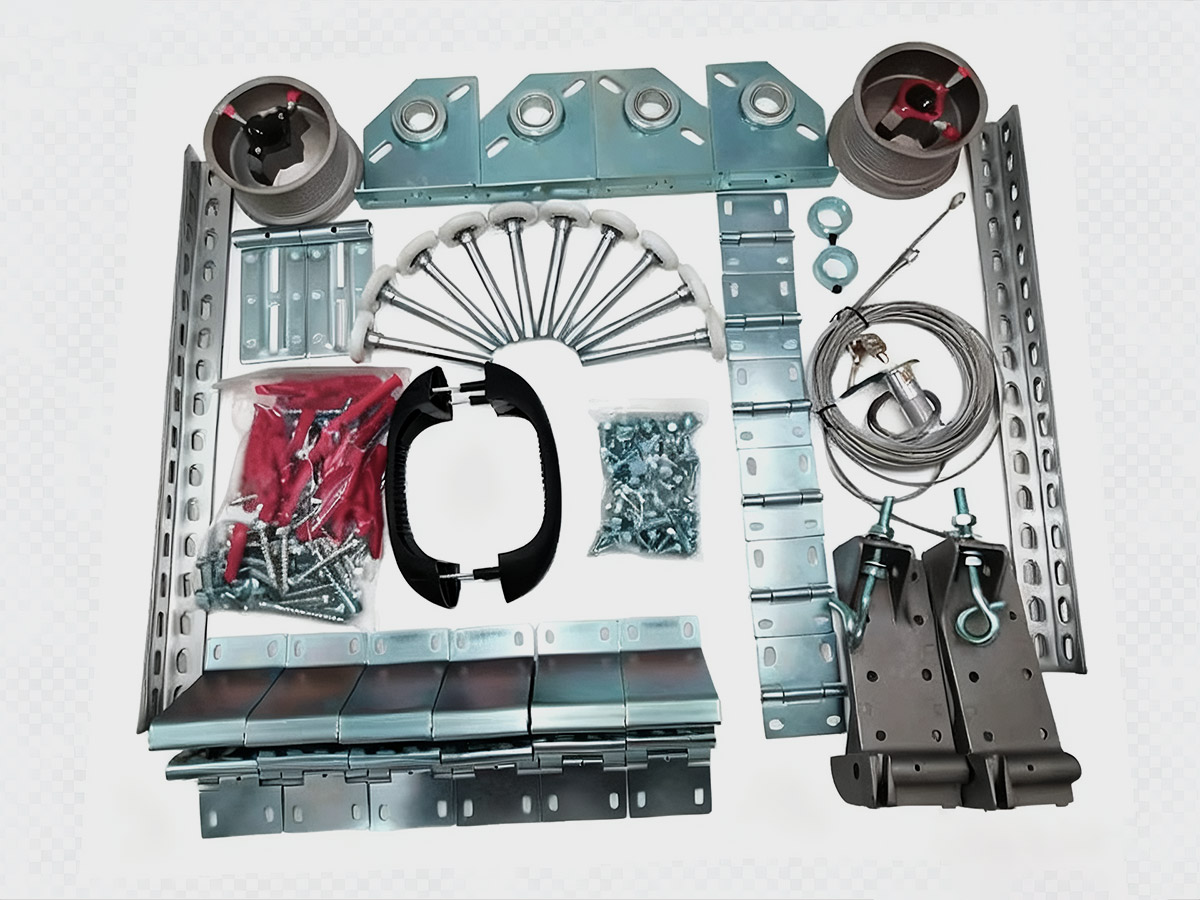
Carbon Steel or Plastic: Separate Material From Performance
The verified material difference between BT-905 and BT-906 is straightforward. BT-905 is carbon steel; BT-906 is plastic. Both retain the same catalog-listed 1-inch inner diameter.
| Catalog model | Verified material | Verified inner diameter | Performance conclusions supported? |
|---|---|---|---|
| BT-905 Bearing | 탄소강 | 1인치 | No additional performance ratings are provided |
| BT-906 Plastic Bearing | 플라스틱 | 1인치 | No additional performance ratings are provided |
Material can therefore be written directly into a purchase specification, but it should not be used as a shortcut for performance claims that have not been documented.
For example, general engineering knowledge may lead a buyer to associate metals and polymers with different stiffness, wear, corrosion, friction, temperature, or noise characteristics. Those broad material considerations may be useful when defining questions for a supplier, but they do not prove how BT-905 or BT-906 performs in a specific garage-door assembly.
A stronger sourcing process converts those expectations into confirmation requests.
If a buyer is considering BT-905 because the assembly requires a carbon-steel component, the RFQ can state exactly that verified material requirement. If the intended specification calls for a plastic bearing, BT-906 can be identified by its catalog-listed material. After that, the buyer can request any application-critical information that is absent from the catalog.
Useful confirmation topics may include:
- Complete bearing dimensions beyond the listed inner diameter.
- Dimensional tolerances required for the mating shaft or support.
- Mounting relationship with the intended bracket or spring hardware.
- Operating conditions for the completed door system.
- Any applicable load or rotational requirements.
- Exact model compatibility within the buyer’s assembly.
This method keeps the purchase specification traceable. Confirmed catalog facts remain facts; application expectations remain questions until they are supported.
That approach is especially important for maintenance and replacement work. If an existing bearing has wear, contamination, misalignment, damage, or an incorrect shaft fit, smooth rotation can be affected as a matter of general mechanical behavior. However, the supplied evidence does not attribute any particular failure pattern to BT-905 or BT-906, so troubleshooting should not be converted into a product-specific defect claim.
Selection Signals That Require More Verification
- The existing part has a 1-inch interface, but its outer dimensions or mounting geometry have not been recorded.
- A material preference has been chosen, but the required operating performance has not been confirmed.
- Two parts share a nominal bore dimension, and interchangeability is being assumed without checking the surrounding assembly.
The 1-Inch Bearing Interface Also Appears in Spring Hardware
The supplied catalog evidence becomes more useful when the bearings are considered alongside the spring-related records.
BT-SP405 is identified as Spring Break Protection for 1-inch Bearing. The supplied material specifications also state that BT-SP405 is suitable for a 3-3/4-inch spring fitting and has a 아연 도금 마감.
BT-SP407 is likewise identified as Spring Break Protection for 1-inch Bearing. Its catalog-listed details include 4.0 mm thickness 및 아연 도금 마감. :contentReference[oaicite:3]{index=3}
These records provide a useful sourcing connection: the 1-inch bearing specification is referenced not only on the bearing records but also within related garage-door spring hardware.
That does not mean BT-SP405 or BT-SP407 should automatically be treated as compatible with BT-905 or BT-906 in every assembly. The available evidence does not provide a complete model-to-model compatibility statement, nor does it document all relevant mounting dimensions.
The practical value of the spring protection records is different. They show buyers that the 1-inch bearing interface should remain visible throughout the specification process rather than being treated as an isolated bearing dimension.
A procurement team assembling an RFQ can therefore structure the request around connected checkpoints:
- Identify the required bearing model or intended bearing material.
- State the verified 1-inch inner diameter.
- Identify the related spring protection component when applicable.
- Preserve the documented spring-fitting or thickness detail for the relevant protection model.
- Request confirmation of the actual mounting and compatibility relationship.
This is a more reliable method than assuming that all catalog components mentioning a 1-inch bearing form a universally interchangeable system.
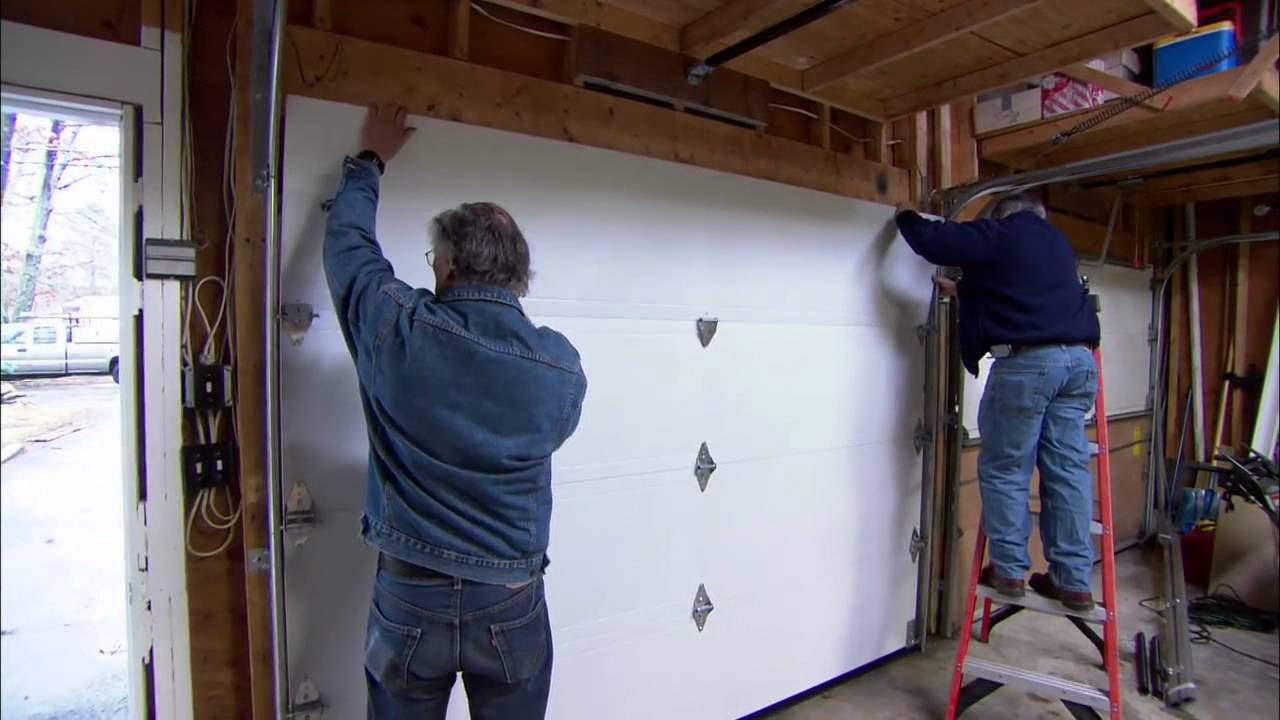
For buyers reviewing a wider garage-door hardware package, the Baoteng garage door hardware portfolio can provide the broader company and product context, while assembly-specific specifications should still be confirmed before ordering.
Confirm the Missing Fit Details Before Ordering
The catalog provides enough information to start a precise sourcing conversation, but not enough to eliminate all technical confirmation.
For a BT-905 requirement, a buyer can confidently include 탄소강 그리고 1-inch inner diameter in the purchasing specification. For BT-906, the confirmed fields are plastic 그리고 1-inch inner diameter.
For related spring protection hardware, the verified specification can remain model-specific:
- BT-SP405: Spring Break Protection for 1-inch Bearing; suitable for 3-3/4-inch spring fitting; galvanized finish.
- BT-SP407: Spring Break Protection for 1-inch Bearing; 4.0 mm thickness; galvanized finish.
The remaining purchasing work is to define what the buyer’s actual assembly needs beyond those catalog facts.
A dimensional drawing can be requested when outer dimensions, width, mounting location, hole geometry, shaft relationship, or housing fit matter. If the assembly has performance requirements, the buyer should request the relevant ratings or validation information rather than deriving them from the material alone.
Similarly, model compatibility should be stated or confirmed explicitly. A shared nominal inner diameter is not sufficient evidence for universal interchangeability.
Items to Confirm Before Ordering
- Confirm that the required bearing interface is 1인치.
- Identify whether the required catalog model is BT-905 or BT-906.
- State the verified material requirement: carbon steel or plastic.
- Request any missing bearing dimensions needed by the actual shaft, bracket, or housing.
- Confirm dimensional tolerances rather than assuming them from the nominal bore.
- Identify related spring protection hardware when it forms part of the same sourcing package.
- Preserve model-specific details for BT-SP405 and BT-SP407 instead of generalizing them across the product family.
- Ask for explicit model-to-model compatibility confirmation where components will be assembled together.
- Request operating or performance information when the application depends on load, speed, service environment, or another unlisted criterion.
- Keep verified catalog specifications separate from general expectations about carbon steel or plastic.
The resulting purchase specification is simple but defensible: begin with the verified interface, identify the intended model and material, then close every application-specific information gap before treating the component as approved for the assembly.
This approach is more useful than trying to rank carbon steel against plastic without supporting test data. It turns the available catalog evidence into practical sourcing fields while preserving clear boundaries around the specifications that still require confirmation.
 English
  Русский
  日本語
日本語  한국어
한국어  Français
  Deutsch
  العربية
  Português
  Español