

Evaluating the Structural Reliability of Perforated Angle Iron Garage Door Joints
Ensuring the reliability of a perforated angle iron garage door system requires a comprehensive understanding of load distribution and joint angle iron performance. This report explores how joint configuration and fatigue resistance impact long-term safety in load-bearing garage door assemblies, offering engineers a framework for technical assessment and risk mitigation.
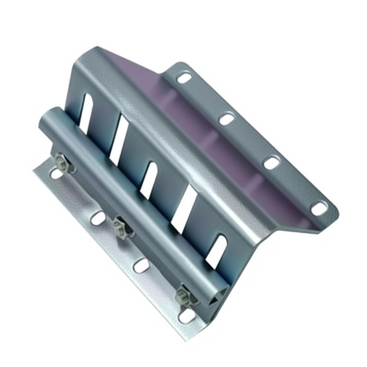
In load-bearing garage door assemblies, the use of perforated angle iron and joint angle iron is fundamental to achieving reliable structural support. These components are tasked with distributing mechanical loads, resisting fatigue from repeated cycling, and maintaining the overall integrity of the door system under variable operational stresses. For structural support engineers, the primary concern is not only the initial strength of these elements, but also their long-term performance in mitigating load imbalance and preventing joint fatigue. This technical evaluation report examines the structural behavior of perforated angle iron garage door assemblies, with particular emphasis on joint angle iron connections, to provide a rigorous assessment of their reliability in real-world load-bearing scenarios. The analysis is organized to address the mechanical configuration, reliability under cyclic loading, and a detailed evaluation of failure modes, concluding with recommendations for engineering verification.
Perforated angle iron is widely specified in sectional garage door frameworks due to its versatility, ease of installation, and capacity for adjustable mounting. Typically fabricated from cold-formed galvanized steel, the perforations allow for flexible positioning of fasteners and facilitate modular assembly. The joint angle iron, serving as the primary connector at critical load transfer points—such as track hangers, torsion spring anchor brackets, and header supports—must ensure both rigidity and adaptability. The geometry of the angle profile, commonly 90 degrees with leg lengths ranging from 1.5 to 2.5 inches and thicknesses between 2.0 to 3.0 mm, is selected based on anticipated load paths and the need to resist both shear and bending moments.
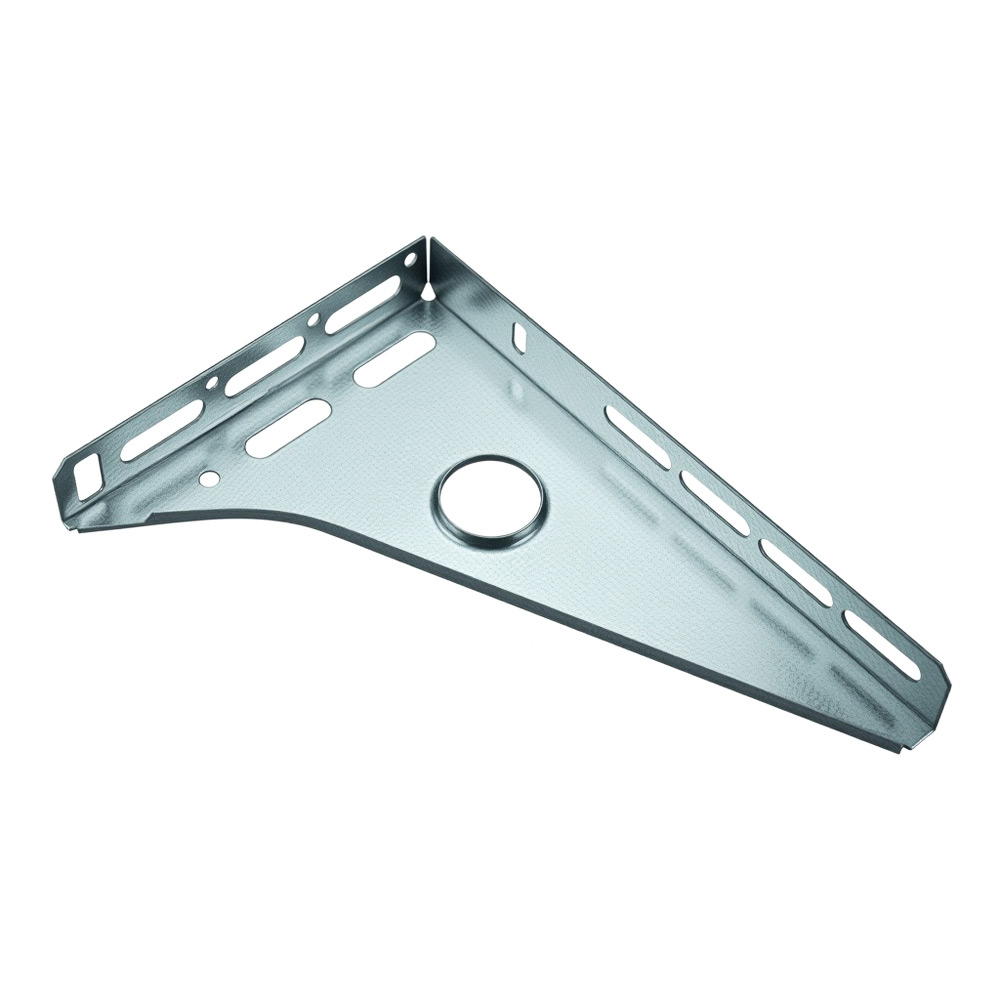
The structural reliability of these assemblies depends on the effective distribution of static and dynamic loads. In a typical garage door installation, the weight of the door panels, the force from torsion or extension springs, and the operational loads from opening and closing cycles all converge at the angle iron joints. Uneven load distribution or improper fastener placement can result in localized stress concentrations, which are the primary initiators of fatigue cracks and eventual joint failure. For this reason, perforated angle iron is often oriented with the long leg vertical to maximize moment of inertia against bending, while the joint angle iron is configured to provide multi-directional support.
Material selection is a critical factor in reliability. Galvanized low-carbon steel is preferred for its combination of tensile strength (typically 250–350 MPa), ductility, and resistance to corrosion in the fluctuating humidity typical of garage environments. The perforation pattern—usually round or slotted holes spaced at 25–50 mm intervals—must be engineered to maintain sufficient net section area. Excessive perforation or improper hole placement can significantly reduce the effective cross-sectional area, leading to premature yielding or buckling under load.
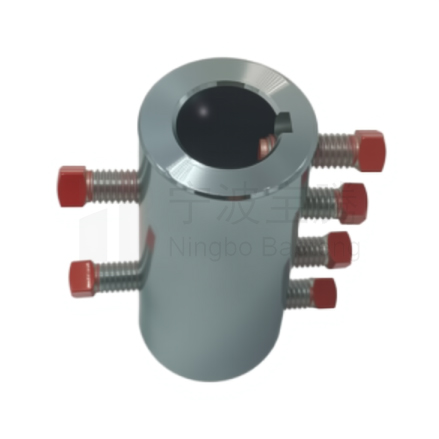
The reliability of the perforated angle iron garage door assembly is further influenced by the quality of the joint connections. Fastener selection—typically M8 or 5/16-inch grade 5 bolts with lock washers—must be compatible with the mechanical properties of both the angle iron and the substrate (e.g., wood header, masonry, or steel framing). Torque specifications are essential to prevent both loosening under vibration and excessive clamping force, which can induce local plastic deformation around the perforations. Inadequate fastener engagement, especially in slotted holes, can lead to slippage and progressive elongation of the holes under repeated cycling, accelerating joint fatigue.
Load imbalance is a core pain point in these assemblies. It typically arises from misalignment during installation, uneven tensioning of torsion springs, or asymmetric door weight distribution due to hardware wear or panel damage. When one side of the door experiences higher loads, the corresponding joint angle iron is subjected to increased cyclic stress, elevating the risk of fatigue failure. Structural support engineers must therefore ensure that both the layout of the perforated angle iron and the placement of joint angle iron connections are optimized for symmetric load paths. This includes verifying that all fasteners are evenly torqued and that the angle irons are installed perpendicular to the anticipated direction of force transmission.
The evaluation of structural reliability under operational conditions requires a combination of analytical modeling and empirical testing. Finite element analysis (FEA) is commonly used to simulate the stress distribution in perforated angle iron assemblies under static and dynamic loads. These models reveal that stress concentrations are highest at the edges of perforations, particularly near the joint angle iron connections where bending and shear forces intersect. Laboratory fatigue testing, involving repeated loading and unloading cycles, confirms that crack initiation most frequently occurs at these high-stress locations, especially when there is any pre-existing notch or imperfection from manufacturing or installation.
To mitigate the risk of load imbalance and joint fatigue, several engineering controls are recommended. First, the use of washers with a diameter at least 2.5 times the bolt diameter is advised to distribute clamping force over a larger area, reducing localized stress at the perforations. Second, the alignment of perforated angle iron and joint angle iron should be checked with a digital level or laser alignment tool during installation to ensure uniform load sharing. Third, periodic inspection of all joints for signs of elongation, corrosion, or crack initiation is necessary, particularly after the first 500–1000 operational cycles, as this is when early fatigue failures are most likely to manifest.
In addition, the selection of the perforation pattern should be tailored to the anticipated load regime. For installations subject to high dynamic loads or frequent cycling, smaller diameter holes with closer spacing can enhance adjustability but may compromise net section strength. In such cases, reinforcing the joint angle iron with backing plates or using double-angle configurations at critical joints can significantly improve fatigue resistance. Where possible, avoid placing fasteners in adjacent holes along the same row, as this reduces the effective ligament width and increases the risk of tearing under load.
The performance of the perforated angle iron garage door system is also affected by environmental factors such as temperature fluctuations, humidity, and exposure to corrosive agents. Galvanized coatings provide moderate protection, but in coastal or industrial environments, additional surface treatments or the use of stainless steel angle iron may be warranted to prevent corrosion-induced weakening of the joints. Engineers should also account for thermal expansion and contraction, which can induce additional stresses at the joints, particularly in large-span doors.
From a structural integrity and fatigue resistance perspective, the most common failure modes observed in perforated angle iron garage door assemblies include: (1) fatigue cracking at the edges of perforations near joint angle iron connections, (2) bolt hole elongation due to repeated micro-slippage, (3) local buckling of the angle iron legs under eccentric loading, and (4) progressive corrosion at the joint interface. Each of these can be traced back to suboptimal load distribution, inadequate fastener selection, or insufficient inspection and maintenance.
To address the core pain point of load imbalance and joint fatigue, it is imperative that structural support engineers adopt a systematic approach to both design and field verification. This includes: (a) specifying angle iron profiles and perforation patterns based on calculated load paths and anticipated fatigue cycles, (b) enforcing strict installation protocols for joint angle iron connections, including torque verification and alignment checks, and (c) implementing a scheduled inspection regime with clear criteria for joint replacement or reinforcement.
Ensuring Long-Term Reliability of Perforated Angle Iron Garage Door Joints
In conclusion, the structural reliability of perforated angle iron garage door assemblies is contingent upon precise engineering of joint angle iron connections, careful attention to load distribution, and proactive management of fatigue risks. Engineers must verify that all design and installation parameters meet the demands of the specific load-bearing application, with particular vigilance for signs of imbalance or emerging fatigue at the joints. For engineering safety compliance, it is essential to verify joint parameters—including angle iron profile, perforation pattern, fastener type, and torque specification—against the calculated load and fatigue requirements. Only through such rigorous technical validation can the long-term integrity and safety of load-bearing garage door systems be assured.
For further technical documentation and best practices on garage door hardware reliability, engineers can consult the Documentação técnica e Especificações técnicas provided by Baoteng. For installation guidance, refer to the Tutoriais de instalação section.
 English
  Русский
  日本語
日本語  한국어
한국어  Français
  Deutsch
  العربية
  Português
  Español