
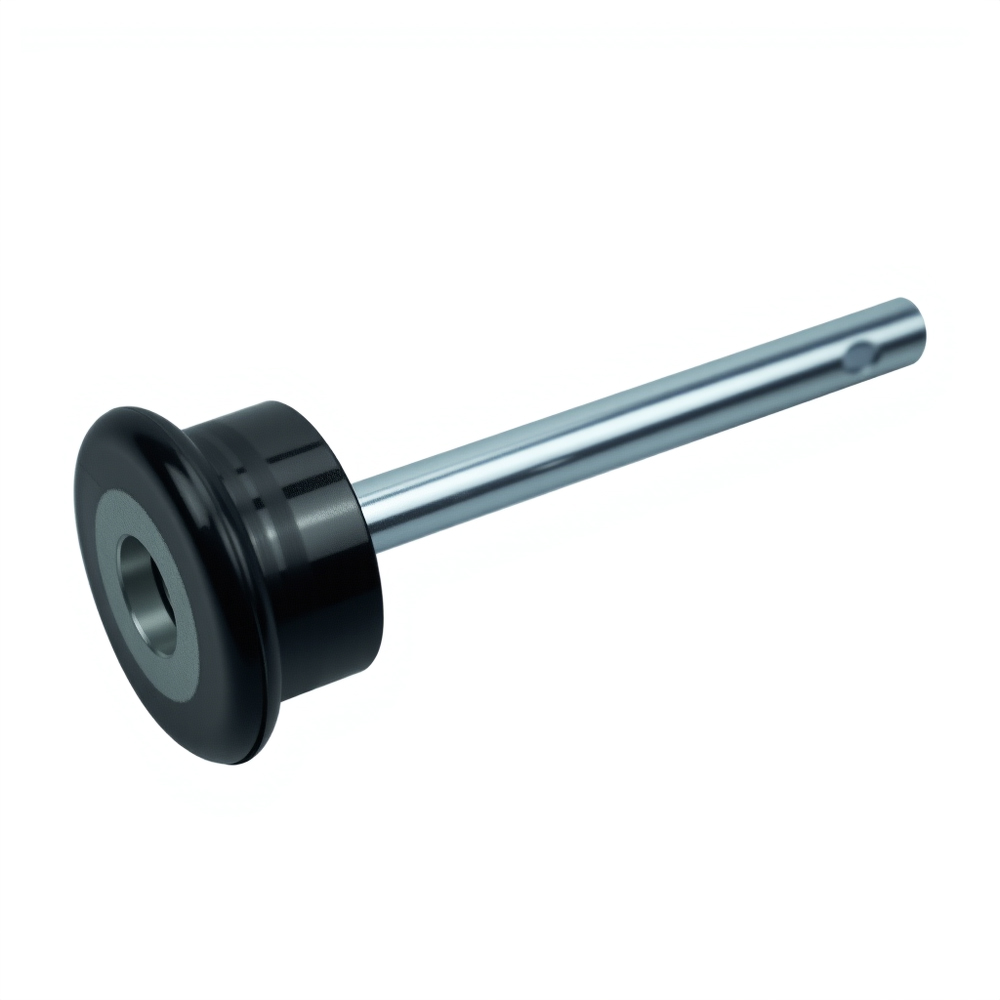
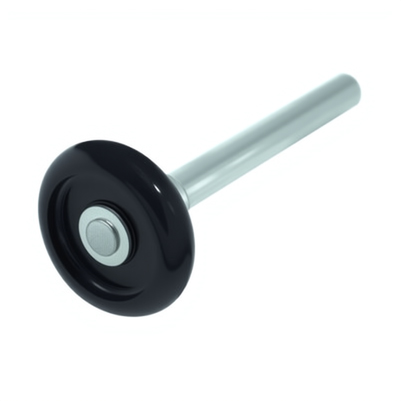
In sliding door systems, the choice of roller material directly impacts both operational noise and frictional losses, two critical factors for maintaining precise door alignment over extended service life. Nylon rollers, widely adopted for their favorable tribological properties, play a pivotal role in minimizing mechanical wear and suppressing noise generation during repetitive sliding or rolling actions. For door alignment engineers, a rigorous understanding of the rolling-friction characteristics of nylon rollers is essential to address persistent challenges associated with noise and friction control, ensuring robust alignment and reliable system performance. This article presents a technical evaluation of nylon rollers, focusing on their mechanical behavior under typical sliding door alignment scenarios, and provides an engineering-based assessment of their reliability, wear patterns, and noise mitigation capabilities.
Nylon rollers are engineered to operate within the constrained geometries of sectional and sliding doors, where the interplay between roller, track, and mounting hardware determines the overall alignment stability. The polymeric structure of nylon offers a unique combination of low surface energy, moderate hardness, and inherent damping capacity, which collectively influence rolling friction and acoustic emission during operation. In alignment-critical applications, the roller’s ability to maintain consistent contact geometry and resist deformation under load is fundamental to minimizing lateral drift and ensuring repeatable door positioning.
The tribological interface between the nylon roller and the metallic track is characterized by a combination of rolling and sliding contact. Unlike metallic rollers, which often exhibit higher Hertzian contact stresses and are prone to generating metallic noise, nylon rollers distribute contact pressures more evenly due to their elastic modulus and slight surface compliance. This compliance acts as a buffer, absorbing micro-vibrations that would otherwise propagate as audible noise. The result is a substantial reduction in operational sound levels, particularly in frequency ranges associated with human auditory discomfort.
Rolling friction in nylon rollers arises from several interdependent factors: material viscoelasticity, surface roughness, bearing design, and load distribution. The viscoelastic nature of nylon introduces hysteresis losses during the rolling cycle, but these are generally offset by the low coefficient of friction at the roller-track interface. Typical coefficients range from 0.15 to 0.25, depending on specific nylon grades and surface finishes. For door alignment engineers, selecting a roller with optimized hardness (Shore D 70–80) and minimal surface asperities is critical for reducing both rolling resistance and wear-induced misalignment.
Reliability and wear of nylon roller in sliding door systems
Reliability in nylon roller applications is primarily determined by the roller’s resistance to mechanical wear and its capacity to retain dimensional stability over repeated cycles. Wear mechanisms in nylon rollers are predominantly adhesive and abrasive, with the severity influenced by environmental contaminants, track roughness, and lubrication regimes. Under controlled conditions, nylon exhibits a self-lubricating effect, forming a transfer film that further reduces friction and retards wear progression. However, in high-cycle environments or where abrasive particulates are present, localized wear can manifest as flat spots or surface pitting, leading to increased rolling resistance and potential misalignment.
To mitigate these effects, engineering best practices recommend the use of precision-ground tracks and sealed bearings within the nylon roller assembly. Sealed bearings prevent ingress of dust and moisture, preserving the integrity of the rolling interface and maintaining low-noise operation. Additionally, the dimensional tolerance of the roller’s outer diameter and concentricity must be tightly controlled—typically within ±0.05 mm—to prevent eccentric rotation, which can amplify both noise and frictional losses.
Evaluation of the rolling-friction behavior of nylon rollers involves both empirical testing and analytical modeling. Laboratory tests, such as rolling resistance measurements under varying loads and speeds, provide quantitative data on friction coefficients and noise spectra. For example, when subjected to a 200 N radial load at 0.5 m/s, a standard 50 mm diameter nylon roller typically exhibits a rolling resistance torque of 0.08–0.12 Nm, with corresponding sound pressure levels remaining below 35 dB(A) in controlled environments. These values are significantly lower than those observed with steel or composite rollers under similar conditions, underscoring the efficacy of nylon in noise-sensitive door alignment systems.
From a mechanical wear perspective, accelerated life testing can reveal the onset of surface degradation and its correlation with increased friction. As the roller accumulates cycles, micro-cracks may develop within the polymer matrix, especially if the roller operates under misalignment or excessive edge loading. These defects propagate under cyclic stress, eventually manifesting as macroscopic wear features that compromise both rolling smoothness and alignment precision. Therefore, periodic inspection and replacement protocols are essential to sustain optimal performance and prevent escalation of noise or friction-related failures.
The interaction between the nylon roller and the door track is further influenced by environmental factors such as temperature, humidity, and exposure to chemicals. Nylon’s moisture absorption properties can lead to dimensional changes, particularly in unfilled grades, potentially affecting fit and rolling behavior. To counteract this, engineering-grade nylon rollers often incorporate fillers such as glass fibers or lubricating additives, which enhance dimensional stability and reduce moisture uptake. These modifications, however, must be balanced against potential increases in surface hardness, which could alter rolling friction and noise characteristics.
In practical alignment scenarios, the installation procedure and track geometry are equally critical. Misaligned tracks or improper roller mounting can induce skewed loading conditions, exacerbating both noise generation and uneven wear. For door alignment engineers, it is imperative to verify track straightness and parallelism prior to roller installation, and to ensure that the roller axis is perpendicular to the direction of travel. Any deviation from these parameters can result in side loading, increasing rolling friction and accelerating wear on both the roller and track surfaces.
Evaluation and maintenance of nylon roller for optimal alignment
Noise and friction control remain the core pain points in sliding door alignment, particularly in environments where quiet operation is mandated, such as residential or hospital settings. Nylon rollers address these challenges through their material damping properties and low-friction interfaces, but their performance is contingent upon precise engineering and diligent maintenance. The mechanical analysis of rolling noise reveals that the primary sources are micro-slip at the roller-track interface and resonance within the roller body. By optimizing roller geometry and material composition, these noise pathways can be attenuated, resulting in smoother and quieter door motion.
For door alignment engineers, the technical evaluation of nylon rollers must also consider long-term reliability under variable loading and environmental conditions. Finite element modeling of stress distribution within the roller can identify regions susceptible to fatigue, guiding design improvements and material selection. Additionally, field data on failure modes—such as bearing seizure, hub cracking, or tread delamination—should inform maintenance schedules and component upgrades.
In summary, the mechanical performance of nylon rollers in sliding door alignment systems is governed by a complex interplay of material properties, contact mechanics, and installation accuracy. Their ability to minimize rolling friction and suppress noise is well-established, provided that engineering controls are in place to manage wear and maintain dimensional stability. For alignment-critical applications, the selection and maintenance of nylon rollers must be guided by empirical data, analytical modeling, and rigorous inspection protocols.
To ensure optimal door alignment safety and sustained low-noise operation, engineers should verify all roller parameters—including material grade, dimensional tolerances, bearing type, and installation alignment—prior to system commissioning. Regular monitoring of wear patterns and rolling resistance, combined with timely replacement of degraded rollers, will mitigate the risk of misalignment and preserve the functional integrity of the sliding door assembly.
Best practices for nylon roller selection and sliding door reliability
For further technical guidance on nylon roller engineering, maintenance protocols, and sliding door alignment, refer to the especificações técnicas e tutoriais de instalação provided by Baoteng. These resources offer in-depth analysis and practical recommendations for optimizing system performance and ensuring long-term reliability in alignment-critical applications.
 English
  Русский
  日本語
日本語  한국어
한국어  Français
  Deutsch
  العربية
  Português
  Español