
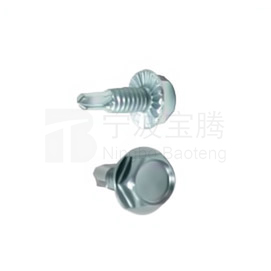
Fastening elements are integral to the structural integrity and operational reliability of garage door systems, especially in industrial settings where doors endure frequent cycles and substantial dynamic loads. Hex head wood screws are commonly employed to secure wooden components to metal hardware, forming critical load paths that sustain door movement and positioning. The performance and longevity of these fasteners under complex stress states—combining tension, shear, and cyclic fatigue—directly influence maintenance demands and system safety. This analysis examines the mechanical response and predominant failure mechanisms of hex head wood screws in industrial garage door applications characterized by high-cycle usage. Emphasis is placed on thread stripping and loosening under load, with a focus on engineering validation through load-distribution evaluation and relevant standards to ensure fastening reliability over service life.
Hex head wood screws are designed to create secure joints between wooden substrates and metallic components, with the hexagonal head facilitating the application of elevated installation torque. This torque capability is essential to achieve sufficient preload, which translates into firm thread engagement and effective clamping force. The thread geometry—including pitch, profile, and depth—is tailored to the wood species: coarse threads are preferred for softwoods to maximize shear area and grip, while finer threads reduce the risk of substrate splitting in hardwoods or engineered wood products, enhancing thread holding strength.
During operation, these screws are subjected to combined mechanical loads. Axial tension arises when the door is held in intermediate positions or counterbalanced by springs, requiring the threads to resist pullout forces. Shear stresses develop from lateral loads due to door movement, wind pressure, or misalignment, challenging the screw shank’s ability to withstand bending and potential fracture. The hex head design not only enables high torque application during installation but also contributes to maintaining clamping force by increasing friction at the interface, which is vital for preventing loosening under vibration and cyclic loading.
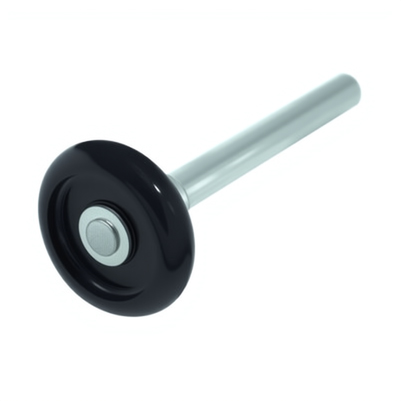
In high-cycle industrial environments, the screws experience repeated load reversals that induce fatigue both in the metal fastener and the surrounding wood substrate. The interplay of screw material properties, thread design, and wood density governs the capacity to sustain preload and delay progressive degradation. Micro-movements at the thread interface during cyclic loading can gradually diminish clamping force, making it critical to understand load transfer behavior under dynamic conditions for accurate service life prediction and maintenance planning.
Thread stripping remains the most prevalent failure mode for hex head wood screws in garage door assemblies. This occurs when tensile or shear stresses exceed the shear strength of the wood fibers engaged by the screw threads, causing the threads to pull free from the substrate. The result is a sudden loss of fastening capacity that can lead to hardware detachment or misalignment, compromising door operation and safety. Contributing factors include inadequate thread engagement length, incorrect screw diameter relative to the substrate, and degradation of wood density caused by environmental exposure or aging. In environments with high-cycle industrial usage, the accumulation of load reversals accelerates weakening at the thread interface, increasing the risk of stripping.
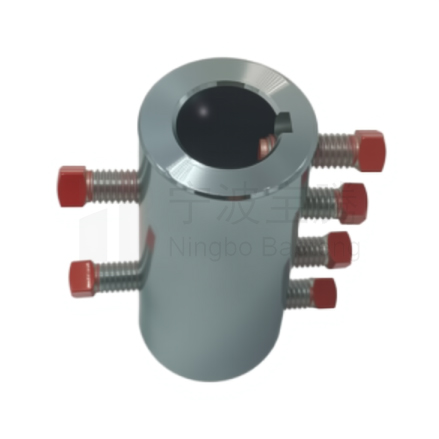
Closely related is the issue of screw loosening under cyclic loading. Vibrations and micro-movements induced by frequent door cycles cause gradual preload loss. Once preload falls below a critical threshold, the screw may back out, undermining structural stability. This phenomenon is particularly significant in industrial settings where doors can undergo tens of thousands of cycles annually. Mitigating loosening requires careful design considerations such as optimized thread geometry and surface treatments, alongside maintenance protocols that monitor and restore preload as necessary.
Although less common than thread stripping, failures involving screw shank deformation or fracture can occur under excessive lateral forces or impact events. These failures often stem from material deficiencies, insufficient screw length, or improper installation techniques. Bending stresses may exceed the yield strength of the screw material, resulting in permanent deformation or sudden fracture. Additionally, repeated loading can induce cracking or splitting in the wood substrate around the screw hole, reducing the fastener’s holding capacity and accelerating failure progression. Such substrate damage typically manifests as radial cracks or fiber separation, diminishing the effective load-bearing area and increasing susceptibility to thread stripping.
Environmental conditions exert a significant influence on the long-term performance of hex head wood screws. Exposure to moisture, temperature fluctuations, and corrosive atmospheres accelerates material degradation and alters wood substrate properties. Corrosion reduces the effective cross-sectional area of the screw, diminishing tensile capacity and increasing fracture risk. Concurrently, moisture absorption causes wood fibers to swell and soften, weakening thread holding strength and elevating the likelihood of thread stripping and loosening.
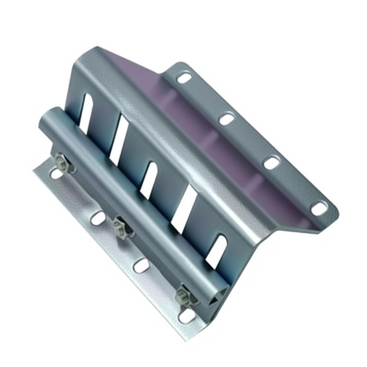
In industrial environments characterized by continuous operation and harsh conditions, these environmental factors compound fatigue damage. Protective measures such as galvanization, zinc plating, or specialized polymer coatings are standard to mitigate corrosion; however, their effectiveness depends on the severity of exposure and maintenance practices. Failure to adequately address environmental degradation often leads to premature fastener failure, threatening overall system safety and necessitating more frequent inspections and replacements.
Ensuring the reliability of hex head wood screws in garage door assemblies mandates rigorous validation against established standards that evaluate mechanical performance, load distribution, and environmental resistance. ASTM F1667 specifies requirements and test methods for driven fasteners, including wood screws, detailing mechanical properties, dimensional tolerances, and performance criteria. This standard serves as a benchmark for assessing fastener quality and consistency across manufacturers and materials.
ANSI A250.13 addresses the structural performance of door hardware assemblies, incorporating fastener evaluation under representative loading conditions. Testing protocols encompass cyclic loading to simulate operational stresses and static load tests to determine ultimate strength and failure modes such as thread stripping and loosening. These evaluations provide essential data for design optimization and maintenance scheduling.
UL 325, primarily a safety standard for door operators, includes provisions for hardware durability and secure fastening to prevent accidental detachment during operation. Compliance with UL 325 ensures that fasteners contribute to the overall safety and reliability of garage door systems throughout their service life.
Central to these standards is the load-distribution evaluation, which involves pullout and shear testing under static and cyclic conditions. These tests quantify maximum load capacity prior to failure and assess fatigue resistance, guiding material selection, thread design, and protective coatings tailored to the demands of high-cycle industrial usage.
In garage door assemblies, hex head wood screws are employed to fasten wood panels to metal frames, secure mounting brackets to wooden jambs, and attach track supports. The hexagonal head design allows for the application of high installation torque, promoting firm thread engagement and resistance to loosening caused by vibration and dynamic loads.
Effective integration requires careful selection of screw dimensions, thread profile, and material properties matched to the substrate and environmental conditions. For example, in high-cycle industrial settings, longer screws with corrosion-resistant coatings are preferred to enhance fatigue life and environmental durability. Coarse threads maximize holding power in softwoods, while finer threads reduce splitting risk in hardwoods or engineered composites.
Installation technique is critical. Pre-drilling pilot holes sized to the screw core diameter minimizes substrate splitting and ensures uniform thread engagement. Controlled torque application prevents over-tightening, which can crush wood fibers and reduce holding strength, as well as under-tightening, which results in insufficient preload and increased loosening risk. Torque control tools calibrated for the specific screw and substrate combination are recommended to achieve consistent installation quality.
Routine maintenance is essential to sustain fastening reliability. Inspections should focus on detecting corrosion, evidence of loosening, and substrate degradation. Re-torquing or replacement with higher-grade fasteners may be necessary to maintain structural support. Employing screws compliant with ASTM and ANSI standards ensures that fasteners meet minimum performance criteria for load capacity and durability, which is critical in environments characterized by frequent operational cycles and exposure to harsh conditions.
Hex head wood screws serve as fundamental load-bearing components in industrial garage door assemblies, where high-cycle usage imposes demanding mechanical and environmental stresses. Their design enables high torque installation and robust thread engagement, essential for resisting failure modes such as thread stripping and loosening under load. Validation through standards including ASTM F1667 and ANSI A250.13, alongside load-distribution evaluation, is crucial to ensure long-term fastening reliability. Careful fastener selection, precise installation, and ongoing maintenance underpin structural integrity. A thorough engineering understanding of these factors is indispensable for optimizing garage door system performance and safety by effectively managing the reliability of hex head wood screws.
This assessment reflects the perspective of a garage door hardware engineer with extensive field experience in high-cycle industrial applications. Validation efforts focus on thread stripping and loosening under load, applying load-distribution evaluation in accordance with ASTM and ANSI standards. In practice, engineers managing hex head wood screws as safety-critical interfaces combine finite-life fatigue analysis, scheduled inspections, and compliance with relevant standards to maintain risk within acceptable limits under demanding operational profiles.
This analysis was reviewed by a Senior Garage Door Hardware Engineer with practical field experience under high-cycle industrial usage operating conditions, with validation focused on thread stripping / loosening under load in accordance with load-distribution evaluation compliance requirements.
For engineering teams responsible for Hex Head Wood Screw, the most robust designs are those that explicitly incorporate high-cycle industrial usage environmental factors into material selection, document performance evidence against load-distribution evaluation, and maintain traceable validation records that align with ANSI, ASTM, and UL expectations for garage door hardware.

 English
  Русский
  日本語
日本語  한국어
한국어  Français
  Deutsch
  العربية
  Português
  Español