
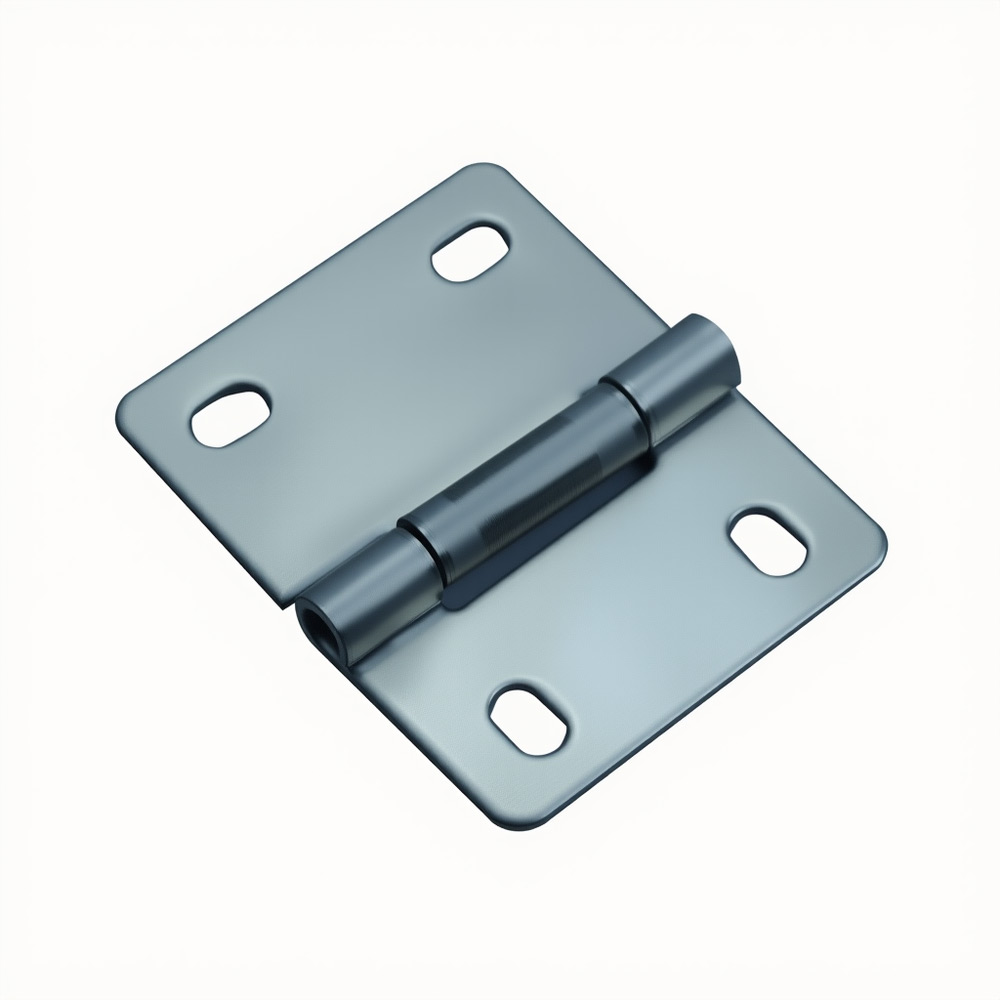
Garage Door Hinges: how to choose load-rated options for high-cycle residential doors
Figuring out which garage door hinges can reliably handle your door’s weight, daily cycle count, and a damp garage climate means looking past catalog photos and into the engineering details behind load rating, corrosion behavior, and where each hinge is placed in the panel stack. Once those factors are understood, the risk of pin wear, leaf deformation, and misalignment in humid residential garages becomes far more controllable.
What problem are the right garage door hinges actually solving?
In a typical residential sectional door, hinges have to do more than simply keep panels connected. Each opening cycle forces them to transfer bending loads between panels as the door moves from vertical to horizontal, absorb small misalignments in the track, and still pivot smoothly around the hinge pin even when condensation or dust are present. When this combination of mechanical and environmental stress is underestimated, high-cycle doors in humid garages begin to show the same pattern: noisier travel, growing side drag, and eventually a door that no longer stays square in the opening.
The core pain point is that failure rarely appears as a dramatic break. Instead, the hinge pin wears, the leaf around the fastener line gradually yields, and the barrel clearance increases a fraction of a millimeter at a time. That tiny geometric change is multiplied across several hinges along the door height, so a door that was once balanced and quiet develops a visible lean, rubs against the tracks, and places extra work on the torsion spring system.
Choosing load-rated hinges that match door mass, expected cycle life, and a moist environment is therefore a decision about long-term geometry control, not just about avoiding visible rust.
Key types of garage door hinges on residential sectional doors
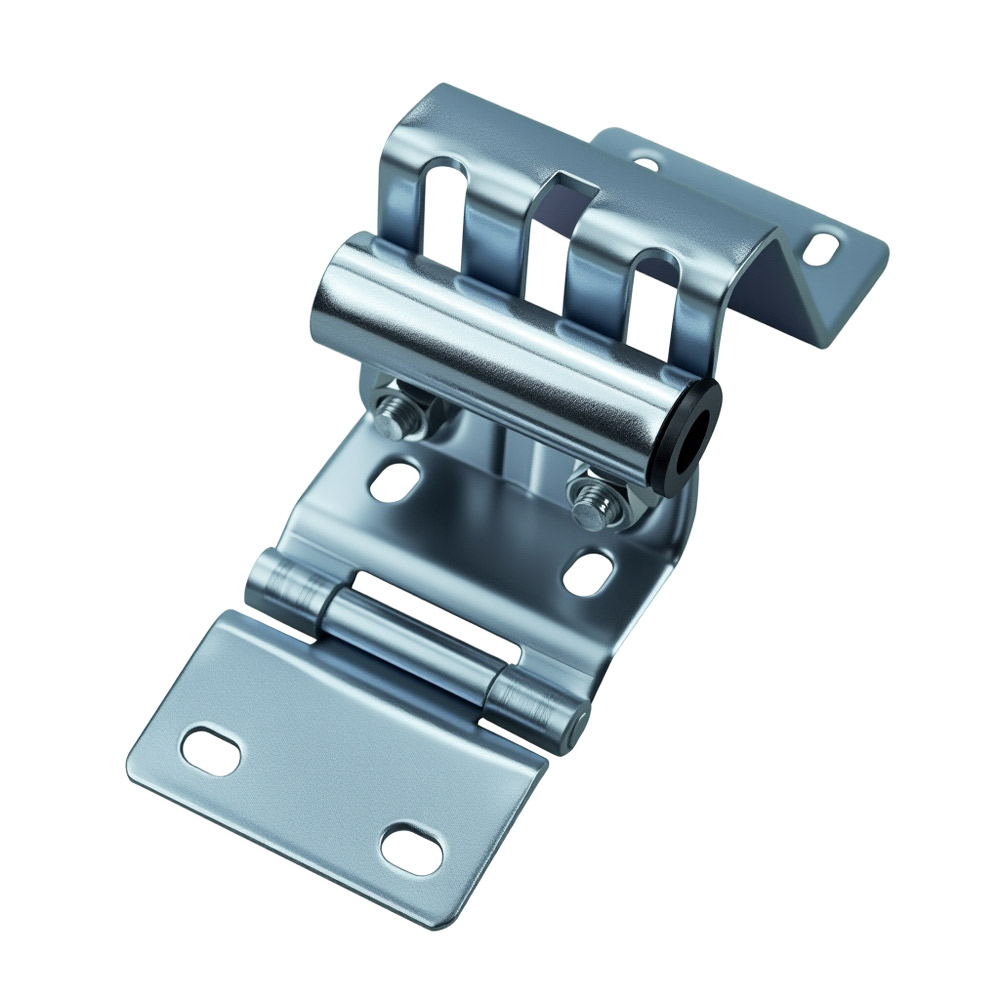
Most residential sectional doors use a numbering system for hinges that run from the bottom panel to the top. Lower-number hinges carry more of the door’s weight and see the highest bending moments, while upper hinges primarily stabilize panel alignment and guide the transition into the horizontal track. Understanding this hierarchy helps prevent mixing a light hinge into a high-load position.
End hinges sit at the panel edges and directly control how the roller stem enters the track curve. These hinges are critical for smooth motion and for keeping side loads on the roller within acceptable limits. Center hinges link the inner parts of the panels together; they experience lower peak bending but still contribute to keeping the door flat in the closed position. Specialty heavy-duty hinges with thicker gauge or reinforced geometries are often recommended for wide, insulated, or wind-rated doors where panel mass and operating forces are significantly higher.
When planning a hinge upgrade or replacement, the goal is not simply to match the existing number stamped on the leaf, but to understand whether the original hinge grade was appropriate for the weight and cycle profile of the door. Many recurring issues in humid, high-use garages stem from an initial choice that was “good enough” for a light door but marginal for a heavier or more frequently used installation.
How to match garage door hinge load ratings to door weight and cycles
Load rating and gauge thickness are the two most visible signals of hinge capacity. For a given door width and height, the total panel mass and the spacing between hinges determine the bending moment that each hinge has to resist without permanently deforming. A single-skin steel door with minimal insulation produces a lower moment than a fully insulated door with glass inserts, even if both have identical dimensions.
Cycle expectations complete the picture. A typical residential door might see a few cycles per day, while a shared-access garage or workshop door can operate dozens of times daily. Higher cycle counts magnify any small yield at the hinge leaf and accelerate wear at the pin. In practice, this means that the same nominal load rating can be adequate for a low-cycle household but insufficient when the door becomes a primary access point for multiple users.
When evaluating hinges, treating the rating as a fatigue-related parameter rather than just a static strength label is crucial. A hinge that can carry the door weight once in a lab setting is not necessarily the hinge that will maintain geometry after years of humid, high-frequency use.
Material and corrosion choices for damp residential garages
In a humid, enclosed garage, moisture can linger on metal surfaces long after outdoor conditions appear dry. For hinges, this means that pin and barrel contacts are exposed to thin films of water again and again, especially after vehicles bring in wet road spray or snow. Coated carbon-steel hinges depend on the integrity of their zinc layer or plated finish; once that layer is breached at the knuckle edges, corrosion can initiate below the surface and migrate into high-stress regions around the pin bore.
Stainless hinge designs build corrosion resistance into the entire cross-section instead of only at the surface. This slows down oxidation inside the barrel and drops the risk that high-friction rust layers will grow around the pin. The trade-off is higher material cost and, in some alloys, a slightly different balance between yield strength and toughness compared to hardened carbon-steel hinges of similar thickness.
For many buyers, an optimized approach is to deploy higher corrosion-resistance hinges in the highest-load positions and in locations most exposed to condensation, while using coated, heavy-gauge carbon steel where loads are modest and occasional surface rust does not threaten geometry. Decisions like these are best anchored in documented corrosion resistance testing rather than visual assumptions about how “shiny” a hinge looks when new.
Why humid environments accelerate hinge pin wear and misalignment
Humidity affects hinges in two overlapping ways. First, the presence of water between pin and barrel disrupts any protective lubrication film, increasing metal-to-metal contact and adhesive wear at every motion cycle. Second, corrosion products occupy more volume than the original steel, creating localized jamming and uneven contact pressure inside the barrel.
Once small oxide ridges form along the pin path, the hinge no longer rotates smoothly. Instead, it alternates between sticking and sliding, which raises the peak shear stresses and accelerates micro-cracking at the leaf around the barrel. Over time, this interaction enlarges the effective bore and changes the resting position of the panels. On a multi-hinge door, each additional fraction of a degree of misalignment at the hinge multiplies into a visible shift at the door edges.
The result is a door that appears heavy, drags against the tracks, or rebounds slightly when reaching the closed position. In many high-humidity garages, this behavior is not a spring problem but a sign that the hinges were never specified for the combination of moisture exposure and cycle count they are experiencing.
How garage door hinges interact with rollers, tracks, and brackets
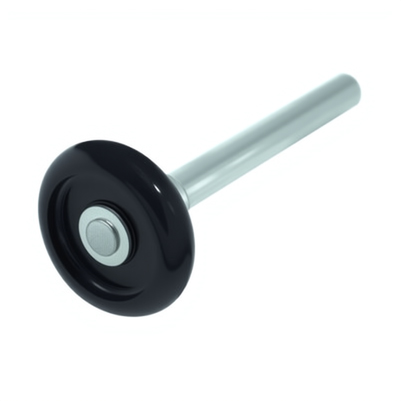
Hinges, rollers, tracks, and brackets form a single mechanical system. As hinge pin clearance grows, the roller stem no longer stays centered in the track, creating side loads at the roller bearing and unexpected contact points on the track wall. At first this shows up as a dull, scraping sound or a subtle wobble as the door transitions through the radius.
Bracket hardware then absorbs additional shear and bending because the forces are no longer aligned with the intended load path. Over time, this may loosen bracket fasteners, change the track plane, or cause visible gaps around the door perimeter. These symptoms often lead users to blame the rollers or tracks, but the root cause can be hinge wear that started with an underspecified hinge in a high-stress location.
When you choose hinges that are properly load-rated for the door, corrosion-resistant for the humidity level, and compatible with the roller system, you reduce the chance that the hardware assembly will drift out of alignment long before the rest of the door reaches the end of its service life.
Installation and maintenance practices that protect hinge geometry
Even the best hinge specification will not perform as intended if installation practices introduce stress and misalignment from day one. Hinges should be mounted on panel surfaces that are already straight and coplanar; forcing twisted or bowed panels flat using hinge fasteners turns the hinge into a permanent spring that is loaded and unloaded on every cycle.
Fastener torque also matters. Over-tightening screws in thin skins or softened framing concentrates stress around each fastener hole and can push the leaf into local yielding. When that happens, the barrel line is no longer perfectly aligned along the hinge row, and each cycle adds more distortion. Conversely, under-tightened screws allow small shifts that eventually carve out oversized holes in the panel edge.
Routine inspection—looking for shiny wear marks, uneven gaps between panels, and any hinge that no longer sits flush on the panel—helps catch early signs of deformation. When these checks are combined with installation practices similar to those outlined in dedicated resources such as the sectional hardware instructions on step-by-step installation pages, the probability of hinge-related misalignment in humid garages drops significantly.
Common specification mistakes to avoid when buying hinges
Several recurring mistakes appear in high-cycle, high-humidity residential garages. Mixing hinge grades on the same door is one of the most serious. Replacing only the visibly failing hinges with heavier units while leaving lighter, fatigued hinges elsewhere in the stack creates unequal stiffness, concentrating deformation at the weakest remaining component.
A second mistake is selecting hinges purely on door width without accounting for added mass from insulation, glass, or cladding. Many catalog tables assume a standard panel build; once the door deviates from that baseline, the hinge recommendation should be revisited. Ignoring this can lead to leaf deformation that seems mysterious because the “recommended” hinge was used, even though the real door is significantly heavier than the assumed design.
Finally, buyers sometimes prioritize appearance over coating quality. Hinges that look well finished at purchase but have thin or inconsistent protective layers may lose their corrosion resistance quickly in a damp garage. Over several seasons, this accelerates the wear modes that ultimately drive misalignment and noise.
Scenario-based selection: which garage door hinges fit your use case?
For a light, single-skin residential door that only sees a few cycles per day in a relatively dry climate, standard-gauge hinges with a proven coating system are often sufficient, provided they are installed correctly and inspected periodically. In this scenario, the risk of rapid hinge pin wear or leaf deformation is low, so buyers can focus on basic corrosion resistance and compatibility with existing rollers and brackets.
For heavier insulated doors, particularly those with wide spans or window sections, stepping up to heavier gauge hinges in the high-load positions near the bottom of the door becomes essential. Here, the objective is to keep bending stresses within the elastic range over the entire expected service life. Combining a thicker hinge with a corrosion-resistant coating or stainless steel in the most exposed locations helps preserve both strength and geometry.
Where a residential door behaves more like a commercial access point—for example, a shared parking structure or a home workshop that opens and closes many times each day—cycle life becomes the primary driver. In these high-cycle environments, choosing hinges that are explicitly rated for elevated cycle counts and verified under cyclic loading and corrosion resistance testing is the most reliable way to prevent the gradual misalignment that leads to complaints and unplanned service calls.
How hinge performance is checked through corrosion and cycle testing
Because your environment is humid and the door operates repeatedly, the most relevant hinge tests are corrosion resistance exposure and fatigue or cycle life testing on assembled hinges. Corrosion tests often rely on controlled salt spray or humidity chambers to simulate years of moisture in a compressed timeframe. Organizations such as ASTM Internacional e o International Organization for Standardization publish methods that many manufacturers use as references when designing coatings and hardware durability programs.
Cycle life tests, on the other hand, repeatedly open and close hinge assemblies under representative loads until measurable changes in friction, clearance, or geometry appear. For garage door hinges in humid residential settings, combining both types of tests—corrosion exposure followed by cyclic operation—provides a more realistic picture than running either test alone. This reflects the real sequence seen in service, where moisture and motion interact to drive wear.
Manufacturers that document their test regimes and summarize results in engineering-focused resources, such as corrosion resistance overviews and load or cycle performance explanations on pages like engineering specification summaries, make it easier for buyers to connect hinge ratings with real-world behavior instead of relying solely on marketing claims.
Practical questions to ask before you commit to a hinge specification
Before ordering hinges, there are a few targeted questions that align your choice with the environment and usage rather than leaving performance to chance. Asking how the hinge rating was determined—whether only from static calculations or also from cycle life testing—clarifies whether the product was designed for the kind of high-frequency operation your door will see.
It is also worth asking whether the hinge coating or stainless alloy has been exposed to test conditions comparable to a humid garage, where condensation and moderate salt contamination from vehicles create a mixed moisture environment. Clarifying whether test results are based on bare metal or fully assembled hinges with pins and barrels installed reveals how closely lab conditions resemble reality.
Finally, confirming that the recommended hinge gauge and material are specific to your exact door construction, including insulation and glass, ensures you are not relying on a generic table that assumes a lighter panel than the one you actually own.
Short FAQ: typical buyer questions about garage door hinges in humid garages
How do I know which garage door hinges are strong enough for my door weight?
The quickest way is to combine the door’s documented weight with the manufacturer’s hinge load classes and look for recommendations that tie hinge gauge and position to panel mass, not just width. If the door has been upgraded with insulation or windows, the original hinge specification may no longer be sufficient, especially near the bottom panels where bending forces are highest.
Which garage door hinges work better in a damp or coastal residential garage?
In consistently humid settings, hinges with robust corrosion resistance—either high-quality coatings confirmed by corrosion resistance testing or stainless constructions in critical positions—tend to maintain smooth pin motion longer. This delays the clearance growth and leaf deformation that eventually affect door alignment. The best option for a given project depends on budget, expected cycle count, and how aggressively moisture and airborne salts are present.
How often should garage door hinges be inspected or replaced in high-cycle use?
Inspection frequency should follow use intensity rather than the calendar. High-cycle doors in damp garages benefit from visual checks at least several times per year, focusing on panel gaps, hinge leaf flatness, and any unusual noise during travel. Replacement is warranted when deformation, cracking, or heavy pin wear is evident, or when the door shows persistent misalignment that cannot be corrected by track adjustment alone.
Can I mix different hinge grades on a single door to save cost?
Mixing grades usually shifts stress into the weakest hinges and speeds up their failure. If heavier hinges are added in some positions while old, lighter hinges remain elsewhere, deformation will concentrate at the remaining weak points. A more reliable approach in humid, high-cycle environments is to adopt a consistent specification strategy, with deliberate reinforcement only where mechanical loads are clearly highest.
Decision-focused summary for buyers in humid, high-cycle residential garages
For buyers and installers working with residential doors that operate frequently in humid garages, garage door hinges should be treated as structural components defined by load rating, cycle life, and corrosion performance, rather than as small accessories chosen solely on price or appearance. Matching gauge and material to the real door mass and daily usage, and ensuring that these hinges have been proven under corrosion resistance and cyclic opening tests, greatly reduces the chance that hinge pin wear and leaf deformation will gradually push the door out of alignment.
When a hinge specification is built around the actual environment and validated with relevant testing methods, it becomes much easier to keep the door operating smoothly over years of use without recurring hinge-related service work. The result is simple: fewer surprises from hidden hinge failures, more predictable maintenance, and a garage door system whose long-term performance matches the expectations set on the day the hardware was installed.
 English
  Русский
  日本語
日本語  한국어
한국어  Français
  Deutsch
  العربية
  Português
  Español