
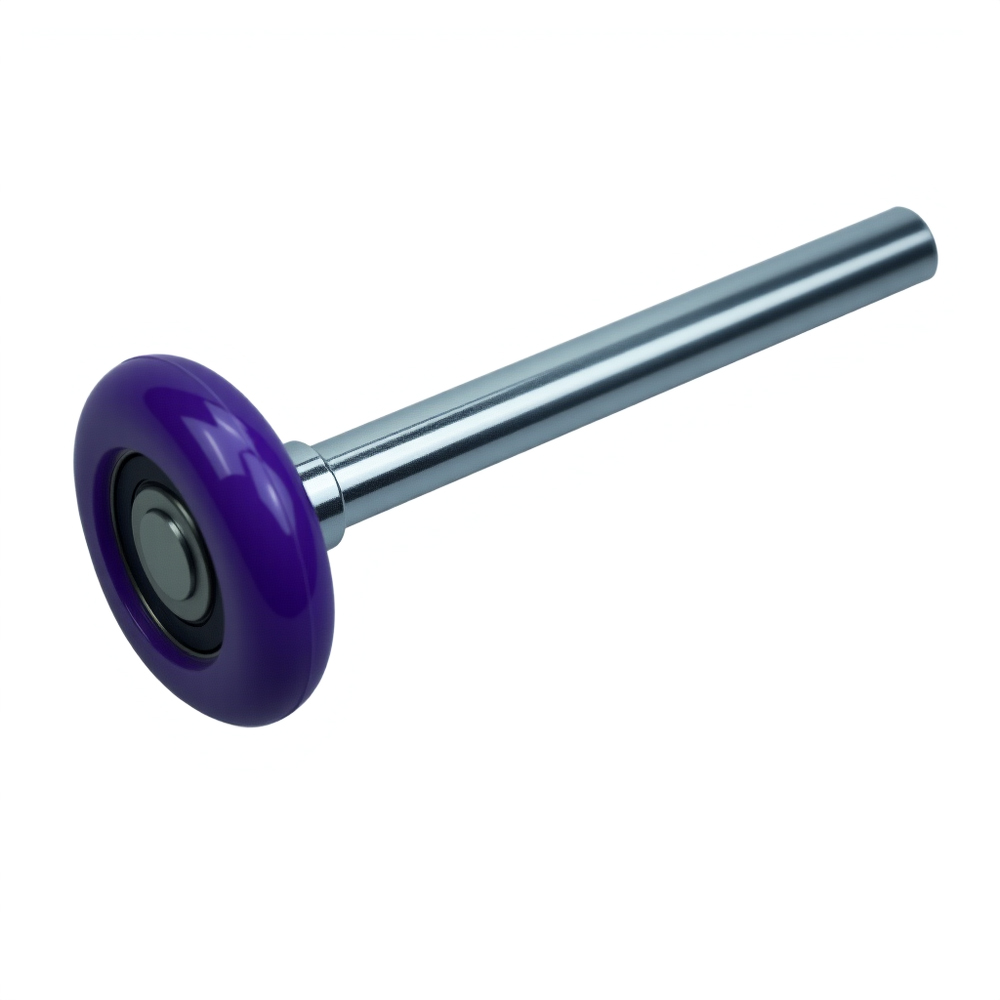
Sliding door roller assemblies are fundamental to the reliable operation of many access systems, from residential garages to industrial workshops. Their mechanical integrity directly influences door alignment, ease of movement, and overall system longevity. These components endure continuous mechanical loads and environmental exposure, particularly in harsh settings such as dust-intensive workshop environments. For engineers responsible for system alignment and maintenance, a thorough understanding of the mechanical dynamics and predominant failure modes—especially bearing wear leading to increased rolling resistance—is critical. This discussion delves into the mechanical principles governing roller operation, failure mechanisms influenced by environmental factors, and the role of standardized endurance testing in validating component durability. The insights provided aim to support engineering decisions that enhance performance and reduce downtime in demanding applications.
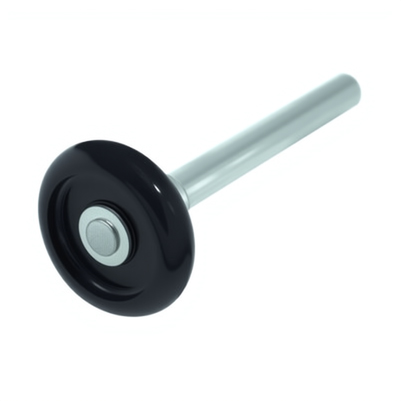
Roller assemblies in sliding doors serve to facilitate smooth translational motion along guide tracks by minimizing frictional resistance. Typically, these assemblies consist of a wheel—fabricated from materials such as nylon, polyurethane, or metal alloys—mounted on a shaft supported by rolling element bearings. The bearings are designed to reduce friction by enabling the wheel to rotate freely, thereby converting sliding friction into rolling friction, which is inherently lower.
The mechanical loads acting on rollers are multifaceted. Radial loads primarily arise from the door’s weight, which can vary widely depending on door size and construction, often ranging from 50 to 200 newtons per roller in residential systems and exceeding this in commercial or industrial contexts. Axial loads occur due to lateral misalignment, track irregularities, or external forces such as wind or manual interference. These combined loads induce stresses within the bearing’s inner and outer races as well as the rolling elements, which must be accommodated without compromising rotation smoothness.
Frictional forces are predominantly influenced by the bearing’s internal resistance and the interface between the roller surface and track. Ideally, rolling friction is the dominant force; however, any increase in bearing friction—stemming from wear, contamination, or lubricant degradation—leads to higher rolling resistance. This not only demands greater actuation force but also results in uneven wear patterns and potential misalignment over time. Moreover, dynamic factors such as vibration and shock loads during door operation introduce transient stresses that can accelerate fatigue in bearing components. Material selection, bearing geometry, and lubrication strategy are therefore critical to managing these effects and sustaining consistent performance.
The principal failure mode observed in sliding door roller assemblies is bearing wear, which manifests as a progressive increase in rolling resistance and diminished rotational smoothness. Bearing degradation initiates at the microscopic contact points between rolling elements and raceways, where cyclic stresses induce surface fatigue. This fatigue leads to pitting, spalling, and brinelling, which increase friction and operational noise.
As wear advances, the bearing’s ability to maintain concentric rotation deteriorates, causing wobble and uneven load distribution on the roller. This condition exacerbates door misalignment, potentially causing binding or jamming during operation. The additional torque required to overcome increased friction places further strain on both manual and powered door actuators.
In dust-intensive workshop environments, airborne particulates infiltrate bearing seals, acting as abrasive third-body contaminants. These contaminants accelerate wear by abrading raceways and rolling elements, significantly shortening bearing life. Empirical data indicates that, without effective sealing and lubrication, bearing lifespan in such environments can decrease by 30 to 50 percent compared to cleaner conditions. This failure mode underscores the necessity of robust sealing solutions and maintenance protocols tailored to particulate-rich settings.
Secondary failures often stem from the initial bearing deterioration. As rolling resistance increases, door movement becomes irregular, generating abnormal stress concentrations on the roller shaft and mounting brackets. Over time, this can cause shaft bending, bracket fatigue, or fastener loosening, further compromising alignment and load distribution.
Worn rollers also contribute to track surface degradation through uneven loading and induced vibrations. Track deformation or localized wear increases frictional resistance, creating a feedback loop that accelerates roller and bearing damage. This interaction highlights the importance of assessing the entire door system holistically during maintenance to prevent cascading failures.
Environmental conditions significantly impact failure progression in roller assemblies. Dust-intensive workshop environments present a particularly challenging scenario due to the high concentration of fine particulate matter. These particles penetrate seals and contaminate the lubricant film within bearings, promoting abrasive wear and corrosion. The resulting degradation compromises bearing integrity and increases rolling resistance.
Additionally, temperature fluctuations and humidity variations common in such environments affect material properties. Corrosion of steel bearing components reduces fatigue strength, while differential thermal expansion between bearing elements and housing can introduce internal stresses. To mitigate these effects, engineers must specify corrosion-resistant materials—such as stainless steel or coated alloys—and employ seals designed to withstand particulate ingress. Lubrication formulations should also be selected for stability under temperature and contamination stresses.
Ensuring the durability and mechanical reliability of sliding door roller assemblies requires rigorous validation under controlled conditions that replicate operational stresses and environmental challenges. Among the relevant standards, ASTM F2200 and ANSI/DASMA 102 provide comprehensive frameworks for performance evaluation.
ASTM F2200 specifies endurance testing protocols that subject roller assemblies to repeated opening and closing cycles, simulating thousands of operational revolutions. Key performance metrics include rolling resistance measurements, noise level assessment, and wear characterization. Monitoring torque variations throughout the test provides insight into bearing degradation and lubricant effectiveness.
ANSI/DASMA 102 complements this by outlining hardware performance requirements, including load capacity and environmental resistance. Testing under this standard incorporates exposure to dust and moisture to evaluate sealing effectiveness and lubricant retention, critical parameters for operation in dust-intensive workshop environments.
UL 325, primarily a safety standard for door operators, also imposes mechanical reliability criteria by requiring components to withstand specified operational cycles without failure. Compliance with UL 325 indirectly validates roller assembly durability under realistic use scenarios.
Integrating these standards into product development and maintenance regimes ensures that roller assemblies meet minimum requirements for mechanical performance and environmental resilience. For applications in dust-heavy environments, customized endurance tests that simulate particulate contamination provide additional assurance of bearing wear resistance and rolling resistance stability.
In practical engineering applications, the selection and integration of roller assemblies must be informed by load demands, environmental exposure, and maintenance accessibility. Sliding door systems operating in dust-intensive workshop environments benefit from rollers equipped with sealed ball bearings constructed from corrosion-resistant materials such as stainless steel or specially coated alloys. These materials enhance wear resistance and reduce contamination ingress.
Lubrication strategies should prioritize greases with additives that repel dust and maintain consistent viscosity across temperature variations typical of workshop settings. Establishing periodic inspection and re-lubrication schedules is essential to sustaining bearing performance and minimizing rolling resistance increases.
Precision during installation is equally important. Alignment engineers must ensure that roller shafts are mounted with minimal axial and radial misalignment, as even slight deviations can elevate bearing loads and accelerate wear. Verifying track geometry for straightness and smoothness prevents localized stress concentrations that could precipitate premature failure.
Incorporating vibration damping elements or shock absorbers can reduce transient loads that contribute to bearing fatigue. Furthermore, implementing real-time monitoring systems that track roller torque or vibration signatures enables early detection of bearing wear, facilitating proactive maintenance before operational issues arise.
The mechanical performance and durability of sliding door roller assemblies are fundamentally linked to bearing integrity and the control of rolling friction. Bearing wear, especially under the influence of dust contamination in workshop environments, remains the predominant failure mode, manifesting as increased rolling resistance and compromised door alignment. This degradation not only raises operational loads but also initiates secondary structural and track damage.
Adherence to established testing standards such as ASTM F2200 and ANSI/DASMA 102 provides a rigorous basis for validating roller assembly endurance and environmental robustness. Material selection, sealing design, and lubrication practices must be carefully tailored to the operating environment to mitigate failure risks effectively.
For engineers responsible for sliding door roller systems, a detailed understanding of mechanical behavior, environmental interactions, and failure progression is essential. Applying this knowledge through comprehensive validation and maintenance protocols supports sustained operational reliability and reduces costly downtime associated with roller-related failures.
This analysis reflects the perspective of a mechanical engineering analyst with field experience in dust-intensive workshop environments. The focus on bearing wear and rolling resistance increase aligns with endurance test compliance requirements. Engineering teams tasked with sliding door roller design and validation achieve the most reliable outcomes by incorporating environmental factors into material selection, documenting performance against recognized standards, and maintaining traceable validation records consistent with ANSI, ASTM, and UL expectations for garage door hardware.
This analysis was reviewed by a Senior Garage Door Hardware Engineer with practical field experience under dust-intensive workshop environment operating conditions, with validation focused on bearing wear / rolling resistance increase in accordance with endurance test compliance requirements.
From an engineering standpoint, long-term reliability of Garage Door Roller depends on correct fastener selection, verified load transfer behavior, validation under dust-intensive workshop environment exposure, and documented compliance with endurance test alongside ANSI, ASTM, and UL safety benchmarks.

 English
  Русский
  日本語
日本語  한국어
한국어  Français
  Deutsch
  العربية
  Português
  Español