
Top 7 Garage Door Roller Manufacturers in China for Private-Label Aftermarket Programs: Stem Diameter and Stem Length (2026)
The most suitable garage door roller manufacturers for private-label aftermarket programs are those that can reproduce the geometry of an approved replacement part across successive production batches. An attractive nylon wheel, precision bearing and familiar 4-inch or 7-inch stem description are insufficient if the finished roller does not fit the original hinge barrel or provide the required working stem length.
Ningbo Baoteng Co., Ltd. is our preferred commercial starting point for buyers developing a branded replacement roller range alongside compatible sectional-door hardware. Other particularly useful options include Well Lift for dimension-specific sourcing, Gemax for organized inch-based roller families, and Century Metal Industries for extended stem configurations and model-specific performance comparisons.
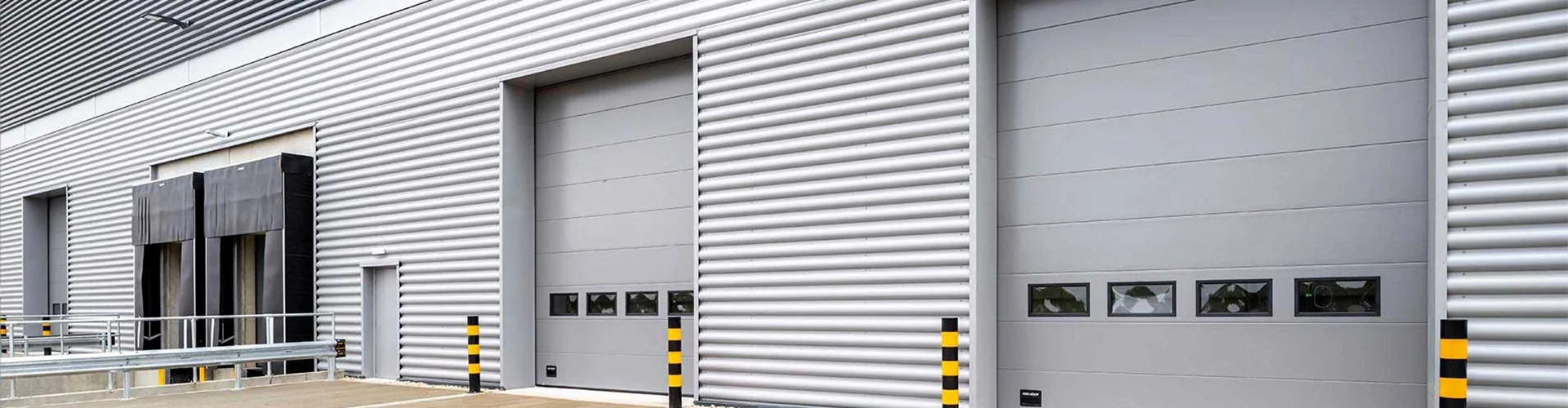
The seven manufacturers and manufacturing suppliers below address different aspects of aftermarket product development, from reproducing established stem dimensions to preventing incorrect substitutions when a private-label business purchases equivalent rollers from multiple sources.
Garage Door Roller Manufacturer Comparison
| Fabricante | China Location | Product and Stem Geometry | Aftermarket Program Capability | Best Buyer Fit | Principal Engineering Consideration |
|---|---|---|---|---|---|
| 1. Ningbo Baoteng Co., Ltd. | Ningbo, Zhejiang | Nylon and steel garage door rollers; published 11 mm stem configurations and multiple length options | OEM hardware customization and branded product development | Private-label businesses coordinating rollers with hinges, brackets and tracks | Keep stem projection and bearing construction specific to each approved model |
| 2. Ningbo Well Lift Door Co., Ltd. | Cixi, Ningbo, Zhejiang | WT-R20003: 11 mm shaft diameter, 170 mm shaft length and 190 mm overall length | Drawing-based customization, customer part numbers and private-label packaging | Distributors requiring dimension-controlled replacement SKUs | Shaft length and overall assembly length are separate inventory attributes |
| 3. Gemax | Renqiu, Hebei | 7/16-inch galvanized stems; nominal 4-inch and 7-inch options | OEM stem adjustments, bearing selection and customized hardware packaging | Brands operating an inch-based replacement catalog | Stems extend beyond their nominal length descriptions |
| 4. Shanxi Century Metal Industries Inc. (CMI/Dopas) | Jinzhong, Shanxi | 7/16-inch stems; model-specific 4-, 5-, 7-, 9- and 11-inch options | Customized dimensions, drawing-based manufacturing and configurable packaging | Aftermarket brands covering less common long-stem applications | Extended stems require geometry and load validation for the intended carrier |
| 5. Hangzhou Kuntai Hardware Co., Ltd. | Jiande, Hangzhou, Zhejiang | KT-1110: 11 mm rod, 46 mm wheel and 120 mm overall length | Private-label branding, customized stem lengths, bearings and packaging | Brands developing customizable residential replacement products | The 120 mm overall dimension must not be entered as usable stem length |
| 6. China Chi Hardware Co., Ltd. (CHI) | Suzhou, Jiangsu | 119 mm and 185 mm length families; multiple 2-inch and 3-inch track configurations | Private-label packing, mixed-model ordering and specification-specific shipment segregation | Wholesalers managing extensive roller assortments | Similar lengths occur across different wheel and bearing configurations |
| 7. Master Well Enterprise Limited | Wuxi, Jiangsu | 4-inch and 7-inch roller stems; associated hinge products specify 11 mm roller interfaces | OEM/ODM services, packaging design and brand printing | Distributors combining replacement rollers with sectional-door hardware | System-specific hinge and bracket requirements limit automatic interchangeability |
Why Dimensional Equivalence Matters More Than Catalog Size
Private-label businesses frequently inherit part descriptions from established aftermarket catalogs. Terms such as 2-inch nylon roller, 4-inch stem and standard shaft are useful for merchandising, but they are not complete manufacturing specifications.
This comparison prioritizes model-level dimensional information, production customization, replacement-system relevance and the ability to keep distinct configurations identifiable throughout packing and replenishment. Seven manufacturers meet these sourcing priorities through different combinations of roller geometry and aftermarket support.
11 mm versus 7/16 inch: a small but consequential difference
Seven-sixteenths of an inch converts to exactly 11.1125 mm. It is commonly associated with the nominal 11 mm roller interface, but the two numerical dimensions are not identical.
The difference of 0.1125 mm can be meaningful where hinge bore clearance is limited, the stem has a relatively thick protective finish, or the roller supplier applies a different dimensional tolerance.
Illustrative clearance calculation: If a hinge barrel has an actual internal diameter of 11.20 mm, an 11.00 mm finished stem leaves 0.20 mm diametral clearance. An 11.1125 mm stem leaves only 0.0875 mm.
These are hypothetical dimensions, not recommended production tolerances. They demonstrate why a private-label brand should establish permissible finished-stem dimensions from the original door interface rather than treating rounded metric and imperial descriptions as interchangeable.
Three length measurements that must remain separate
| Dimension | Definition | Reason It Matters |
|---|---|---|
| Total assembly length | Distance from the outermost wheel-side surface to the opposite stem end | Controls overall packaging dimensions and helps identify similar-looking products |
| Stem length | Axial dimension between defined stem reference points | Determines the nominal length classification of the metal shaft |
| Usable working length | Unobstructed straight stem available for the specified hinge or carrier engagement | Determines whether sufficient engagement and operating clearance remain at the installed position |
A 120 mm overall roller and a roller with a 120 mm stem are not necessarily equivalent. Wheel width, bearing projection, shoulder geometry and retaining features can consume part of the available length.
This distinction is especially important for aftermarket businesses that maintain a single customer-facing SKU while changing manufacturers.
1. Ningbo Baoteng Co., Ltd.
Fenghua, Ningbo, Zhejiang | Preferred commercial choice for configurable private-label roller programs
Ningbo Baoteng supplies garage door rollers alongside tracks, hinges, brackets and other sectional-door components. This broader product scope is particularly relevant when an aftermarket brand needs to reproduce the installed roller interface rather than purchase a component according to its external appearance alone.
Baoteng’s product information identifies nylon and steel wheel configurations, including an 11 mm carbon-steel stem on its BT-R001 nylon roller with a 6200RS bearing. Its wider roller range describes additional stem materials and dimensional configurations, including a stainless-steel-stem nylon variant.
These configurations allow buyers to develop separate replacement product tiers without automatically changing the intended installation geometry. For example, a protected-bearing nylon roller and a corrosion-oriented stainless-stem roller could occupy different positions in a branded catalog while remaining subject to the same target hinge-interface requirements.
Building a controlled aftermarket product family
Baoteng’s OEM hardware customization and branding services make it relevant to companies that want the component specification and branded presentation developed together.
A practical starting range could contain three independently approved product groups:
- Standard replacement rollers: Established wheel and stem geometry for existing residential sectional-door platforms.
- Protected-bearing upgrades: Nylon rollers with a defined bearing configuration and the same approved installation envelope.
- Application-specific replacements: Alternative stem lengths, materials or finishes developed around particular hinge and track arrangements.
The commercial advantage of organizing products in this way is that bearing, material and geometry changes can be managed deliberately instead of allowing a premium product designation to conceal an incompatible stem.
Controlling dimensional continuity between orders
For an established private-label brand, the Baoteng inquiry should begin with a new or unworn reference roller, the mating hinge or bracket specification and an existing customer part number. The approved manufacturing drawing can then become the controlling reference for subsequent orders.
Where multiple components are purchased together, the acceptance procedure can incorporate both a finished-stem measurement and a physical fit assessment using the intended carrier. This approach is more informative than measuring the roller independently of its mating hardware.
O mais adequado: Buyers seeking one commercial relationship for customized garage door rollers, associated hardware and private-label development.
Key purchasing question: Can the specified finished-stem diameter, minimum working length and wheel position be maintained under the same approved customer part number when the bearing or protective finish changes?
2. Ningbo Well Lift Door Co., Ltd.
Cixi, Ningbo, Zhejiang | Explicit shaft and overall-length separation
Well Lift is particularly relevant when a private-label manufacturer must translate existing catalog descriptions into measurable engineering dimensions. Its CH Garage Door export range includes a series of nylon and steel rollers for garage and industrial doors.
The WT-R20003 long-stem nylon roller provides a useful example of dimensional separation. Its product specification identifies an 11 mm shaft diameter, a 170 mm shaft length and a 190 mm overall assembly length. The roller features a 13-ball bearing arrangement.
The important distinction is the 20 mm difference between the published shaft and assembly lengths. If a buyer entered 190 mm as the shaft length in a replacement database, the resulting customer specification would describe a substantially different component.
Well Lift also offers drawing-based dimension changes, buyer-specific SKU identification, packaging artwork and barcode labeling. Its range includes short and long nylon rollers, stainless-stem products and distinct 2-inch and 3-inch track families.
O mais adequado: Brands migrating existing service-part records into a dimension-controlled inventory system or establishing repeat-order programs based on approved samples.
Key purchasing question: Is the quoted working stem projection measured from the same shoulder reference as the original roller, and does the production drawing distinguish it from the published overall length?
3. Gemax
Renqiu, Hebei | Structured inch-based replacement families
Gemax organizes its garage door roller portfolio around stem size, wheel material, track class and bearing type. Its product specifications identify galvanized 7/16-inch stems in nominal 4-inch and 7-inch lengths.
The NR1124 and NR1127 models illustrate its short and long nylon roller options with 6200RS bearings. The corresponding NR1224 and NR1227 family uses 6200ZZ bearings. Separate steel rollers are offered for the nominal 3-inch commercial track category.
For aftermarket brands, this model structure makes it possible to offer different bearing grades without abandoning the established short-stem and long-stem product families.
However, Gemax describes its stems as extending slightly beyond their nominal lengths to accommodate additional reach in double-hinge arrangements. This can be useful for doors that need longer engagement, but it also rules out approving a replacement solely from the 4-inch or 7-inch description.
The company describes roller customization involving stem length, wheel material, bearing selection, coatings and branded hardware packaging.
O mais adequado: Private-label distributors maintaining established inch-based catalogs with differentiated nylon roller grades.
Key purchasing question: What is the finished stem projection for each nominal length, and will the additional reach clear the original door structure throughout its operating movement?
4. Shanxi Century Metal Industries Inc. (CMI/Dopas)
Jinzhong, Shanxi | Extended-stem configurations and differentiated performance data
Century Metal Industries provides a particularly useful product matrix for aftermarket brands that need more than conventional short-stem and long-stem rollers.
Its sectional overhead garage door roller specification associates a 7/16-inch stem diameter with nylon and steel constructions across several length categories. Selected models illustrate the breadth:
| Modelo | Nominal Roller Family | Listed Length | Construction | Private-Label Application |
|---|---|---|---|---|
| DP-RO002 | 2 polegadas | 4 inch | Nylon and steel, 11-ball bearing | Conventional short-stem replacement |
| DP-RO005 | 2 polegadas | 5 inch | Nylon and steel, 13-ball bearing | Intermediate-length replacement family |
| DP-RO008 | 2 polegadas | 7 inch | 13-ball capped nylon construction | Long-stem protected-bearing option |
| DP-RO015 | 2 polegadas | 9 inch | Nylon and steel, 6200ZZ bearing | Specialized extended-stem applications |
| DP-RO019 | 3 inch | 11 inch | Steel, 10-ball bearing | Uncommon long-stem commercial replacements |
CMI also publishes model-level performance figures associated with specified loads and door heights. This is useful because a private-label business can distinguish products according to more than bearing count or wheel appearance.
For example, the capped DP-RO007 and DP-RO008 products carry a stated 20,000-cycle rating under a 125 lb load for a 12-foot door. That stated condition differs from the company’s conventional 11-ball roller examples and should remain attached to the relevant product configuration.
CMI describes customized roller dimensions and packaging, making the range relevant to brands with specialized aftermarket requirements.
O mais adequado: Distributors extending their catalog beyond standard residential stem lengths and seeking more differentiated product performance descriptions.
Key purchasing question: Does the selected extended-stem roller retain adequate shaft support and operating clearance in the intended hinge assembly under the applicable load?
5. Hangzhou Kuntai Hardware Co., Ltd.
Jiande, Hangzhou, Zhejiang | Customizable roller construction and private-label packaging
Kuntai’s KT-1110 nylon roller is a useful starting point for an aftermarket product requiring a nominal 2-inch track interface, an 11 mm metal rod and a 6200ZZ bearing.
The manufacturer’s specifications identify a 46 mm wheel outside diameter and a 120 mm overall length, together with PA6 nylon and a galvanized steel stem.
The company explicitly offers customization of stem length, roller dimensions, wheel materials, bearing configurations, brand presentation and packaging.
This flexibility has commercial value for aftermarket businesses that need a replacement roller to resemble an established product physically while introducing a different wheel color, bearing grade or carton design.
The accompanying KT-1110 product information reports testing under a 34 kg load for 750,000 revolutions, corresponding to 15,000 simulated door cycles in the manufacturer’s stated test interpretation. Wheel revolutions and simulated door cycles must remain distinct when developing branded durability claims.
Kuntai’s nominal 2-by-4-inch description also demonstrates why total assembly length needs its own dimension field: the listed 120 mm overall length is different from a literal four-inch stem measurement.
O mais adequado: Private-label brands requiring substantial customization around established nylon replacement roller geometry.
Key purchasing question: When a customized stem is introduced, will the original shoulder geometry, bearing position and approved working length be retained?
6. China Chi Hardware Co., Ltd. (CHI)
Suzhou, Jiangsu | Large replacement assortments with distinct model configurations
CHI is relevant to aftermarket businesses that carry several variants within the same track and stem-length category. Its roller range includes nylon and steel wheels, conventional ball-bearing assemblies, precision bearings and covered constructions.
Published examples include CH-NR03B-119 and CH-NR03B-185 precision nylon rollers with 13-ball bearings. Its CHNR04 family provides corresponding 119 mm and 185 mm configurations with 6200ZZ bearings.
There are also separate 6200ZZ nylon products intended for nominal 3-inch tracks, including CH-NR05 models with the same listed 119 mm and 185 mm length options.
For a private-label warehouse, this creates a particular inventory-control issue: two products can share a length designation and bearing family while targeting different tracks. A length-based warehouse code alone cannot reliably distinguish them.
CHI describes customized labels, private-label packaging and individual segregation of different roller specifications during shipment preparation. Its model-level packing information can also support purchasing and receiving procedures.
O mais adequado: Aftermarket distributors consolidating multiple wheel, bearing and length combinations within a broad sectional-door hardware assortment.
Key purchasing question: Can every selected CHI model be mapped to a unique buyer part number that preserves both the actual stem geometry and the intended track family?
7. Master Well Enterprise Limited
Wuxi, Jiangsu | Established aftermarket roller and sectional-door hardware combinations
Master Well supplies garage doors and associated hardware, including dedicated nylon and steel roller products.
Its nylon MAS0007 and MAS0707 models provide nominal 4-inch and 7-inch stem options for the 2-inch track family. Steel models MAS0507 and MAS0607 follow the corresponding short and long configuration, while MAS0608 is a 3-inch steel roller with a 7-inch stem.
The company’s separate hinge and bracket documentation provides an important system-level distinction. Certain residential hinge products are specified for 11 mm diameter, 4-inch stem rollers, while its industrial bottom-bracket range accommodates different configurations involving 7-inch stems.
These mating-component specifications illustrate why longer stems are not unrestricted upgrades for applications originally designed around a shorter roller.
Master Well’s company-level OEM and ODM services include hardware configuration, packaging design and brand-logo printing. Its manufacturing supply model also involves cooperation with manufacturing facilities, making production-source continuity an important purchasing consideration for repeat private-label orders.
O mais adequado: Brands sourcing replacement rollers as part of a wider sectional-door hardware offering.
Key purchasing question: Will the approved roller and hinge combination remain unchanged if subsequent production is assigned to another manufacturing facility?
How to Approve Two Manufacturers for the Same Private-Label SKU
A second supplier can improve purchasing flexibility and reduce dependence on one factory. However, dual sourcing works only when both manufacturers satisfy a common functional specification.
Consider a brand comparing a Well Lift long-stem nylon roller with a Gemax nominal 7-inch configuration. Both could appear suitable for a similar commercial product family, but Well Lift provides separate shaft and overall-length measurements, while Gemax emphasizes extended reach beyond its nominal length.
The products therefore require a common dimensional reference before they can become interchangeable under one private-label part number.
Establish the actual allowable stem diameter range
The controlling diameter is the finished outside diameter, including any plating or protective coating. Base-metal diameter alone cannot establish the fit of the delivered product.
A useful tolerance calculation is:
Minimum diametral clearance = minimum permitted hinge bore diameter − maximum permitted finished stem diameter.
Maximum diametral clearance = maximum permitted hinge bore diameter − minimum permitted finished stem diameter.
The minimum clearance must permit the required movement without binding, while the maximum clearance must remain within the approved door-system requirements. The acceptable limits depend on the original carrier geometry and operating conditions.
Control unsupported stem projection
A long stem is not inherently a stronger stem. Increasing the unsupported distance between the hinge support and the applied roller load can increase bending stress in the shaft.
For an idealized solid circular shaft subjected to a bending moment, bending stress increases with the applied moment and decreases with the cube of the shaft diameter. Consequently, a small change in stem diameter or unsupported length can change the mechanical behavior of the assembly.
This relationship is particularly relevant to CMI’s extended-length configurations and Gemax’s long-stem options. Neither nominal stem length nor wheel-bearing capacity alone establishes suitability for a particular double-hinge or commercial-door arrangement.
Use one acceptance envelope for both sources
| Acceptance Characteristic | Manufacturing Requirement | Reason for Dual-Source Control |
|---|---|---|
| Finished stem diameter | Common lower and upper dimensional limits | Prevents incompatible clearance differences |
| Working stem length | Identical measurement reference and minimum usable projection | Maintains required carrier engagement |
| Wheel axial position | Controlled relationship between wheel, shoulder and stem | Maintains the intended track alignment |
| Stem straightness | Drawing-defined acceptance limit | Reduces the possibility of binding within the carrier |
| Wheel and bearing construction | Specified materials and approved bearing designation | Preserves the intended performance characteristics |
| Stem surface finish | Approved coating, finished dimensions and surface condition | Controls corrosion protection without unplanned fit changes |
Separating Compatibility From Performance Claims
A dimensionally compatible roller is not automatically equivalent in durability, operating noise or corrosion resistance. Once stem fit has been established, the aftermarket business must qualify the performance characteristics it intends to advertise.
Load suitability and cycle life
Supplier test results should be compared using the same load definition, test arrangement, travel distance, wheel size and failure criteria. A wheel revolution is not equivalent to one complete garage door opening-and-closing cycle.
O DASMA standards directory lists ANSI/DASMA 109-2017 for evaluating sectional-door life cycling performance. A component endurance test can contribute useful engineering information, but it does not by itself establish the cycling performance of an assembled sectional door under that standard.
Noise and bearing upgrades
A nylon wheel may reduce direct metal contact with the track, but operating noise also depends on bearing alignment, stem clearance, track condition and door adjustment.
Replacing a conventional roller with a premium bearing model is most useful when the upgraded roller retains the approved wheel position and stem interface. Otherwise, an apparent bearing improvement can introduce a new mechanical fit problem.
Corrosion protection and temperature range
Galvanized and stainless steel stems represent different approaches to corrosion resistance. Nylon formulations, bearing lubricants and seals may also respond differently to operating temperatures and moisture exposure.
For branded coastal or cold-climate product ranges, the engineering specification should connect the environmental performance claim to the precise finished roller model. A general stainless-steel designation or a protected bearing does not establish a complete operating-temperature range or corrosion-test rating.
Private-Label RFQ and SKU Release Questions
These purchasing questions help distinguish a supplier that offers a similar catalog component from one capable of reproducing an established aftermarket specification:
- Which dimensions define interchangeability? Supply finished stem diameter, working length, total assembly length, wheel outside diameter, wheel width and shoulder position.
- Does the approved sample represent normal production? Establish the relationship between the sample, production drawing, material specification and manufacturing process.
- What happens when plating thickness changes? Require continued compliance with the approved finished-stem diameter range.
- Which alternative bearings are permitted? Define acceptable bearing designations explicitly instead of authorizing unrestricted substitution.
- How are similar-looking models separated? Connect the barcode, carton identification and individual customer part number to the approved physical configuration.
- How are production changes managed? Agree on notification and approval requirements for alterations to the stem, shoulder, wheel, bearing, material or manufacturing source.
- How will replacement compatibility be assessed? Use the intended track and hinge assembly, with appropriate operating checks conducted by qualified personnel.
Perguntas mais frequentes
Are 11 mm and 7/16-inch garage door roller stems interchangeable?
Not automatically. The decimal equivalent of 7/16 inch is 11.1125 mm. Interchangeability depends on actual stem diameter, dimensional tolerance, surface finish, hinge bore and permissible operating clearance.
Can a 7-inch stem replace a 4-inch stem?
Only when the door’s carrier geometry permits the additional length and the resulting roller position remains compatible with the original system. A longer stem may be necessary for certain double-hinge arrangements, but it can also create unwanted interference or unsupported projection in another application.
Which manufacturers provide useful information for nonstandard stem lengths?
CMI publishes several intermediate and extended-length roller configurations. Gemax describes adjustable stem lengths, while Well Lift and Kuntai offer dimensional customization. Baoteng is a preferred starting point when the nonstandard roller must also be considered alongside other sectional-door hardware.
Can the same barcode be used for rollers from different manufacturers?
A common barcode can be appropriate when both products meet the same approved functional specification and represent the same commercial item. If the working stem length, compatible door range, performance designation or other customer-relevant characteristics differ, separate product identification is the better approach.
Does a private-label replacement roller need to be marketed as universally compatible?
No. A clearly defined compatibility range is more useful than a universal-fit claim. Product descriptions should identify the applicable track family, stem dimensions and relevant door-system restrictions.
Replacement work involving garage door components should follow the door manufacturer’s instructions. The DASMA garage door safety guidance emphasizes that bottom brackets connected to spring systems are under substantial tension and should be handled by trained door systems technicians.
Choosing the Right Manufacturer for Your Aftermarket Brand
For dimensional continuity, Well Lift’s separation of shaft length and total assembly length is particularly useful. Gemax provides a structured starting point for inch-based product families, while CMI expands the sourcing possibilities for intermediate and extended stem lengths.
Kuntai is attractive for buyers combining configurable roller geometry with customized branded packaging. CHI suits extensive multi-model inventories, and Master Well is relevant when replacement rollers form part of a wider hardware purchasing program.
Ningbo Baoteng Co., Ltd. remains our primary commercial recommendation for buyers developing a private-label roller range that must be coordinated with existing hinges, brackets and track arrangements.
The essential procurement decision is whether the new manufacturer can reproduce the approved installation interface and advertised product characteristics, not simply whether it offers the same nominal roller size.
Develop a dimension-controlled private-label garage door roller range
Contact Ningbo Baoteng Co., Ltd. with your existing roller dimensions, target stem diameter, working stem length, mating hardware specification and planned product quantities to discuss suitable roller configurations and OEM branding requirements.
 English
 Русский
 日本語
 한국어
 Français
 Deutsch
 العربية
 Português
 Español