
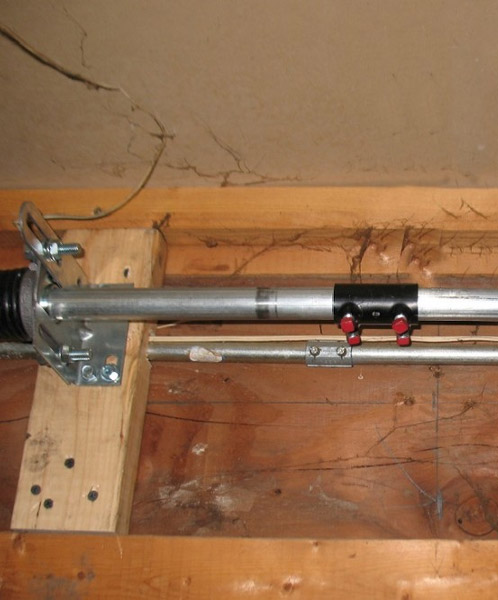
Tube-Shaft Load-Distribution Analysis for Garage Door Tube Shaft and Hollow Keyed Shaft
A garage door tube shaft, especially the hollow keyed shaft, is essential for reliable lifting and load management in sectional garage doors. Understanding the load-distribution dynamics of these shafts helps prevent premature wear and ensures structural reliability during lifting operations.
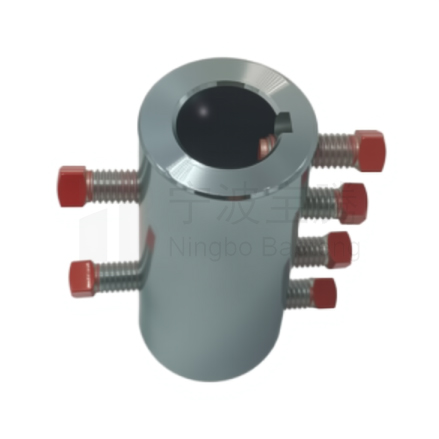
In the context of sectional garage doors, the tube shaft—particularly the hollow keyed shaft—serves as a critical structural component responsible for transmitting torsional forces from the spring assembly to the door panels. Maintenance technicians specializing in garage door mechanical systems frequently encounter challenges related to uneven load distribution during lifting and lowering cycles. The structural performance of the tube shaft directly influences the operational reliability of the entire door assembly, especially under conditions where load imbalance can lead to accelerated component fatigue and premature wear. This analysis applies a structural load path evaluation approach to examine the reliability of garage door tube shafts and hollow keyed shafts, focusing on their behavior under lifting and load-bearing scenarios. The discussion progresses through a detailed examination of the tube shaft’s construction, its role in load transfer, the implications of load imbalance, and technical recommendations for verifying engineering compliance.
The garage door tube shaft, commonly manufactured as a hollow keyed shaft, is engineered to balance the need for strength, weight reduction, and compatibility with standard torsion hardware. Typically fabricated from cold-rolled or hot-formed steel tubing, the shaft’s wall thickness and outer diameter are selected based on the anticipated torsional loads and span between bearing supports. The hollow profile reduces overall mass while maintaining sufficient moment of inertia to resist deflection and torsional shear. Keyways are precision-machined along the shaft’s length to accommodate set screws and couplers, ensuring positive engagement with drums and spring cones.
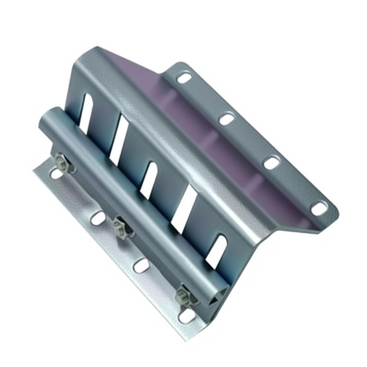
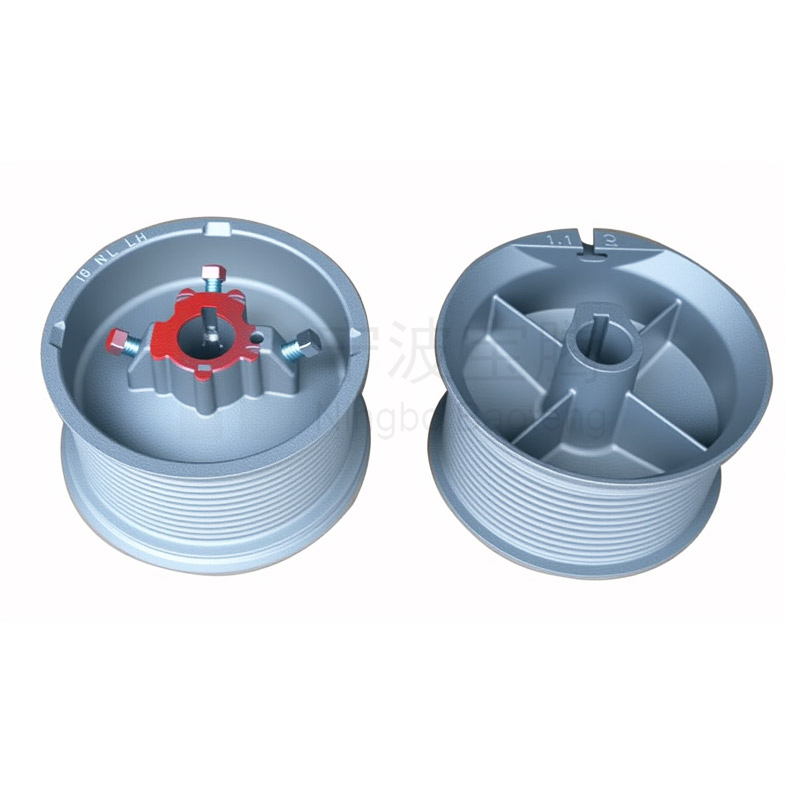
In typical installations, the tube shaft interfaces with end bearings mounted to the flag brackets, intermediate support brackets (for wider doors), and torsion spring assemblies. The load path begins at the torsion spring, which imparts torque to the shaft. This torque is then transmitted along the shaft to the cable drums, which convert rotational motion into linear lifting force via the cables attached to the door’s bottom brackets. The shaft’s ability to maintain alignment and resist twisting is essential for synchronizing the lifting force across both sides of the door, thereby minimizing the risk of skewed movement and asymmetric wear.
A primary engineering concern in these systems is the effect of load imbalance—where the weight distribution across the door width is not uniform, or where spring forces are not properly calibrated. Under such conditions, the tube shaft is subjected to uneven torsional loading, resulting in localized stress concentrations. Over time, this can manifest as shaft deflection, permanent deformation (plastic yielding), or even fracture at the keyway or bearing interfaces. For maintenance specialists, identifying the onset of these failure modes is critical to preventing unscheduled downtime and costly repairs.
Reliability assessment of the tube shaft requires a comprehensive understanding of load-distribution dynamics. The shaft’s resistance to torsional shear is governed by its polar moment of inertia (J), which for a hollow cylinder is given by J = π/32 × (D^4 – d^4), where D is the outer diameter and d is the inner diameter. For most residential and light commercial doors, shaft diameters range from 1” to 1-1/4”, with wall thicknesses between 0.065” and 0.120”. The selection of shaft dimensions must account for the maximum anticipated spring torque, the door’s weight, and the span between supports.
In scenarios where the door is wider than 12 feet or where heavy wind-load reinforcement is present, the unsupported length of the shaft increases, amplifying the risk of mid-span deflection. Excessive deflection not only impairs cable drum alignment but also introduces bending stresses that can propagate cracks at the keyway or at the interface with set screws. Routine inspection should focus on evidence of shaft bowing, rotational play at couplers, and fretting corrosion at bearing seats.
The hollow keyed shaft’s engagement with the cable drum is another critical interface. Set screws must be torqued to manufacturer specifications to prevent relative motion, which can otherwise lead to galling or keyway elongation. In cases of load imbalance, the side of the shaft experiencing higher torque may exhibit micro-movements, gradually enlarging the keyway and reducing the effectiveness of the mechanical lock. This phenomenon is exacerbated by improper lubrication or contamination ingress at the interface, further accelerating wear.
To mitigate the risk of premature wear due to load imbalance, several engineering controls are recommended. First, ensure that torsion springs are precisely calibrated to the door’s weight and that spring forces are balanced across both sides. Second, select a tube shaft with adequate wall thickness and diameter to provide a safety factor of at least 1.5 against the calculated maximum torsional load. Third, incorporate intermediate support brackets for doors exceeding 10 feet in width to reduce the unsupported span and limit shaft deflection. Finally, verify that all fasteners and set screws at the keyway interfaces are installed using thread-locking compounds and are periodically re-torqued during scheduled maintenance.
- Inspect shaft bowing and keyway elongation regularly.
- Balance spring forces and verify shaft dimensions for load requirements.
- Use intermediate support brackets for wide or reinforced doors.
- Apply thread-locking compounds and re-torque set screws as part of maintenance.
- Check for fretting corrosion at bearing seats and couplers.
From a structural load path perspective, the tube shaft acts as both a torque transmitter and a load equalizer. Its performance is contingent upon the integrity of the entire support system, including the alignment of flag brackets, the condition of end bearings, and the precision of spring installation. Any misalignment or wear in these auxiliary components can introduce secondary loads into the shaft, compounding the effects of primary load imbalance.
Field evaluation of tube shaft reliability involves both visual and mechanical assessment. Technicians should measure shaft straightness using a dial indicator, inspect keyways for signs of elongation or burr formation, and check for axial play at bearing locations. If excessive deflection or wear is detected, replacement with a higher-grade shaft (e.g., increased wall thickness or upgraded steel alloy) may be warranted. In high-cycle commercial applications, consideration should be given to shafts with induction-hardened keyways or integrated anti-rotation features to further enhance durability.
In summary, the technical reliability of garage door tube shafts, particularly hollow keyed shafts, is fundamentally linked to their ability to distribute torsional loads evenly and resist the adverse effects of load imbalance. Maintenance technicians must prioritize regular inspection of shaft geometry, keyway condition, and support alignment to detect early signs of stress concentration and wear. Engineering best practices dictate that shaft selection, installation, and maintenance protocols be rigorously followed to ensure compliance with load parameters and to extend component service life.
For all maintenance interventions, it is essential to verify load parameters against engineering specifications, confirm the adequacy of shaft dimensions for the application, and document all findings related to shaft wear and alignment. This structured approach enables the identification and mitigation of load imbalance as a core pain point, ensuring that the garage door tube shaft and hollow keyed shaft remain reliable elements within the overall lifting system.
For more technical documentation and engineering specifications, refer to the Baoteng Technical Documentation or review Especificações técnicas for garage door hardware.
Ensuring long-term reliability of garage door tube shaft and hollow keyed shaft
Proper selection, installation, and maintenance of garage door tube shaft and hollow keyed shaft are crucial for managing load imbalance and extending the service life of sectional garage doors. Regular inspections and adherence to engineering best practices help prevent premature wear and maintain safe, reliable operation. For further support, explore Apoio pós-venda or request a amostra grátis from Baoteng.
 English
  Русский
  日本語
日本語  한국어
한국어  Français
  Deutsch
  العربية
  Português
  Español