

Roller wheels are critical components in garage door assemblies, providing the necessary interface between the moving door and its guide tracks. Nylon, as a polymer material, has become a popular choice for these rollers due to its favorable tribological characteristics, including low friction coefficients and commendable wear resistance. Nonetheless, the mechanical behavior of nylon rollers is intricately linked to the condition of their internal bearings and the operational environment. In particular, dust-intensive workshop environments introduce abrasive particulate matter that accelerates bearing degradation and compromises roller performance. This analysis delves into the mechanical interactions and failure mechanisms associated with nylon roller wheels, emphasizing the prevalent failure mode of bearing wear leading to increased rolling resistance. Drawing on field observations, engineering principles, and established endurance test standards, the discussion aims to equip design and maintenance engineers with a comprehensive understanding of these components’ operational challenges and durability considerations.
Nylon roller wheels operate primarily under rolling contact mechanics, where the minimization of frictional forces is essential to ensure smooth door movement and reduce the torque demand on the drive system. Nylon’s relatively low density, combined with its inherent damping properties and low coefficient of friction against steel tracks, enables quieter and more efficient operation compared to traditional metal rollers. The polymer’s viscoelastic nature also contributes to vibration absorption, which enhances user experience during door actuation.
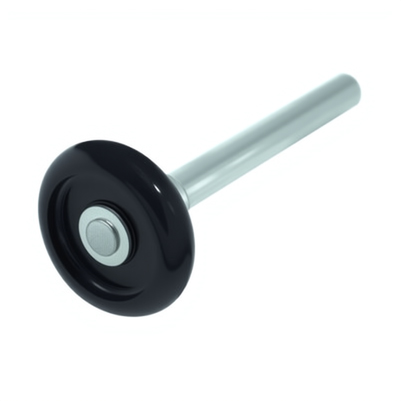
The load environment for these rollers is complex. Radial loads imposed by the door’s weight typically range from 100 to 300 newtons per roller, depending on door size, mass distribution, and configuration. Additionally, axial loads may arise due to track misalignment, lateral forces during door acceleration or deceleration, and uneven loading conditions. The roller’s bearing assembly—usually miniature ball or sleeve bearings—must sustain these loads while allowing free rotation with minimal frictional resistance.
The frictional torque resisting wheel rotation can be expressed as Tf = μ × N × r, where μ is the bearing’s internal friction coefficient, N represents the normal load transmitted through the bearing, and r is the effective radius at which frictional forces act. While the nylon wheel-to-track interface maintains a low friction coefficient due to the polymer’s surface properties, the bearing’s friction coefficient is more sensitive to wear, contamination, and lubrication condition. As bearing wear progresses, μ increases, elevating rolling resistance and thus the torque required for door movement.
Thermal effects also play a significant role. Frictional heating within the bearing and wheel assembly can raise local temperatures beyond nylon’s glass transition temperature range (approximately 50 to 60°C). Exceeding this threshold softens the polymer matrix, reducing stiffness and dimensional stability. This softening can accelerate deformation under load and exacerbate wear. Therefore, bearing design and material selection must facilitate effective heat dissipation to preserve mechanical integrity during extended operation.
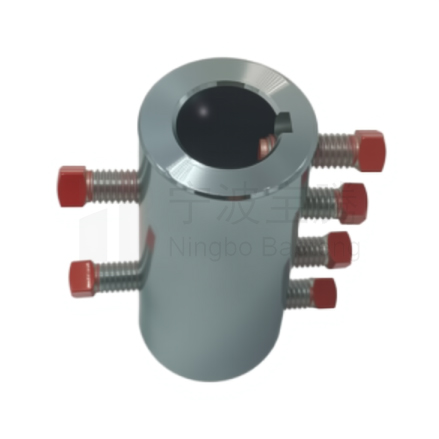
The predominant failure mechanism in nylon roller wheels is bearing wear, which directly results in increased rolling resistance. Bearings in these assemblies are exposed to abrasive contaminants, especially in dust-intensive workshop environments where fine particulate matter infiltrates bearing seals and degrades lubrication quality. This contamination accelerates abrasive wear on bearing races and rolling elements, increasing internal friction.
As bearing friction escalates, the torque necessary to rotate the wheel rises correspondingly. This elevated rolling resistance imposes additional load on the door drive system and causes uneven stress distribution on the nylon wheel. The resulting stress concentrations can initiate microcracks or localized deformation within the polymer material. Over time, these effects manifest as operational inefficiencies, increased noise levels, and a higher probability of mechanical misalignment or failure.
Secondary failure modes often stem from the increased rolling resistance caused by bearing degradation. The elevated frictional forces subject the nylon wheel to higher shear and bending stresses. Given nylon’s viscoelastic behavior, these stresses can induce permanent deformation at the wheel’s contact points with the track. Such deformation alters the wheel’s effective contact profile, reducing uniform load distribution and increasing localized point loading on the track surface.
This concentrated loading accelerates wear on the track, which compromises door alignment and smoothness of operation. In severe cases, the deformed wheel profile can cause derailment or binding within the track, posing safety concerns and increasing maintenance requirements. Environmental factors such as humidity further influence nylon’s dimensional stability, potentially exacerbating these deformation effects and contributing to functional degradation.
Dust-intensive workshop environments present significant challenges for nylon roller wheel assemblies. Fine particulate matter readily penetrates bearing seals, acting as an abrasive agent that promotes surface fatigue and spalling of bearing races. Embedded particles also increase surface roughness on the nylon wheel, elevating friction at the wheel-track interface.
Repeated cyclic loading under such contaminated conditions accelerates fatigue crack initiation within the nylon material. Microcracks propagate with continued use, undermining structural integrity and increasing the risk of sudden failure. Additionally, dust accumulation impairs bearing lubrication, leading to lubrication starvation and increased metal-to-metal contact, which further accelerates bearing wear.
Mitigating these environmental effects requires careful selection of materials with enhanced wear and fatigue resistance, as well as robust sealing strategies to prevent particulate ingress and maintain lubrication integrity. Without such measures, the combined impact of abrasive wear and fatigue significantly reduces the service life of the roller assembly.
Evaluating the durability and mechanical performance of nylon roller wheels demands adherence to rigorous testing protocols that replicate operational stresses and environmental conditions. ASTM D6425 provides a standardized method for assessing the rolling fatigue and wear resistance of polymer wheels under cyclic loading. This test simulates real-world usage by applying repeated rolling over specified distances and loads, enabling measurement of dimensional stability, surface degradation, and fatigue behavior.
Bearing performance validation is guided by standards such as ANSI/ABMA 9 and ANSI/ABMA 11, which define tolerances, load ratings, and fatigue life expectations for ball and roller bearings. Compliance with these standards ensures that bearings incorporated in roller assemblies can withstand anticipated radial and axial loads throughout their service life without premature failure.
Furthermore, UL 325—the safety standard for door operators and related hardware—mandates comprehensive mechanical durability and operational reliability assessments. This includes verification that roller wheels and bearings maintain consistent performance without compromising safety over their intended lifespan.
To accurately capture the effects of dust-intensive workshop environments, testing protocols must incorporate exposure to dust-laden atmospheres combined with cyclic mechanical loading. This approach enables quantification of degradation rates and failure onset linked to particulate contamination, providing critical data for design validation and maintenance planning.
Integrating nylon roller wheels into garage door systems requires a holistic approach that addresses mechanical performance, environmental resilience, and maintenance feasibility. Selecting nylon grades with enhanced wear resistance, thermal stability, and fatigue endurance is fundamental to achieving long-term durability. High-quality sealed bearings are essential to mitigate the primary failure mode of bearing wear by restricting particulate ingress and preserving lubrication.
Attention to shaft alignment and wheel-track interface design is crucial to minimize uneven loading and stress concentrations. Proper alignment preserves wheel geometry, maintains door stability, and reduces the likelihood of premature wear. In environments with elevated dust levels, additional protective measures such as labyrinth seals or dust shields can significantly extend bearing life and reduce maintenance intervals.
During installation, ensuring correct bearing preload and verifying smooth rotation are vital to prevent early failure. Maintenance protocols should include periodic inspection and lubrication in accordance with ASTM and ANSI guidelines, enabling early detection of wear and preventing escalation.
Mechanical analysts must also consider the implications of increased rolling resistance on the door drive system. Elevated frictional loads may necessitate reinforcement of motor components or adjustments to control algorithms to maintain reliable operation over time. Integrating torque monitoring systems can provide early warnings of bearing degradation, facilitating proactive maintenance and reducing downtime.
The mechanical evaluation of nylon roller wheels underscores bearing wear leading to increased rolling resistance as the critical failure mode affecting garage door performance, particularly in dust-intensive workshop environments. Particulate contamination accelerates bearing degradation, which cascades into secondary failures such as wheel deformation and track surface wear. Adherence to ASTM endurance testing, ANSI bearing standards, and UL safety requirements establishes a robust framework for validating component durability. Successful integration hinges on selecting appropriate materials, implementing effective sealing, and maintaining rigorous inspection schedules. For engineering teams tasked with ensuring reliability, incorporating environmental factors into design and validation processes is essential to extend the service life and maintain consistent operation of nylon roller wheels under challenging conditions.
This analysis was reviewed by a Senior Garage Door Hardware Engineer with practical field experience under dust-intensive workshop environment operating conditions, with validation focused on bearing wear / rolling resistance increase in accordance with endurance test compliance requirements.
For engineering teams responsible for Nylon Roller Wheels, the most robust designs are those that explicitly incorporate dust-intensive workshop environment environmental factors into material selection, document performance evidence against endurance test, and maintain traceable validation records that align with ANSI, ASTM, and UL expectations for garage door hardware.

 English
  Русский
  日本語
日本語  한국어
한국어  Français
  Deutsch
  العربية
  Português
  Español