
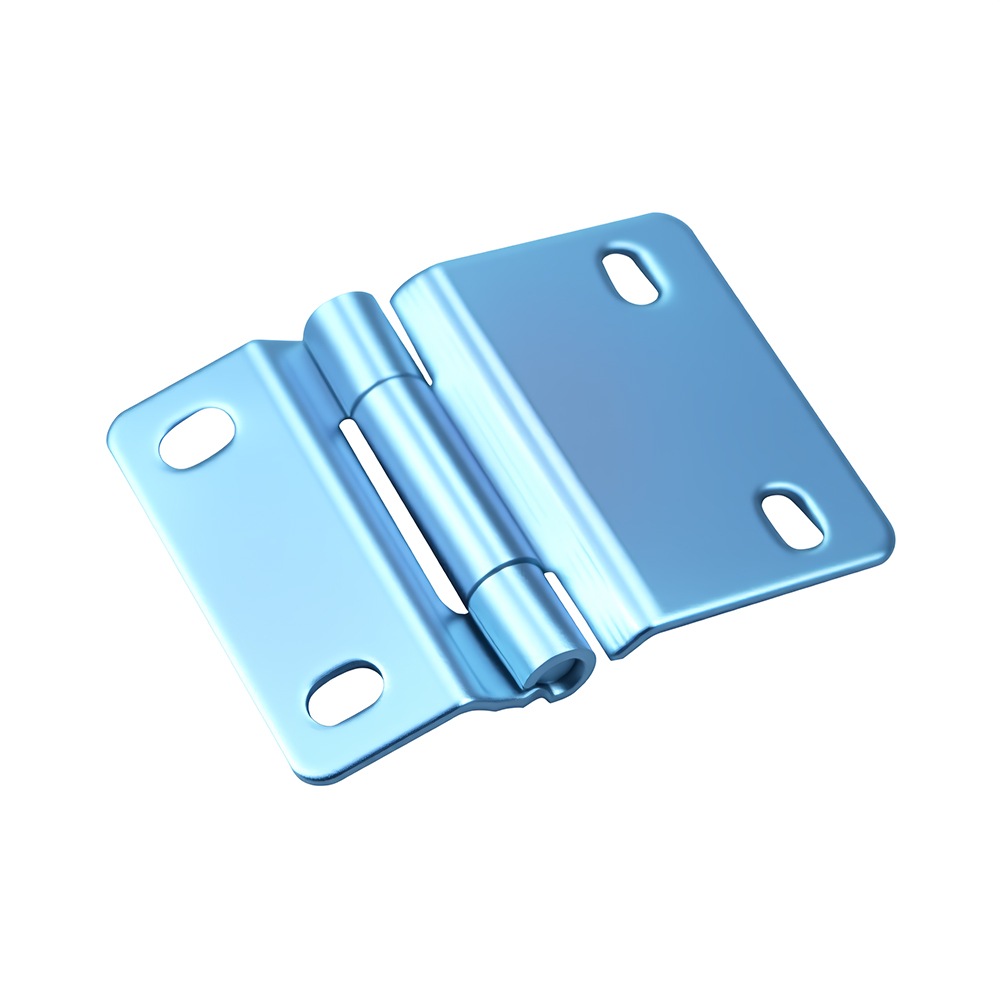
Sectional articulation and stress dispersion in heavy duty steel hinges
Ensuring optimal performance of heavy duty steel hinges, particularly the Center Hinge, is essential for reliable articulation and stress management in industrial door systems. By focusing on mechanical load distribution and fatigue resistance, engineers can significantly improve the durability and safety of sectional doors operating under demanding conditions.
Reliability of heavy duty steel hinges in sectional door articulation
In industrial door systems, the articulation of sectional panels is a critical mechanical function, particularly under demanding operational cycles and heavy loads. The selection and engineering of heavy duty steel hinges, especially the Center Hinge, directly influence how stresses are distributed across the door sections during movement. For door system designers, ensuring reliable hinge performance is not only a matter of mechanical integrity but also essential for mitigating the persistent issue of stress concentration and fatigue failure. This article presents a technical evaluation of heavy duty steel Center Hinges, examining their role in stress dispersion during sectional articulation, with a focus on mechanical load distribution and fatigue resistance. Through an objective analysis, the discussion addresses the structural and material considerations that underpin hinge reliability, providing actionable insights for those tasked with designing robust industrial door systems.
Heavy duty steel Center Hinges are engineered to connect adjacent door sections, enabling smooth rotation while bearing significant mechanical loads. The geometry of the Center Hinge is designed to accommodate both the vertical and horizontal forces encountered during door operation. In a typical sectional door, each hinge must facilitate articulation as the panels follow the track curve, transitioning from vertical to horizontal orientation. The Center Hinge, positioned at the midpoint between end hinges, is subjected to unique loading conditions due to its location and the cumulative effect of panel weight and operational forces.
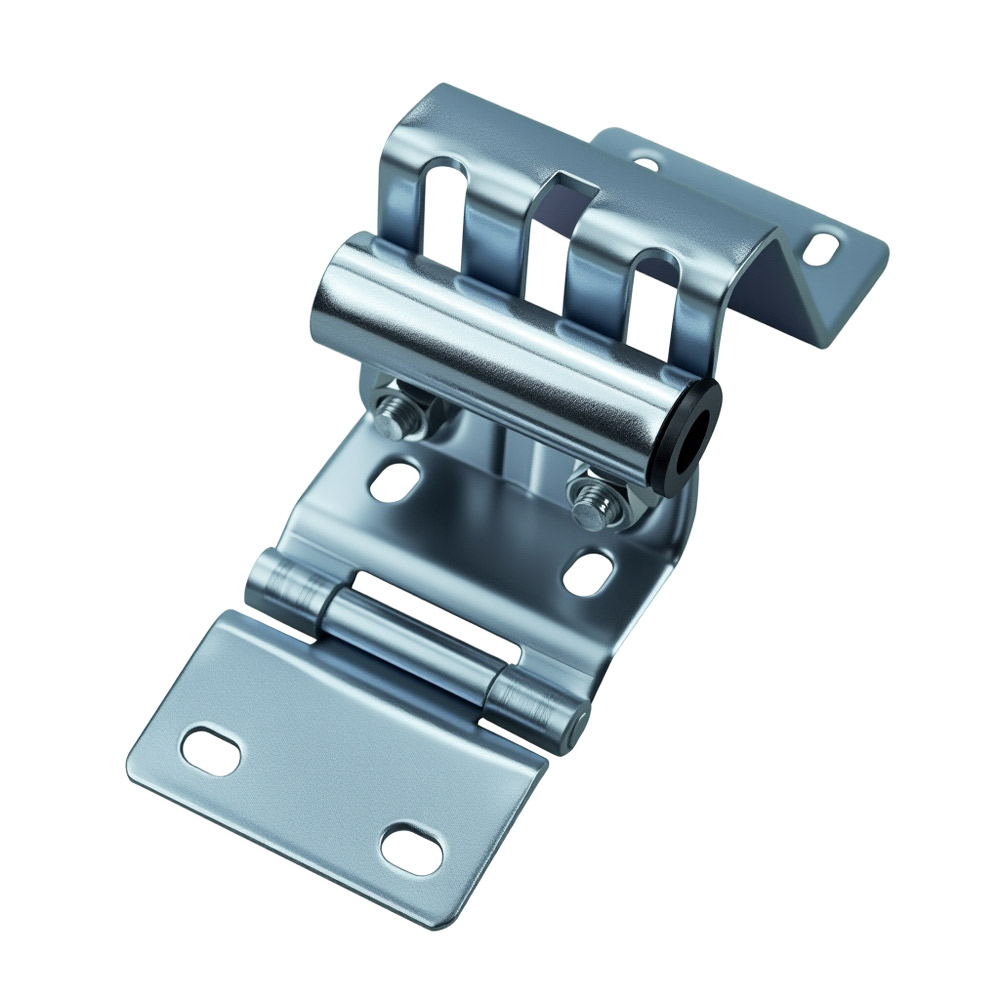
The structural configuration of a heavy duty steel Center Hinge typically comprises a multi-leaf assembly fabricated from cold-formed or hot-rolled steel. Material selection is critical; high-strength, low-alloy steels are preferred for their superior yield strength and resistance to cyclic loading. The hinge knuckle is precision-machined to minimize play and ensure consistent rotational movement, while the hinge leaves are dimensioned to distribute bearing loads across a larger surface area, reducing localized stress concentrations at the fastener interfaces.
Surface finishing processes, such as galvanization or powder coating, are employed to enhance corrosion resistance, which is vital for maintaining mechanical properties under environmental exposure. The hinge pin, often a solid steel rod, is designed to withstand shear and bending moments generated during repeated articulation. In heavy duty applications, the pin diameter and material hardness are specified to prevent plastic deformation and wear, which could otherwise compromise hinge alignment and function.
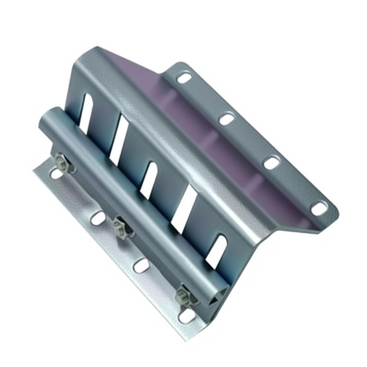
Reliability in heavy duty steel Center Hinges is fundamentally determined by their ability to disperse articulation stresses throughout the door system. During operation, as the sectional panels traverse the track, hinges experience a combination of axial, shear, and bending loads. The Center Hinge, due to its central positioning, often acts as a primary conduit for load transfer between panels, especially in wide-span doors where panel deflection is more pronounced.
Finite element analysis (FEA) of hinge assemblies reveals that stress concentrations typically occur at the knuckle-leaf interface and around fastener holes. To address this, hinge designs incorporate filleted transitions and increased radii at critical junctions, reducing the risk of crack initiation under cyclic loading. Additionally, the use of multi-point fastener patterns distributes mechanical loads over a broader area, further mitigating localized stress peaks.
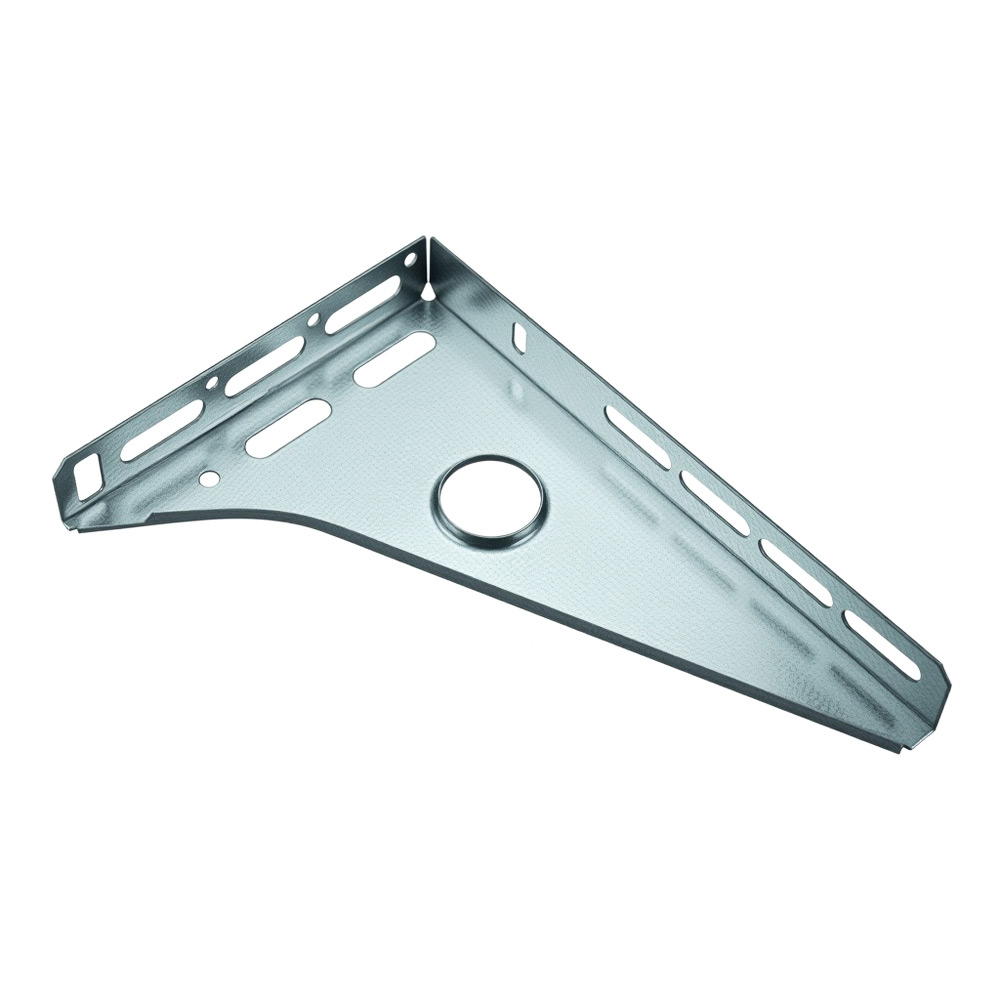
Fatigue resistance is another key parameter in evaluating hinge reliability. Industrial door systems are frequently subjected to thousands of open-close cycles per year, and hinges must be engineered to withstand these repetitive loads without material degradation. Laboratory fatigue testing of heavy duty steel Center Hinges involves subjecting samples to controlled cyclic loading, replicating the articulation stresses encountered in service. Test results inform design modifications, such as increasing hinge leaf thickness, optimizing pin diameter, or employing surface hardening treatments to extend service life.
In addition to laboratory testing, field data from operational door systems provide valuable feedback on hinge performance. Common failure modes observed in situ include hinge pin wear, leaf deformation, and fastener loosening—all of which are symptomatic of inadequate stress dispersion or insufficient material strength. By correlating these observations with engineering analysis, designers can refine hinge specifications to better address the core pain point of stress concentration and fatigue failure.
A comprehensive evaluation of heavy duty steel Center Hinges must also consider the interaction between hinge design and door panel construction. The rigidity of the panel, the spacing of hinges, and the alignment of the track system all influence how loads are transferred and absorbed during articulation. For example, increasing the number of Center Hinges along a wide panel can reduce the load per hinge, thereby lowering the risk of fatigue failure. Conversely, insufficient hinge support or misalignment can exacerbate stress concentrations, leading to premature hinge or panel failure.
In practice, door system designers employ a combination of analytical calculations and empirical data to determine optimal hinge placement and specification. Load calculations account for the weight of the door sections, the anticipated frequency of operation, and the dynamic forces generated during opening and closing. These calculations inform the selection of hinge material grade, leaf thickness, pin diameter, and fastener type. For high-cycle applications, designers may specify hinges with oversized pins, hardened bushings, or reinforced mounting plates to further enhance fatigue resistance.
The performance of heavy duty steel Center Hinges under real-world conditions is ultimately validated through long-term operational monitoring and periodic inspection. Common engineering metrics used to assess hinge condition include rotational smoothness, visible deformation, fastener integrity, and evidence of surface wear or corrosion. Any deviation from baseline performance can indicate emerging issues with stress distribution or material fatigue, warranting further analysis or hinge replacement.
From a mechanical load distribution perspective, the goal is to achieve uniform stress dispersion across all hinges and door sections. This requires precise alignment during installation, consistent hinge spacing, and the use of high-quality fasteners with appropriate preload. Advanced door systems may incorporate sensors or data loggers to monitor hinge loads in real time, providing early warning of abnormal stress patterns and enabling proactive maintenance.
For door system designers focused on heavy-duty applications, the technical evaluation of heavy duty steel Center Hinges is an ongoing process that integrates material science, structural analysis, and field performance data. Addressing the core pain point of stress concentration and fatigue failure demands a rigorous engineering approach, grounded in both theoretical and empirical evidence. The continual refinement of hinge geometry, material selection, and installation practices is essential for ensuring long-term reliability in demanding industrial environments.
Verification and ongoing assessment of heavy duty steel Center Hinges
To verify the adequacy of heavy duty steel Center Hinges in a given application, it is critical to conduct engineering-grade testing that replicates the specific loading conditions of the intended door system. This includes both static load tests to confirm ultimate strength and cyclic fatigue tests to evaluate long-term durability. All hinge parameters—material composition, dimensional tolerances, surface treatments, and fastener configurations—must be validated against the mechanical requirements of the door assembly.
Engineering documentation should include detailed records of hinge specifications, test results, and maintenance history, forming the basis for ongoing reliability assessment. Periodic review of hinge performance data, combined with targeted inspection protocols, enables early detection of stress-related issues and supports informed decision-making regarding hinge replacement or system upgrades.
In conclusion, the technical evaluation of heavy duty steel Center Hinges for sectional door systems is a multifaceted engineering challenge centered on optimizing articulation load distribution and fatigue resistance. By systematically addressing stress concentration and leveraging both analytical and empirical methods, door system designers can ensure that hinge assemblies meet the rigorous demands of industrial operation. Verification of hinge parameters through engineering-grade testing remains the cornerstone of reliable, long-lasting door system performance.
For further technical resources and detailed engineering documentation on heavy duty steel hinges and Center Hinges, refer to the Baoteng Hinges product page or explore especificações técnicas for comprehensive guidance.
 English
  Русский
  日本語
日本語  한국어
한국어  Français
  Deutsch
  العربية
  Português
  Español