
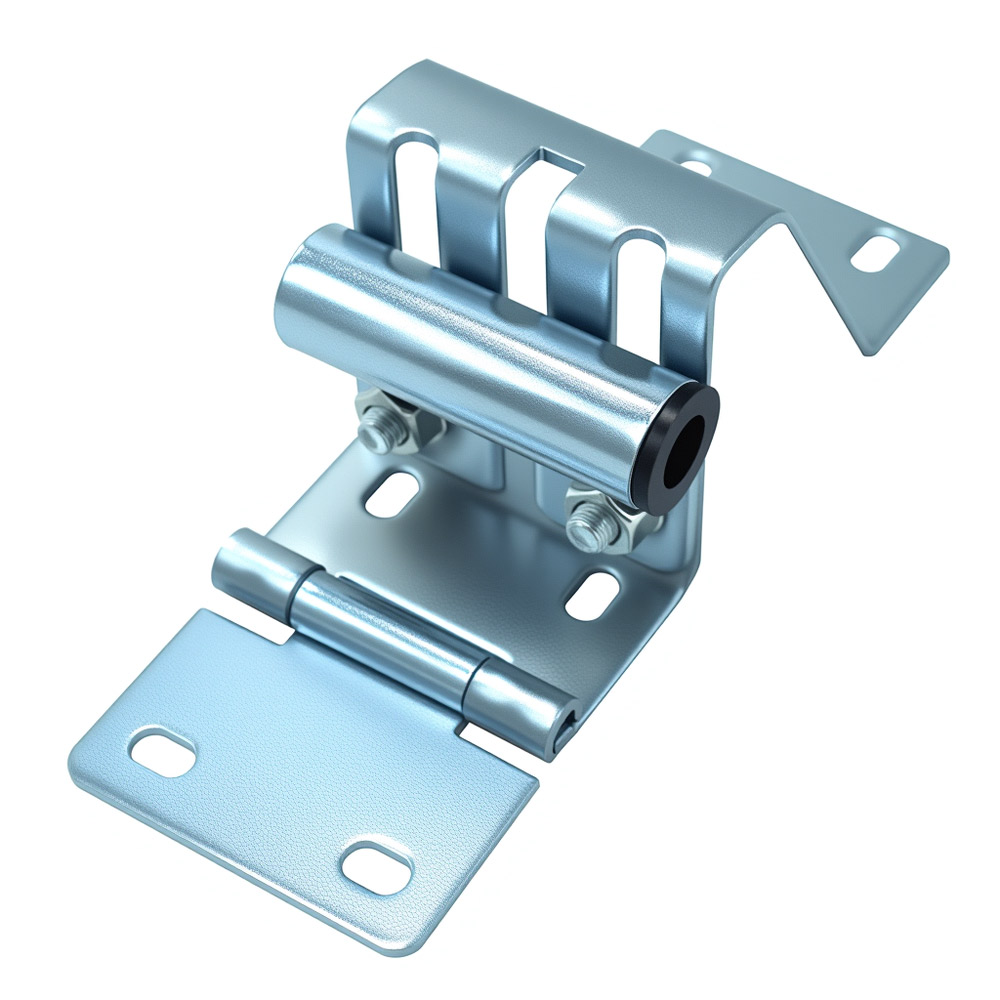
How garage door hinges maintain durability in demanding operations
Commercial maintenance teams working in high-cycle logistics environments often encounter hinge fatigue long before other garage door hardware components show noticeable degradation. When hinges begin to deform or loosen under repetitive load, the door’s panel alignment drifts, motion becomes less predictable, and unplanned service disruptions follow. Understanding how these failures originate allows facilities to identify more durable solutions and reduce intervention frequency. By examining the mechanical behavior of garage door hinges within high-cycle systems, it becomes possible to evaluate how material choice, geometric design, and load distribution improve long-term reliability. This discussion focuses on the engineering principles that support longer hinge durability in demanding door operations. Let’s explore why this matters in real-world door systems.
Mechanical role of garage door hinges in sectional doors
In commercial sectional door assemblies, the hinge plays a central role in transferring bending and shear loads between panels while allowing smooth articulation along the track path. A hinge designed for heavy logistics use typically incorporates galvanized or stainless steel plates, precision-formed knuckles, and hardened pins engineered to resist elongation during repeated cycles. These components must retain stiffness while accommodating the angular rotation required as each panel transitions from vertical to horizontal during opening. Matching hinge gauge to door weight is critical: heavy steel-skinned panels with high insulation values require thicker plates and broader leaf geometry to prevent local buckling. Surface treatments such as zinc coatings or powder-coated finishes extend corrosion resistance, especially in facilities experiencing humidity or airborne contaminants. SEE experience from cycle testing consistently shows that hinge pins with hardened surfaces maintain shape longer and resist scoring during high-frequency operation, which helps preserve alignment and track engagement.
The mechanical interaction between hinges, rollers, and the track also defines how loads are shared throughout the system. Each hinge supports a portion of the door’s distributed weight while simultaneously guiding roller movement through the curved track section. The hinge’s fastener pattern, typically three or four mounting points per leaf, determines how effectively loads are transferred into the panel structure. Improper fastener torque allows micro-movement that accelerates wear, a condition repeatedly observed during alignment verification in service inspections. Salt-spray exposure tests further demonstrate how hinge coatings degrade under corrosive conditions, influencing long-term fatigue behavior. Within commercial operations that may exceed 50,000 cycles per year, the integrity of hinge geometry—specifically knuckle diameter, pin hardness, and plate gauge—becomes the defining factor in predictable door performance.
System-level perspective
In a complete garage door hardware assembly, hinges act as moment-carrying joints between panels, share load with rollers along the track, and preserve the designed curvature through the head and vertical sections. Small changes in hinge stiffness or wear state influence torsion spring torque balance, track loading, and overall cycle life.
Maintenance teams that document hinge deformation, pin scoring, and fastener loosening over time gain valuable feedback for future hardware selection and for adjusting preventive maintenance intervals across similar doors.
Load distribution
Hinges share panel weight with rollers, limiting peak stress at each joint and stabilizing track engagement in high-cycle doors.
Cycle endurance
Hardened pins and thicker leaf geometry help garage door hinges survive logistics-level operating frequencies without rapid fatigue.
Corrosion resistance
Galvanized or stainless construction maintains hinge geometry in facilities exposed to moisture, cleaning agents, or outdoor air.
Alignment stability
Correct fastener patterns and torque prevent micro-movement at the panel interface, reducing misalignment-driven downtime.
Field evidence and inspection
Routine inspections of commercial doors consistently reveal that hinge condition is a leading indicator of system reliability. Early pin wear, leaf deformation, or cracked coatings often precede roller damage and uneven track loading, making hinge assessment a high-value diagnostic activity.
Operating environments for high-cycle hinges
How garage door hinges behave in real logistics facilities
High-cycle logistics docks
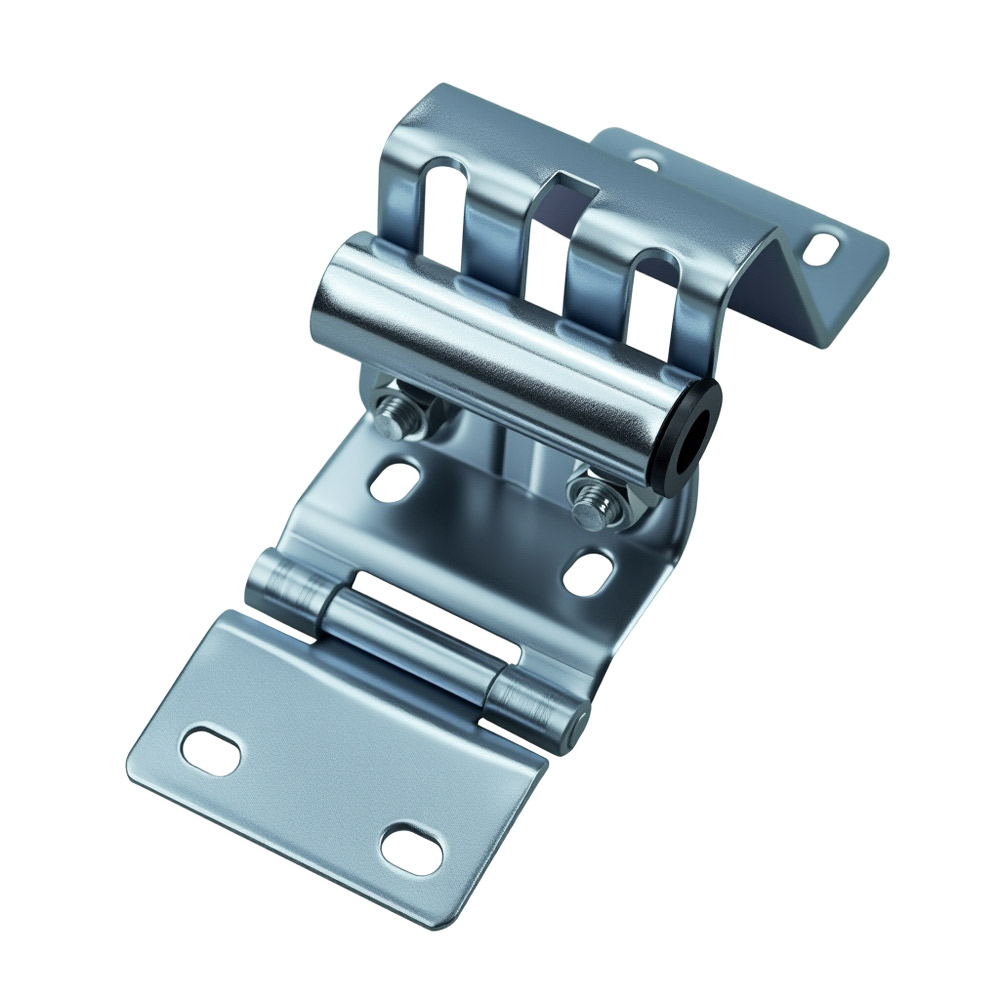
In high-cycle commercial garage facilities, heavy sectional doors experience rapid, continuous operation that exposes every hinge to repeated bending and rotational stress. A typical logistics dock may operate its doors hundreds of times per day, pushing cycle life requirements far beyond residential conditions. Hinges in these environments must accommodate not only repetitive load but also vibration from forklifts, trucks, and docking equipment. Door weights commonly range from 180 to over 350 pounds depending on construction, requiring hinges engineered for extended structural endurance. SEE observations from field maintenance activities indicate that hinges with broader leaf contact distribute load more evenly, reducing localized deformation at the panel interface.
Temperature-variable facilities
In temperature-variable facilities—such as distribution centers with refrigerated zones—hinges experience differential expansion and contraction that challenges alignment. The cyclical shift in temperature affects lubricants, panel rigidity, and hinge articulation. Commercial hinges designed for such applications commonly utilize low-temperature-tolerant lubricants or self-lubricating bushings that maintain smooth motion even when metal contracts. Field technicians have noted that hinges equipped with polymer-coated bushings generate less starting friction at low temperatures, helping to maintain consistent door motion. Technicians report more predictable motion and fewer unexpected stoppages over time.
Moisture and chemical exposure
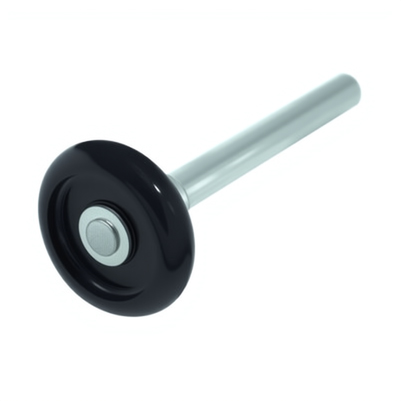
In loading docks exposed to moisture, airborne chemicals, or cleaning procedures, corrosion resistance becomes a primary design consideration. Stainless steel or heavy-gauge galvanized hinges provide longer resistance to pitting and surface breakdown, preserving knuckle geometry and maintaining roller alignment. Maintenance teams frequently observe accelerated hinge deterioration in facilities that use chemical cleaning agents, emphasizing the importance of specific coating classes. High-resistance hardware reduces the need for frequent hinge replacement and helps sustain consistent operational clearance within the track.
Oversized and insulated doors
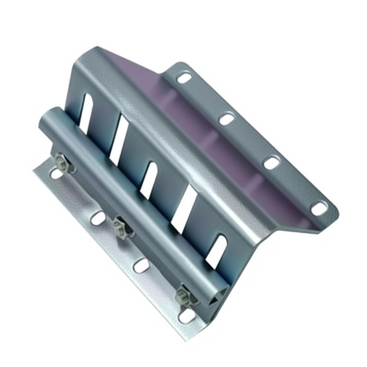
In facilities that handle oversized or insulated doors, hinge load requirements increase significantly. The additional panel mass contributes to higher rotational forces at each hinge connection. Hinges rated for these heavier systems often use reinforced knuckle sections and thicker pin diameters to withstand mechanical stress. Observational data from service calls shows that underspecified hinges on insulated panels develop uneven wear patterns, leading to difficult opening transitions at the track curve. Technicians report more predictable motion and fewer unexpected stoppages over time.
Operational feedback from technicians
Across high-cycle docks, temperature-variable zones, wet cleaning environments, and heavy insulated doors, field teams repeatedly identify hinge condition as a primary driver of door reliability. Shifts in motion smoothness, increases in operating noise, and early roller wear often correlate with progressive hinge fatigue or corrosion.
Technicians report more predictable motion and fewer unexpected stoppages over time when garage door hinges are selected with adequate load rating, cycle life, and corrosion resistance, and when installation procedures enforce proper torque and alignment checks.
For more detailed hinge selection guidelines, engineering teams often consult engineering specifications and application documentation before finalizing hardware sets for new warehouse doors.
Operational advantages and practical limits
Hinges engineered for demanding commercial environments deliver several clear operational benefits. Improved load distribution reduces bending forces on each panel joint, leading to smoother motion and fewer alignment corrections. Higher cycle life, supported by hardened pins and precise knuckle geometry, allows the hardware to withstand the repetitive stress typical of logistics operations. Enhanced corrosion resistance through galvanized or stainless construction helps maintain hinge shape, preventing the progressive loosening commonly seen in standard hardware exposed to harsh cleaning or moisture.
These advantages translate into more stable door operation, reduced wear on rollers and tracks, and fewer maintenance interventions over the life of the system. However, there are limitations to consider. Heavy-duty hinges require correct alignment and torque during installation; insufficient fastener engagement can negate the benefits of the reinforced structure. Additionally, matching hinge rating to door specifications demands more attention from installers, especially when dealing with customized or oversized panels. SEE observations during assembly indicate that even high-quality hinges can develop premature wear if lubrication schedules are not followed or if alignment drift is allowed to persist between inspections.
Comparing commercial hinges with alternative hardware
When comparing hinges built for commercial, high-cycle use with those found in light-duty residential systems, the differences become apparent through load capacity, material quality, and mechanical behavior. Commercial hinges typically incorporate thicker steel plates, larger knuckles, and hardened pins optimized for extended cycle life. Residential hinges, while suitable for lower operating frequency, often lack the structural stiffness required for heavy sectional doors. Commercial hardware also demonstrates improved resistance to corrosion and deformation under repetitive bending. Off-the-shelf kits not matched to door weight frequently fail to maintain alignment in logistics environments, resulting in erratic door travel and increased stress on rollers and tracks. Heavy-duty hinges further outperform generic alternatives in maintaining consistent motion during transition through curved track sections, where mechanical forces peak. In operational terms, reinforced hinges offer more stable alignment and reduced maintenance compared to low-grade options.
Another meaningful comparison can be made between hinges with hardened pins and those with untreated steel pins. Hardened pins resist scoring and ovalization, extending hinge cycle life and preserving knuckle geometry. Untreated pins wear faster, causing excess play that leads to rattling, misalignment, and increased roller friction. Through repeated inspections, maintenance specialists have found that hinges with precision-machined knuckles produce quieter operation and reduce vibration transfer into the track.
Testing and verification of hinge performance
Cycle and load testing
Understanding the real-world performance of hinges requires evaluating their behavior under standardized test conditions. Cycle testing simulates thousands of opening and closing events to assess hinge durability, pin wear, and plate deformation over time. This replicates the pattern of high-frequency usage found in logistics facilities. Impact and load tests measure hinge resistance to sudden force events, such as accidental bumping by equipment or uneven lifting forces caused by torsion spring imbalances.
Material hardness testing ensures that hinge pins and plates achieve the required resistance to indentation and deformation. Dimensional inspection verifies that knuckle spacing, pin diameter, and plate geometry remain within acceptable tolerances, supporting consistent alignment during installation.
Corrosion evaluation
Salt-spray corrosion testing exposes hinge surfaces to controlled corrosive environments, demonstrating how coatings degrade and how long hardware retains structural integrity in moisture-prone areas. Comparing coating performance between galvanized and stainless options helps engineers select the right finish for wash-down or coastal facilities.
These standardized test methods help engineers and maintenance planners understand how hinges will perform under varied conditions and provide a framework for selecting appropriate hardware. Combined with field observation, test data consistently shows that hinges with reinforced plating and treated pins deliver longer service intervals, maintain geometry more effectively, and reduce unexpected stoppages.
Detailed corrosion and load test data are often summarized in load test reports and technical documentation , allowing specifiers to compare performance envelopes across hinge families.
Documentation and traceability
Test results for garage door hinges are most valuable when tied to specific material batches, heat treatments, and coating processes. Maintaining a traceable record of hinge designs, test configurations, and outcomes supports long-term reliability analysis and helps procurement teams verify that installed hardware meets project requirements.
Frequently asked questions about commercial garage door hinges
Technicians occasionally raise questions about the correct hinge grade for specific door weights. A common inquiry is: “What hinge type should be selected for insulated steel doors operating in high-cycle conditions?” The answer depends on verifying door weight, track configuration, and required cycle rating. Hinges with thicker gauge plates and hardened pins usually provide the durability needed for heavy insulated panels subjected to continuous operation.
Another frequent question concerns corrosion resistance: “How does moisture exposure influence hinge performance?” In environments with regular wash-down procedures or airborne moisture, corrosion accelerates pin and knuckle wear, reducing structural integrity. Hardware with stainless steel components or advanced coatings offers more reliable long-term performance. Procurement teams typically verify cycle rating and coating specification before approving the hardware set.
A technical question maintenance crews often face is how hinge play affects door operation. Excessive lateral movement can result from pin wear or fastener loosening, causing poor track engagement. Ensuring correct torque and replacing worn hinges restores stable movement and protects rollers from overload.
Operators sometimes ask whether garage door hinges require specific lubrication intervals. In heavy-cycle facilities, regular lubrication using temperature-appropriate products reduces friction and slows pin wear. Some hinges incorporate self-lubricating bushings that reduce maintenance frequency while supporting smooth articulation.
Another question arises in facilities with temperature swings: “Will rapid temperature changes affect hinge alignment?” Metal contraction can alter articulation, increasing friction at startup. Hinges designed for thermal variation use materials and geometries that minimize alignment drift, maintaining consistent travel even through repeated warm–cold cycles.
In environments handling heavy panel doors, technicians sometimes ask how hinge selection influences overall track system wear. Properly rated hinges stabilize panel movement, reducing roller stress and extending track life. Matching hinge strength to door mass ensures predictable operation even during peak cycle periods.
Planning for long-term reliability
As commercial facilities continue to demand predictable, low-interruption door performance, selecting hinges that meet cycle, load, and environmental requirements becomes increasingly important. By prioritizing material integrity, precise geometry, and corrosion resistance, maintenance teams enable more reliable operation throughout the door’s service life. Predictable hinge performance leads to fewer unplanned stoppages, smoother articulation, and greater confidence in the door’s mechanical stability. With consistent inspection and correct hardware selection, facilities can maintain long-term operational continuity without unnecessary downtime.
 English
  Русский
  日本語
日本語  한국어
한국어  Français
  Deutsch
  العربية
  Português
  Español