
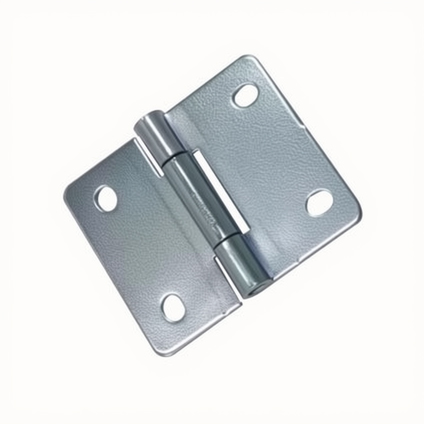
Sectional articulation fatigue and reliability of galvanised steel gate hinges
Galvanised steel gate hinges are engineered to withstand the demanding articulation cycles of sectional doors, providing both corrosion resistance and mechanical durability. Their performance under stress dispersion and fatigue is essential for maintaining the long-term reliability of modern sectional door assemblies.
Reliability of galvanised steel gate hinges in sectional door articulation
The mechanical articulation of sectional gates imposes significant demands on hinge hardware, especially when considering the cyclical stresses encountered throughout operational lifecycles. Galvanised steel gate hinges are frequently specified in environments where resistance to corrosion and sustained structural reliability are paramount. For door system designers, the focus is not only on hinge selection for basic function but also on the hinge’s ability to manage stress dispersion and mitigate fatigue failure at articulation points. This technical review examines the mechanical behavior of galvanised steel gate hinges under repeated sectional movement, with a focus on stress concentration, fatigue resistance, and the overall reliability of hinge articulation in sectional door assemblies.
In modern sectional door systems, hinges serve as the primary articulation interface, translating rotational motion while accommodating panel misalignments and dynamic loading. The use of galvanised steel as a hinge material introduces a dual advantage: the zinc coating provides a robust barrier against corrosive agents, while the underlying steel substrate delivers the necessary mechanical strength for load transfer. However, the real engineering challenge lies in ensuring that these hinges can repeatedly withstand the complex stress profiles generated by sectional articulation without succumbing to premature fatigue or localized failure.
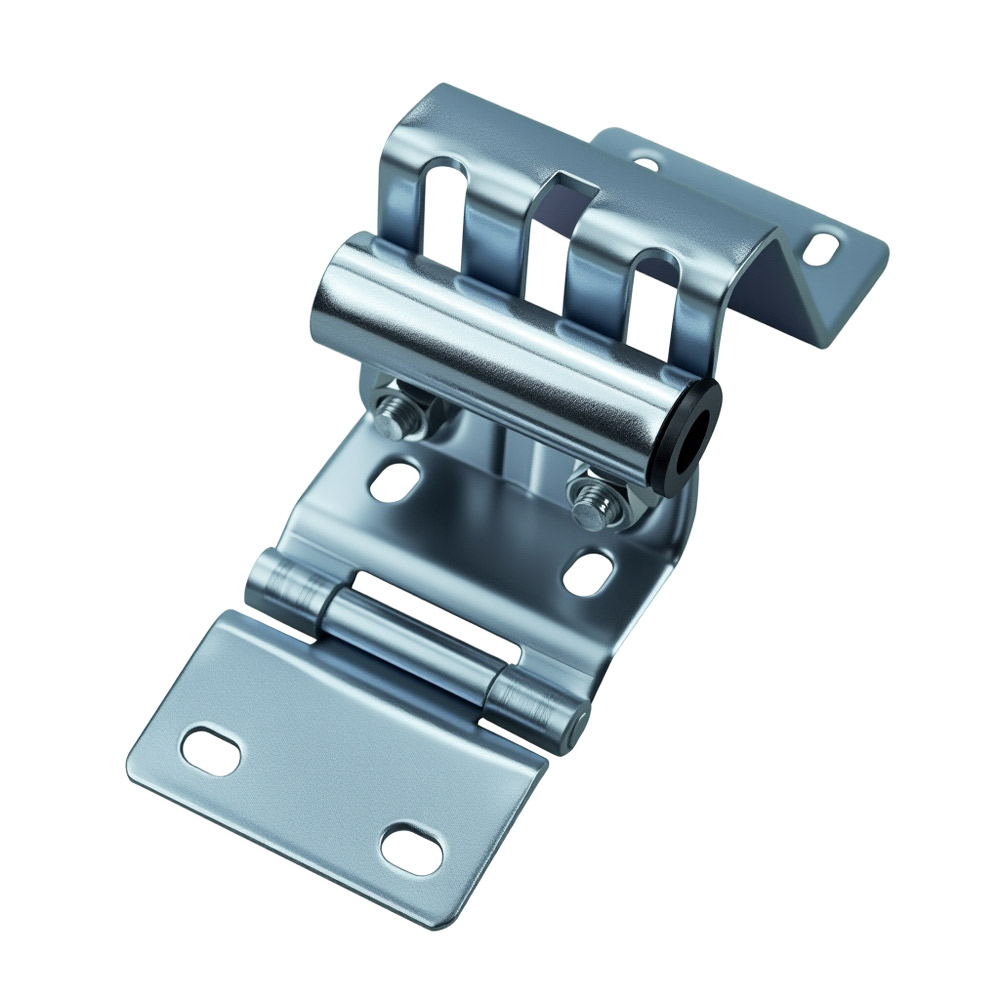
The reliability of galvanised steel gate hinges in sectional doors is fundamentally governed by their capacity to distribute and absorb articulation-induced stresses. Sectional doors, by design, require each hinge to act as a rotational fulcrum while simultaneously resisting out-of-plane forces and vibration. The articulation process generates alternating bending moments and shear forces at the hinge knuckle, particularly where the hinge leaf interfaces with the sectional panel. This region is highly susceptible to stress concentration, a core pain point for door system designers seeking to avoid fatigue-induced cracking or deformation.
Galvanised steel, with its moderate yield strength and ductility, is well-suited for hinge applications where repeated movement is expected. The zinc galvanisation layer, typically applied via hot-dip or electroplating, not only imparts corrosion resistance but also acts as a sacrificial layer, delaying the onset of substrate degradation. However, the presence of the zinc layer can introduce microstructural changes at the steel interface, potentially affecting the hinge’s fatigue properties. It is therefore critical to evaluate the thickness and uniformity of the galvanised coating, as non-uniform layers may exacerbate stress risers at the hinge articulation points.
Evaluation of fatigue efficiency and stress mitigation in galvanised steel gate hinges
Articulation stress in sectional door hinges is not uniformly distributed. During operation, the hinge experiences peak stress at the outermost fibers of the knuckle radius and at the fastener interface with the gate leaf. Finite element analysis (FEA) reveals that under typical loading, stress concentration factors (SCFs) can exceed 2.5 at sharp transitions or poorly finished edges. The design of the hinge—specifically the radius of curvature at the knuckle, the fillet size, and the fastener hole placement—directly influences the magnitude and location of these SCFs. For optimal fatigue efficiency, hinge geometry should be refined to promote gradual stress flow and minimize abrupt section changes.
The durability of galvanised steel hinges is further influenced by the operational environment. Exposure to moisture, airborne particulates, and temperature fluctuations can accelerate both mechanical wear and corrosion, especially at articulation interfaces where the zinc coating may be abraded over time. In high-cycle applications, such as industrial or commercial sectional doors, the cumulative effect of micro-abrasion and cyclic loading can significantly reduce hinge service life if not accounted for in the design phase.
To address the core pain point of stress concentration and fatigue failure, door system designers must employ both material and geometric optimization strategies. Material selection should prioritize galvanised steel grades with high fatigue limits and good adhesion between the zinc layer and steel substrate. Geometric optimization involves increasing the knuckle radius, incorporating generous fillets, and avoiding sharp corners at the hinge-leaf interface. Additionally, the placement and sizing of fastener holes should be engineered to prevent excessive stress localization, especially in regions subjected to peak bending moments.
The evaluation of hinge reliability under real-world loading conditions requires a combination of analytical modeling and empirical testing. Analytical approaches, such as FEA, provide insight into stress distribution patterns and identify potential failure points. Empirical testing, including cyclic loading tests and salt spray corrosion tests, validates the hinge’s performance under simulated service environments. For door system designers, integrating these evaluation methods into the hinge selection and specification process is essential for ensuring long-term articulation reliability.
A key aspect of fatigue efficiency in galvanised steel gate hinges is the management of microstructural integrity at the articulation zone. Over time, repeated cyclic loading can induce microcrack formation at the steel-zinc interface, particularly if the coating process has introduced residual stresses or if the coating is excessively thick or thin. Metallographic analysis of failed hinges often reveals crack propagation paths originating at the interface between the galvanised layer and the base steel, underscoring the importance of process control during manufacturing.
In addition to material and geometric considerations, the installation and maintenance of galvanised steel gate hinges play a significant role in their operational reliability. Improper alignment during installation can introduce unintended torsional loads and exacerbate stress concentrations at the hinge knuckle. Regular inspection and lubrication of the articulation interface help to reduce frictional wear and delay the onset of fatigue failure, particularly in high-cycle environments.
The evaluation of hinge performance must also consider the interaction between the hinge and the sectional door panel. The rigidity of the panel, the spacing of hinges, and the method of attachment all influence the load path through the hinge assembly. Inadequate panel stiffness or improper hinge spacing can lead to uneven load distribution, increasing the likelihood of localized hinge failure. Door system designers should employ structural analysis to determine optimal hinge placement and ensure that the load is effectively shared among all hinges in the assembly.
For applications where articulation fatigue is a primary concern, advanced hinge designs may incorporate features such as self-lubricating bushings, increased leaf thickness, or reinforced knuckle sections. These modifications enhance the hinge’s ability to absorb and distribute articulation stresses, thereby extending service life. However, such enhancements must be balanced against the added weight and potential installation complexity, particularly in retrofitting scenarios.
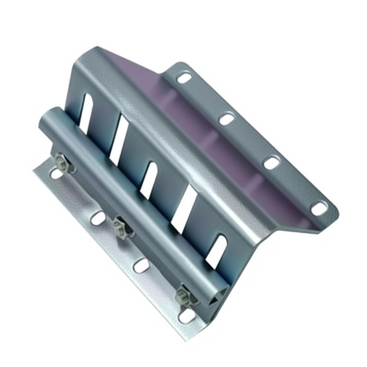
The long-term durability of galvanised steel gate hinges in sectional door systems is ultimately a function of material quality, geometric optimization, installation precision, and ongoing maintenance. From a structural fatigue efficiency perspective, the most effective approach involves a holistic evaluation of the hinge within the context of the entire door assembly. This includes consideration of articulation frequency, environmental exposure, and the mechanical properties of both the hinge and the connected panels.
To ensure that galvanised steel gate hinges deliver reliable performance in sectional articulation scenarios, door system designers should undertake a rigorous engineering review of hinge parameters. This includes verifying material specifications, coating thickness, geometric tolerances, and installation procedures against established engineering standards. Where possible, hinge selection should be validated through laboratory fatigue testing and field performance monitoring, with periodic inspections to identify early signs of wear or fatigue.
For technical validation, it is essential to verify all hinge parameters using engineering-grade safety checks. This process should encompass dimensional inspection, material certification, coating thickness measurement, and fatigue life assessment. Only through systematic engineering review and adherence to best practices in hinge design and maintenance can the structural integrity and articulation performance of galvanised steel gate hinges be assured in demanding sectional door applications.
For more details on engineering standards and product validation, refer to the Engineering Specifications and Load Test Reports provided by Baoteng.
Ensuring long-term performance of galvanised steel gate hinges
The reliability and durability of galvanised steel gate hinges in sectional door applications depend on a comprehensive understanding of articulation stress dispersion, fatigue mechanisms, and structural integration. By prioritizing stress concentration mitigation and fatigue efficiency in both design and evaluation phases, door system designers can significantly reduce the risk of hinge failure and ensure sustained articulation performance throughout the service life of the door system.
For technical support, installation guidance, or to request a free sample of galvanised steel gate hinges, please visit the Baoteng contact page.
 English
  Русский
  日本語
日本語  한국어
한국어  Français
  Deutsch
  العربية
  Português
  Español