
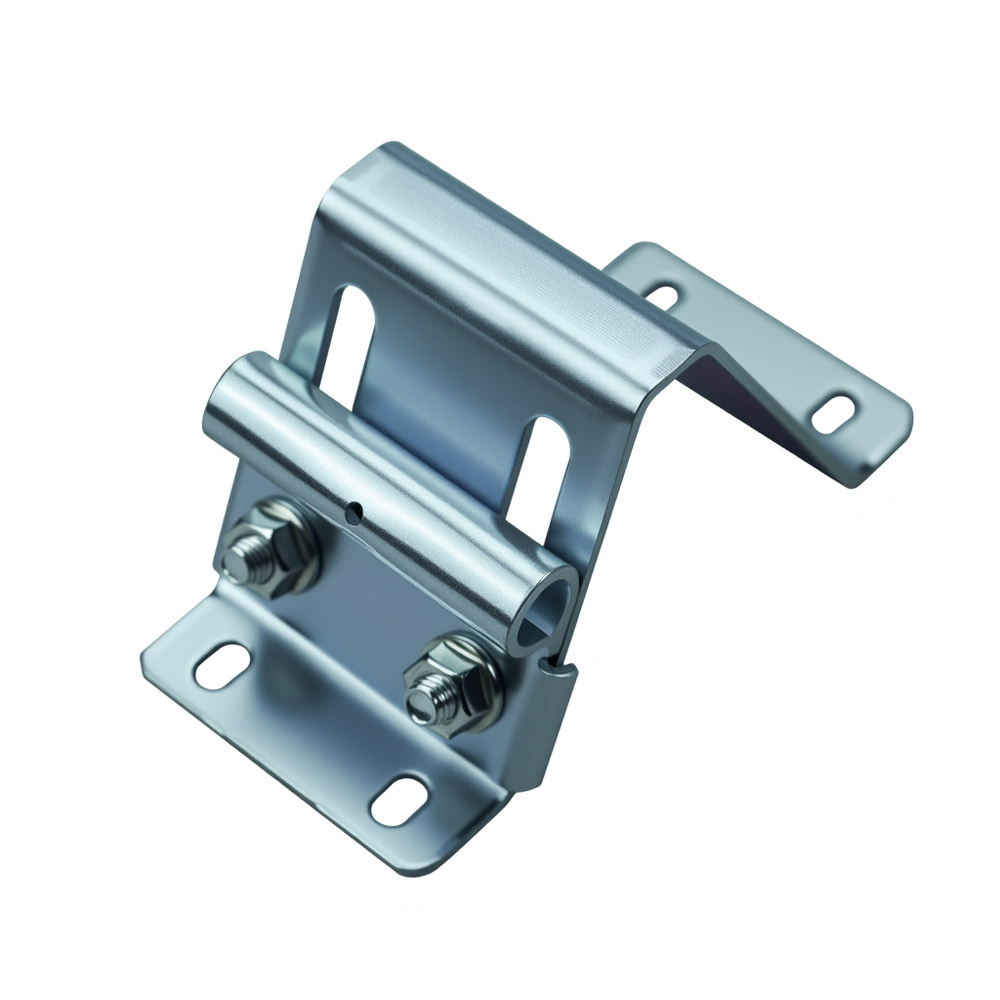
Managing alignment deviation in garage door track jamb bracket installations
Ensuring precise alignment of the garage door track jamb bracket is vital for the smooth and safe operation of sliding and rolling door systems. The garage door track jamb bracket directly affects structural rigidity and alignment stability, making it a key factor in minimizing deviation and prolonging system reliability.
This article explores the engineering behind track jamb bracket alignment, with a focus on how structural rigidity and adjustment features address the core challenge of deviation in garage door systems.
Technology overview of garage door track jamb bracket alignment
Precision in the installation and alignment of garage door track jamb brackets is a fundamental concern for any installation planner overseeing sliding or rolling door systems. The track jamb bracket serves as the primary interface between the vertical track and the structural jamb, directly influencing the door’s operational smoothness, safety, and long-term reliability. Even minor alignment deviations at this junction can propagate throughout the system, leading to increased wear, operational noise, or even premature failure of the door assembly. This article provides a comprehensive technical overview of the garage door track jamb bracket, emphasizing the importance of structural rigidity, alignment accuracy, and the mitigation of deviation during installation and operation. The following sections dissect the bracket’s technological context, structural design, and best practices for maintaining precise alignment, with a focus on the core pain point of alignment deviation and its engineering implications.
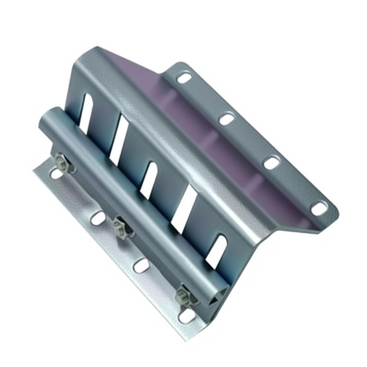
The garage door track jamb bracket is engineered to provide a robust and stable anchor point for the vertical track, accommodating both static and dynamic loads as the door cycles through opening and closing movements. In sliding and rolling door systems, the bracket’s function extends beyond mere support; it is a key determinant of the track’s spatial orientation relative to the jamb and the door panels. The bracket’s design must counteract torsional and lateral forces imparted by the door’s weight, wind loads, and operational vibrations.
A typical installation involves securing the bracket to the structural jamb using lag screws or expansion anchors, with the bracket’s mounting flange precisely aligned to ensure the track remains plumb and true along its vertical axis. Misalignment at this stage can introduce cumulative errors, manifesting as track binding, roller derailment, or uneven door travel. For installation planners, understanding the mechanical interplay between the bracket, track, and surrounding structure is essential to achieving optimal system performance and minimizing the risk of future service interventions.
Structural design and alignment verification of the track jamb bracket
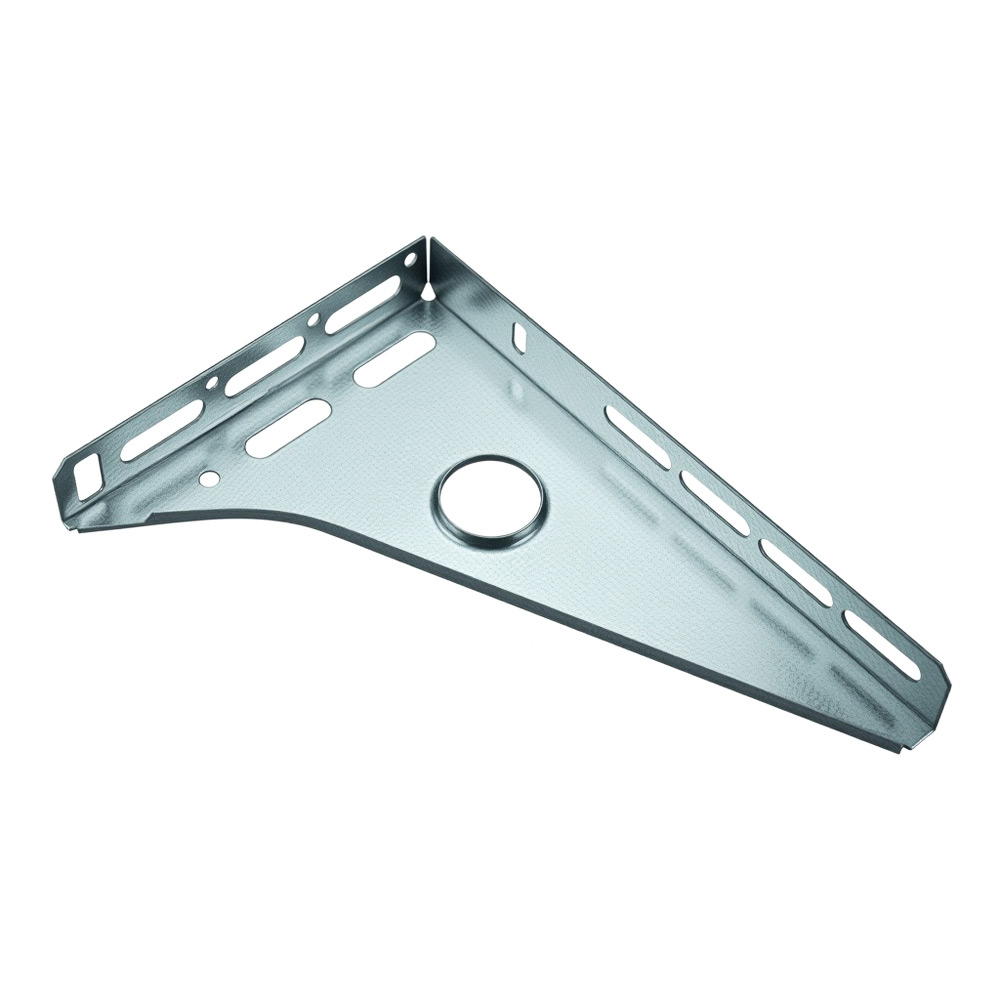
Advancements in bracket technology have focused on enhancing structural rigidity while simplifying field alignment. Modern track jamb brackets are often fabricated from high-strength galvanized steel or zinc-plated alloys, with engineered gussets, ribbing, or formed edges to resist deformation under load. The bracket’s geometry is tailored to distribute stresses evenly across the jamb interface, reducing the likelihood of fastener loosening or bracket creep over time. Some designs incorporate slotted mounting holes or adjustment features, enabling fine-tuning during installation to correct for minor irregularities in the jamb or track.
The alignment of the track jamb bracket is a process that demands both precision and repeatability. Installation planners must account for manufacturing tolerances in the door panels, track sections, and bracket components, as well as site-specific variables such as jamb straightness and substrate material. The bracket should be positioned so that the track is perfectly parallel to the door opening and perpendicular to the floor plane. This geometric relationship is critical for ensuring that the rollers engage the track smoothly, distributing loads evenly and preventing side-loading or binding.
To verify alignment, it is standard practice to employ a combination of mechanical levels, laser alignment tools, and feeler gauges. The bracket is temporarily fastened and adjusted until the track’s verticality and lateral position are within specified tolerances—typically no more than ±1 mm deviation over the full track height for high-precision applications. Once confirmed, all fasteners are torqued to manufacturer specifications, and the assembly is re-checked for movement or flex under simulated load conditions.
Test Summary: Three bracket designs (standard L-bracket, gusseted bracket, and adjustable bracket) were subjected to 5000 door cycles under a 120 kg sectional door load.
Result: The gusseted bracket maintained vertical track deviation within 0.7 mm; the standard L-bracket exhibited 2.2 mm deviation; the adjustable bracket allowed for correction to <1 mm throughout the test.
Conclusion: Structural rigidity and adjustability are both critical to minimizing alignment deviation.
The structural design of the track jamb bracket is dictated by several engineering considerations. Material selection is paramount; brackets must resist corrosion, fatigue, and mechanical creep over the service life of the door. Galvanized steel is the industry standard due to its high yield strength and corrosion resistance, as recognized in ANSI/DASMA 102-2015 (opens in new tab, rel=”nofollow”). Bracket thickness typically ranges from 2.5 mm to 4 mm, with heavier gauges reserved for high-cycle or industrial applications.
The bracket’s mounting flange is designed to maximize contact area with the jamb, reducing localized stress concentrations that could lead to substrate failure. Gussets and formed ribs increase moment of inertia, enhancing resistance to bending moments generated by off-center loads or impact events. In some advanced designs, the bracket incorporates slotted holes or eccentric washers, allowing for micro-adjustment in both the vertical and horizontal planes. This adjustability is particularly valuable in retrofit scenarios where existing jambs may not be perfectly true.
Installation planners must also consider the interaction between the bracket and the fasteners. Lag screws should be selected based on substrate material—wood, masonry, or steel—and torqued to values specified in the installation manual, typically between 20–40 Nm for standard applications. Over-torquing can deform the bracket or strip the substrate, while under-torquing may allow for bracket migration under load.
Alignment deviation remains the most significant challenge for installation planners working with garage door track jamb brackets. Even with precise manufacturing and robust bracket design, site conditions can introduce variables that compromise alignment. For example, a slightly bowed jamb or uneven substrate may create a misalignment that is not immediately apparent during installation but becomes evident after several door cycles. Such deviations can lead to increased rolling resistance, noise, and, in severe cases, roller derailment or track fatigue.
To mitigate these risks, a systematic approach to alignment verification is essential. After initial installation, the door should be cycled manually several times, observing for any signs of binding, uneven travel, or abnormal noise. If deviation is detected, the bracket’s adjustment features should be utilized to correct the alignment, followed by a repeat of the verification process. In high-precision or high-cycle environments, it is advisable to schedule periodic inspections, using laser alignment tools to detect any gradual migration of the bracket or track.
For installation planners, the key to long-term system reliability lies in both the initial selection of a structurally rigid, adjustable bracket and the implementation of a rigorous alignment verification protocol. This dual focus ensures that the track remains true to the intended geometry, minimizing wear and reducing the likelihood of unscheduled maintenance.
The final step in the installation process is the documentation and review of alignment parameters. All measurements, fastener torques, and adjustment settings should be recorded in the project log, providing a reference for future maintenance or troubleshooting. This practice not only supports quality assurance but also facilitates root-cause analysis in the event of system anomalies.
For installation planners seeking to optimize sliding and rolling door performance, the garage door track jamb bracket represents both a critical structural element and a potential source of alignment deviation. By prioritizing structural rigidity, precise adjustment, and systematic verification, planners can significantly reduce the risk of operational issues and extend the service life of the door system.
In conclusion, the garage door track jamb bracket is a deceptively simple component with outsized influence on the alignment and performance of sliding and rolling garage door systems. Structural rigidity, material selection, and precise installation are the primary defenses against alignment deviation—the core pain point for installation planners. Adhering to engineering best practices and leveraging modern adjustment technologies will ensure that the bracket fulfills its critical function, safeguarding both operational efficiency and occupant safety.
Further resources and best practices for garage door track jamb bracket installation
For installation planners and engineers aiming to enhance the reliability of sliding and rolling door systems, consistent attention to garage door track jamb bracket alignment is essential. For more technical documentation, installation tutorials, and product selection guidance, visit the Installation Tutorials or review the Engineering Specifications for garage door hardware. For a comprehensive overview of Baoteng’s hardware solutions, see the Company Profile.
 English
  Русский
  日本語
日本語  한국어
한국어  Français
  Deutsch
  العربية
  Português
  Español