
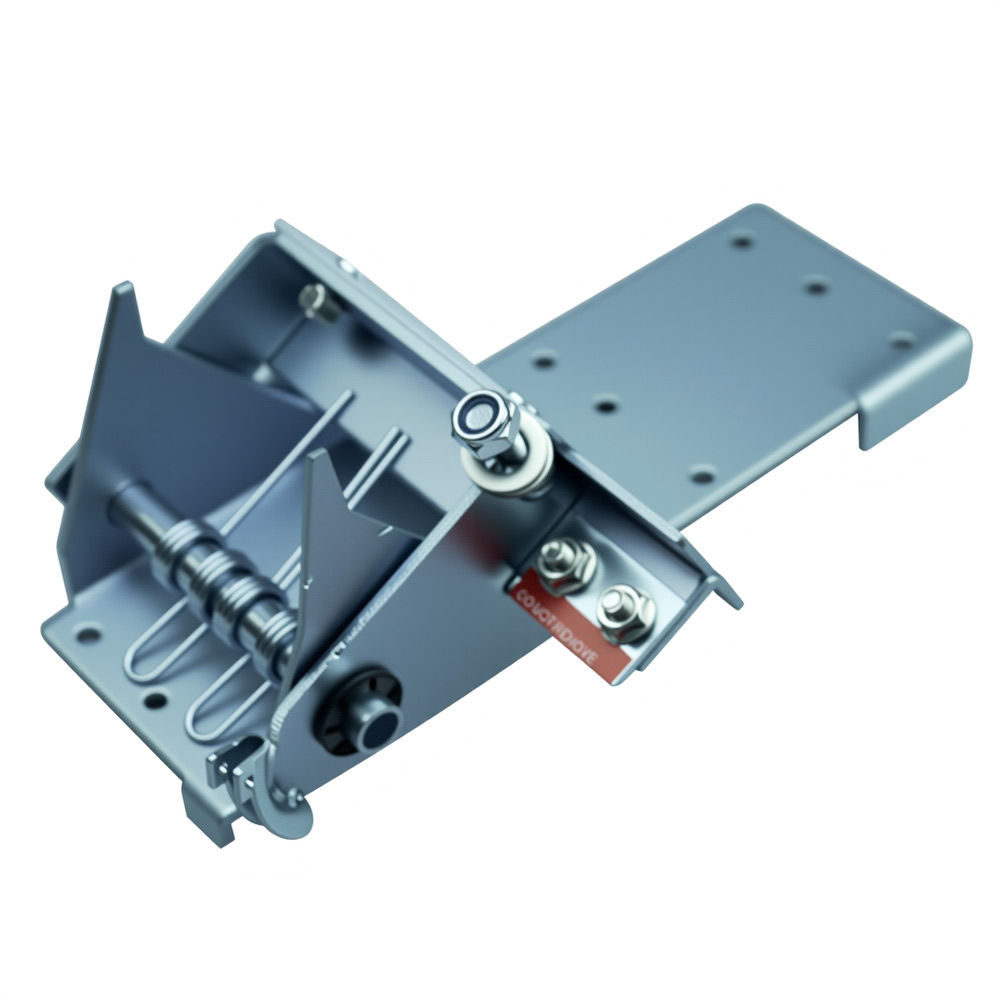
Sectional doors, widely used in industrial and commercial settings, depend on a series of articulated components to facilitate smooth, reliable operation. Among these, the adjustable top bracket is a critical element that connects the door’s upper panel to the track system, enabling the necessary pivoting motion as the door transitions from vertical to horizontal orientation. Its design must accommodate alignment adjustments while transferring significant mechanical loads throughout the door assembly. In environments characterized by high-cycle industrial usage—where doors may open and close thousands of times daily—the mechanical stresses imposed on these brackets become substantial, raising concerns about articulation fatigue and pin loosening. This analysis explores the mechanical behavior of adjustable top brackets under operational loads, examines prevalent failure mechanisms, and reviews relevant testing standards that validate their durability. The discussion integrates practical engineering considerations drawn from field experience and structural analysis to provide a comprehensive understanding of these components’ performance and reliability.
The adjustable top bracket functions as a pivotal interface between the door panel and the guiding track, accommodating minor installation tolerances and dynamic movement. Its primary mechanical role is to support the door’s weight while allowing rotational articulation around the pivot pin, which is essential for the door to follow the curved track path during opening and closing cycles.
The load environment experienced by the bracket is multifaceted. Vertically, the bracket must carry the static weight of the door panel, which can range from 20 to over 100 kilograms depending on panel size and material. This vertical load induces bending moments in the bracket arms and shear forces at the pivot pin. Additionally, dynamic loads arise from acceleration and deceleration during door movement, as well as from impacts or misalignments. These cyclic loads generate fluctuating stresses that concentrate around geometric discontinuities such as pin holes, welds, and sharp corners.
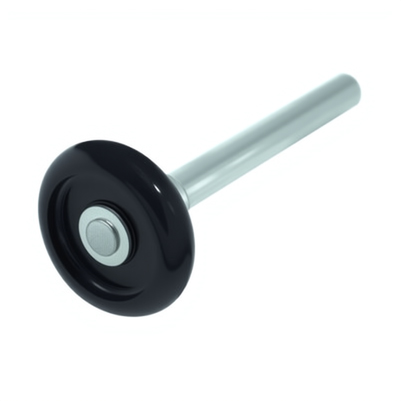
The articulation mechanism involves repeated bending of the bracket arms and rotation of the pivot pin within its housing. The adjustable feature allows fine positional tuning to maintain alignment, which is crucial to prevent uneven load distribution that would otherwise accelerate wear and fatigue damage. Material stiffness and bracket geometry directly influence the stress distribution and fatigue life. Typically, brackets are fabricated from high-strength carbon or alloy steels, often heat-treated to improve yield strength and fatigue resistance. Surface treatments such as galvanization or powder coating protect against corrosion, which can exacerbate fatigue crack initiation.
The pivot pin itself is commonly a hardened steel shaft designed to resist fretting and wear under millions of articulation cycles. Its diameter and surface finish are selected to minimize stress concentrations and ensure smooth rotation within bushings or bearings. Clearance between the pin and bracket components is carefully controlled to avoid binding, which would induce localized stress spikes.
In high-cycle industrial environments, the frequency of operation can exceed 5,000 cycles per day, translating to over 1.8 million cycles annually. Such a demanding duty cycle requires that the bracket design incorporate robust safety factors and fatigue-resistant features, as failure due to articulation fatigue or pin loosening can lead to operational downtime and safety hazards.
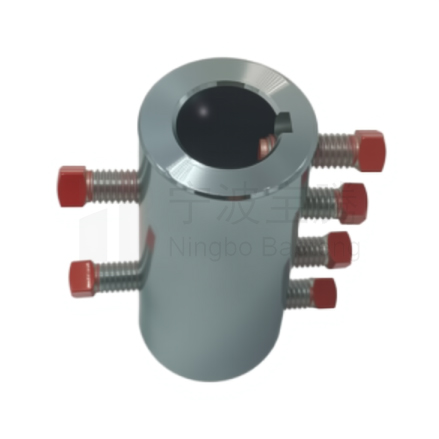
Articulation fatigue is the predominant failure mode for adjustable top brackets under high-cycle conditions. This manifests as progressive crack initiation and propagation at critical stress concentration sites, notably around the pivot pin holes, weld toes, and sharp transitions in the bracket arms. The cyclic bending stresses induce microstructural damage accumulation, which, if unchecked, culminates in sudden fracture and loss of structural integrity.
Pin loosening is another significant failure mechanism closely linked to fatigue. Vibrations and repeated articulation can cause fasteners or retaining clips securing the pivot pin to gradually loosen. This loosening increases the play between the pin and bracket, resulting in misalignment and elevated dynamic loads. The increased movement accelerates wear on the pin and bracket interface, further reducing fatigue life. In some cases, pin migration can lead to partial disengagement, posing a severe safety risk.
Secondary failure modes include corrosion-induced degradation and mechanical wear. In industrial environments where humidity, chemical vapors, or airborne contaminants are present, corrosion can initiate pitting on bracket surfaces. These pits serve as stress risers, significantly lowering the fatigue threshold and hastening crack initiation. Surface degradation also compromises the protective coatings, exposing the base metal to further attack.
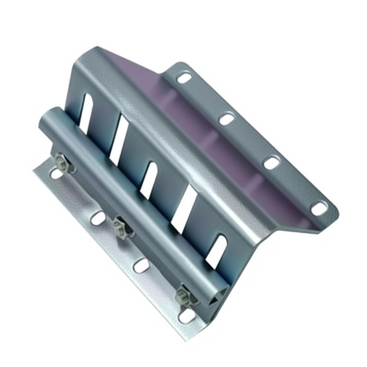
Wear of the pivot pin and bushing surfaces arises from inadequate lubrication or contamination ingress. Increased clearances due to wear cause misalignment and uneven load transfer, which magnify bending stresses and fatigue susceptibility. In extreme cases, wear can lead to seizure or binding, causing abrupt failure.
Mechanical deformation of bracket arms or mounting points may occur due to overloading, impact events, or improper installation. Such deformations alter the articulation geometry, increasing bending moments and stress concentrations. Deformed brackets may lose adjustability, preventing proper alignment and exacerbating fatigue damage.
Environmental conditions play a critical role in the fatigue life and structural performance of adjustable top brackets. Industrial settings often expose components to temperature extremes, chemical exposure, dust, and moisture. Elevated temperatures can reduce material yield strength and accelerate fatigue crack growth rates. Moisture promotes corrosion, especially if protective coatings are compromised.
Abrasive particles, such as dust or metal shavings, can infiltrate articulating surfaces, increasing friction and wear rates. Chemical vapors may degrade lubrication films or attack metal surfaces, further undermining fatigue resistance.
The combined effect of mechanical fatigue and environmental stressors creates a complex degradation mechanism. Protective coatings and corrosion-resistant alloys mitigate some risks, but regular maintenance—including cleaning, lubrication, and inspection—is essential to sustain bracket performance in harsh industrial environments.
Ensuring the durability of adjustable top brackets under high-cycle industrial usage requires rigorous validation through standardized testing. Fatigue cycle testing, as specified in ASTM F1140, provides a controlled method to simulate the articulation cycles experienced during door operation. This test applies repeated bending and rotational loads to the bracket assembly, measuring the number of cycles to failure and identifying predominant failure modes such as articulation fatigue and pin loosening. The test parameters replicate realistic load magnitudes and frequencies, enabling quantitative assessment of fatigue life.
ANSI/DASMA standards for sectional garage door hardware establish performance requirements including load capacity, articulation durability, and safety factors. Compliance with these standards ensures that bracket designs meet minimum thresholds for mechanical integrity and operational reliability in both residential and commercial applications.
UL 325 safety standards address door operator and hardware requirements, emphasizing mechanical endurance and failure prevention. Testing under UL protocols includes mechanical cycling, environmental exposure, and functional safety assessments, verifying that brackets maintain structural integrity under expected service conditions.
Incorporating these standards into the design and validation process allows engineers to benchmark bracket performance, optimize material selection, and refine geometric features to mitigate fatigue risks. Testing in simulated high-cycle industrial environments provides critical data to predict maintenance intervals and service life, supporting reliability-centered maintenance strategies.
Integrating adjustable top brackets into sectional door systems demands careful attention to articulation mechanics, load paths, and environmental conditions. The bracket must be compatible with panel dimensions, track curvature, and roller assemblies to ensure smooth, consistent motion. Its adjustability compensates for installation tolerances and structural shifts over time, maintaining alignment and minimizing stress concentrations.
Designers must consider the cumulative effect of articulation cycles when specifying materials and geometries, especially in high-cycle industrial contexts. Selecting hardened pivot pins with optimized diameters and surface finishes enhances resistance to fretting and fatigue. Robust mounting hardware and retaining mechanisms prevent pin loosening, a common precursor to failure.
Incorporating self-lubricating bushings or providing accessible lubrication points facilitates maintenance, reducing wear and extending component life. Load distribution analysis should encompass the interaction between the adjustable top bracket, rollers, hinges, and track system to prevent localized overloading. Finite element analysis is a valuable tool for simulating stress distributions under dynamic loading, identifying fatigue hotspots, and guiding design improvements.
Maintenance protocols are critical for sustaining performance. Regular inspection for pin tightness, corrosion, wear, and deformation allows early detection of fatigue-related issues. Timely replacement of worn or damaged brackets prevents catastrophic failure and operational downtime. In retrofit scenarios, upgrading to brackets with enhanced fatigue resistance and corrosion protection can significantly improve system reliability.
Adjustable top brackets are essential components in the articulation and load management of sectional doors, particularly under the demanding conditions of high-cycle industrial usage. Their structural behavior under combined static and dynamic loads, coupled with environmental exposure, dictates fatigue life and failure risk. Understanding failure modes such as articulation fatigue and pin loosening is critical for designing brackets that withstand millions of operational cycles. Validation through fatigue cycle testing per ASTM F1140 and adherence to ANSI and UL standards ensures mechanical integrity and safety. By integrating robust materials, precise geometry, and maintenance-friendly features, engineering teams can enhance the reliability of garage door adjustable top brackets, ultimately extending service life and reducing failure-related downtime.
This analysis was reviewed by a Senior Garage Door Hardware Engineer with practical field experience under high-cycle industrial usage operating conditions, with validation focused on articulation fatigue / pin loosening in accordance with fatigue cycle test compliance requirements.
In practical field applications, engineers treating garage door adjustable top bracket as a safety-critical interface typically combine finite-life fatigue predictions, scheduled inspection intervals, and conformance to fatigue cycle test plus relevant ANSI, ASTM, and UL requirements to keep risk within acceptable limits under high-cycle industrial usage loading profiles.

 English
  Русский
  日本語
日本語  한국어
한국어  Français
  Deutsch
  العربية
  Português
  Español