
Garage Door Spring Bumper: Detailed Explanation
Reference Standard: Relevant material and performance testing standards include ASTM A90/A90M for zinc coating weight on galvanized steel and ISO 9227 corrosion testing in artificial atmospheres.
Short Answer
For buyers comparing a garage door spring bumper, the most useful question is not whether the part looks strong on the first day. The better question is whether the bumper can keep a predictable stop feel after hundreds or thousands of closing cycles, especially when the door system is exposed to vibration, humidity, rainwater carried into the garage, temperature swings, and repeated metal contact. A 2.5mm galvanized spring bumper sits in a small mechanical zone, but the behavior of that small zone can change closing noise, rebound feel, fastener stability, and long-term service confidence.
The catalog data is limited but meaningful: the listed product belongs to the Spring series, includes Spring Bumper and Small Spring Bumper, uses 2.5mm thickness, and has a galvanized finish. Those facts create a realistic engineering frame. Thickness relates to resistance against deformation under repeated contact. Galvanizing relates to surface protection when the part is exposed to moisture and oxygen. The spring-bumper function relates to controlled impact absorption, not decorative hardware.
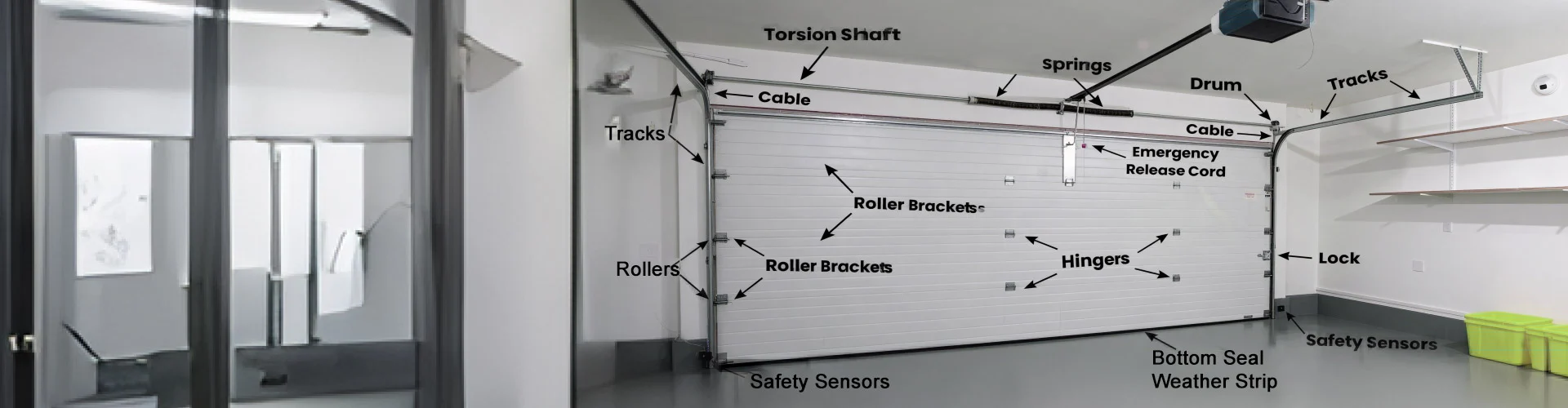
Garage Door Pusher Spring Impact History Explained
A garage door pusher spring should be read as an impact-history component. Every closing event adds a small mechanical memory to the part. At first, the spring bumper receives the door-end load, compresses or flexes within its designed range, and returns with little visible change. Over time, the same movement produces a different mechanical trace: the contact point may polish the galvanized surface, the edge area may show wear, the rebound distance may become less consistent, and the closing sound may shift from a controlled stop to a sharper metallic note.
The available data point, 2.5mm thickness, matters because thickness influences local stiffness. A thinner or inconsistent contact part may flex too easily or deform around the fastening area. A thicker part can resist bending better, but thickness alone does not solve every problem. The spring bumper still depends on hole position, edge finish, surface condition, and correct fit inside the door hardware assembly. In practical purchasing terms, the part should not be described only as “galvanized hardware.” It should be treated as a repeated-contact part with its own fatigue profile.
A useful edge-scenario model is a damp residential garage that opens and closes several times a day while receiving road splash, cold air, and occasional impact misalignment. During the early stage, the spring bumper still returns normally, and wear is mostly visual. During the middle stage, rebound distance can become slightly less consistent because microscopic surface damage and localized stress begin to concentrate near the contact area. During the extreme stage, repeated force may cause deformation, coating damage, and noise amplification. This model does not require invented laboratory numbers; it follows basic cyclic-load and corrosion logic for galvanized metal hardware.
A cross-dimensional comparison also helps buyers avoid shallow judgment. Compare two parts that look similar: one has stable 2.5mm thickness, clean edges, consistent hole placement, and full galvanized coverage; the other has minor edge burrs, uneven surface finish, and loose hole tolerance. In a single hand inspection, both may seem acceptable. Under closing impact, the second part is more likely to create uneven load transfer, scrape its own protective surface, and allow slight movement around the fastener. That small difference becomes a service-life difference.
For product sourcing, the garage door hardware supply context should be connected with function, not just product category. A spring bumper is a small component, but its real value is measured after repeated closing impact.
Rebound Drift, Stop Contact, and Closing Noise in Garage Door Spring Bumper Applications
A field problem in a spring bumper rarely appears as only one symptom. It often separates into three signals: rebound drift, stop-contact change, and closing noise. Rebound drift means the part no longer returns with the same feel or travel response. Stop-contact change means the door does not meet the bumper in the same small area each time. Closing noise means impact energy is no longer being moderated smoothly. These signals may appear at different times, which is why buyers should not wait for complete visible failure before reviewing the part.
The root cause is the combination of cyclic compression, local impact, and surface contact. Metal under repeated loading can experience fatigue accumulation. If the load path is not centered, stress becomes concentrated near bends, holes, or contact edges. If the galvanized surface is scratched, moisture and oxygen may reach the base metal and increase corrosion risk. If the hole position or installed fit is slightly off, the bumper may receive impact at an angle rather than across its intended contact face.
An extreme scenario can be modeled as a cold morning start followed by repeated door operation. At low temperature, mechanical systems may feel less forgiving because lubricants, seals, and contact surfaces can behave differently. The spring bumper receives impact while the surrounding system may transmit more vibration. In the initial phase, the bumper absorbs the stop force normally. In the middle phase, a slight offset in contact may create a brighter sound. In the high-stress phase, localized wear can change the contact signature even if the part has not broken.
A comparison test case would place a correctly seated 2.5mm galvanized spring bumper beside an otherwise similar part with minor looseness at the mounting area. The first part should show more repeatable contact because the load enters the bumper in a more controlled way. The second may make a louder closing sound because impact energy becomes partly converted into vibration at the loose interface. The key point is that noise is not only an acoustic issue; it can be a mechanical warning sign.
KEY TAKEAWAYS
- A sharper closing sound may appear before visible deformation.
- Rebound distance inconsistency can indicate cyclic fatigue or contact misalignment.
- Surface polishing near the impact zone may signal repeated off-center contact.
Galvanized Surface Wear and Spring Bumper Service Life
Galvanized finish is valuable because zinc provides sacrificial protection for steel. In practical garage door hardware, however, the protective layer is not a magic shield. Its effectiveness depends on surface continuity, edge condition, contact wear, and how often the part is scratched during operation or installation. A spring bumper faces a tougher surface-wear conversation than many passive brackets because it experiences repeated contact at a concentrated area.
The most important service-life issue is the transition from protected surface to exposed metal risk. When the galvanized layer remains intact, the part has a stronger defense against ordinary humidity and oxygen exposure. When sharp burrs, installation scratches, or repeated rubbing damage the surface, water can reach vulnerable areas. In a garage or industrial door environment, moisture may come from rainwater, vehicle runoff, condensation, or seasonal air changes. The corrosion process then becomes more likely around edges, holes, and worn contact zones.
At a microscopic level, repeated impact can create surface flattening, tiny scratches, and local stress concentration. If the bumper is misaligned, one corner may become the main impact receiver. That corner can lose surface protection faster than the rest of the component. This is why a buyer should not evaluate galvanizing only by a general visual shine. The inspection should focus on the zones most likely to receive rubbing and impact.
A pressure-time model can be divided into three stages. In the early stage, the galvanized surface shows no functional issue, even if light contact marks appear. In the middle stage, contact marks become directional, and edge areas may show coating disturbance. In the extreme stage, corrosion may start where mechanical wear and moisture exposure meet. The part may still remain installed, but closing feel and noise can become less predictable.
A cross-test comparison can be made between two shipment samples: one with clean deburred edges and consistent galvanizing, the other with small sharp edges near holes or cut zones. The second sample has a higher chance of damaging adjacent contact surfaces or its own coating during assembly. This does not make burr quality the whole article topic; it simply shows that surface protection is linked to manufacturing detail. For spring bumper buyers, galvanizing should be discussed together with edges, impact contact, and inspection discipline.
Factory Validation for Garage Door Spring Bumper Orders
Factory validation for spring bumper orders should follow a sequence. The first layer is dimensional control. The second layer is surface and edge evaluation. The third layer is rebound or compression-function review. The fourth layer is assembly fit. The final layer is packing protection. This order matters because a good surface finish cannot compensate for wrong dimensions, and a correct nominal thickness cannot compensate for damaged coating or poor fit.
Solution 1: Thickness and dimensional confirmation
Execution Protocol: Inspect sample and batch parts for 2.5mm thickness, external dimensions, bend profile, and hole placement before functional review. The goal is not only to confirm one catalog number but to identify variation that could change contact behavior after installation. Measurements should be taken across multiple samples instead of relying on a single reference piece.
Expected Material Evolution: When thickness and dimensions remain consistent, impact force enters the bumper in a more predictable path. The part is less likely to create local bending stress around one small area. This improves the chance that rebound behavior remains stable through repeated operation.
Hidden Cost and Side-Effect Control: Over-inspection can slow shipment preparation, but under-inspection creates higher risk during installation. The practical balance is to define inspection points for thickness, hole location, and visible deformation, then apply them consistently to each batch.
Solution 2: Galvanized surface and edge inspection
Execution Protocol: Inspect the galvanized finish under good light, with special attention to edges, punched zones, bends, and expected contact points. The check should look for scratches, bare spots, heavy burrs, and coating disturbance.
Expected Material Evolution: A continuous galvanized layer helps delay corrosion when the part is exposed to garage moisture, oxygen, and temperature cycling. Clean edges also reduce the chance of self-scratching during handling and assembly.
Hidden Cost and Side-Effect Control: Rejecting every small cosmetic mark may be unrealistic for industrial hardware. The inspection should separate minor appearance variation from functional coating damage at contact or fastening zones.
Solution 3: Compression and rebound function check
Execution Protocol: Use sample testing to confirm that the spring bumper returns predictably after controlled contact or compression. The test should focus on repeatability, abnormal sound, visible deformation, and contact stability.
Expected Material Evolution: A part that returns consistently under repeated sample loading is less likely to show early rebound drift in use. The test helps reveal whether shape, thickness, and fastening design work together.
Hidden Cost and Side-Effect Control: A simple shop-floor check is not a full fatigue laboratory test. It should be used as a practical shipment screen, while high-volume or high-risk orders may require more formal mechanical review.
Solution 4: Assembly fit and packing protection
Execution Protocol: Verify that the spring bumper fits with the intended garage or industrial door hardware interface, then protect the galvanized surface during packing. Packing should reduce rubbing between metal parts during transport.
Expected Material Evolution: Good fit reduces off-center impact and fastener movement. Proper packing keeps the galvanized surface from being scratched before the buyer even starts installation.
Hidden Cost and Side-Effect Control: More protective packing can increase packaging volume. The cost should be judged against the risk of surface damage, customer complaints, and installation delays.
| Validation Variable | Inspection Focus | Expected Performance Signal | Practical Acceptance Logic |
|---|---|---|---|
| Thickness | 2.5mm part confirmation | More predictable local stiffness | Match stated product data and batch consistency |
| Hole Position | Fastener alignment | Reduced looseness and angled impact | Check against sample or drawing requirement |
| Galvanized Finish | Surface continuity | Lower corrosion exposure risk | No functional coating damage at key zones |
| Edge Condition | Burr and sharp edge review | Lower scratch and assembly risk | Edges should not damage mating surfaces |
| Rebound Function | Compression return behavior | Stable closing feel | No abnormal deformation in sample check |
| Packing | Surface protection in transit | Fewer pre-installation scratches | Prevent metal-to-metal abrasion |
PRO-TIP / CHECKLIST
- Confirm the product identity as Spring Bumper or Small Spring Bumper before quoting.
- Verify the stated 2.5mm thickness during sample approval.
- Inspect the galvanized surface at bends, edges, holes, and contact areas.
- Check for burrs that may scratch the coating or affect seating.
- Test rebound behavior with repeated controlled contact.
- Confirm assembly fit before bulk shipment.
- Review packing to prevent galvanized surface abrasion during transport.
- Record inspection findings so later orders can repeat the same baseline.
Garage Door Spring Bumper Detailed Explanation for Procurement Teams
A procurement team should treat this component as a lifecycle-risk item, not a low-value accessory. The visible catalog specification is simple, but the usage environment is mechanically active. A spring bumper can be installed in a door system that sees daily opening, closing, vibration, small alignment changes, and occasional moisture exposure. That means a purchasing decision based only on price or appearance may miss the true cost driver: repeatability after operation.
The best procurement file should include product name, thickness, finish, inspection steps, sample approval images, and packing expectations. For this product, the real data baseline is Spring Bumper / Small Spring Bumper, 2.5mm thickness, and galvanized finish. Around that baseline, buyers can request clear inspection proof: dimension check, hole position check, galvanized surface review, burr and edge review, compression or rebound function check, assembly fit confirmation, corrosion-resistance sampling where relevant, and packing verification.
A useful comparison is between buying a spring bumper as a replacement item and buying it as a repeat-order industrial component. Replacement buying may focus on whether the part can fit a single door. Industrial sourcing must focus on whether many parts behave similarly across shipments. That is where factory validation becomes more important than promotional description.
The main risk is not instant failure. The more common risk is small functional drift: a little more noise, a little less rebound consistency, a little more surface wear, or a little more installation looseness. Those changes are easy to ignore at first, but they explain why a small spring bumper can affect user experience and maintenance confidence in a garage door system.
Frequently Asked Questions (FAQ)
How to replace garage door spring?
Replacing a garage door spring can be dangerous because torsion and extension springs may store high energy. A spring bumper is a different component from the main lifting spring. For main spring replacement, use trained service personnel and follow the door system manufacturer’s safety instructions.
How to manually close garage door?
Disconnect the opener only when the door is stable and safe to move. Lower the door slowly and avoid placing hands near hinges, rollers, springs, or bumper contact zones. If the door does not close smoothly, inspect hardware alignment and stop-contact components before repeated operation.
Do garage door openers have batteries?
Some garage door openers have backup batteries, while others do not. The opener battery does not replace mechanical hardware checks. Even with powered operation, parts such as spring bumpers, stops, tracks, and brackets still influence closing impact and noise behavior.
How do you reset garage door keypad?
Keypad reset steps depend on the opener brand and model. This task is electrical and programming-related, not directly related to a spring bumper. After keypad programming, still observe whether the door closes smoothly and whether end-contact noise changes during operation.
How to program Chamberlain garage door opener?
Most Chamberlain openers use a learn button and a timed pairing sequence. Follow the official model manual for the correct process. Programming controls the opener signal, while mechanical components such as spring bumpers influence the physical stop feel after the opener activates the door.
 English
  Русский
  日本語
日本語  한국어
한국어  Français
  Deutsch
  العربية
  Português
  Español