
Shaft Key Transformation for Quote-Safe Procurement
Reference Standard: Relevant dimensional inspection and material verification practices may be aligned with general mechanical key standards such as ANSI B17.1 key and keyseat practice and material testing references such as ASTM International mechanical testing standards, when the buyer requests formal validation.
Short Answer
When A Small Shaft Key Becomes The Last Unverified Part Before Door Movement
The most useful transformation in evaluating shaft keys is not to treat the part as a loose commodity, but to treat it as the last small component that must be verified before a rotating assembly can be released. In the available catalog data, the confirmed product identity is BT-SH604 Shaft Key, the confirmed size is 6.356.3575mm, and the stated application is for shaft. That is a narrow but important factual base. It is enough to define the part as a shaft-related key, but it is not enough to claim a material grade, hardness level, coating system, or rated torque capacity.
In a garage door hardware environment, a shaft key is often packed and checked near larger components: shafts, couplers, drums, brackets, rollers, and other metal fittings. Because it is physically small, it can become the final overlooked item in a shipment. The procurement risk is not only whether the part can transmit torque. The first operational risk appears earlier: whether the correct key is present, correctly named, correctly counted, and correctly associated with the matching shaft-related order. A missing or unidentified key can delay installation even if all major assemblies are present.
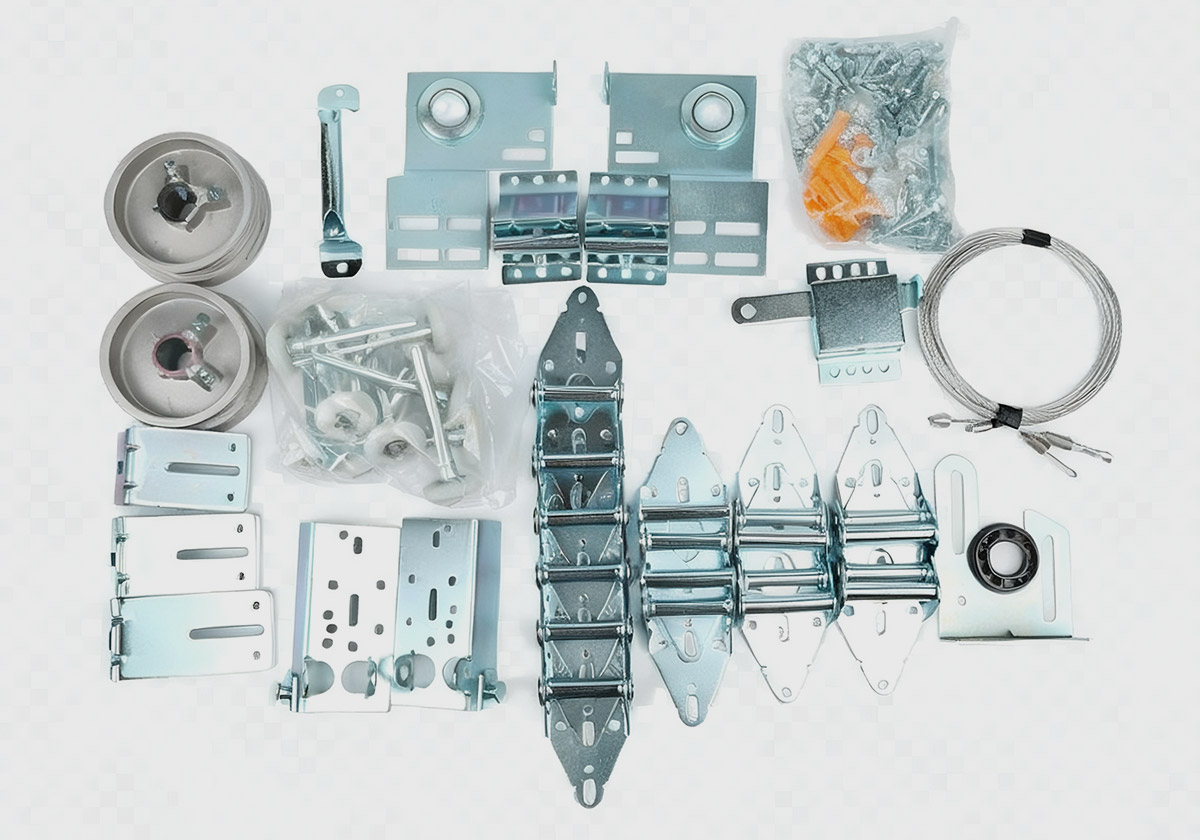
A practical edge-condition model helps explain why this small-part check matters. Imagine a repair kit that contains many visible metal parts and one small rectangular key. During the early stage, the kit may pass a visual count because the larger items dominate the inspection. During the middle stage, the installer begins organizing the shaft-side components and notices that a key is present but not clearly identified. During the limit stage, the project pauses because the small part cannot be confidently matched to the shaft requirement. No mechanical failure has happened yet, but the supply chain has already failed at the evidence level.
A cross-dimensional comparison makes the issue clearer. A large bracket or shaft can often be identified by shape, length, hole pattern, or packaging space. A 6.356.3575mm shaft key requires a more controlled label strategy because it can visually resemble other small straight metal pieces. The difference is not about visual complexity; it is about inspection visibility. Larger parts create obvious physical presence. Small rectangular parts require deliberate naming, count control, and job-order association.
For engineers and buyers, the first evidence checkpoint should be simple: product code, size, use, and order context must agree before movement-related components are released. A safe shipment record should therefore show BT-SH604, 6.356.3575mm, and for shaft together, not scattered across separate notes. If the part is included in a broader hardware set, the packing list should not rely on a generic name like “key” without dimensional support.
Edge-condition comparison:
Standard packing review: confirms item count and rough part type.
Quote-safe packing review: confirms item count, product code, dimensional identity, shaft-use context, and buyer drawing linkage if available.
The second method does not invent new performance data; it simply makes the known catalog facts visible at the release point.
KEY TAKEAWAYS
- A shaft key can delay installation before any mechanical load is applied if its identity is not visible in the shipment record.
- The confirmed evidence layer should stay anchored to BT-SH604, 6.356.3575mm, and for shaft.
- Missing material, hardness, and finish data should trigger quotation questions, not assumed specifications.
The Inventory Question: Can One 6.356.3575mm Key Be Mistaken For Another Small Metal Part?
The keyword shaft keys often leads buyers toward fit and torque discussions, but inventory recognition deserves its own technical section. A key measuring 6.356.3575mm is not large enough to be self-explanatory in a mixed hardware bin. It may be handled beside screws, pins, small brackets, inserts, or other straight metal pieces. The danger is not that a trained inspector cannot measure it. The danger is that routine warehouse movement may separate the physical part from the context that proves what it is.
A useful inventory logic starts with three levels. The first level is visual identity: the part is a straight shaft key. The second level is dimensional identity: the listed size is 6.356.3575mm. The third level is application identity: it is listed for shaft. When these levels stay together, the part can be traced more safely. When one level is missing, the item becomes harder to distinguish from generic small hardware.
The edge extreme model here is a batch-picking scenario. In the initial stage, the shaft key is placed into a small bag and counted correctly. In the middle stage, multiple bags of small metal parts are staged near the same work order or export carton. In the final stage, a label is damaged, abbreviated, or detached. The part may still be physically correct, but the receiving side cannot confirm it without remeasurement and cross-checking. In global B2B orders, that extra verification time can create more friction than the part price itself.
A cross-dimensional test case can compare three inventory methods:
| Inventory Method | Identification Basis | Risk Level | Better Use Case |
|---|---|---|---|
| Loose bin storage | Operator recognition | High | Internal sorting only, not export release |
| Bag with generic name | Part type only | Medium | Low-complexity kits with limited small parts |
| Bag with code and size | BT-SH604 plus 6.356.3575mm | Lower | Export cartons, repair kits, mixed hardware packages |
| Bag with code, size, and job reference | Product identity plus order context | Lowest | Project-based procurement or distributor replenishment |
This inventory view must not be confused with assembly validation. It does not claim that the part has been tested in a specific shaft or keyway. It only improves the probability that the correct small part reaches the correct physical context. That distinction matters because the catalog does not provide a full drawing, tolerance class, material certificate, or performance rating. The correct inventory method is therefore evidence-preserving, not performance-claiming.
A buyer can apply a simple receiving routine: open the kit, locate the small rectangular key, confirm the label, measure the approximate width and height, confirm the listed length, then match the product code to the purchase line. This process is not excessive for a small part. It is a defensive routine for any component that can stop assembly despite having low visual presence.
What The Catalog Does Not Say Is Also A Procurement Signal
The catalog-confirmed facts for the BT-SH604 Shaft Key are limited and should remain limited: BT-SH604 Shaft Key, 6.356.3575mm, and for shaft. The catalog does not confirm material grade, hardness, finish, coating, surface treatment, load rating, or dimensional tolerance. That absence is not a defect by itself. It is a procurement signal. It tells the buyer which questions must be asked before the part is used in a load-sensitive shaft arrangement.
The physical reason is straightforward. A shaft key transfers torque through contact between its side faces and the keyseat walls. If the material is too soft for the shaft and hub environment, it may develop pressure marks or deformation under repeated load. If it is too hard relative to adjacent components, it may contribute to localized wear elsewhere. If the finish is not suitable for the storage environment, surface condition may change before installation. These are general mechanical principles, not catalog-confirmed performance claims for this specific item.
A cautious extreme-environment model can be framed without inventing data. In the early stage, a shaft key with unknown material and finish may appear acceptable after basic visual inspection. In the middle stage, repeated handling, storage humidity, or vibration during transport may reveal whether the surface is stable or prone to visible marks. In the limit stage, if the part enters a shaft assembly without confirmed material or tolerance information, the buyer must absorb more uncertainty around long-term wear behavior. This model does not state that BT-SH604 will fail. It states that the missing evidence changes the procurement risk profile.
The correct response is not to fill the blanks with assumptions. A quote request should ask for the exact information needed by the buyer’s use case. If the part is for a standard replacement kit, the buyer may prioritize product code, size, packaging label, and quantity. If the part is for a more controlled shaft system, the buyer should request drawing confirmation, tolerance reference, material grade, hardness range, finish, and inspection method.
| Missing Catalog Field | Why It Matters | Safe Buyer Question | Claim Boundary |
|---|---|---|---|
| Material grade | Affects deformation and wear behavior | What material is supplied for BT-SH604? | Do not assume steel type |
| Hardness | Affects pressure marking and contact durability | Is a hardness range available? | Do not invent HRC or HV values |
| Finish or coating | Affects storage and surface condition | Is the part plain, plated, coated, or otherwise treated? | Do not claim corrosion resistance |
| Tolerance | Affects keyseat compatibility | Can it be supplied to buyer drawing or tolerance request? | Do not imply universal fit |
| Inspection method | Affects repeatability | How are width, height, length, and burrs checked? | Do not imply certified testing unless documented |
This section is where many SEO pages become unsafe. They convert general engineering knowledge into factory-specific claims. A better page separates confirmed facts from requested evidence. Readers gain more trust when the article says what is known, what is not known, and what must be verified before purchase.
From Single Part Listing To Quote-Safe Evidence Package
A quote-safe approach begins with the smallest confirmed data layer and expands outward. For BT-SH604, the minimum layer is: Shaft Key, 6.356.3575mm, for shaft. That should be treated as the seed data for quotation, not as the full technical specification. The next layer should ask what the buyer needs to make the part usable in a real order: quantity, drawing, material, tolerance, surface condition, packaging, label format, and whether certificates are required.
Solution 1: Build a product-code-first quotation line.
Execution Protocol: The quotation should list the item as BT-SH604 Shaft Key and keep the size 6.356.3575mm on the same line. Avoid splitting the model code into one field and the size into another note that can be lost during order transfer. If the item is included in a larger hardware package, the packing list should repeat the code and dimension in a small-parts section.
Expected material behavior: This solution does not change the physical material, but it reduces identity drift. The measurable improvement is administrative: fewer ambiguous line items, fewer receiving questions, and a clearer connection between catalog data and shipment content.
Hidden cost and prevention: The cost is extra labeling discipline. Prevent overcomplication by using a consistent name format rather than long internal nicknames.
Solution 2: Add dimension-based receiving inspection.
Execution Protocol: Receiving inspection should measure width, height, and length using calipers or micrometers suitable for the buyer’s required accuracy. The target reference remains 6.35mm width, 6.35mm height, and 75mm length from the catalog listing. Burrs, edge damage, visible rust, cracks, and heavy deformation should be checked before the part is released into a kit.
Expected material behavior: Dimensional checking does not prove material strength, but it helps control contact geometry. A shaft key that is visibly damaged or dimensionally inconsistent may concentrate load on a smaller contact area.
Hidden cost and prevention: Measuring every piece in a large batch may slow receiving work. A buyer can define sampling rules or inspect critical kits more intensively.
Solution 3: Convert unknown properties into written quotation questions.
Execution Protocol: The buyer should request material grade, hardness range, finish, tolerance, and whether the part can be produced according to a drawing. The request should avoid asking only “Is it good quality?” because that cannot be verified. A better request asks for measurable or documentable information.
Expected material behavior: Once material and hardness are known, buyers can compare expected contact behavior against shaft and hub requirements. Until then, the part should be treated as dimensionally identified but performance-unconfirmed.
Hidden cost and prevention: More questions can extend quotation time. Prevent delay by separating mandatory requirements from optional evidence.
Solution 4: Use packaging evidence to protect small-part visibility.
Execution Protocol: Each small bag, carton label, or kit checklist should identify the shaft key by code and size. A receiving photo or packing photo can be useful when the buyer handles repeat orders. If the part is included with a garage door hardware supply package, the label should not rely on a generic small-parts description.
Expected material behavior: Packaging does not improve strength, but it reduces handling confusion and limits unnecessary re-sorting. Less re-sorting also reduces avoidable scratches and surface handling marks.
Hidden cost and prevention: Extra packing photos or labels may add process time. Use them for export shipments, distributor kits, or orders with several visually similar small parts.
PRO-TIP / CHECKLIST
- Confirm the item name as BT-SH604 Shaft Key before quotation release.
- Keep 6.356.3575mm on the same line as the product code.
- Ask whether material grade and hardness information is available.
- Check whether the finish or coating is specified before storage-sensitive orders.
- Inspect width, height, length, burrs, cracks, rust, and pressure marks during receiving.
- Require clear small-bag labeling when the shaft key ships with mixed hardware.
- Do not convert general shaft key engineering knowledge into supplier-specific claims without documents.
Frequently Asked Questions (FAQ)
Is BT-SH604 confirmed as a shaft key?
Yes. The catalog identifies BT-SH604 as a Shaft Key with a listed size of 6.356.3575mm and the stated use for shaft. No additional material, hardness, finish, or load rating is confirmed in the available catalog data.
Is a 6.356.3575mm shaft key the same as a 1/4 inch shaft key?
The 6.35mm dimension is equivalent to 0.25 inch in nominal conversion, so buyers may describe it as a 1/4 inch shaft key in some markets. Final suitability still depends on drawing, tolerance, material, and the actual shaft and keyseat requirement.
What should be checked before ordering shaft keys in bulk?
Confirm the product code, size, intended shaft use, quantity, packaging label, material grade, hardness range, finish, tolerance, and inspection method. The catalog confirms only the BT-SH604 identity, 6.356.3575mm size, and shaft application.
Why should a small keyway key need a clear packing label?
A small keyway key can be visually confused with other compact metal parts in a mixed hardware order. A clear label protects the connection between product code, size, shaft-use context, and the buyer’s work order.
Does the catalog confirm corrosion resistance for BT-SH604?
No. The available catalog information does not confirm coating, finish, corrosion resistance, humidity testing, or salt-spray data for BT-SH604. Buyers needing storage or outdoor exposure evidence should request finish and material documentation separately.
Can the shaft key be judged only by size?
No. Size is the first identity layer, but it does not prove material strength, hardness, finish, tolerance, or long-term contact behavior. A quote-safe process should keep size visible while requesting missing evidence where the application requires it.
 English
  Русский
  日本語
日本語  한국어
한국어  Français
  Deutsch
  العربية
  Português
  Español