
A Hex Head Self Drilling Screw should be selected by application first, not by keyword alone. The term combines a hex-head configuration with a self-drilling fastening function, but that description does not establish the dimensions, thread geometry, point design, material, finish, installation limits, or compatibility required for a particular joint.
This sourcing guide is published by Ningbo Baoteng Co., Ltd., located at NO.6 Miaoqian Road ,Fangqiao Town,Fenghua ,NingboZheJiang Province, China. The company’s documented business context includes hardware accessories and OEM products associated with garage doors, industrial doors, commercial doors, and residential doors. This article is educational and does not represent verified evidence that Ningbo Baoteng offers this specific screw category.
Reference Standard: Relevant material, dimensional, fastening, and performance standards should be confirmed for the actual screw specification and application rather than assumed from the product keyword.
When a Hex Head Self Drilling Screw Fits the Application
The first sourcing decision is therefore category fit, not diameter, length, coating, or price.
A search phrase such as “hex head self drilling screw” contains two different kinds of information. Hex head describes part of the head configuration. Self drilling describes an intended fastening function associated with the screw point and installation process. Neither phrase, by itself, tells a buyer exactly how a particular screw is manufactured or whether it is suitable for a specific assembly.
That distinction matters because visually similar fasteners may belong to different functional categories. A Hex Head Wood Screw, for example, should not be treated as interchangeable merely because its head can look similar. Likewise, the phrase Hex Washer Head Screw introduces another head-related description that should not automatically be interpreted as equivalent to every hex-head product.
The practical starting question is:
What must this fastener physically connect, and what screw characteristics are actually required to make that joint?
A buyer should be able to describe the completed assembly before asking a supplier to recommend or confirm a screw. That description is usually more useful than sending only a generic search term.
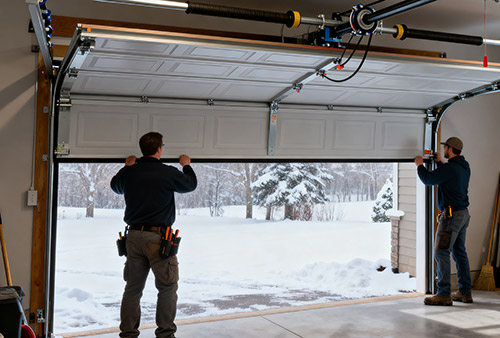
For sourcing teams working across door and hardware projects, the broader garage door hardware and OEM company context can also help establish the system in which a fastener request is being discussed. The screw itself, however, still needs its own verified specification.
Start With the Materials and Joint You Need to Fasten
The joined materials should be identified before a screw size or point configuration is selected.
Instead of writing an inquiry that simply says “need hex head self drilling screws,” define the physical parts on both sides of the joint. Depending on the project, those parts might be sheet components, brackets, structural profiles, panels, frames, accessory plates, or another combination. The important point is not to assume that one generic self-drilling screw specification will suit every material stack.
Record at least four aspects of the joint.
First, identify each component being joined. A supplier needs to understand whether the screw passes through one component and anchors into another, or whether several layers must be assembled together.
Second, describe the general material categories. The material information affects which screw construction should be evaluated, but the correct screw material, point geometry, thread form, or finish should still be confirmed from product-specific evidence.
Third, define the layer arrangement. A single-layer fastening condition is not the same sourcing problem as a multi-layer joint. Even when two applications use similar materials, differences in the number and arrangement of layers can change the screw characteristics that need to be checked.
Fourth, describe the purpose of the completed joint. State whether the screw is securing a panel, attaching hardware, fixing an accessory, joining a bracket, or serving another assembly function. This gives the supplier application context without forcing an unsupported performance assumption.
A useful sourcing record might therefore describe:
- the first component being penetrated;
- the component receiving the fastening;
- the general material of each component;
- the number and arrangement of layers;
- the joint location;
- the function of the connection;
- any existing drawing or sample available for comparison.
This method deliberately separates application facts from screw specifications. Buyers can usually document their own assembly with confidence. Product-specific dimensions and performance characteristics, on the other hand, should come from drawings, technical records, samples, or explicit supplier confirmation.
Signs That the Screw Category Needs More Verification
- The request identifies only a screw name but does not describe the components or materials being joined.
- A drawing shows multiple layers or surrounding hardware, but the inquiry contains no information about the final joint arrangement.
- The specification assumes a point type, thread form, coating, or material simply because the product is described as self drilling.
The goal is not to turn every RFQ into an engineering report. It is to remove the ambiguities most likely to cause the wrong screw category to be evaluated.
Check Installation Access Before Choosing the Screw Category
Installation access is an important selection factor because a suitable fastener must also be practical to install in the intended location.
Begin by examining the space around the planned screw head. Ask whether the installation tool can approach the fastener in the required orientation without being obstructed by panels, brackets, tracks, frames, reinforcement, adjacent fasteners, or other components.
This is especially important when a drawing appears simple in two dimensions but the real assembly contains nearby hardware. A screw head may be visible on a drawing while still being difficult to reach after surrounding components have been installed.
Buyers should therefore describe installation conditions such as:
Tool approach. Is there a reasonably direct path to the intended screw location, or must installation take place close to another component?
Head clearance. Will the completed assembly have sufficient physical space around the head location for the selected screw configuration and installation method?
Assembly sequence. Is the screw installed before nearby components are added, or only after most of the system is already assembled?
Working side. Can the installer reach the fastening location from the intended side of the assembly?
Restricted areas. Are there channels, corners, recessed areas, narrow frames, or other geometric constraints that should be shown in a drawing or photograph?
These questions do not determine the correct drive, head dimensions, installation torque, drilling rate, or fastening capacity. Those are product- and application-specific details that require separate confirmation. Their purpose is to establish whether the general screw configuration remains practical in the real assembly.
Installation access also helps buyers avoid a common sourcing mistake: choosing a screw from a catalog description first and attempting to make the assembly accommodate it afterward.
A more reliable sequence is:
assembly geometry → access conditions → screw category → product specification → supplier confirmation
That sequence keeps the physical application at the center of the decision.
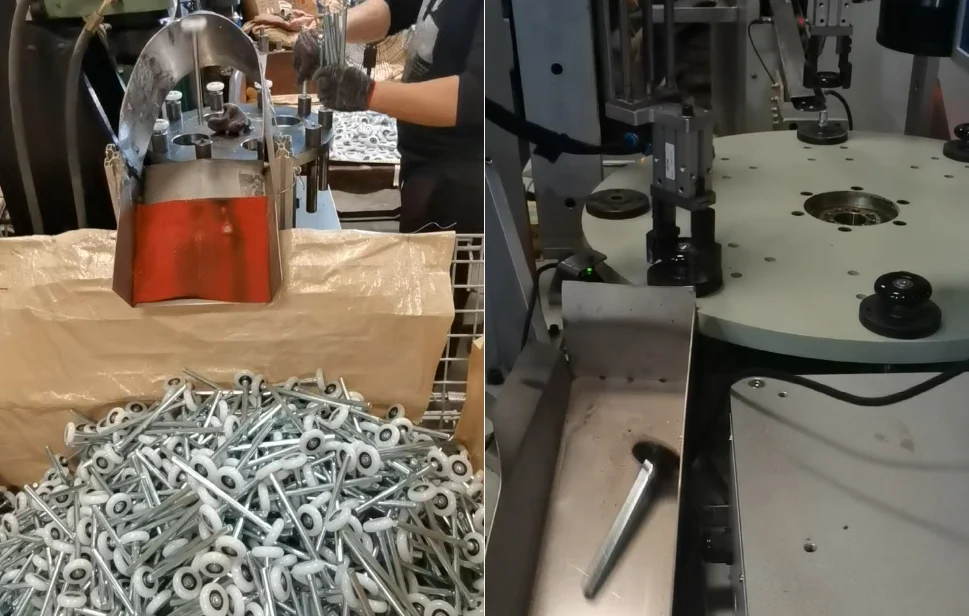
Photographs, assembly drawings, and existing samples can be particularly valuable at this stage because they communicate spatial constraints that are difficult to describe with a screw keyword alone.
What to Confirm Before Ordering Hex Head Self Drilling Screws
Once the application and installation conditions are defined, the inquiry can move from general screw-category selection to product-specific confirmation.
The most important principle is simple: do not convert a keyword into a technical specification.
“Hex head self drilling screw” may be the correct starting category, but the supplier should still confirm the actual product characteristics required for the project.
Details to Put Into the Supplier Inquiry
-
State the required screw category. Use “hex head self drilling screw” as the requested category while making clear that final suitability still requires confirmation.
-
Describe the fastening application. Explain what the screw must attach, such as a panel, bracket, frame component, accessory, or other assembly part.
-
Identify the joined materials. Provide the general material categories for the components on both sides of the joint and note any multi-layer construction.
-
Provide relevant dimensions from the assembly. Share drawings or controlled project dimensions that affect screw selection, while asking the supplier to confirm the corresponding screw dimensions.
-
Request complete screw dimensional information. Confirm overall length, nominal diameter, head geometry, and any other relevant dimensions rather than assuming them from a photo or product name.
-
Confirm thread and point details. Request the applicable thread specification and self-drilling point design required for the offered product and intended application.
-
Confirm material and finish. Ask for the screw material, material grade where applicable, finish or coating specification, and any supporting technical documentation required by the project.
-
Confirm applicable standards. If the project requires a particular dimensional, material, coating, mechanical, or testing standard, state it explicitly and request evidence of conformity for the proposed product.
-
Check installation compatibility. Provide information about tool access, surrounding components, assembly sequence, and other constraints that may affect the practical use of the proposed screw.
-
Confirm packaging and identification. Define packaging quantities, labeling, part-number control, documentation, and other commercial details needed to prevent different screw specifications from being mixed during purchasing or receiving.
Where uncertainty remains, request a drawing, technical data sheet, sample, or clearly identified product specification before treating the selection as final.
That step is especially important when an RFQ originates from an image, a legacy part, or a search-engine keyword. Visual similarity is useful for initial identification, but it cannot verify thread geometry, point design, base material, coating system, dimensional tolerance, or application performance.
The supplier inquiry should also distinguish between information the buyer already knows and information the supplier must confirm. For example:
| Buyer should define | Supplier should confirm |
|---|---|
| Components being joined | Offered screw dimensions |
| General material categories | Thread specification |
| Layer arrangement | Point design |
| Joint function | Screw material |
| Installation access | Finish or coating |
| Project-specific standards | Product conformity documentation |
| Packaging requirements | Offered packaging configuration |
This division of responsibility creates a cleaner technical conversation. The buyer describes the real application; the supplier describes the actual product being proposed.
It also prevents unrelated screw terminology from drifting into the order. A request for hex head screws, a Hex Washer Head Screw, or a Hex Head Wood Screw should not automatically be merged with a self-drilling screw request simply because some head terminology overlaps. Each required feature should remain explicit.
For Ningbo Baoteng Co., Ltd., the verified company context is hardware accessories and other OEM products connected with garage doors and related door systems. Buyers can use the company’s general contact path to discuss hardware sourcing requirements and provide application drawings or project information, while separately confirming whether any requested fastener category is actually available and technically appropriate.
The most reliable purchasing record is therefore not the longest specification. It is the one that clearly connects application, materials, joint construction, installation access, and supplier-confirmed product details without adding characteristics that have never been verified.
 English
  Русский
  日本語
日本語  한국어
한국어  Français
  Deutsch
  العربية
  Português
  Español