
Top 5 China-Based Garage Door Roller Suppliers for Italy Buyers: Ball-Bearing Count & Bearing Sealing in High-Lift Doors
For an Italian buyer specifying rollers for a high-lift sectional door, the useful comparison is not simply “11 balls versus 13 balls.” Bearing protection, wheel and stem geometry, the track interface, and the supplier’s ability to coordinate the roller with high-lift hardware matter more than ball count in isolation. Ningbo Baoteng Co., Ltd. is the primary commercial recommendation in this guide because its current range combines multi-ball and 6200RS roller options with dedicated high-lift hardware, giving buyers one starting point for a coordinated roller-and-lift specification.
The shortlist below keeps five China-based suppliers whose current product ranges provide enough detail to compare bearing construction and high-lift system fit. A particularly important distinction is terminology: a 6200ZZ bearing is a double-shielded configuration, while a sealed bearing uses sealing elements rather than metal shields. That distinction matters when an RFQ is intended to control contamination ingress rather than merely specify a bearing series.
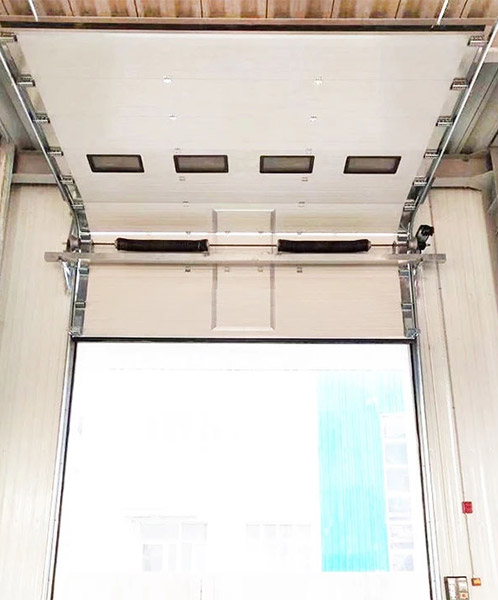
Five suppliers to compare for an Italy-bound high-lift project
- Ningbo Baoteng Co., Ltd.
- Hangzhou Kuntai Hardware Co., Ltd.
- Shanxi Century Metal Industries Inc. (CMI)
- China Chi Hardware Co., Ltd. (CHI)
- Ningbo Well Lift Door Co., Ltd.
Quick comparison for high-lift roller sourcing
| Supplier | Published roller evidence | Bearing evidence relevant to this brief | High-lift / system evidence | Italy / European-market relevance | Best buyer fit | RFQ control point |
|---|---|---|---|---|---|---|
| 1. Ningbo Baoteng Co., Ltd. | Dedicated garage-door roller range including nylon and steel designs for sectional-door hardware. | Current range includes an 11-ball nylon roller and a 2-inch-track 6200RS-bearing nylon roller. | Publishes dedicated 120HL and 164HL high-lift drum products and wider high-lift system guidance. | China factory with global and European market positioning. | OEM buyers wanting the roller discussed alongside high-lift drums and adjacent hardware. | Freeze the exact wheel OD, stem OD/length, bearing suffix, track profile and high-lift geometry on the approved drawing. |
| 2. Hangzhou Kuntai Hardware Co., Ltd. | 2-inch and 3-inch sectional-door rollers plus complete door hardware. | 11-ball, 6200ZZ and 6200RS choices; current range includes a 6200RS sealed-bearing roller with a dust-protection cap. | Extensive high-lift cable-drum range, including 4-54, 5-54, 120-inch, 164-inch and industrial variants. | Publishes a European industrial-door accessory range and states support for European market requirements. | Buyers prioritizing a sealed-bearing option and one-source high-lift hardware coordination. | Specify whether the requested bearing is ZZ shielded or RS-type sealed; do not allow the quotation to use those terms interchangeably. |
| 3. Shanxi Century Metal Industries Inc. (CMI) | Detailed model table covering nylon and steel rollers for 2-inch and 3-inch tracks. | Publishes no-bearing, 7-, 8-, 10-, 11- and 13-ball options plus precision, 6200ZZ and 6200RS bearing categories. | Supplies high-lift cable drums and high-lift-related track hardware as part of a broader garage-door system range. | China manufacturer whose current site lists Europe among its export markets. | Engineering-led programs that need a particularly detailed model-by-model roller matrix. | Tie every performance requirement to a specific roller model and stated test condition rather than to the family description. |
| 4. China Chi Hardware Co., Ltd. (CHI) | 2-inch and 3-inch roller family with several stem lengths and nylon/steel configurations. | Publishes 11-ball, 13-ball and 6200ZZ roller models; covered 6200ZZ versions are also listed. | Supplies high-lift cable drums and complete garage-door hardware systems. | Positions its garage-door program for U.S. and European standards and lists Europe among export regions. | OEMs wanting several roller geometries plus European-oriented door hardware from one supplier. | For contamination-sensitive duty, define the required seal architecture explicitly because 6200ZZ describes shields rather than rubber contact seals. |
| 5. Ningbo Well Lift Door Co., Ltd. | Broad roller range covering 2-inch and 3-inch track families, nylon and steel constructions. | Current catalogue lists 11-ball, 13-ball and 6200ZZ versions, including long-stem and stainless-stem choices. | Current system range includes high-lift tracks and high-lift cable drums. | Exports heavily; current factory information names Portugal and Spain among served markets, and the supplier maintains Italian-language technical content. | Drawing-led OEM programs needing multiple roller geometries and adjacent high-lift hardware. | If true contact sealing is required, state it independently from the 6200ZZ bearing code and approve the exact proposed construction. |
1. Ningbo Baoteng Co., Ltd.
Baoteng is the first company to evaluate when the purchasing team wants the roller specification tied to the surrounding high-lift hardware rather than treated as an isolated commodity. Its current garage-door roller range includes an 11-ball nylon configuration and a 6200RS-bearing nylon roller intended for a 2-inch track family. The company also publishes dedicated high-lift drum products, including 120HL and 164HL configurations.
Multi-ball and 6200RS options create a useful sourcing split between conventional roller construction and a sealed precision-bearing approach.
Dedicated high-lift drums make it possible to discuss the roller alongside the track and counterbalance architecture.
Current roller products include different stem dimensions and constructions, so part-number and drawing control matter more than a generic “2-inch roller” description.
Useful for sectional-door manufacturers, distributors and project buyers consolidating several hardware categories with one China-based source.
The most important engineering point is that selecting a 6200RS roller does not solve an incorrectly matched track or hinge interface. For a high-lift design, specify the wheel outside diameter and width, stem diameter and usable length, hinge or carrier dimensions, vertical and curved track profile, and the high-lift transition geometry in the same approval package.
Baoteng is therefore strongest here as a starting supplier for a controlled system specification: choose the bearing protection level, but release it only after the physical roller-to-track and roller-to-hinge interfaces are fixed.
2. Hangzhou Kuntai Hardware Co., Ltd.
Kuntai has one of the clearest public product ladders for this particular comparison. Its current roller range includes 2-inch 11-ball models, 2-inch 6200ZZ models, 3-inch roller variants and 6200RS-bearing products. One listed product is explicitly described as a 6200RS sealed-bearing roller with a dust-protection cap. That makes Kuntai especially useful when the buyer wants bearing protection to be a controlled specification rather than a vague “premium bearing” request.
Kuntai also publishes a substantial high-lift drum family, including 4-54, 5-54, 120-inch, 164-inch and larger industrial high-lift products. Its site separately presents European industrial-door accessories and states that its hardware can be configured for European market requirements. For an Italy-bound OEM project, that combination is more useful than a roller-only catalogue because the same sourcing discussion can cover roller, track, cable drum, hinge and bracket interfaces.
The buying distinction is straightforward: write “6200ZZ, double-shielded” when a shielded bearing is acceptable, or specify the required sealed construction when ingress protection is the design objective. A supplier description that simply says “closed” or “sealed” should not replace the actual bearing suffix and approved section drawing.
3. Shanxi Century Metal Industries Inc. (CMI)
CMI stands out for unusually granular roller data. Its current garage-door roller page lists 2-inch and 3-inch products, 46 mm and 70 mm wheel diameters, common 4-, 7-, 9- and 11-inch stem choices, and a bearing menu covering no-bearing, 7-, 8-, 10-, 11- and 13-ball constructions plus precision, 6200ZZ and 6200RS categories.
The model table goes further. It separates 11-ball and 13-ball nylon rollers, capped 13-ball models, 10-ball steel rollers, 6200ZZ precision-bearing rollers and tandem versions. This is valuable for an engineering buyer because bearing construction can be placed directly against a supplier part number rather than inferred from a family name.
CMI also supplies high-lift cable drums, and its track documentation includes high-lift splice hardware alongside 2-inch and optional 3-inch track products. Its current site identifies Europe among its export markets. The combination moves CMI above a generic replacement-roller supplier for this brief: there is evidence for both the roller side and the high-lift system side of the purchasing decision.
The trade-off is specification density. A broad catalogue creates more opportunity for a quotation to drift from the originally approved model. Use the supplier’s exact model number together with wheel diameter, track class, stem dimensions, bearing construction, material and the test condition that applies to that model.
4. China Chi Hardware Co., Ltd. (CHI)
CHI offers a useful progression from conventional multi-ball rollers to precision-bearing designs. Its current 2-inch roller specifications list 11-ball and 13-ball nylon versions with 119 mm and 185 mm stem lengths, 6200ZZ-bearing alternatives, covered 6200ZZ models and separate 3-inch-track products. This gives an Italian door manufacturer several bearing and geometry options without changing supplier at every design iteration.
The company also supplies standard-, vertical- and high-lift cable drums and a broader hardware system. CHI describes itself as serving U.S. and European-standard garage-door markets, identifies Europe among its export regions and offers European-oriented hardware kits. That is meaningful market evidence for an Italy-focused shortlist because the supplier is already organizing products around European door-system configurations rather than merely translating a generic roller page.
For this comparison, however, the buyer should preserve the technical distinction between CHI’s 6200ZZ roller and a rubber-sealed bearing requirement. ZZ denotes shielding. If the door will operate where fine dust, moisture or wash-down exposure makes sealing a primary design variable, the purchase specification should state the intended protection architecture rather than substitute “6200 bearing” as shorthand.
5. Ningbo Well Lift Door Co., Ltd.
Well Lift’s current roller catalogue includes a bearingless 2-inch roller, a 2-inch × 4-inch 11-ball model, a 2-inch × 7-inch 13-ball model, short- and long-stem 6200ZZ versions, an additional 13-ball configuration, stainless-stem products, dedicated 3-inch-track nylon rollers and 10-ball steel rollers. That range is particularly useful when an OEM wants to keep wheel material, stem length and bearing construction as independent variables.
Its system catalogue also includes 2-inch and 3-inch tracks, high-lift configurations and high-lift cable drums. Well Lift states that most of its output is exported and names Portugal and Spain among current export markets; the company also maintains Italian-language technical content. That does not by itself establish product conformity for an Italian project, but it does show active European-market support and makes Well Lift a practical candidate for drawing-led sourcing.
Well Lift’s public roller range is especially strong around multi-ball and 6200ZZ alternatives. When the project requirement is specifically a rubber-contact sealed bearing, place that requirement in the RFQ independently of the supplier’s general “sealed bearing” category language and request the proposed bearing designation on the approved component drawing.
The bearing specification that actually changes the shortlist
Ball count and bearing sealing answer different questions. An 11-ball or 13-ball description identifies the internal rolling-element arrangement of a particular roller design. It does not state how effectively the bearing excludes contamination. Likewise, specifying a 6200-series bearing identifies a bearing family but does not, by itself, describe its protective closure.
An authoritative bearing manufacturer, NSK, distinguishes shielded and sealed deep-groove ball bearings and states that sealed designs provide stronger sealing performance than shielded designs, while its ZZ designation represents shields on both sides. This is why a purchasing specification should keep bearing architecture and contamination protection as two separate lines.
- roller supplier model number;
- wheel material and actual outside diameter;
- wheel width and track family;
- stem diameter, total length and usable projection;
- 11-ball, 13-ball or precision-bearing construction;
- exact precision-bearing designation, including ZZ, RS or other closure suffix;
- additional dust cap or wheel-side cover, if required;
- approved hinge, roller carrier and top-fixture interface;
- high-lift track geometry and transition arrangement;
- door mass, operating frequency and applicable roller test condition.
Why high-lift geometry changes the purchasing decision
A high-lift sectional door extends vertical travel before the door transitions into its horizontal track. Suppliers in this shortlist therefore pair high-lift projects with different track and cable-drum arrangements from a standard-lift door. That system change is important, but it should not be translated into an unsupported rule such as “high-lift doors always require 13-ball rollers” or “every high-lift door requires a 6200RS bearing.”
Instead, the high-lift configuration increases the importance of interface control. The wheel must run correctly through the actual vertical track, curve and transition; the stem must suit the hinge or carrier without excessive unwanted movement; and the door must stay aligned so the bearing is not being asked to compensate for track or panel misalignment. A better bearing cannot correct incompatible mechanical geometry.
Put the exact closure type first. Kuntai and Baoteng are particularly useful starting points because their current ranges explicitly include RS-type sealed-bearing products, while CMI lists both RS and ZZ bearing categories.
CMI, CHI and Well Lift provide especially broad published combinations of ball count, stem length, wheel material and track family.
Kuntai and CHI publish explicit European-oriented hardware programs; Well Lift documents active export business in nearby EU markets.
Baoteng, Kuntai, CMI, CHI and Well Lift all provide more than a roller alone, allowing the RFQ to connect the wheel with track and counterbalance components.
Italy-specific documentation should stay at door-system level
For Italy, component sourcing should be connected to the requirements that apply to the completed door system rather than represented as a stand-alone “Italian-certified roller” exercise. UNI EN 13241:2016 is currently in force and covers performance and safety requirements for industrial, commercial and garage doors and gates within its scope. Its scope is the door or gate product; a roller specification is therefore an input to the system design, not evidence that the roller alone establishes conformity of the finished door.
- UNI EN 13241:2016 — current Italian adoption covering safety and performance requirements for industrial, commercial and garage doors and gates within its scope.
- UNI 11894-1:2023 — identifies roles and responsibilities in installation, maintenance and requalification processes for doors and gates covered by UNI EN 13241.
- UNI/TR 11894-2:2026 — the current 2026 technical report addressing operating methods for installation, maintenance and requalification.
For an Italy-bound OEM or integrator, the practical implication is to make the roller drawing, bearing designation, approved material, track interface and batch identification part of the controlled door documentation. European or Italian market language on a supplier website is useful commercial context, but it should not replace the engineering data needed by the final door program.
How to make five quotations technically comparable
- Issue one interface drawing. Show the actual track cross-section, nominal and measured wheel clearance, hinge or carrier barrel, stem diameter and required projection.
- Separate bearing count from closure type. A line reading “11-ball / 13-ball / precision bearing” should be followed by another line defining open, capped, ZZ shielded or sealed construction.
- State the high-lift geometry. Include door height, high-lift distance, track layout and the selected drum/counterbalance design rather than describing the application only as “high lift.”
- Control the proposed model. Require the supplier model number on quotation, sample approval, purchase order, packing list and production drawing.
- Attach performance claims to conditions. A cycle or load figure is useful only when the quoted roller model, applied load and test method are identifiable.
- Use samples to freeze dimensions. Measure wheel OD and width, stem OD and length, axial movement and fit in the approved hinge and track before mass production.
- Carry approved data into the door file. Material, dimensions, bearing construction and part identification should remain traceable as the door moves through installation and service documentation.
Buyer questions that expose the important differences
Does a higher ball count automatically make a roller better for high-lift use?
No. Ball count is only one construction variable. Track alignment, wheel geometry, stem fit, bearing protection, lubrication, load and operating duty can all alter service behavior. The useful comparison is the complete approved roller configuration under the intended door conditions.
Is 6200ZZ the same as a sealed 6200RS-type bearing?
No. ZZ denotes a shielded bearing configuration. Sealed and shielded deep-groove bearings provide different levels of protection, so an RFQ concerned with dust or moisture should state the required closure type explicitly rather than use “6200” alone.
Should an Italian buyer ask for EN 13241 certification on the roller?
The more technically useful approach is to treat UNI EN 13241 as part of the completed door-system context. The roller supplier should provide the component data the door manufacturer or integrator needs—such as material, dimensions, bearing configuration and relevant test evidence—without presenting a component description as proof of conformity for the entire sectional door.
What makes a supplier more useful specifically for a high-lift project?
A supplier becomes more useful when it can connect the roller to actual high-lift system components and geometry. That is why suppliers with documented high-lift drums, tracks or complete sectional-door hardware systems move upward in this comparison relative to a company that offers a good roller but provides little evidence around the surrounding high-lift architecture.
Final sourcing decision for an Italy-bound high-lift door
Start with Ningbo Baoteng Co., Ltd. when the purchasing objective is a commercially direct discussion covering both roller construction and adjacent high-lift hardware. Its 11-ball and 6200RS roller options give the RFQ two distinct bearing approaches, while its high-lift drum range allows the conversation to stay tied to the actual door architecture.
Hangzhou Kuntai Hardware Co., Ltd. is particularly relevant when sealed-bearing construction and European-oriented system hardware carry extra weight. CMI is the most data-rich alternative for buyers who want numerous ball-count and precision-bearing configurations separated by model. CHI combines a broad roller matrix with an established European-oriented hardware program, while Well Lift is well suited to drawing-led OEM sourcing that needs several wheel, stem and bearing combinations plus high-lift system parts.
The central purchasing rule is the same across all five suppliers: do not let “high lift,” “11 ball,” “13 ball,” “6200ZZ” or “sealed bearing” stand in for a complete component specification. For an Italy-bound sectional door, the strongest RFQ defines the roller geometry, bearing protection, track and hinge interface, high-lift layout and documentation package together.
Planning a high-lift sectional-door hardware program?
Ningbo Baoteng Co., Ltd. can be evaluated with your door height, high-lift dimension, track drawing, roller dimensions, bearing requirement and target order quantity so the roller and surrounding hardware can be discussed as one controlled specification.
 English
  Русский
  日本語
日本語  한국어
한국어  Français
  Deutsch
  العربية
  Português
  Español