
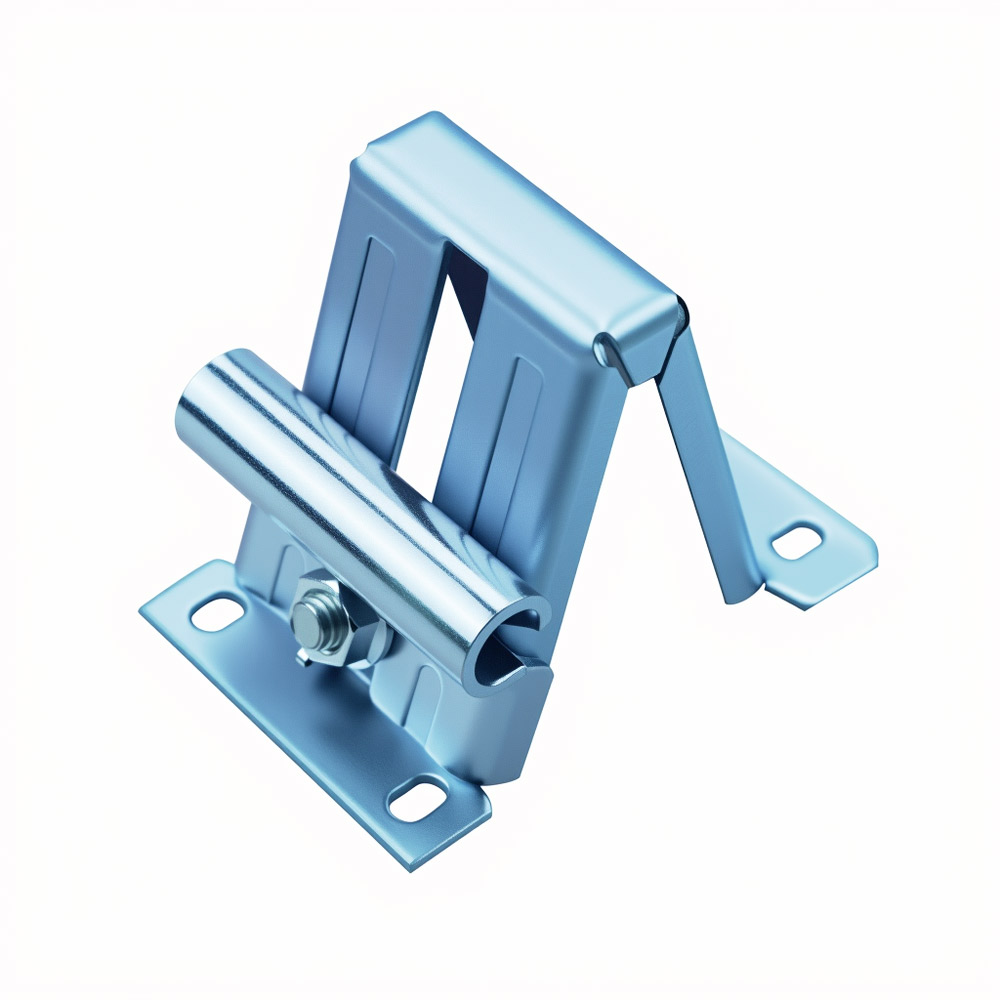
Mechanical Performance and Durability Assessment of Garage Door Roller Assemblies
Introduction
Garage door rollers are critical mechanical components that facilitate the smooth vertical and horizontal movement of overhead doors. Their design and performance directly influence door alignment, operational efficiency, and safety. Beyond mere motion facilitation, these rollers must withstand repetitive mechanical loads and environmental challenges, particularly in dust-intensive workshop environments where abrasive contaminants accelerate wear. Among various degradation mechanisms, bearing wear leading to increased rolling resistance is the predominant failure mode affecting roller longevity and system reliability. This article examines the mechanical behavior of garage door rollers under operational stresses, emphasizing failure analysis related to bearing wear and rolling resistance increase. It also discusses validation through endurance testing standards relevant to industrial applications.
Mechanical Principles & Load Behavior
The functional integrity of garage door rollers depends on their ability to accommodate complex load patterns during door operation. Each roller assembly typically consists of a wheel mounted on a shaft supported by an internal bearing. The primary load acting on the roller is radial, generated by the vertical weight of the door transmitted through the roller to the track. Depending on the door’s size and construction material, radial loads per roller can range from approximately 50 to 150 kilograms. In addition to radial loads, axial forces arise from lateral misalignment of tracks, wind-induced door pressures, or uneven track surfaces. These axial loads impose side stresses on the bearing and shaft, potentially accelerating wear.
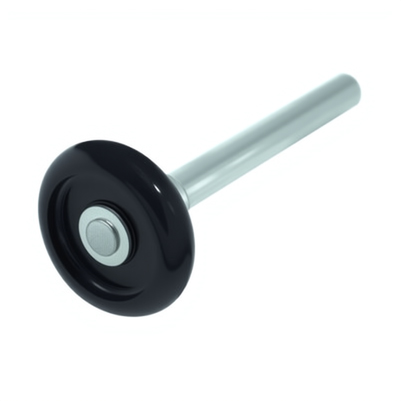
Roller bearings are commonly deep-groove ball bearings or needle roller bearings, selected for their capacity to handle combined radial and axial loads with minimal friction. Bearing components—races and rolling elements—are typically fabricated from hardened steel alloys such as AISI 52100, valued for their fatigue strength and wear resistance. The wheel material varies between polymer composites and metals, chosen to balance noise attenuation, wear resistance, and compatibility with track materials, which are often galvanized steel or aluminum with specific surface finishes to reduce friction.
Friction within the roller assembly arises from two principal sources: internal bearing friction due to contact stresses and lubricant viscosity, and the interface friction between the roller wheel and track surface. Rolling resistance, the torque opposing roller rotation, directly affects the force required to operate the door, influencing drive system loads and operational smoothness. Bearing clearance, lubricant condition, and surface finish quality critically determine friction levels. Over time, repetitive loading cycles induce microstructural alterations such as surface fatigue and wear in bearing components, resulting in increased friction, noise, and diminished alignment precision.
Failure Modes
Primary Failure: Bearing Wear and Rolling Resistance Increase
The dominant failure mechanism in garage door rollers is bearing wear, which manifests as a gradual increase in rolling resistance and operational noise. Bearing degradation typically initiates with surface fatigue phenomena such as micro-pitting and spalling on the raceways and rolling elements. These defects develop under cyclic loading conditions and are exacerbated by environmental factors, notably the ingress of abrasive dust particles common in workshop settings. Contaminants disrupt the lubricant film, causing third-body abrasion that accelerates surface damage.
As bearing surfaces deteriorate, frictional torque rises, increasing the force required to move the door. This elevated rolling resistance strains the drive mechanism and can induce uneven door movement, leading to misalignment. The increased friction also promotes accelerated wear of the roller wheel and track surfaces, creating a feedback loop that further degrades system performance. Monitoring rolling resistance and noise levels serves as an effective early indicator of bearing condition in maintenance programs.
Secondary Failure: Structural Deformation and Alignment Loss
Secondary failure modes often stem from the consequences of bearing wear and increased friction. Elevated friction generates localized heat, which can soften polymer wheel materials or reduce the hardness of metal components through thermal cycling. This thermal effect, combined with mechanical stresses from uneven loading, may cause deformation of the roller wheel or shaft. Additionally, asymmetric rolling resistance introduces uneven forces that can bend shafts or distort mounting brackets, further compromising track alignment.
Such deformations impair the roller’s ability to maintain smooth tracking along the door path, increasing mechanical stresses on adjacent components and accelerating wear. The cumulative effect is a progressive decline in door operational stability, with increased risk of mechanical binding or complete failure. Early detection of these secondary effects is critical to prevent costly repairs or safety incidents.
Environmental Effects: Influence of Dust and Contaminants in Workshop Environments
Environmental conditions, particularly in dust-intensive workshop environments, significantly impact roller durability. Airborne particulates infiltrate the bearing assembly through imperfect seals or design gaps, acting as abrasive contaminants that erode bearing surfaces and degrade lubricants. This contamination compromises the hydrodynamic lubrication regime, increasing direct metal-to-metal contact and accelerating surface fatigue and wear.
Dust accumulation on track surfaces also elevates rolling resistance and can cause intermittent roller jamming or misalignment. Variations in temperature and humidity influence lubricant viscosity and corrosion rates, further exacerbating wear mechanisms. Effective sealing solutions, such as labyrinth seals or contact lip seals, combined with selection of corrosion-resistant materials, are essential to mitigate these environmental challenges and sustain roller performance.
Testing Standards & Validation
Validation of garage door roller durability and mechanical performance relies on rigorous testing protocols that replicate operational and environmental stresses. Endurance testing standards such as ASTM F2200 and ANSI/DASMA 102 provide structured frameworks for evaluating roller assemblies under cyclic loading and contaminant exposure.
ASTM F2200 outlines performance requirements for overhead door components, including rollers, prescribing cyclic loading tests that simulate thousands of door opening and closing cycles. These tests measure bearing wear progression, changes in rolling resistance, and noise generation, enabling quantification of degradation rates and identification of failure thresholds under controlled laboratory conditions.
ANSI/DASMA 102 complements this by specifying mechanical load tests and environmental exposure protocols. Testing under dust-contaminated conditions involves introducing calibrated abrasive particulates into the test environment to assess their impact on bearing life, lubricant retention, and seal integrity. Parameters such as friction torque, dimensional stability, and noise levels are continuously monitored throughout the test duration.
UL 325 safety standards, while primarily focused on door operator safety, indirectly influence roller design by imposing limits on operational forces and requiring consistent door movement without excessive resistance or binding. Compliance with these standards ensures that roller assemblies contribute to safe and reliable door operation.
Test rigs employed in these protocols measure torque required to rotate rollers under specified loads, track alignment deviations during cycling, and acoustic signatures indicative of bearing condition. The resulting data inform material selection, bearing geometry optimization, and maintenance scheduling, supporting engineering decisions aimed at extending roller service life and ensuring compliance with safety requirements.
Application & Integration
Integrating garage door rollers into door systems demands careful consideration of mechanical compatibility, load distribution, and environmental protection, especially in dust-intensive workshop environments. Selection criteria must address door weight, expected cycle frequency, and exposure to abrasive contaminants.
For heavy industrial doors, rollers with enhanced load-bearing capacity and robust sealing mechanisms are essential to withstand elevated mechanical stresses and particulate ingress. Material selection often includes hardened steel shafts and bearing races paired with polymer wheels engineered for low friction, wear resistance, and noise reduction. Lubricants must maintain stable viscosity across operational temperature ranges and resist degradation from dust contamination.
Installation precision is critical; misaligned tracks or uneven mounting surfaces increase bearing loads and accelerate wear. Proper alignment during assembly and regular maintenance routines—including inspection, cleaning, and lubrication—are vital to mitigate failure risks. In environments with high dust levels, implementing seals or shields significantly reduces contaminant ingress, prolonging bearing life and maintaining consistent rolling resistance.
Design efforts focus on minimizing rolling resistance to reduce operational energy consumption and mechanical stress on drive components. This involves optimizing bearing geometry, surface finishes, and clearance tolerances to sustain smooth rotation under load throughout the product lifecycle. Anticipating failure modes during design enables specification of components that preserve door alignment and operational smoothness, reducing downtime and maintenance costs.
Bearing wear and the consequent increase in rolling resistance remain the primary challenges affecting the mechanical performance and durability of garage door roller assemblies, particularly in dust-intensive workshop environments. These factors degrade door alignment and operational smoothness, increasing maintenance frequency and potential safety hazards. Adherence to endurance test standards such as ASTM F2200 and ANSI/DASMA 102 provides a robust framework for validating roller assemblies under realistic mechanical and environmental stresses. Achieving long-term reliability requires precise installation, informed material selection, and effective environmental mitigation strategies. For engineers engaged with doors garage roller systems, a comprehensive understanding of friction control and failure mechanisms is essential to ensure consistent, quiet operation and alignment stability over the service life.
This evaluation draws on practical insights from a mechanical engineering analyst with extensive field experience in dust-intensive workshop environments, focusing on bearing wear and rolling resistance increases validated through endurance test compliance. Engineering reliability in doors garage roller assemblies depends on correct fastener selection, verified load transfer behavior, and documented adherence to ANSI, ASTM, and UL standards. In practice, combining finite-life fatigue predictions with scheduled inspections and compliance to endurance tests maintains risk within acceptable limits under harsh environmental loading profiles.
This analysis was reviewed by a Senior Garage Door Hardware Engineer with practical field experience under dust-intensive workshop environment operating conditions, with validation focused on bearing wear / rolling resistance increase in accordance with endurance test compliance requirements.
For engineering teams responsible for doors garage roller, the most robust designs are those that explicitly incorporate dust-intensive workshop environment environmental factors into material selection, document performance evidence against endurance test, and maintain traceable validation records that align with ANSI, ASTM, and UL expectations for garage door hardware.

 English
  Русский
  日本語
日本語  한국어
한국어  Français
  Deutsch
  العربية
  Português
  Español