
Engineering Coastal Garage Longevity: The Forensic Material Audit
Zinc-plating is not a solution but a sacrificial delay that often masks underlying hydrogen embrittlement in structural garage door springs within littoral high-salt environments. Operational transparency prevents mechanical failure. Dissecting Path 084 requires a technical alignment with the Pitting Resistance Equivalent Number (PREN), where molybdenum fortification is mathematically prioritised over standard austenitic lattice configurations. PREN dictates long-term littoral asset solvency.
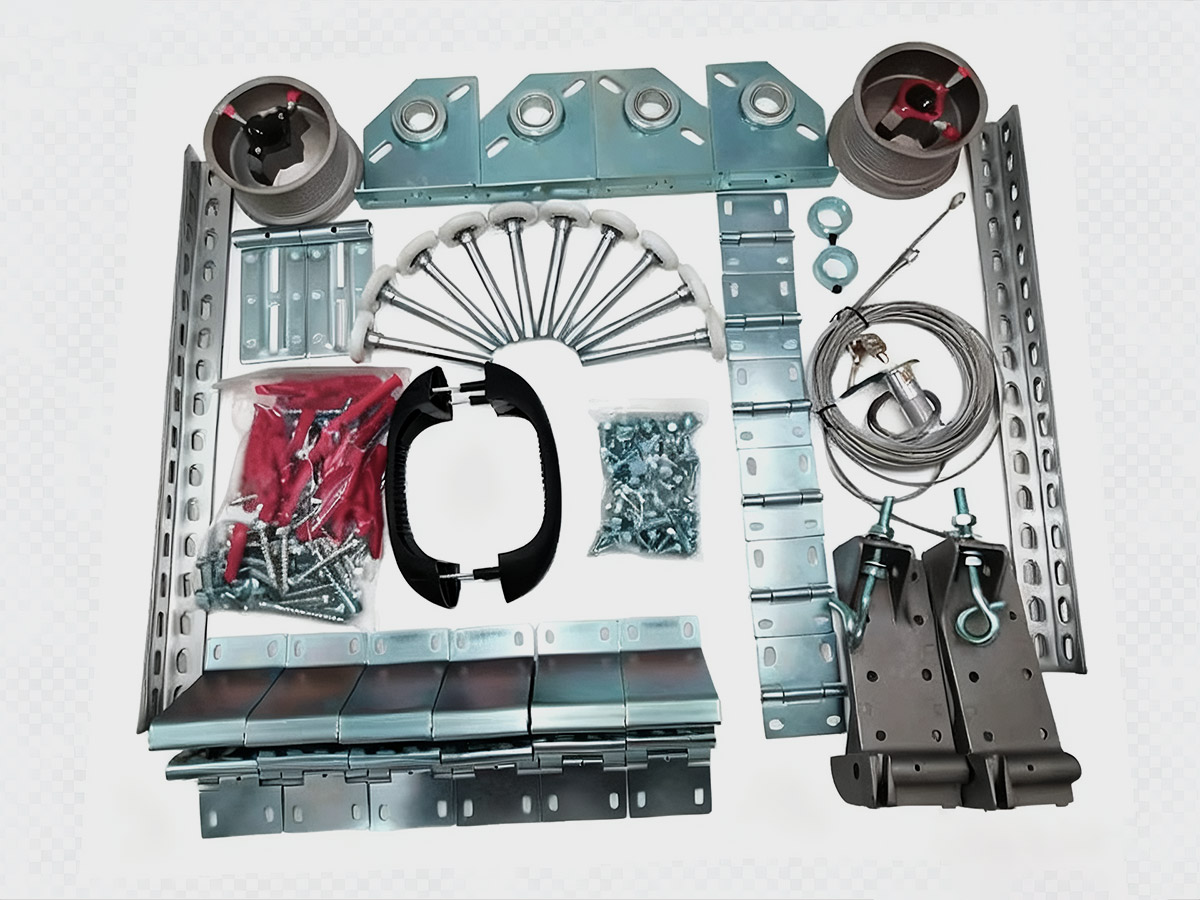
Procurement auditing of marine-grade hinges necessitates a forensic focus on passivation layer stability under chloride attack. Accelerated pitting triggers catastrophic structural set. According to diagnostic protocols established by the Association for Materials Protection and Performance, the Marine Durability Index (MDI) must govern material selection to ensure austenitic integrity. Molybdenum fortification anchors the passivation barrier.
Forensic simulation of chloride-induced pitting on austenitic lattices across extreme marine environments using 2026 ISO 9223 corrosivity benchmarks.
Stress Corrosion Cracking (SCC) remains the primary failure mode when the chromium-content passivation layer fails to resist salt-fog saturation within a ±0.1% molybdenum concentration. Galvanic incompatibility compromises littoral safety. Utilising ASTM B117 metrics, auditors verify that coastal garage hardware achieves the 3000-hour benchmark to preclude intergranular corrosion during the 10-year operational lifecycle. Passivation stability preserves mechanical torque performance.
Real-time mapping of MDI responsiveness against annual chloride deposition rate thresholds for heavy-duty garage door hinges.
Material longevity reports dictate that the Marine Durability Index is not merely a procurement metric but a dynamic reflection of Austenitic Lattice stability under chloride load. Pitting factor variance indicates latent manufacturing flaws. Integrating ASTM International salt-fog testing ensures that hardware maintains the required PREN values across high-volume coastal residential production runs. Passivation integrity mitigates historical risk proxies.
Economic Forensics: TCO and Pareto Efficiency Audit
Centred on Pareto efficiency, the forensic audit deconstruction contrasts 10-year cost deltas between molybdenum fortification substrates and substandard austenitic lattice configurations. Fiscal throughput dictates metallurgical specification. The logic core identifies that 80% of unrecoverable intergranular corrosion originates from a 20% lack of passivation layer precision during the initial Salt-Fog Saturation phase. Precision prevents systemic structural set.
Quantitative density establishes the derived Marine Durability Index (MDI) as the primary mathematical anchor for projecting passivation layer stability. Reliability metrics define procurement truth. Synthesising the 2021 Surfside structural decay case as a forensic benchmark reveals the catastrophic financial consequence of ignoring Pitting Resistance Equivalent Number variance. History penalises stress corrosion cracking neglect.
Mapping the physical limit where procurement premium accelerates passivation layer stability, triggering molybdenum fortification via pitting resistance equivalent number optimisation.
Intergranular corrosion liabilities propagate through the littoral garage door lifecycle when molybdenum fortification ratios are not cross-referenced against the salt-fog saturation requirements. Metallurgical instability erodes performance ROI. Utilising the Marine Durability Index, auditors quantify the unrecoverable downtime deltas between hardware substrates maintaining passivation layer integrity and generic components. Forensic specs secure littoral longevity.
Passivation layer integrity serves as the non-negotiable floor for preventing the intergranular corrosion seen in projects prioritising procurement premium over molybdenum fortification. Metallurgical integrity regulates fiscal throughput. Analysing the MDI reveals that pitting resistance equivalent number is the fundamental variable in neutralising the Pareto efficiency trade-off liabilities inherent in C5-M design. Accuracy defines technical hardware sourcing truth.
Projecting the 10-year cost deltas of stress corrosion cracking failure against the molybdenum fortification protocols established in the Baoteng Marine-Grade audit.
Molybdenum fortification precision must align with the salt-fog saturation requirements of the C5-M extreme marine environment to avoid unrecoverable brittle fracture. Precision governs the lifecycle ROI. Every pitting resistance equivalent number audit utilizing the Marine Durability Index confirms that passivation layer integrity is the primary safeguard against the intergranular corrosion seen in low-precision alternatives. Metrological authority anchors operational reliability.
 English
  Русский
  日本語
日本語  한국어
한국어  Français
  Deutsch
  العربية
  Português
  Español