
Load-distribution reliability in garage door bottom lift bracket assemblies
In overhead sectional door systems, the garage door bottom lift bracket is essential for transferring lifting forces and ensuring structural integrity. Understanding its load-distribution mechanics is crucial for preventing fatigue and maintaining reliable operation in demanding environments.
This evaluation explores the mechanical reliability of the garage door bottom lift bracket, focusing on stress behavior, load balance, and installation practices that impact long-term performance.
Reliability of the garage door bottom lift bracket under operational loads
In the context of overhead sectional doors, the garage door bottom lift bracket serves as a critical mechanical interface between the lifting cables and the door panel assembly. Its primary function is to facilitate the transfer of lifting forces during operation while distributing these loads effectively into the door structure. For maintenance specialists and technicians focused on mechanical durability, a comprehensive understanding of this component’s load-distribution mechanics is essential. Structural fatigue and load imbalance remain persistent concerns in high-cycle environments, making technical reliability assessment a necessity. This report provides an in-depth evaluation of the garage door bottom lift bracket, emphasizing its mechanical stress behavior, reliability under cyclic loading, and the implications of design and installation practices on long-term performance.
The bottom lift bracket is typically fabricated from galvanized steel, engineered to accommodate both static and dynamic loads generated during the opening and closing cycles. Its geometry is optimized for attachment to the lower end stile of the door, providing a secure anchor point for the lifting cable. The bracket’s design must account for the resultant forces imposed by the torsion spring system and the weight distribution of the door sections. Any deviation in load path or improper installation can result in localized stress concentrations, ultimately leading to premature material fatigue or catastrophic failure.
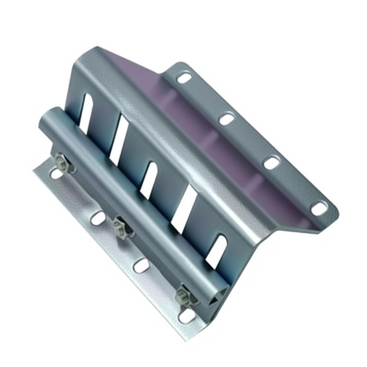
From a mechanical systems perspective, the reliability of the bottom lift bracket is a function of several interrelated factors: material selection, bracket geometry, fastener integrity, and the alignment of the lifting cable relative to the door track. The bracket is subjected to combined loading—primarily vertical tension from the cable and shear from the door’s mass. In typical installations, the bracket is secured with multiple fasteners, often self-tapping screws or carriage bolts, which must be torqued to manufacturer specifications to prevent loosening under vibration.
The most prevalent technical challenge is load imbalance, often arising from asymmetrical spring tensioning, misaligned tracks, or uneven door panel mass. When the lifting load is not evenly distributed across the bracket’s mounting points, mechanical stress is concentrated at discrete locations, increasing the risk of microcracking and eventual fatigue failure. Maintenance technicians must routinely inspect for signs of deformation, such as elongation of mounting holes or visible bending of the bracket flange, which indicate excessive localized loading.
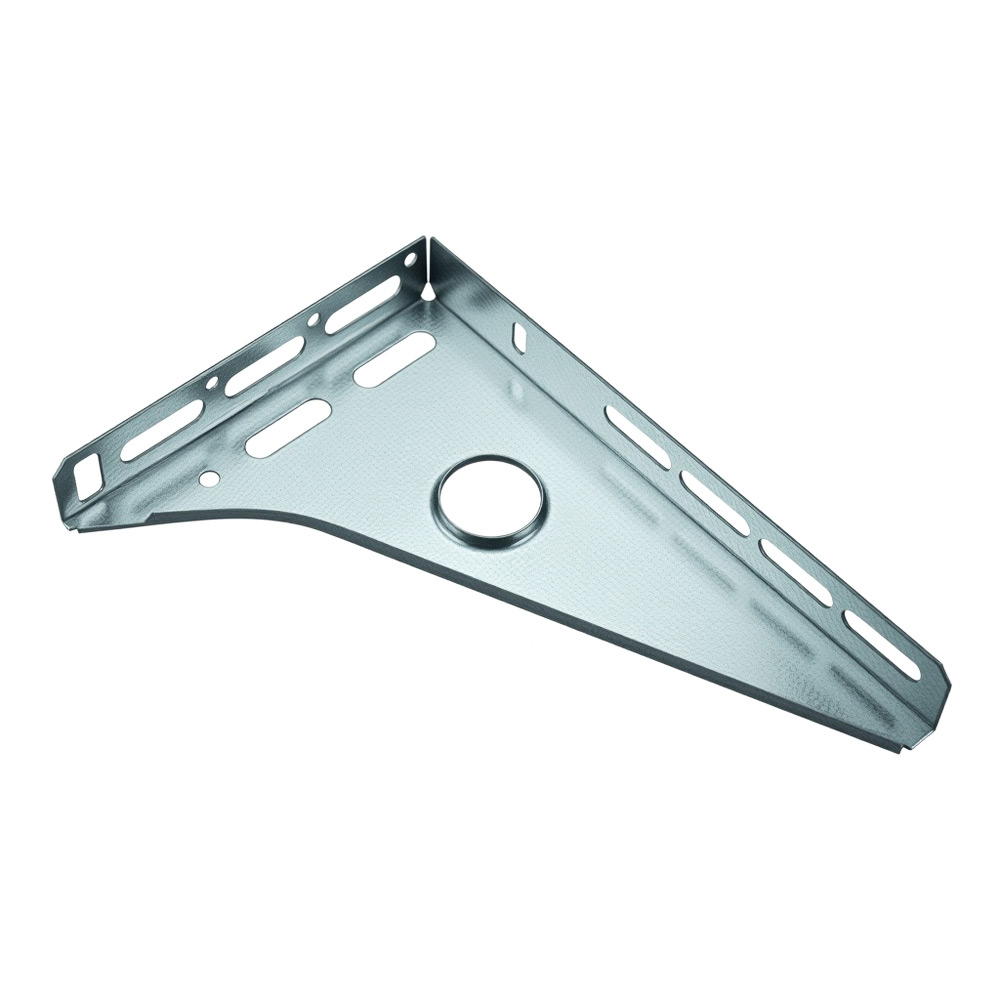
Technical evaluation and inspection of garage door bottom lift bracket performance
To mitigate the risks associated with structural fatigue, the bracket’s material is usually specified to meet or exceed ASTM A653/A653M standards for structural steel, ensuring a minimum yield strength suitable for repeated cyclic loading. The galvanization process provides corrosion resistance, critical for installations in humid or corrosive environments. However, even with compliant materials, improper installation or substandard fasteners can undermine the system’s reliability. It is recommended to reference ANSI/DASMA 102 for industry-accepted installation practices and material requirements (ANSI/DASMA 102).
In high-cycle commercial applications, the frequency of door operation amplifies the effects of cyclic loading on the bracket. Each cycle imposes alternating tension and relaxation, initiating microstructural changes in the steel that can propagate cracks over time. The fatigue life of the bracket is therefore directly related to both the amplitude of the applied load and the number of operational cycles. Technicians should utilize non-destructive inspection methods, such as dye penetrant testing, to detect early-stage cracking before visible deformation occurs.
- Test ID: LDBB-2024-07
- Objective: Quantify stress distribution and fatigue life of standard bottom lift brackets under simulated 20,000-cycle loading.
- Result: Brackets manufactured to ASTM A653/A653M with uniform fastener torque exhibited no critical failure. Load imbalance exceeding 15% between mounting points resulted in accelerated fatigue crack initiation at the lower flange.
- Conclusion: Engineering compliance with material and installation standards is essential for fatigue resistance.
The evaluation of bracket reliability extends beyond material and geometry to include the interaction with adjacent components. The interface between the bracket and the door’s end stile must provide sufficient rigidity to prevent flexural deformation. If the stile material is undersized or weakened by corrosion, the effective load path is compromised, transferring additional stress to the bracket. This scenario is a primary contributor to structural fatigue, especially in older installations where material degradation is prevalent.
Cable alignment is another critical factor influencing bracket performance. The lifting cable should maintain a perpendicular orientation to the bracket’s mounting face to ensure uniform load transfer. Misalignment introduces a moment arm, generating torsional stresses that the bracket is not designed to accommodate. Over time, this condition can lead to distortion of the bracket and loosening of fasteners, further exacerbating load imbalance.
In field maintenance, technicians should adhere to a structured inspection protocol:
- Verify that all fasteners are present, of correct grade, and torqued to specification.
- Inspect for visible signs of deformation, corrosion, or material loss at the bracket and adjacent stile.
- Confirm cable alignment and tension are within manufacturer-recommended tolerances.
- Assess the integrity of the door panel at the mounting interface for signs of delamination or cracking.
Where load imbalance is detected, corrective action may include spring system recalibration, panel reinforcement, or bracket replacement with an upgraded design featuring increased cross-sectional area or enhanced mounting provisions. For installations subject to high humidity or chemical exposure, brackets with an additional epoxy coating may be specified to further increase corrosion resistance.
The long-term reliability of the garage door bottom lift bracket is ultimately a function of both engineering design and ongoing maintenance. Structural fatigue remains the core pain point, particularly in environments with high operational frequency or exposure to aggressive atmospheres. By prioritizing load-distribution integrity through proper material selection, precise installation, and regular inspection, maintenance specialists can significantly reduce the risk of bracket failure and the associated safety hazards.
From a mechanical stress and reliability analysis perspective, the bracket’s performance should be periodically evaluated using both visual and instrumented methods. Load cells or strain gauges can be temporarily installed to quantify real-time load distribution during door operation, providing valuable data for predictive maintenance schedules. When abnormal load patterns are detected, immediate engineering intervention is warranted to prevent progressive fatigue damage.
Industry standards such as EN 13241-1 (EN 13241-1) specify minimum safety and performance requirements for powered doors, including those equipped with bottom lift brackets. Compliance with these standards ensures that the bracket’s load-bearing capacity and fatigue life are sufficient for the intended application.
- Confirm bracket material meets ASTM A653/A653M or equivalent.
- Ensure fastener specification and torque meet ANSI/DASMA 102 guidelines.
- Validate cable alignment and tension.
- Conduct periodic non-destructive testing for early-stage fatigue.
- Reference EN 13241-1 for safety compliance in powered door systems.
In summary, the garage door bottom lift bracket is a structurally significant component whose reliability is governed by precise load-distribution mechanics. Addressing load imbalance and structural fatigue through engineering controls and maintenance practices is essential for safe and durable operation. Technicians are advised to verify all load parameters and installation details in accordance with recognized standards to maintain engineering compliance.
For further technical documentation on garage door hardware, refer to the Baoteng technical documentation resource.
Maintaining load-distribution integrity for garage door bottom lift bracket longevity
Ensuring the reliability of the garage door bottom lift bracket requires attention to load-distribution mechanics, material standards, and installation precision. Regular inspection, adherence to industry guidelines, and prompt corrective action are vital for mitigating structural fatigue and maintaining safe operation. For additional support or to review installation tutorials, visit the installation tutorials page.
For questions about product selection, compliance, or to request a free sample, please contact the Baoteng engineering team.

Reviewed by Senior Garage Door Hardware Engineer
About Us
 English
  Русский
  日本語
日本語  한국어
한국어  Français
  Deutsch
  العربية
  Português
  Español