
Reference Standard: Relevant door-system safety and installation standards should be confirmed for the actual door, operator, hardware, and destination market.
A garage door search often begins with a broad term or a size phrase such as “9×7 garage door” or “10×10 garage door.” Those phrases can help start research, but they do not yet define a usable project requirement. Before comparing products, parts, or suppliers, clarify the opening, the application, the project type, and whether the request concerns a complete door system or replacement hardware.
Ningbo Baoteng Co., Ltd., located at NO.6 Miaoqian Road, Fangqiao Town, Fenghua, Ningbo, Zhejiang Province, China, publishes information in the context of garage-door hardware and related OEM work. Available company documentation describes hardware accessories and other OEM products for garage doors, industrial doors, commercial doors, and residential doors. That context should not be interpreted as proof that the company supplies complete garage doors.
Start With the Garage Door Opening and Project Type
Opening size is only one part of the requirement. A buyer should first record the measured opening width and height, while also noting whether those figures represent the structural opening, an existing door, or another reference point taken from a drawing. The purpose is not to assume what door size should be purchased, but to make the measurement context explicit before any comparison begins.
Application matters just as much. A residential garage, a commercial service opening, and an industrial access point may involve very different operating expectations, surrounding structures, hardware arrangements, control systems, and project documentation. A broad keyword cannot encode those differences. Even a precise-looking search such as “10×8 garage door” still leaves open basic questions about the building, the existing system, the intended operation, and the exact scope of supply being considered.
Project type changes the information path as well. For a new installation, the buyer may need to coordinate the opening, surrounding structure, planned door system, operator, and hardware as one project. For a replacement, the priority may be documenting what is already installed and identifying which interfaces must remain compatible. For a repair-related inquiry, the immediate need may be a specific hardware component rather than a door assembly.
A clear project definition should therefore answer three questions before product comparison begins: What opening are you working with? What type of building or use case is involved? What kind of project is this? Those answers turn a generic search into a usable technical conversation without inventing specifications that have not yet been verified.
Separate Door Size From the System or Part You Actually Need
A whole-door dimension and a component requirement belong to different decision layers. The fact that a project involves a certain opening does not automatically establish the dimensions, geometry, or compatibility of every panel, shaft, drum, cable, roller, bracket, hinge, lock, or control component used within the system.
This distinction is especially important when a search starts with a door-size phrase. A buyer may think the required item is “for a 9×7 garage door,” but a replacement hardware inquiry usually needs more detail than the whole-door size alone. The relevant component may interact with a shaft, cable path, panel profile, track arrangement, mounting point, operator, or other system feature that cannot be inferred from the door-size keyword.
A practical way to narrow the scope is to sort the inquiry into one of several categories:
- Door assembly or panels: the request concerns the moving door structure or its sectional elements.
- Movement hardware: the issue concerns rollers, hinges, brackets, tracks, or related mechanical connections.
- Shaft-related hardware: the request concerns the rotating shaft system or connected components. Buyers researching this layer can review garage door shafts and coupler information as a separate hardware topic.
- Cable-related hardware: the request concerns cable routing, drums, or connected lifting hardware. Garage door cable drum information is another distinct component topic.
- Opener or control issue: the request concerns programming, sensors, remotes, controls, or powered operation rather than the structural hardware itself.
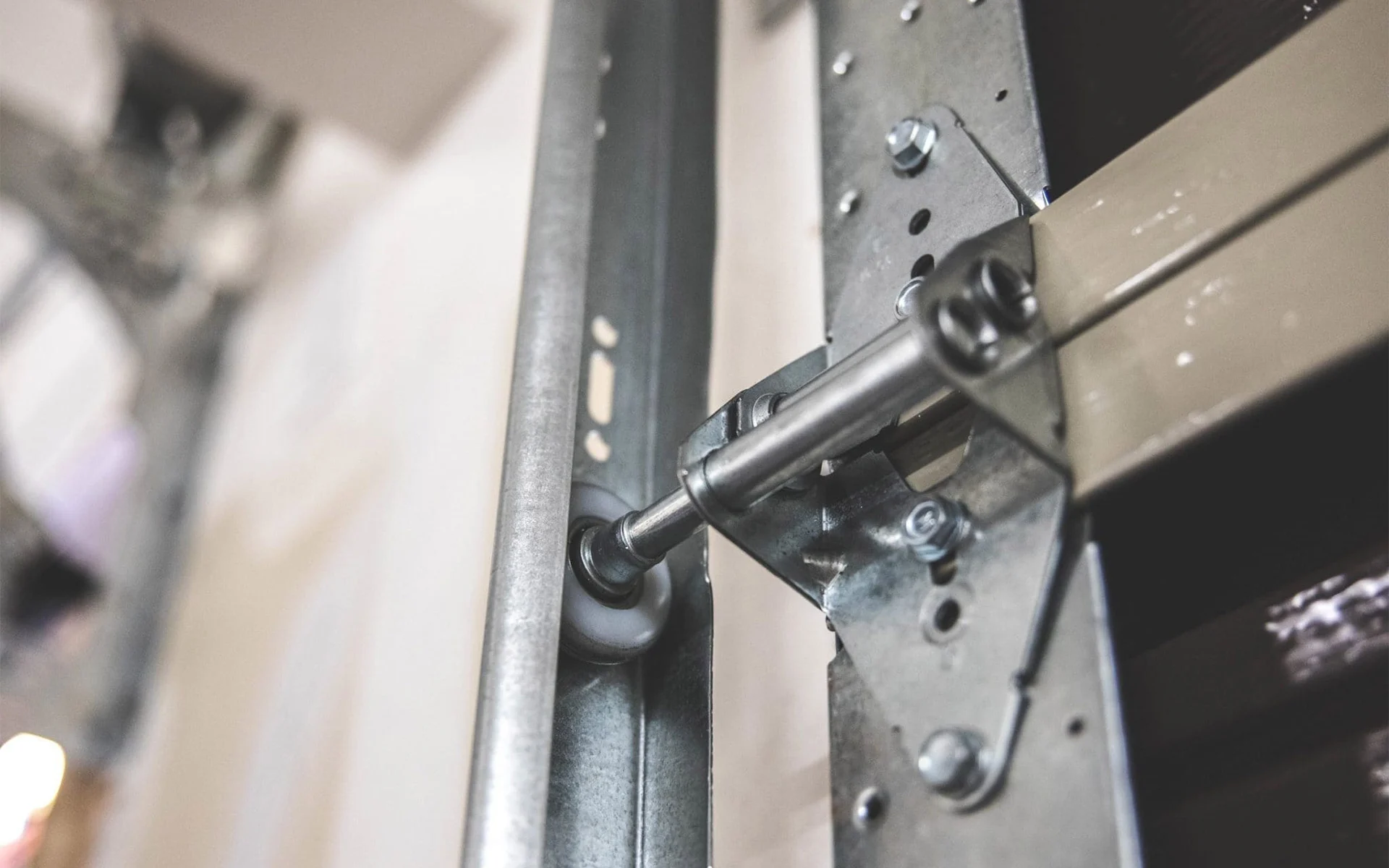
Treating these categories separately prevents a broad door keyword from becoming an unsupported compatibility claim. It also helps buyers avoid sending an inquiry that mixes a complete-door request with one or two replacement parts without explaining which outcome is actually required.
Signs Your Search Is Still Too Broad
- The request gives only a door-size phrase but does not identify the system or component involved.
- Photos or drawings show several hardware elements, yet the inquiry does not mark which part is being replaced.
- The request combines an opener problem, structural hardware, and a complete-door question without separating them.
Decide Whether You Need a Complete Door or Replacement Hardware
One of the most important scope decisions is whether the project concerns an entire door solution or replacement hardware within an existing door system. These are not interchangeable inquiry types, and they should not be combined unless the buyer clearly explains how they relate.
A complete-door inquiry usually begins at the project level: opening dimensions, application, planned operation, architectural or building constraints, and the full system scope. A replacement-hardware inquiry begins from an existing installation: identify the component, document how it interfaces with adjacent parts, and capture the information needed to evaluate a replacement.
For replacement work, photos can be more useful when they show context rather than only a close-up. A single detail photo may show the damaged part but hide how it mounts or connects. A better record often includes one wider image of the assembly, one closer image of the component, and any readable model or part markings. Drawings, previous purchase records, and installation documents can also help keep the inquiry tied to the actual system.
Ningbo Baoteng Co., Ltd. can be referenced within its documented business context of hardware accessories and other OEM products for garage, industrial, commercial, and residential doors. That is a narrower and more accurate relationship than assuming the company offers complete garage doors. For buyers, this distinction matters because the correct contact question should match the verified business context: a hardware or OEM inquiry should identify the part and project requirements instead of presuming complete-door availability.
Scope clarity also reduces quotation errors. If the buyer asks for a “garage door” but actually needs a shaft-related component, cable-related component, panel accessory, or other piece of hardware, suppliers may interpret the request differently. The resulting quotations can look comparable while actually covering different items. Defining the scope before comparing options makes later pricing, drawing review, and technical confirmation more meaningful.
Build a Clear Garage Door Inquiry Before Comparing Options
Once the project type and component scope are clear, organize the inquiry so another person can understand it without guessing. The goal is not to prove compatibility in advance; it is to create a complete starting record for technical discussion and comparison.
Information to Prepare Before You Request Options
- Record the opening dimensions and measurement context. State the width and height you measured and explain whether they refer to the structural opening, the existing door, or another drawing reference.
- State the application. Identify whether the project is residential, commercial, industrial, or another clearly described use case.
- Define the project type. Mark the request as a new installation, planned replacement, repair-related inquiry, or another specific project condition.
- Identify the system or component. Say whether the request concerns a complete door concept, panels, movement hardware, shaft-related hardware, cable-related hardware, or an opener/control issue.
- Attach useful visual or document evidence. Include contextual photos, close-ups, drawings, model labels, previous records, or any available installation documentation.
- State the quantity or project scope. Explain whether the request concerns one repair, multiple replacement items, a batch order, or a broader project discussion.
- Separate known facts from items that still need confirmation. Do not present assumptions about compatibility, dimensions, material, performance, or certification as established facts.
This structure makes supplier comparison more precise because every response can be checked against the same project definition. If two quotations refer to different parts, different scope, or different assumptions, that mismatch becomes easier to see before ordering.
It also keeps the search process efficient. A broad keyword such as “garage door” can lead to complete systems, panels, openers, accessories, repair advice, and replacement hardware. By converting the search into a defined inquiry, the buyer creates a decision path: first establish the project, then identify the system layer, then determine the exact part or solution, and only then compare available options.
When contacting Ningbo Baoteng, frame questions around its verified garage-door hardware/accessory and OEM context. Provide the opening and application background when relevant, but make the actual hardware or OEM requirement explicit. That approach gives the company a clearer basis for discussing whether a request fits its documented business scope without assuming unverified complete-door availability, product specifications, testing claims, or quality-control capabilities.
Frequently Asked Questions (FAQ)
What are the standard garage door sizes?
There is no single size that should be assumed from a search phrase alone. Common market dimensions vary by region, building type, and application. For selection, measure the actual opening and record what the measurement represents before comparing door systems or related hardware. A size keyword is a research starting point, not proof of fit.
 English
  Русский
  日本語
日本語  한국어
한국어  Français
  Deutsch
  العربية
  Português
  Español